24 Small Bedroom Ideas That Make the Room Feel Bigger
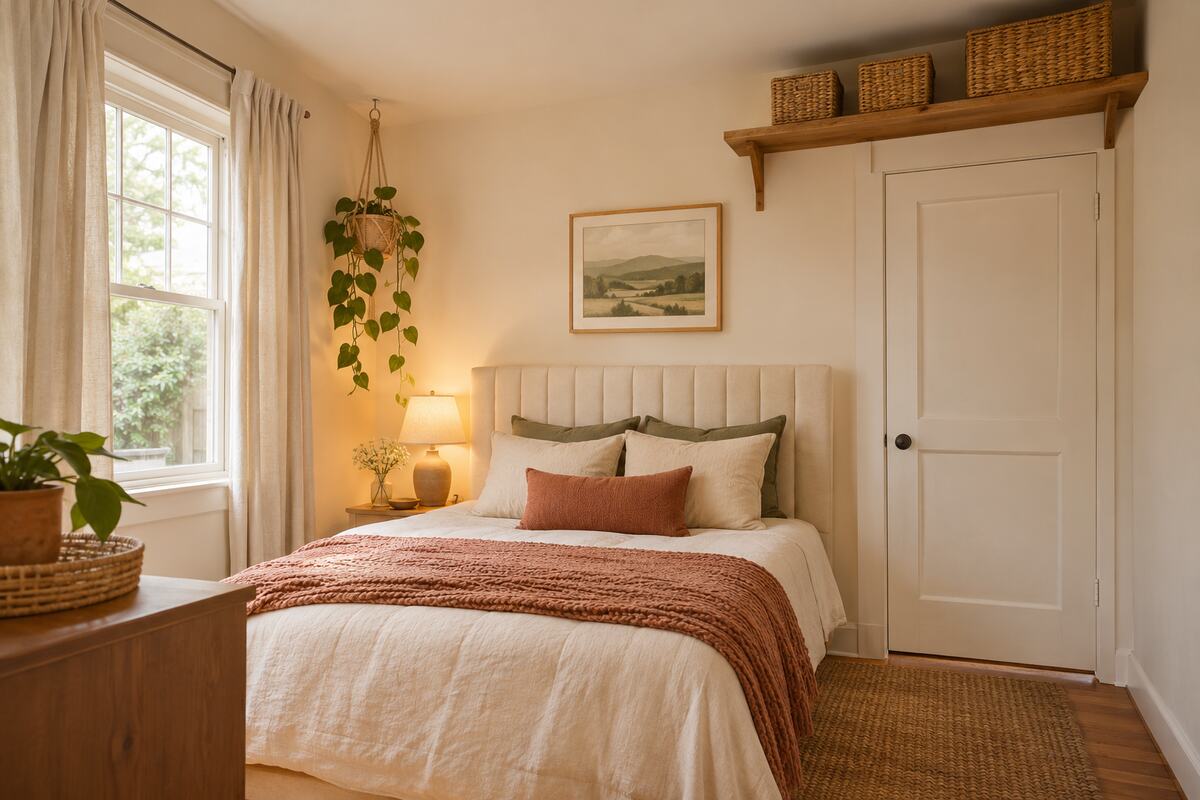
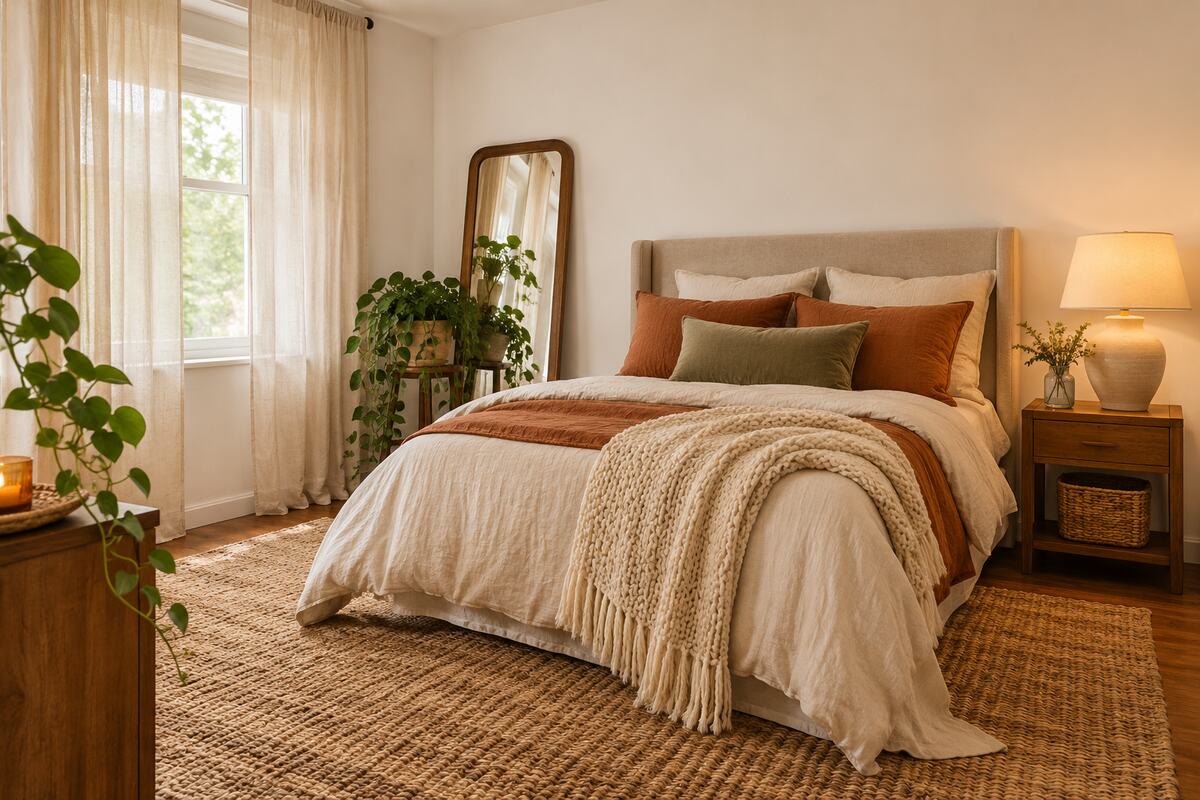
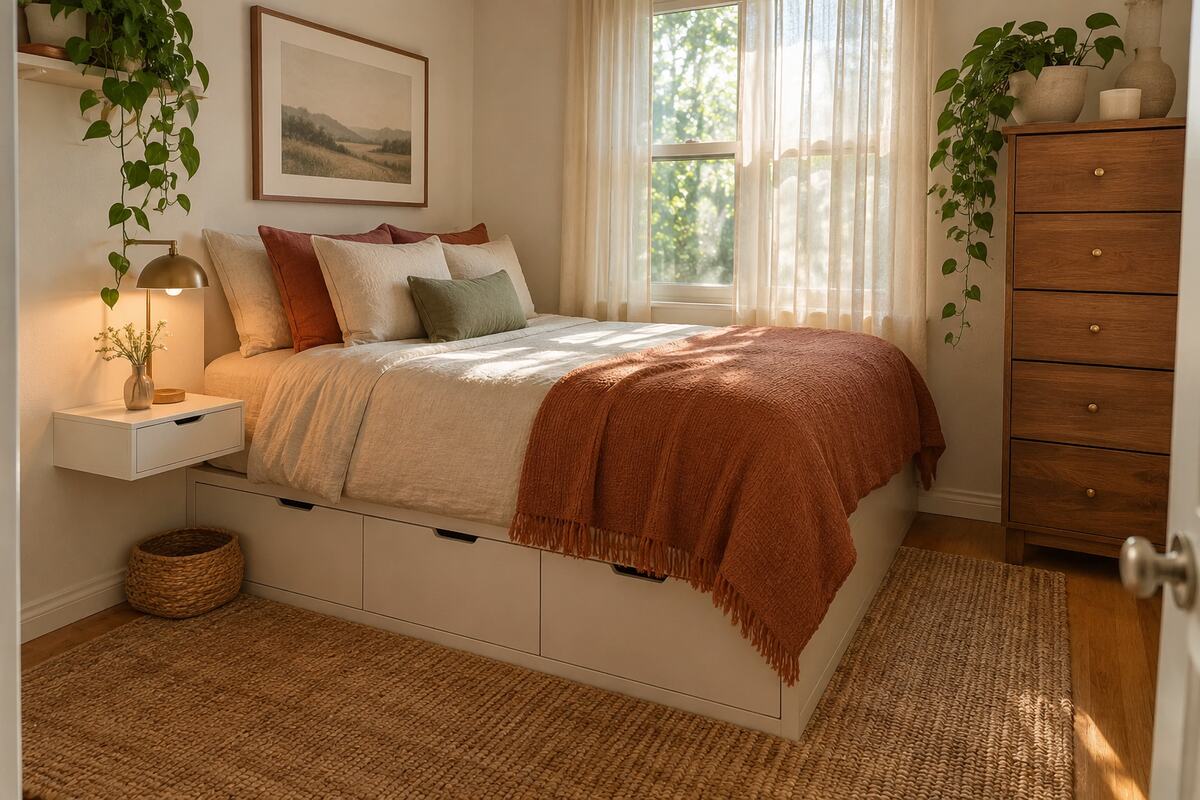
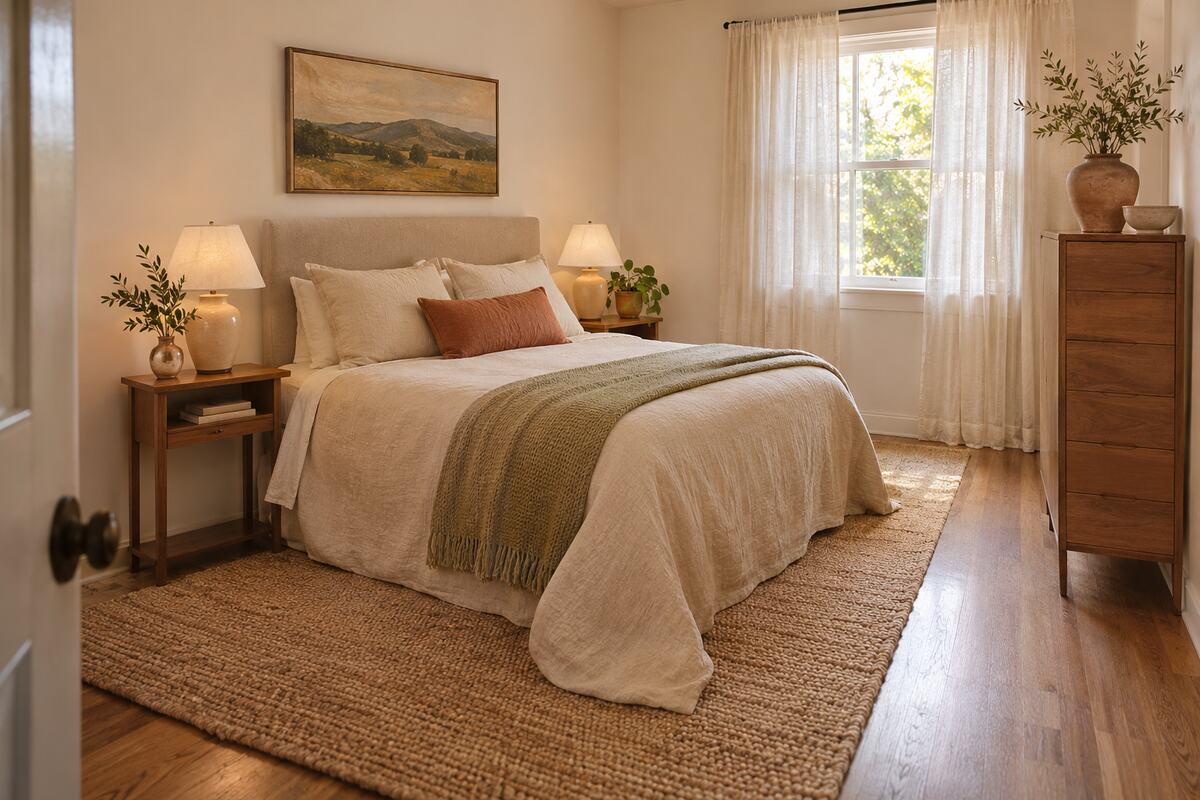
These small bedroom ideas make a tight room feel bigger without moving walls or buying a whole new set of furniture. The ideas come in six groups: visual tricks, color and scale, vertical space, light, clutter systems and corners that do two jobs, each with a short note on how to copy it.
If you are still deciding where the bed goes, start with our guide to laying out a small bedroom. The basics we covered in our bedroom ideas post, like a storage bed or a mirror opposite the window, are not repeated here, so this list goes further.
Visual tricks that stretch the walls
A room feels bigger when your eye can travel without stopping. These ideas remove the lines and edges that make a small bedroom look boxed in.
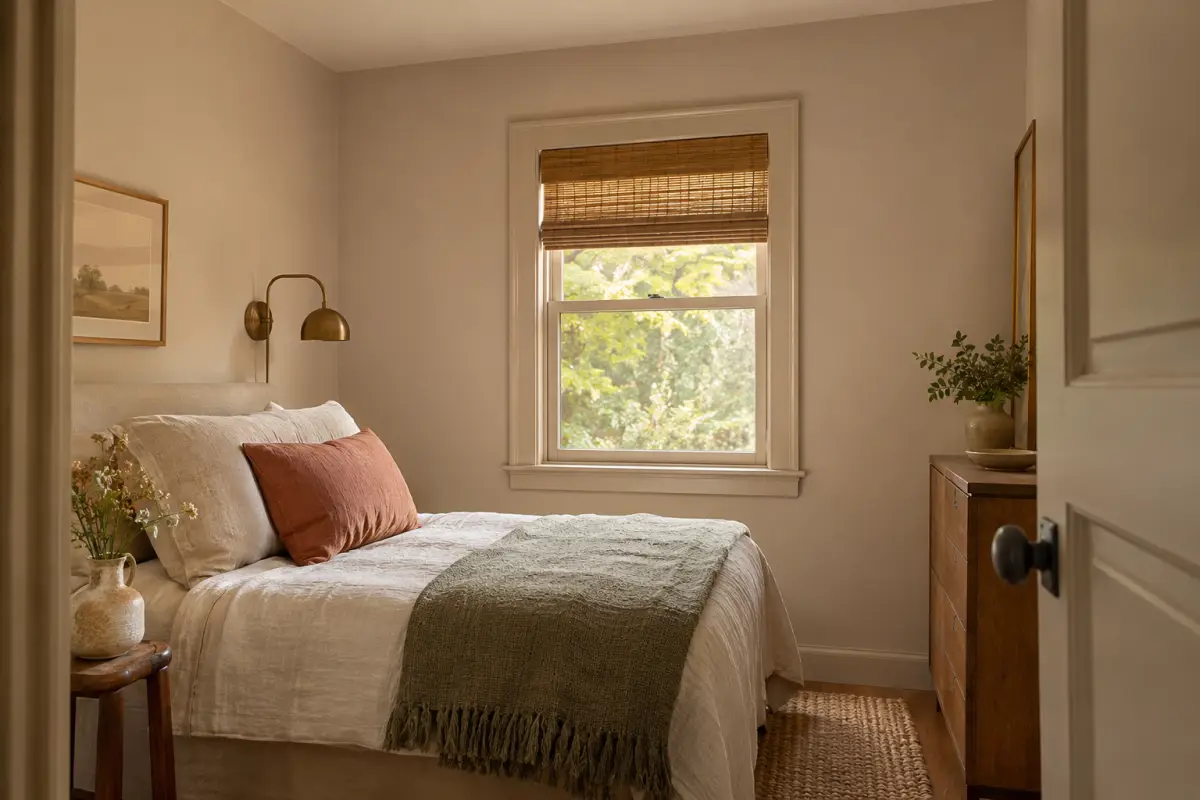
1. Paint the trim the same color as the walls
White trim around doors, windows and baseboards draws a frame around every edge of the room. In a small bedroom those frames make the walls look shorter and busier.
Paint the trim in the wall color and the edges fade. Use the same color in a slightly shinier finish on the trim so it still wipes clean.
How to copy it: ask the paint counter for your wall color in a satin or semi-gloss finish for trim, sand glossy old trim lightly, then cut in with an angled brush.
2. Hang curtains in the same color as the walls
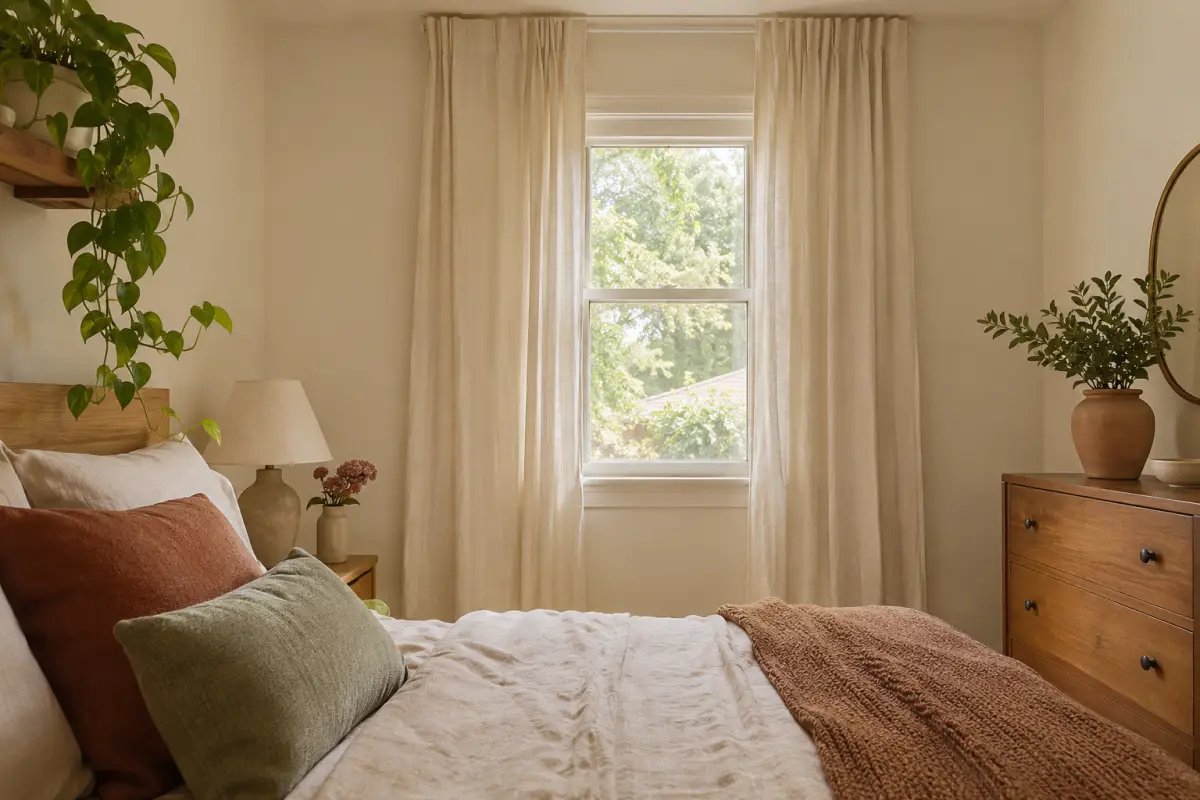
Contrasting curtains cut the wall into pieces. Curtains close to the wall color blend in, so the window wall reads as one long surface instead of three.
Pick a fabric one shade lighter or darker than the paint and let it reach the floor. Our bedroom ideas post covers hanging the rod high and wide, which pairs well with this.
How to copy it: take a paint chip to the store, hold it against the curtain fabric in daylight, and choose floor-length panels in linen or cotton.
3. Keep the ceiling lighter than the walls
A pale ceiling is one of the easiest ways to make a low room feel taller. Sherwin-Williams’ guide to dark and moody rooms notes that a bright white ceiling can make a room feel taller and more expansive, while a dark ceiling visually lowers the space.
If your walls are a mid-tone, ask for the ceiling in the same color mixed much lighter. The room stays coordinated and the ceiling seems to lift.
How to copy it: flat ceiling paint in white or a very light tint of the wall color, an extension pole, a roller with a thick nap for textured ceilings.
4. Run stripes or paneling up and down
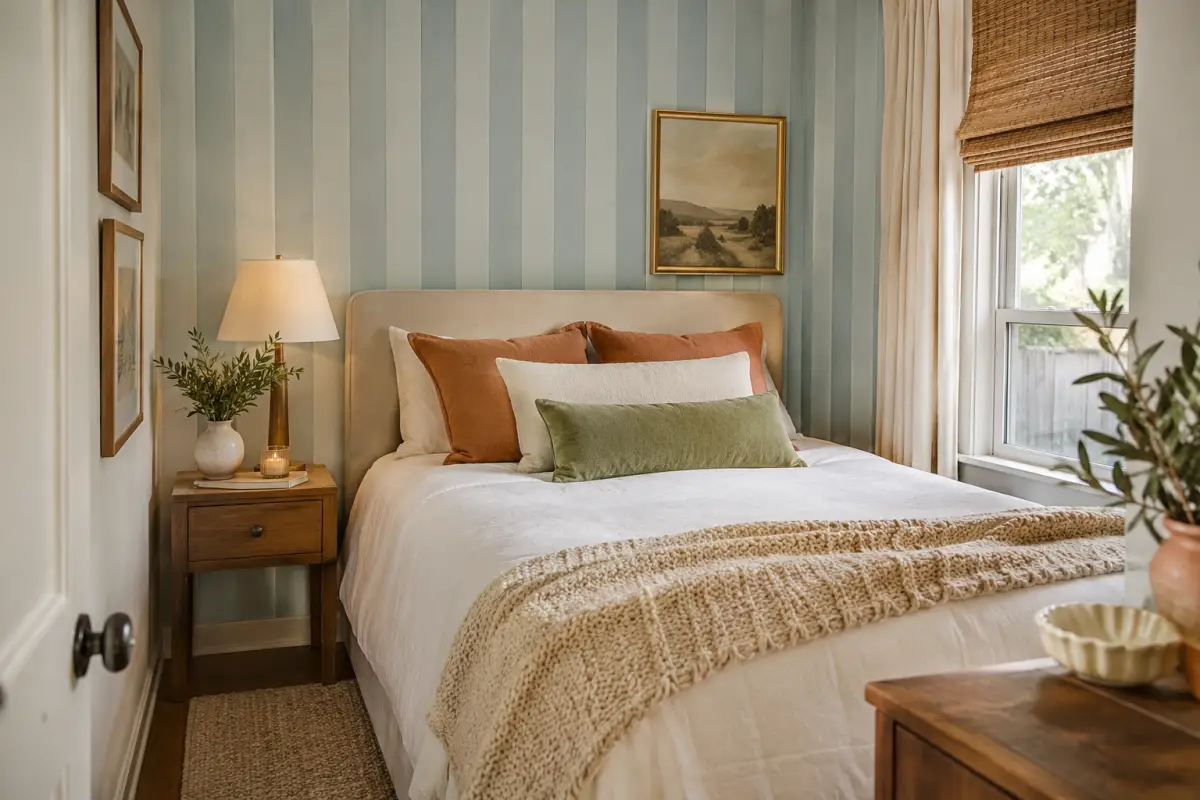
Vertical lines pull the eye toward the ceiling, so the walls feel taller than they are. Narrow vertical paneling, a striped wallpaper or a wall of tall slim frames all do it.
Keep the contrast low in a small room: tone-on-tone stripes stretch the walls without making them busy. For pattern you can peel off later, see our peel-and-stick wallpaper ideas.
How to copy it: pick a stripe in two close shades, use a level for the first strip, and cover only the wall behind the bed if the room is tiny.
Small bedroom ideas for color and scale
Color and size of pieces decide whether a small room feels open or packed. These ideas use both on purpose.
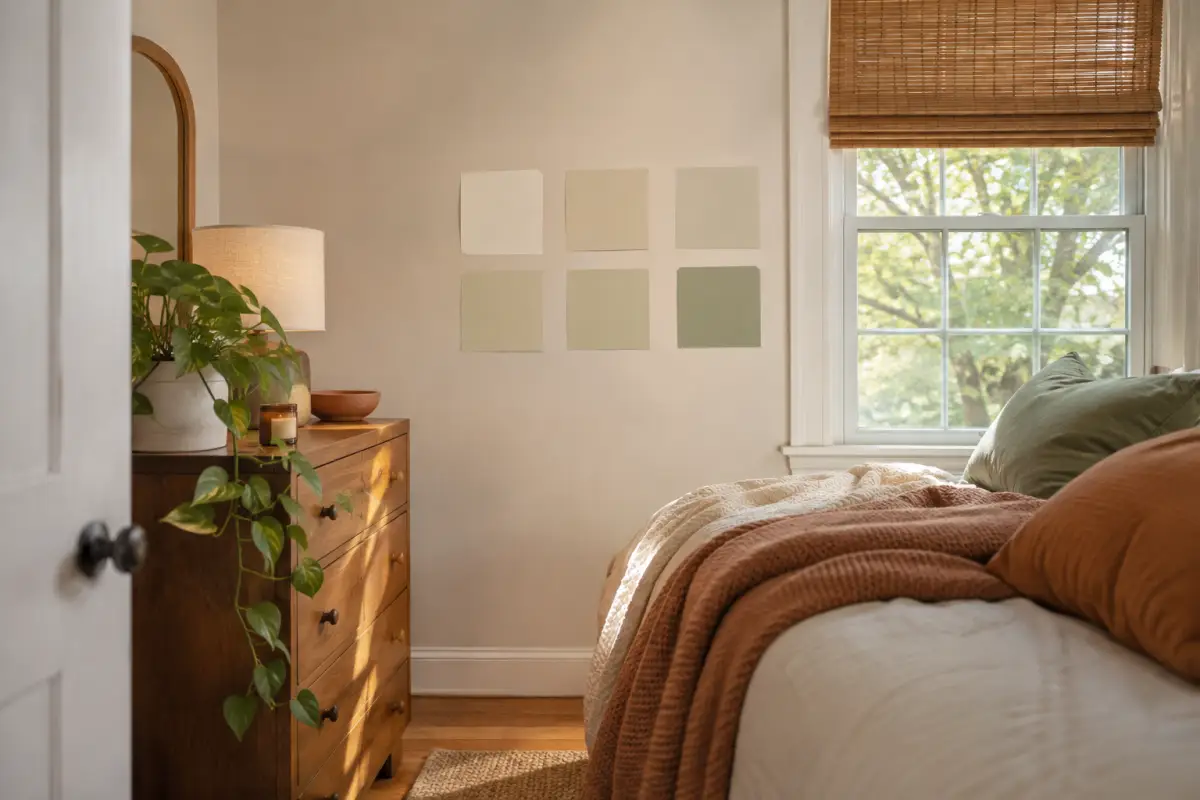
5. Read the LRV before you buy paint
Every paint chip has a number called LRV, or light reflectance value. Sherwin-Williams’ room direction guide explains that LRV is the amount of light a color reflects, on a scale from 0 to 100, where zero reflects no light.
Lighter tints have higher LRVs than darker ones, so they bounce more light around a room. For a north-facing bedroom, Sherwin-Williams suggests looking at colors with a higher LRV.
What the LRV number on a paint chip means
0 = reflects no light
Deep colors: cozy, enclosed, best with good lamps.
Higher = more light bounced
Light tints: the easy pick for a dim or north-facing room.
100 = reflects all light
The very top of the scale.
Test before you commit. Sherwin-Williams sells 8 by 8 inch peel-and-stick samples for $3.95 each on that page. Stick one on two different walls and check it morning and night.
6. Go dark on purpose
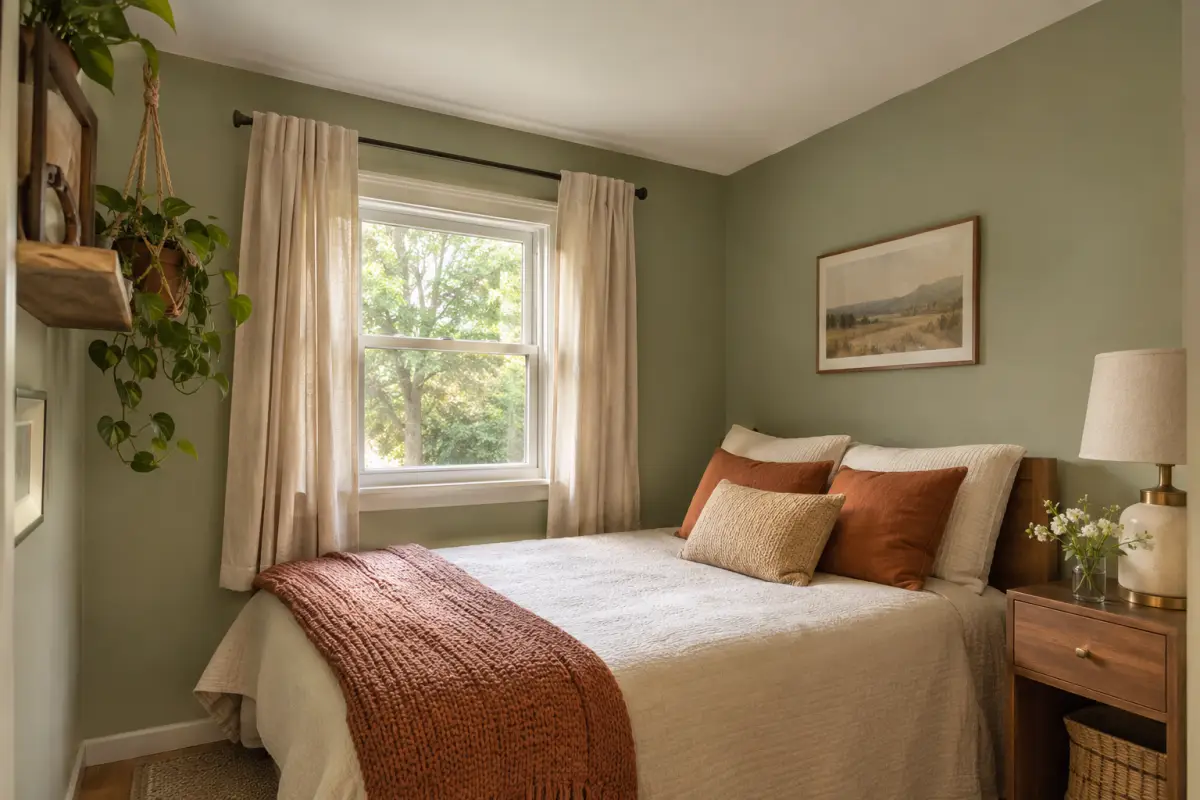
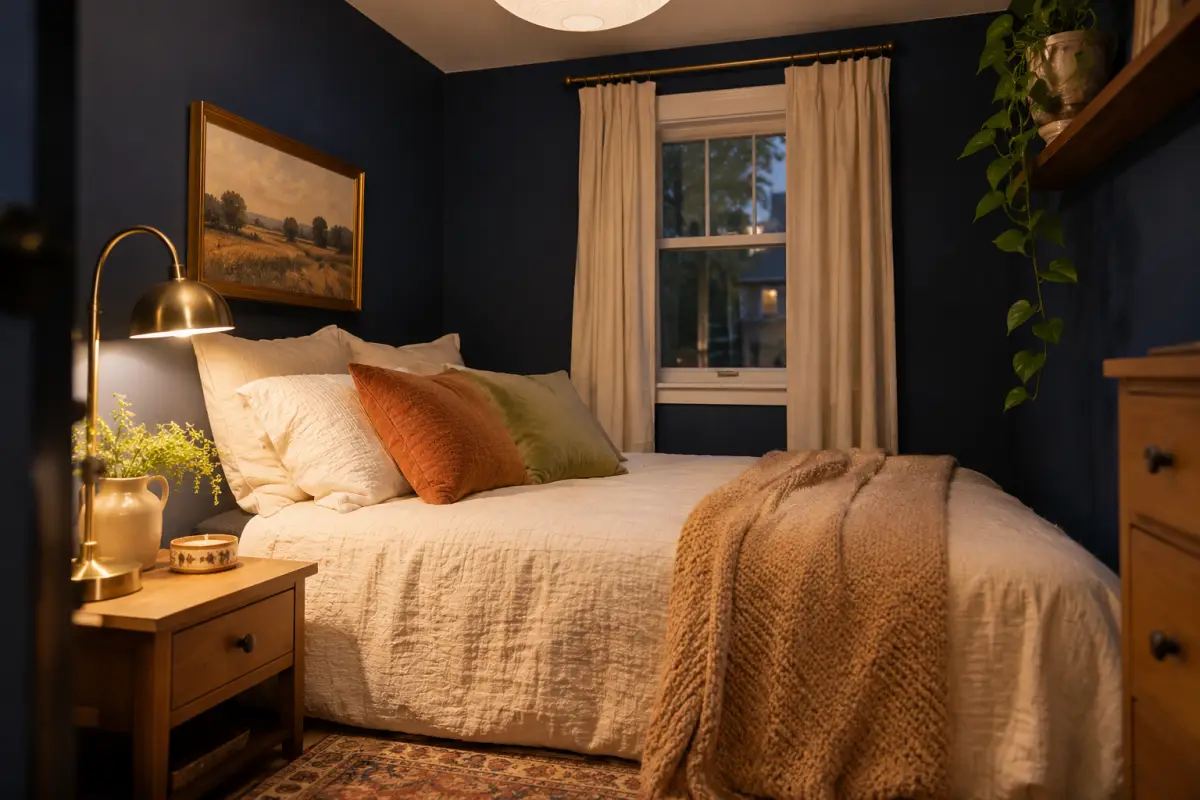
Light walls are not the only way to handle a small bedroom. Sherwin-Williams says dark hues can make a smaller room feel cozy and intimate, which suits a room you mostly use at night.
The trick is commitment. A deep color on every wall blurs the corners, so you stop noticing where the room ends.
How to copy it: choose a deep green, navy or charcoal with a low LRV, keep the bedding light so the bed stands out, and add warm lamp light. Paint the ceiling dark too if you want a cocoon, or keep it light for height.
7. Choose one large piece of art over many small ones
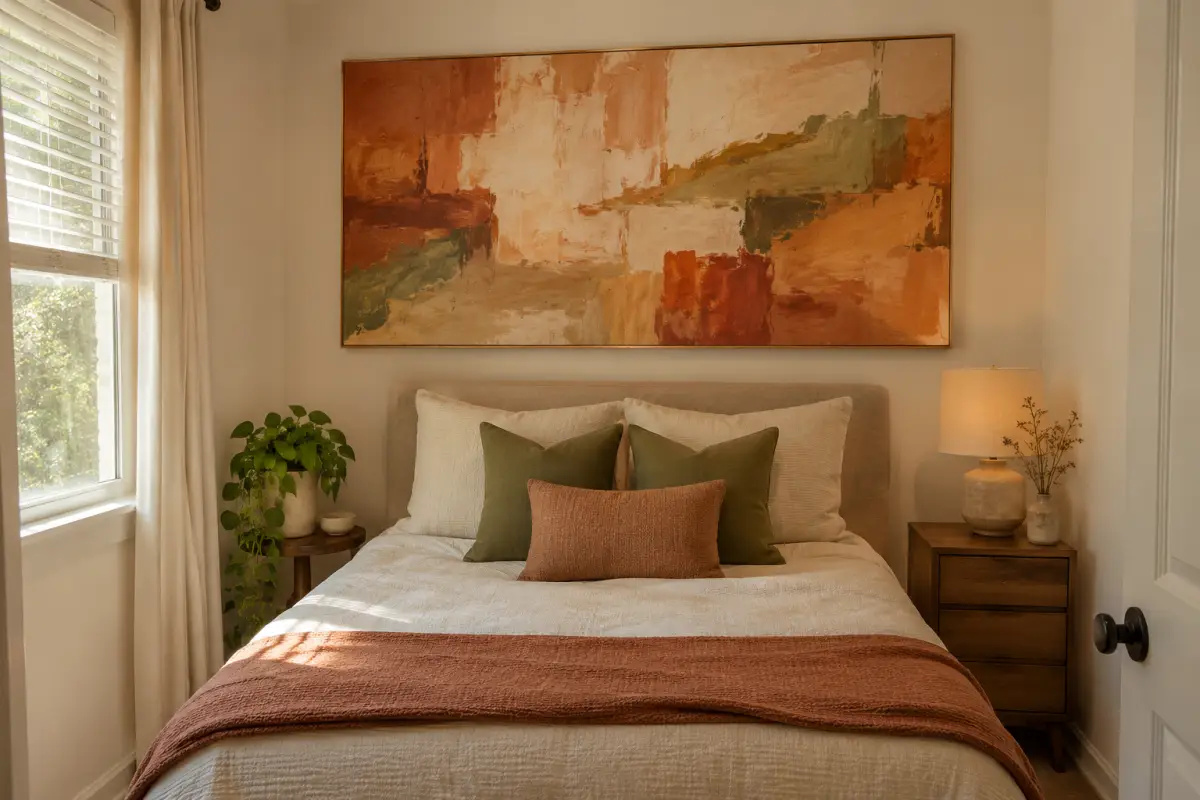
Lots of small frames break a wall into busy pieces, and busy walls feel closer. One large artwork gives the eye a single place to rest, which makes the wall look calmer and wider.
Go bigger than feels natural. A piece that spans most of the headboard width looks intentional, while a small one floats.
How to copy it: a large canvas or an oversized print in a thin frame, hung centered over the bed with a few inches of wall between the frame and the headboard. Use secure hangers above a bed.
8. Pick a tall headboard
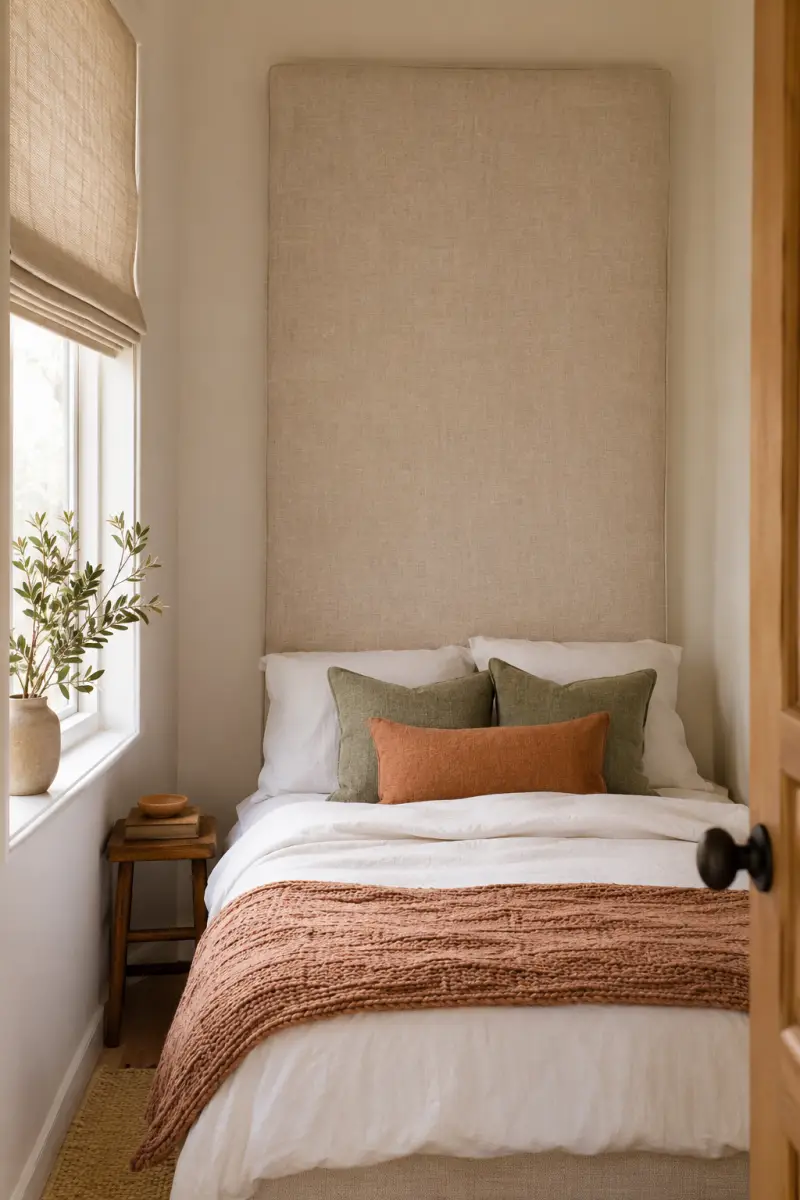
A tall headboard draws the eye up, and up is the direction a small room has room to grow. It also gives the bed a clear focal point, so the rest of the room can stay quiet.
Choose a slim profile so it adds height without adding depth. Fabric in the wall color keeps it from looking heavy.
How to copy it: a tall upholstered or paneled headboard in a color close to the walls, mounted to the wall or the bed frame, with simple bedding below.
9. Repeat one pattern instead of mixing five
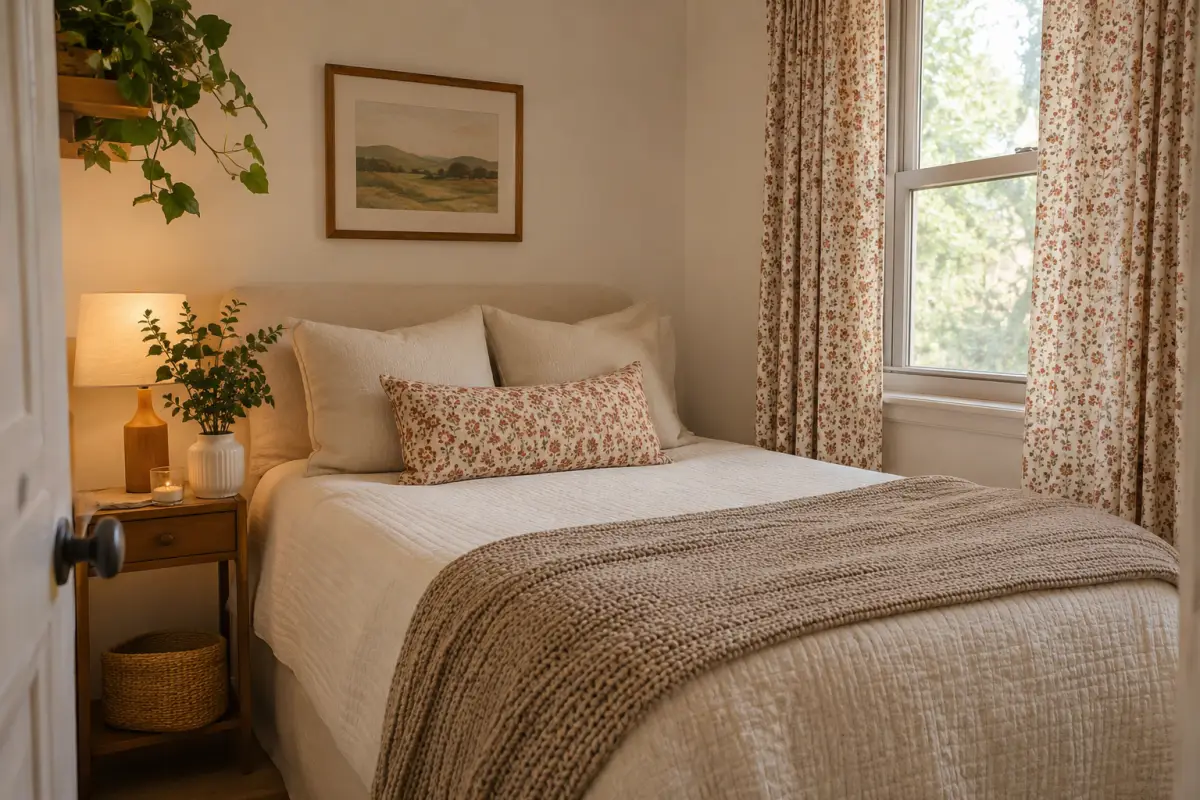
Several patterns in a small bedroom compete, and the room feels crowded before you add a single object. Choosing one pattern and repeating it makes it look planned.
Use it in two or three places: the curtains, a lumbar pillow and a lampshade, for example. Everything else stays solid.
How to copy it: pick one print you love, repeat it on two or three soft items, then pull your solid colors straight from that pattern.
Vertical space: storage that leaves the floor clear
Floor space is the most precious thing in a small bedroom. These ideas move storage onto the walls and doors, where it does not cost you a step.
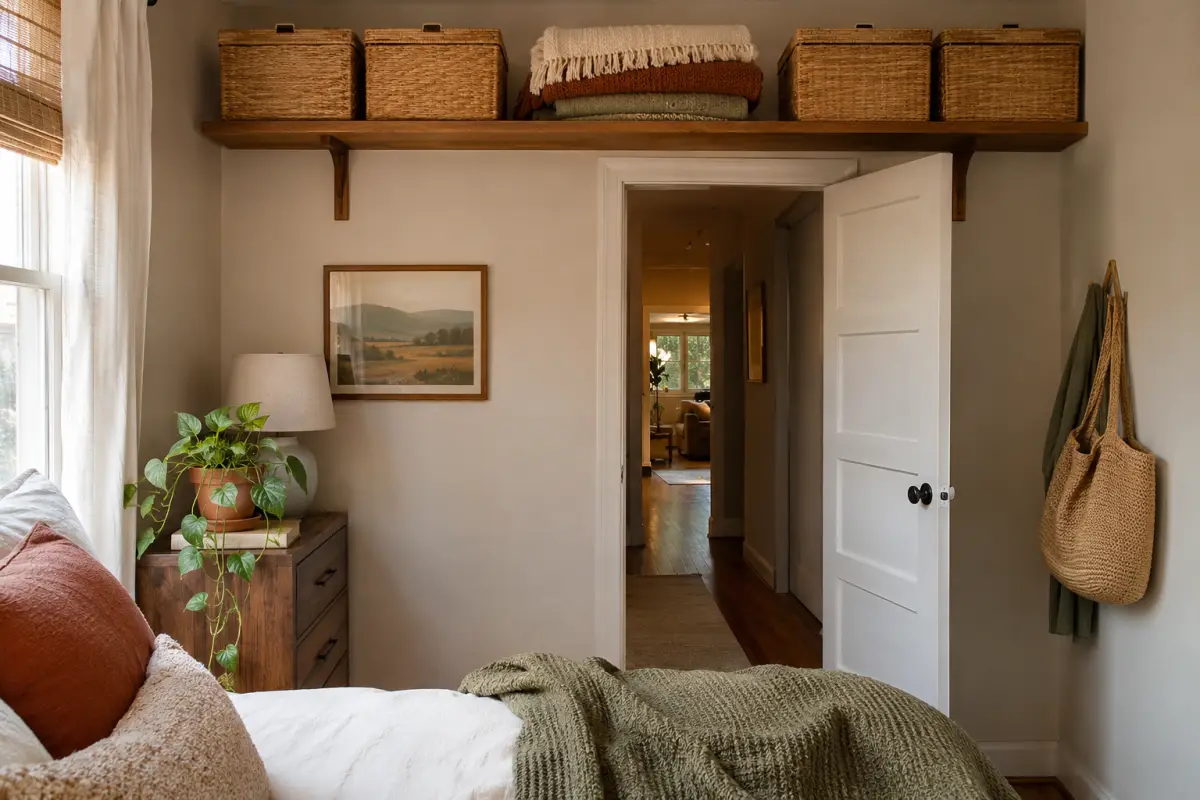
10. Run a shelf above the door
The wall above a bedroom door is almost always empty. A shelf there holds books, baskets or spare pillows you do not need every day.
Lidded baskets keep the shelf looking tidy from below. Put the lightest things up high so the shelf stays easy to use.
You need: a long wood shelf, sturdy brackets screwed into studs, matching lidded baskets, a step stool that lives in the closet.
11. Hang a peg rail for the chair pile
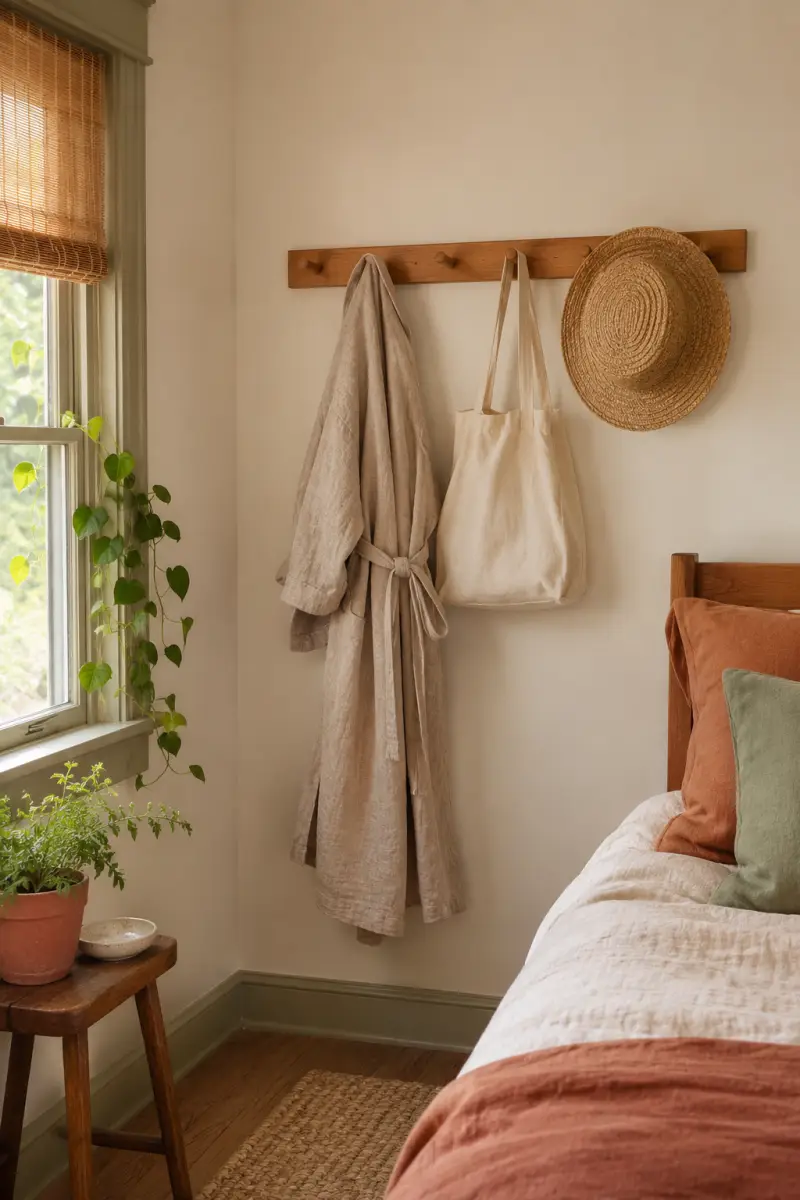
Every small bedroom has a chair or corner where worn-once clothes land. A peg rail gives them a home on the wall instead, along with bags, a robe and tomorrow’s outfit.
Shaker-style rails look good even when full. Mount one at shoulder height so hanging things do not touch the floor.
How to copy it: a wood peg rail screwed into studs or a row of wall hooks, one peg per daily item, and a rule that nothing goes on the bed.
12. Use the back of the door
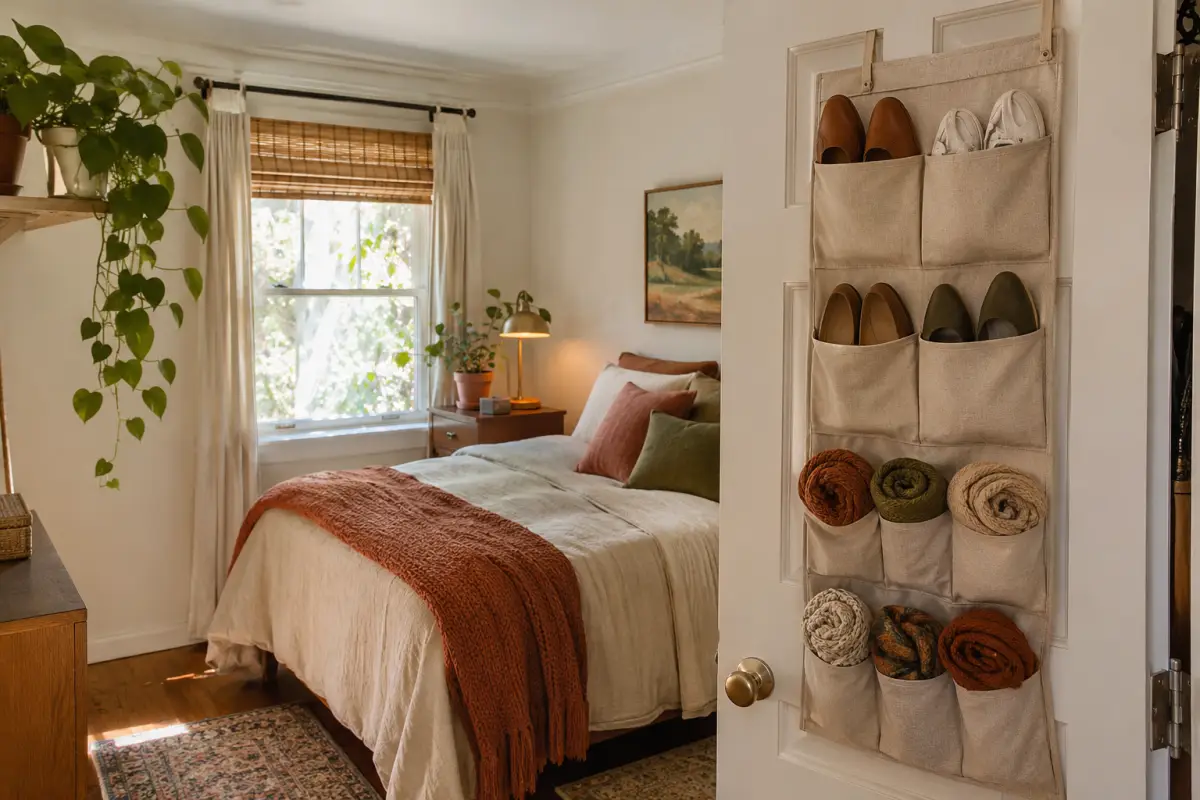
A bedroom door has a whole wall’s worth of surface on the back. An over-the-door organizer holds shoes, scarves, belts or bags that would otherwise need a dresser drawer.
Choose a clear or fabric organizer in a calm color, and check that the door still closes fully.
You need: an over-the-door hook rack or pocket organizer, felt pads on the hooks so they do not scratch the door, and a quick sort of what really needs to live there.
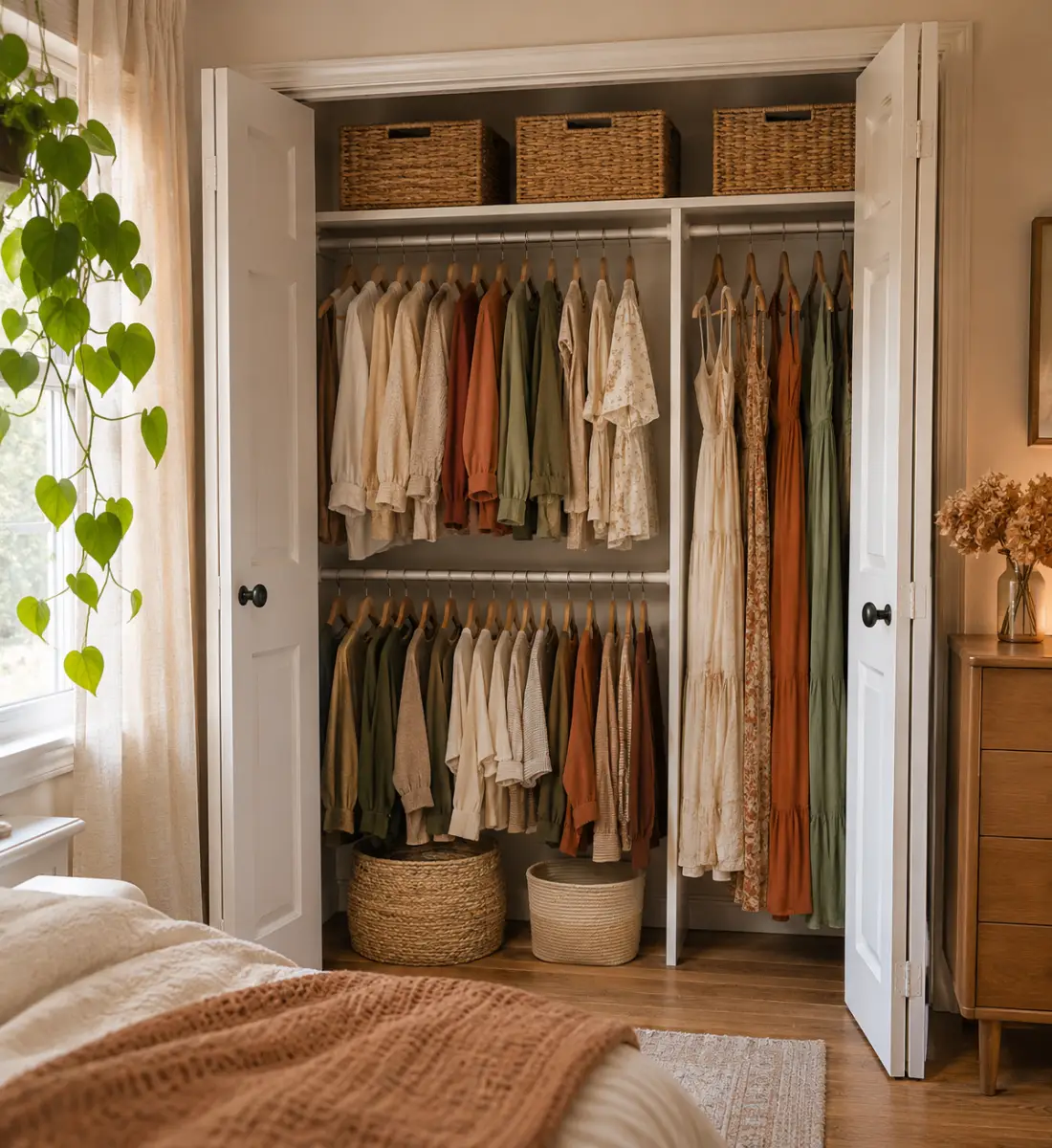
13. Use the closet from top to bottom
Most closets have one rod and wasted space above and below it. Adding a second rod under the first doubles short hanging space for shirts and skirts.
Then add shelf dividers on the top shelf and bins on the floor. Matching slim hangers also make the rail look and work neater.
- Sort hanging clothes into long and short.
- Hang a second rod under the short side.
- Add bins on the floor and dividers on the top shelf.
Our small bedroom furniture guide covers wardrobes for rooms with no closet.
14. Hang plants instead of placing them
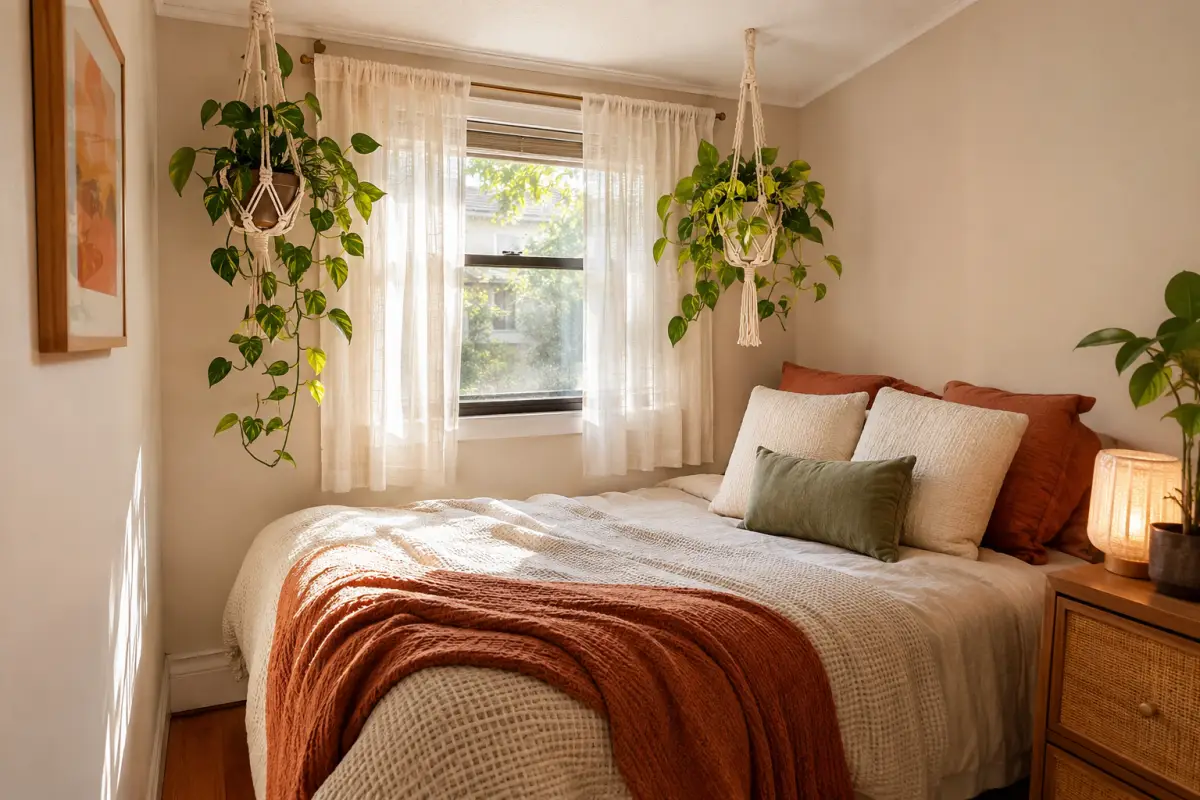
Floor plants and nightstand plants take space a small room cannot spare. Hanging planters put the green up in the air and draw the eye upward at the same time.
A trailing plant in front of the window also softens the frame. Hang planters from a ceiling hook fixed into a joist, and stay within the weight rating on the hook’s package.
How to copy it: a ceiling hook rated for the weight of a watered pot, a macrame or metal hanger, and a trailing plant that suits your light, such as pothos.
Light: make the edges of the room glow
Light changes how big a room feels as much as paint does. These ideas push light into the corners and up to the ceiling.
15. Bounce light off the ceiling
A single ceiling light pointing down leaves the top of the room in shadow. Sherwin-Williams’ article on light and color notes that downlights can cause ceilings and the top edges of walls to appear dark in comparison.
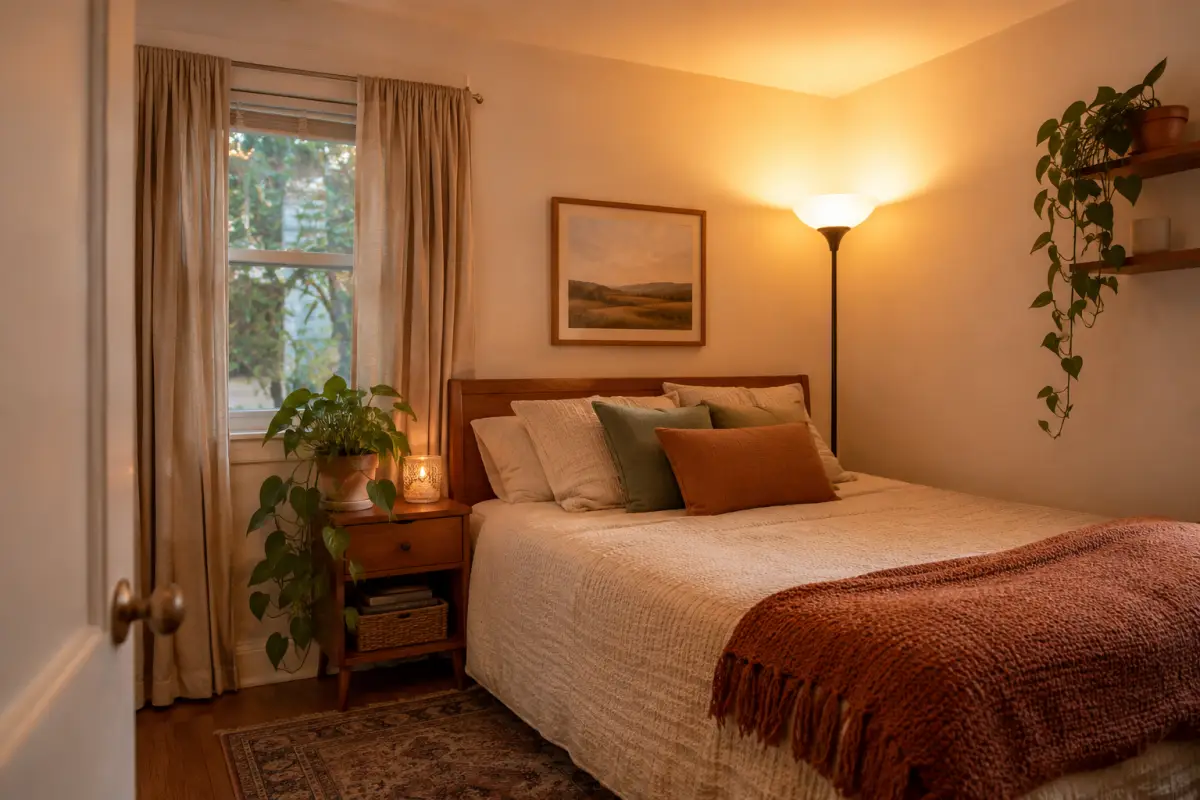
Light aimed at the ceiling spreads through the room and gives it a loftier feel, according to a lighting specialist quoted in the same article. An uplight in a dark corner does this cheaply.
Which way your light points
Down only
Bright floor, dark ceiling and upper walls. The room feels lower.
Up and out
Light spreads across the ceiling and corners. The room feels taller.
16. Add a warm glow behind the bed
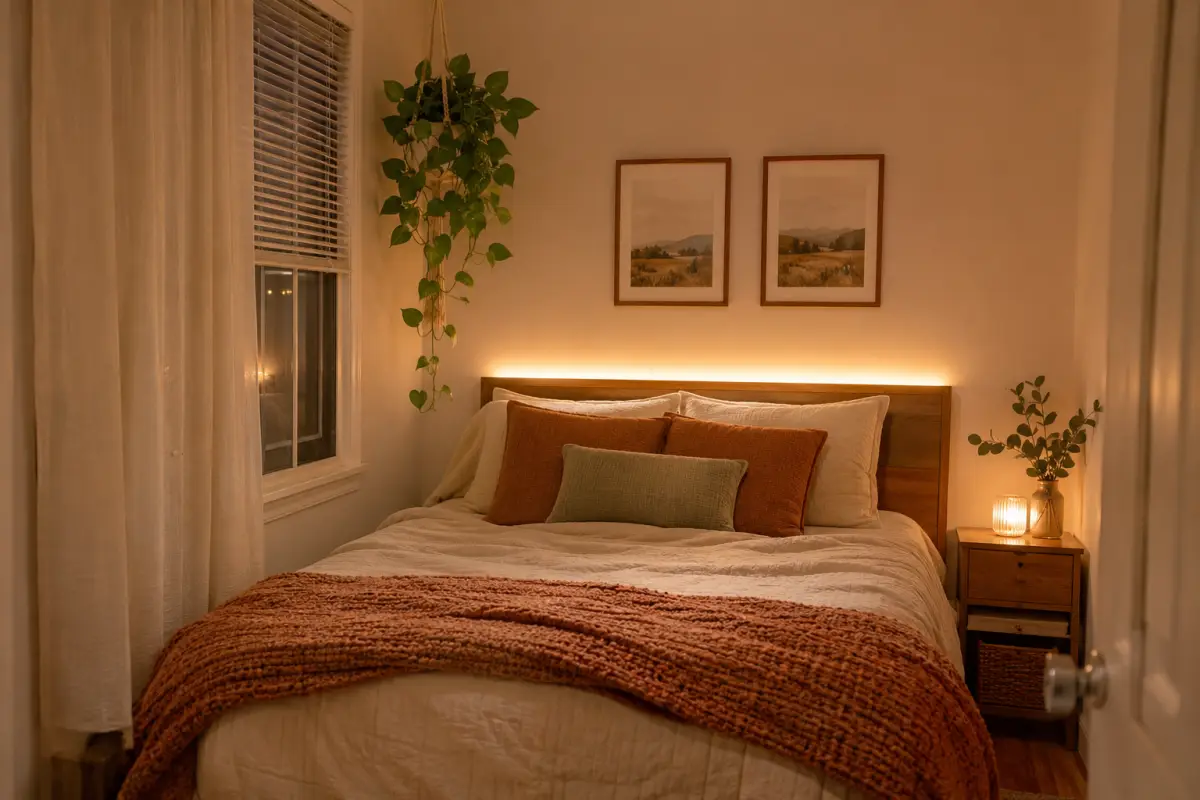
A strip of light behind the headboard or under the bed frame lights the wall instead of your eyes. The wall seems to fall back, and the bed looks lighter.
Choose a warm white strip. The U.S. Department of Energy describes warm home light as around 2,700 K, the color that suits wood and fabric.
How to copy it: a plug-in LED strip in warm white, adhesive clips along the back of the headboard or the bed frame, and a dimmer or smart plug so it can stay low at night.
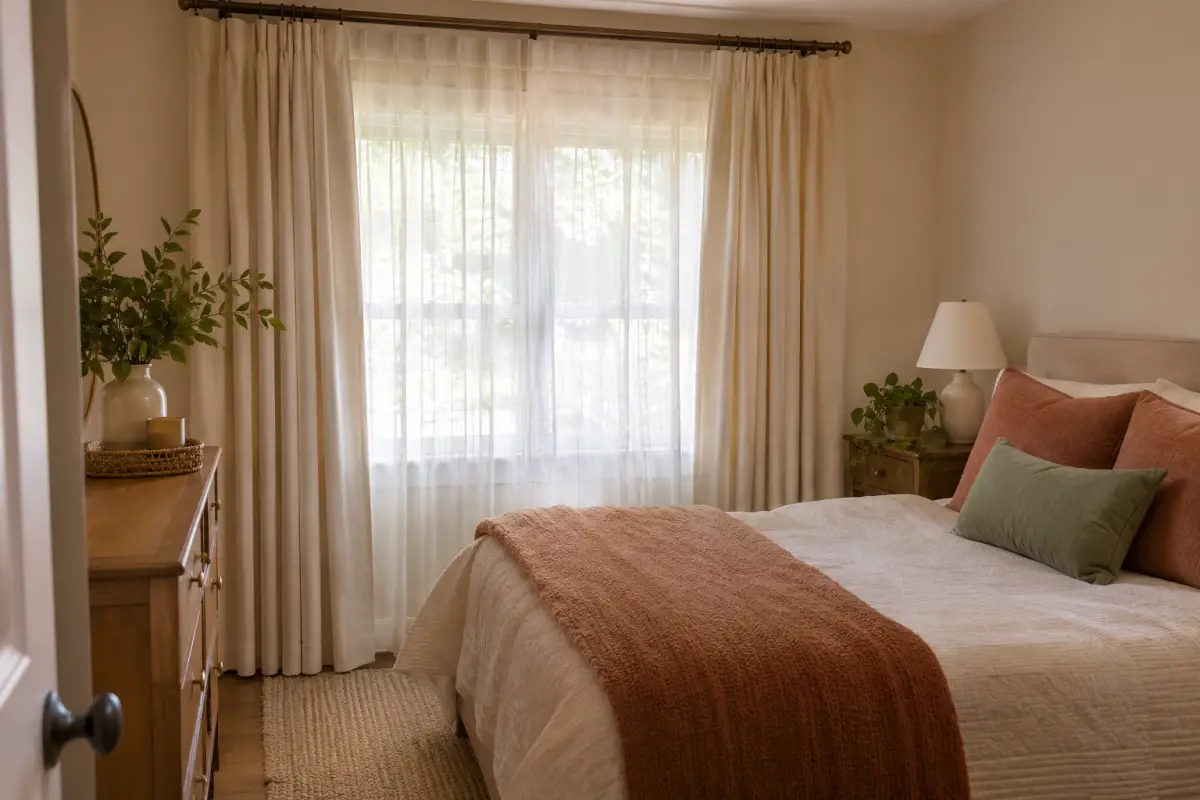
17. Swap heavy curtains for sheers plus a blackout layer
Heavy drapes block daylight even when they are open, because they bunch up beside the window. Sheers let light in all day, and a blackout layer behind them handles the night.
A double curtain rod holds both on the same brackets. Keep the blackout panels in a color close to the walls so they disappear when open.
You need: a double curtain rod, white or ivory sheer panels for the front, blackout or lined panels for the back, and tiebacks if the window is narrow.
18. Add shine in small doses
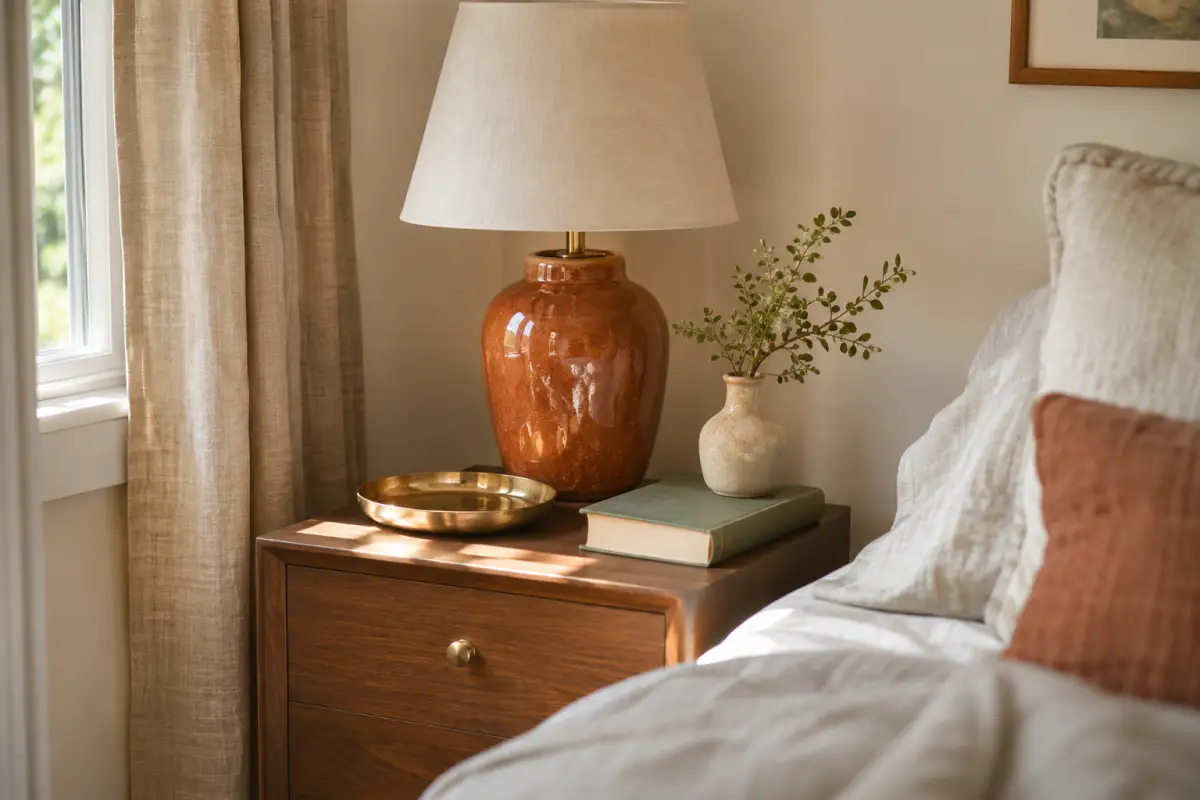
Shiny surfaces send light back into the room. Sherwin-Williams notes that the higher the gloss level, the more light bounces off a surface, and suggests reflective surfaces like mirrors or metallic accents when a room feels smaller than it is.
Use shine as an accent, not everywhere. A glazed ceramic lamp, a brass tray and a lacquered nightstand top are enough.
How to copy it: two or three glossy or metallic pieces spread around the room. For mirror placement, see our bedroom mirror ideas.
Clutter systems for a small bedroom
A small room shows clutter faster than a large one. These systems give everything a home so the room resets in minutes.
19. Give every surface a tray
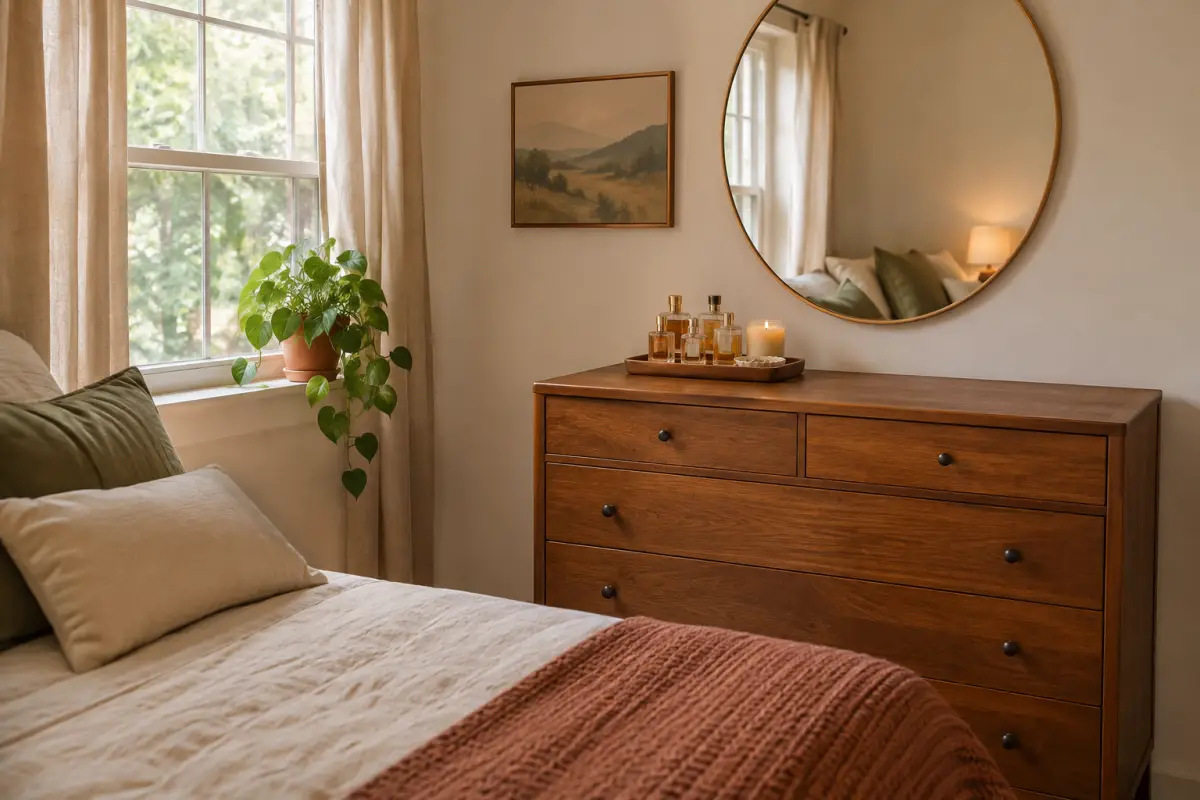
Loose things scattered across a dresser look like mess. The same things grouped on a tray look styled, and you can lift the tray to dust.
Set one tray per surface and let only what fits on it stay. Everything else goes in a drawer.
How to copy it: a small tray on the nightstand for glasses, rings and lip balm, a larger tray on the dresser for perfume and a candle, and a dish by the door for keys.
20. Store off-season clothes outside the bedroom
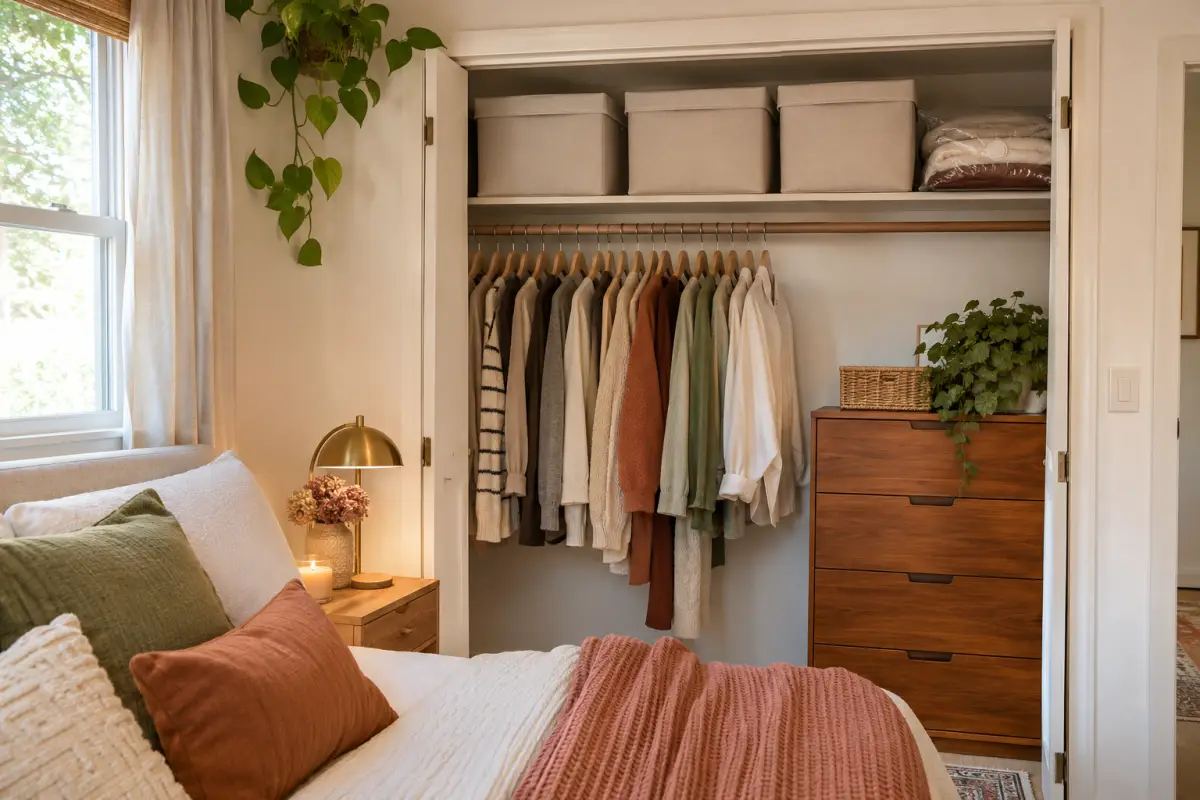
Every winter coat in a small closet steals space from what you wear this month. Pack the off-season clothes away and the closet breathes.
Vacuum bags or lidded bins work under a bed in another room, on a high closet shelf in the hallway, or in a storage closet. Swap the sets twice a year.
How to copy it: label bins by season, wash everything before it goes in, and add a cedar block to protect wool.
21. Hide the cords and chargers
Cords running across the floor and up the nightstand are visual noise. In a small room you see all of them at once.
Gather chargers into one spot and route cords along the furniture. Cord clips and a small box for the power strip clear the floor in an afternoon.
You need: adhesive cord clips, a cord-management box for the power strip, a charging tray in a nightstand drawer, and paintable cord covers for wall runs.
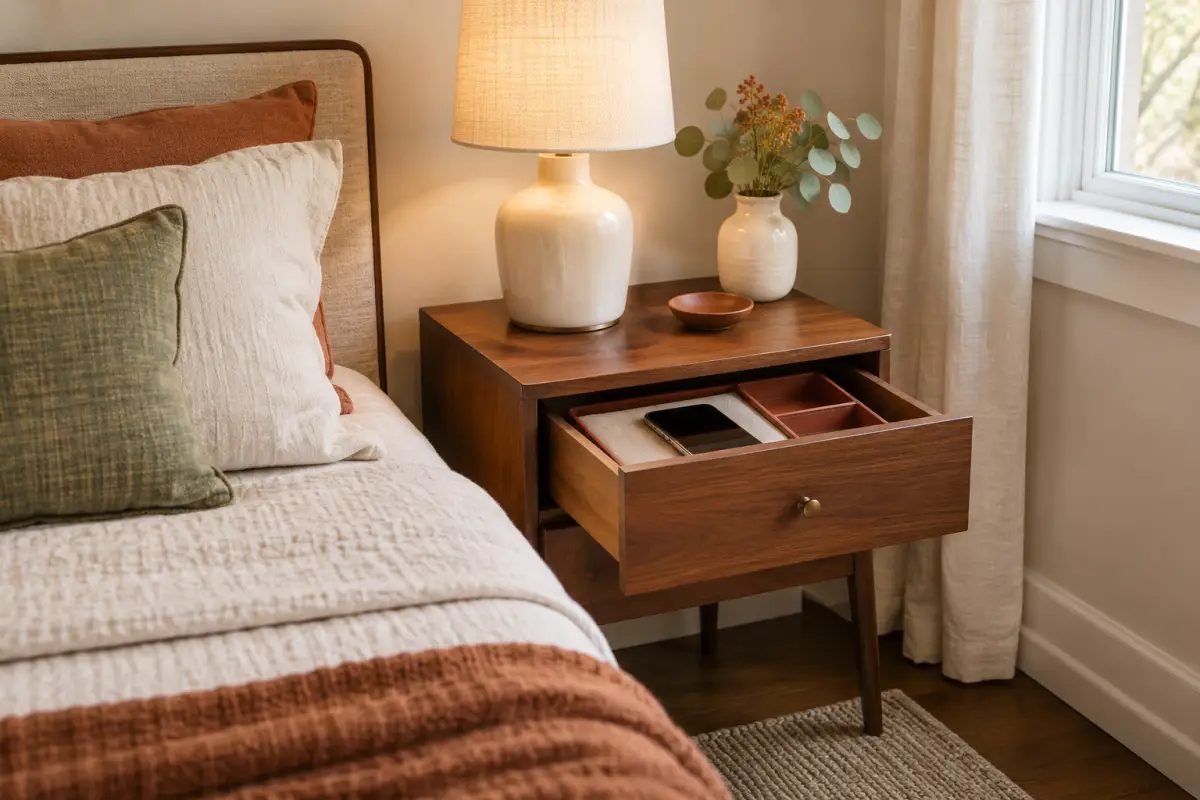
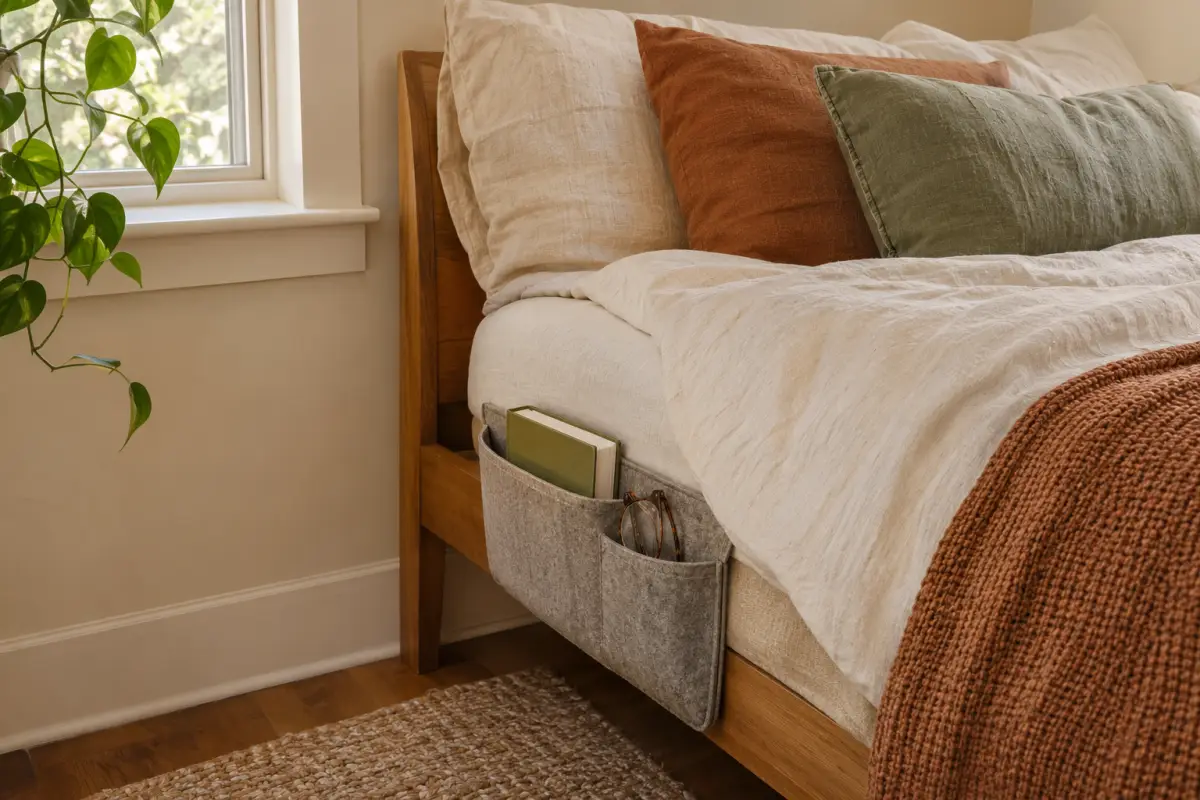
22. Add a bedside caddy
When the nightstand is tiny or missing, a caddy that tucks between the mattress and the frame holds a book, glasses, a remote and a phone. It takes no floor space at all.
Felt and canvas caddies look softer than plastic. Choose one in a color close to your bedding.
How to copy it: a felt or canvas bedside caddy slid under the mattress on your side, and a habit of emptying it once a week.
A home for everything in a small bedroom
Corners that do two jobs
A small bedroom often has to be a dressing room or an office too. These ideas add a second job without adding a second piece of furniture.
23. Let the dresser double as a vanity or desk
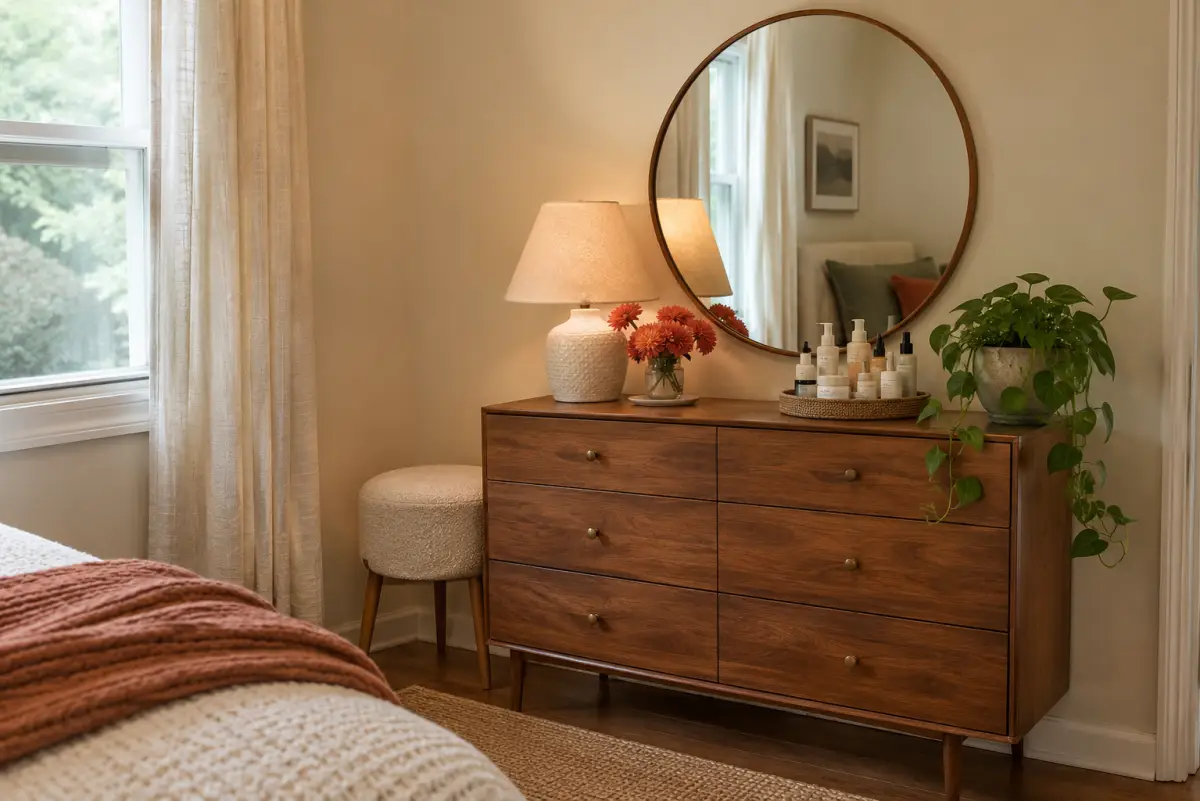
A dresser top at standing height already works for getting ready. Hang a mirror above it, add a lamp, and it becomes a vanity without a separate table. Our bedroom vanity ideas go deeper.
Anchor the dresser, especially once it carries a mirror and a lamp. The CPSC’s Anchor It campaign says new dressers come with anti-tip devices to install right away, and older furniture can use inexpensive anti-tip brackets.
How to copy it: a mirror centered over the dresser, a small lamp to one side, a tray for makeup, and the anti-tip kit fitted before you load the top.
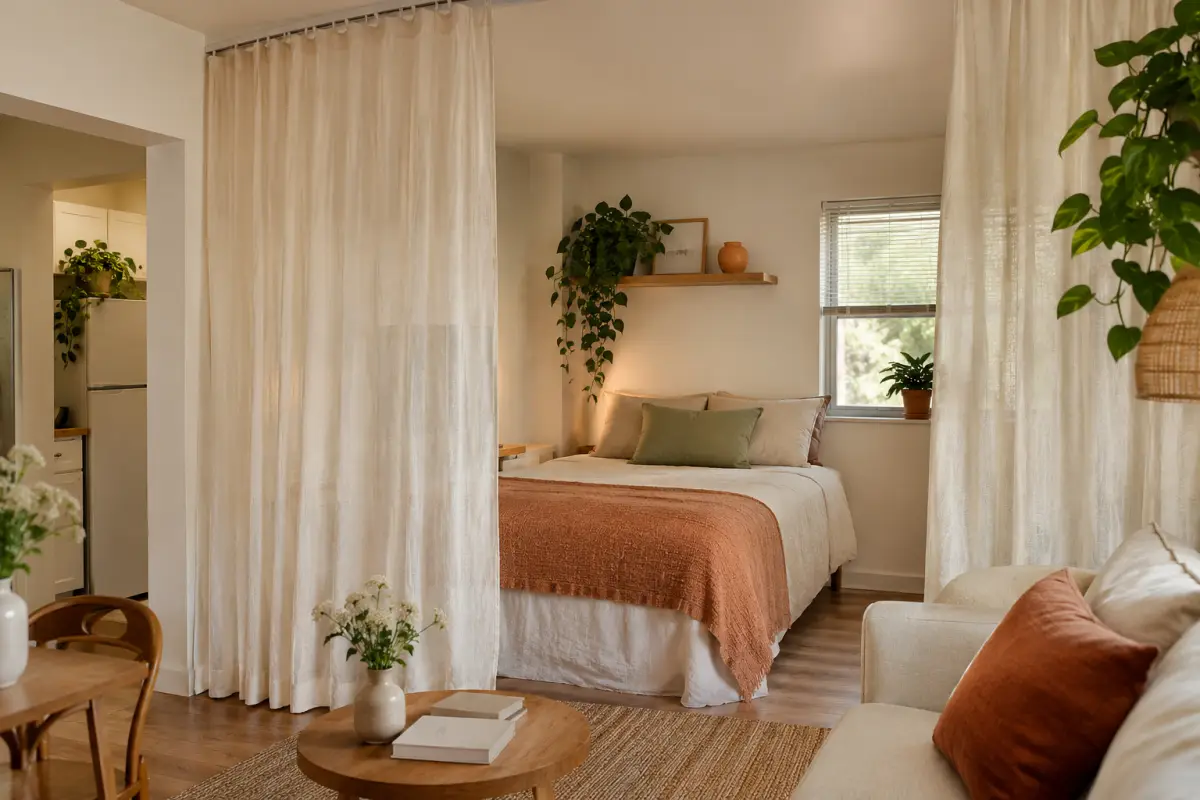
24. Curtain off a sleep nook
In a studio or a shared room, a curtain around the bed creates a separate sleeping zone without a wall. Open, it disappears; closed, it hides the bed from the rest of the room.
A ceiling-mounted track lets the curtain glide on a curve or in an L shape. Use a light, floor-length fabric so the room still feels airy.
How to copy it: a ceiling curtain track screwed into joists, sheer or light linen panels, and tiebacks so it stays neat when open. Renters can check our apartment bedroom decor guide before drilling.
Small bedroom ideas FAQ
How do I make a small bedroom look bigger?
Remove edges and contrast first: paint the trim like the walls, match the curtains to the walls and keep the ceiling light. Then clear the floor by moving storage up the walls and onto the door, and light the ceiling and corners instead of the middle.
What color makes a small bedroom look bigger?
Light tints have higher light reflectance values than darker ones, so they bounce more light around the room. Check the LRV on the chip: a higher number reflects more light. Deep colors are a good choice too if you want the room to feel cozy rather than big. For help choosing a full scheme, see our bedroom color palette guide.
How do I lay out a small bedroom?
Place the bed first, then leave clear paths and put storage on the remaining walls. Our step-by-step guide to small bedroom layout walks through it.
What furniture works best in a small bedroom?
Pieces that store, fold or mount on the wall. Our small bedroom furniture guide sorts them by problem, and there are more small-space posts in our small bedrooms section.
Save this post to your small bedroom board, and pick the two or three ideas that cost least to try first. When you are ready for weekend projects, our DIY ideas for small bedrooms are the next read.
Sources
- Mastering Dark and Moody Interior Design, Sherwin-Williams
- How to Choose Paint Colors Based on Room Direction, Sherwin-Williams
- The Play of Light and Color, Sherwin-Williams
- Purchasing Energy-Efficient Light Bulbs, U.S. Department of Energy, 2013-10-07
- AnchorIt.gov, U.S. Consumer Product Safety Commission (CPSC)