Bedroom Color Palette: A Beginner's Guide to Choosing One That Works in Your Light
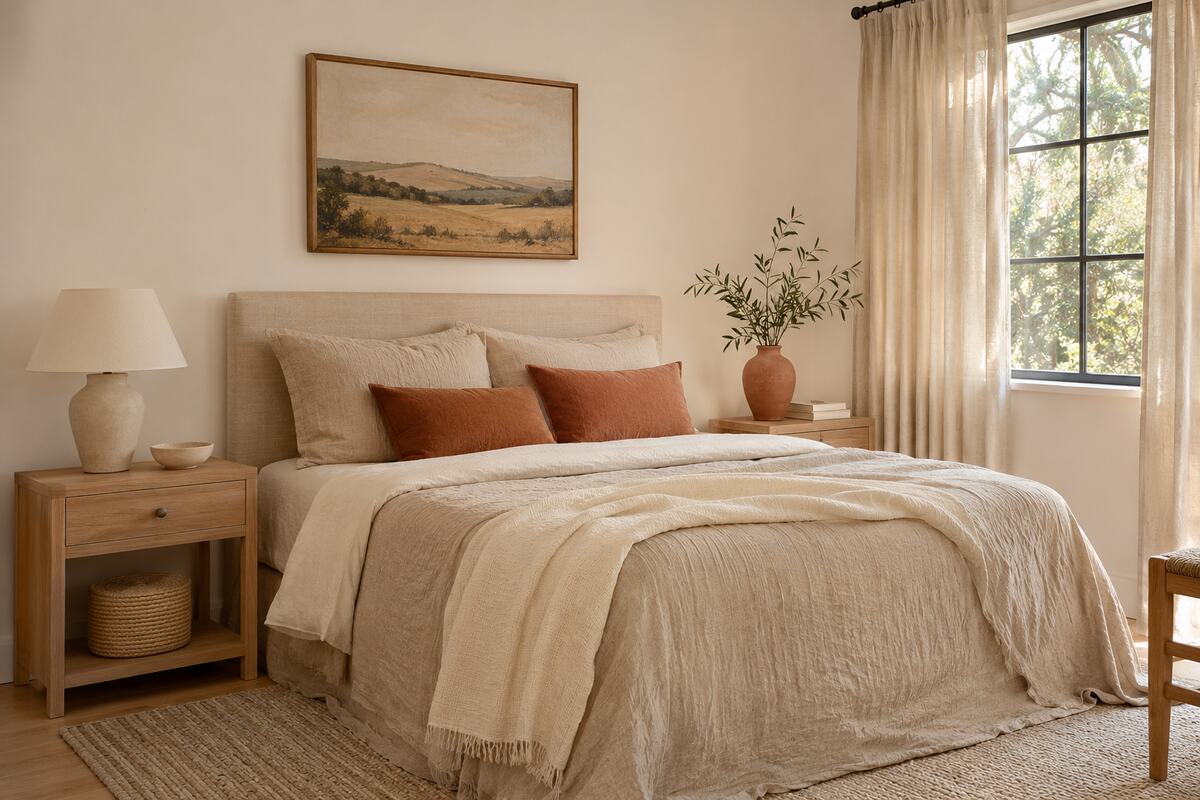
This guide walks you through choosing a bedroom color palette in five steps, from the pieces you already own to the swatch test on your wall. At the end you get six example palettes built from colors the paint makers themselves recommend, so you have a real starting point.
Every rule here comes from Sherwin-Williams, Benjamin Moore and Behr’s own color guides. Read the steps in order the first time; after that, the checklists are enough.
THE FIVE STEPS AT A GLANCE
Keep
List what stays: floor, furniture, bedding.
Read
Spot warm or cool undertones and check LRV.
Face
Find which way the windows face, and check your bulbs.
Split
Share the colors out: main, supporting, accent.
Test
Paint big swatches and watch them all day.
Step 1: Start with what stays in the room
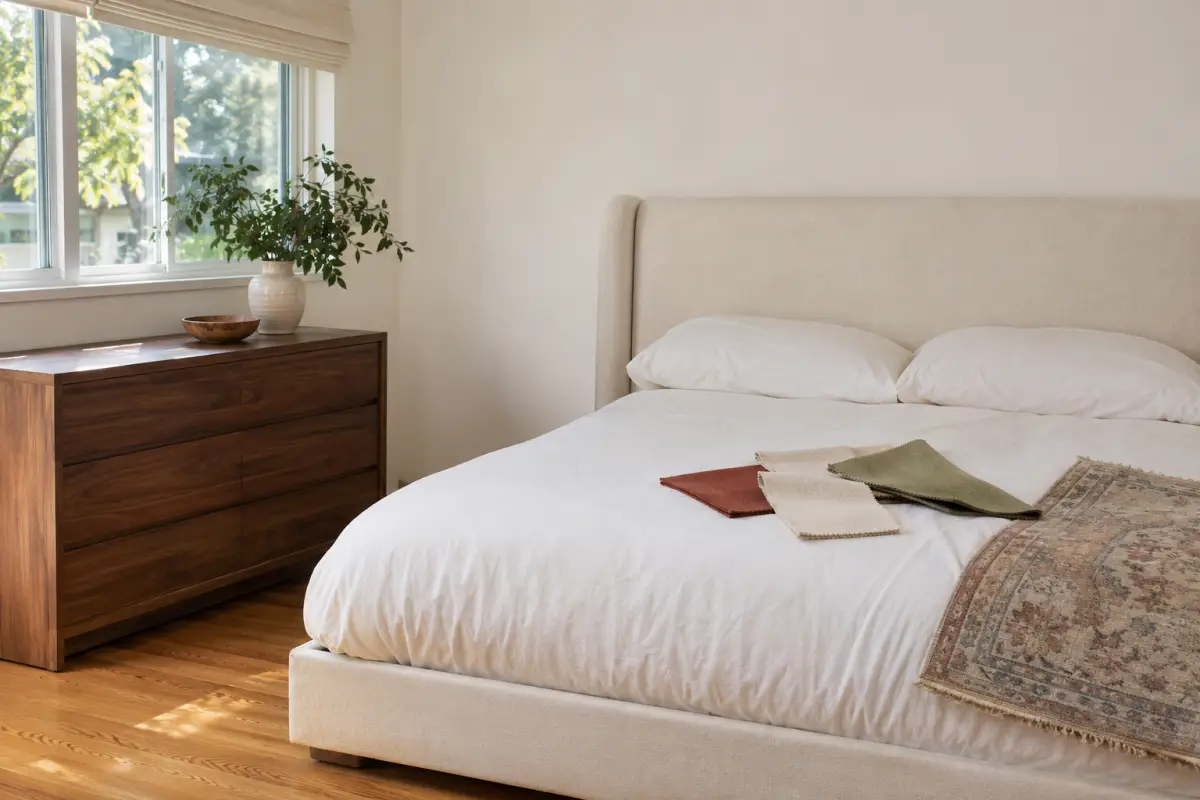
Most bedrooms are not a blank box. The floor, the bed frame, the dresser and maybe a rug you love are staying, and your new colors have to get along with them.
Behr’s advice for picking a neutral palette is to focus on what you already have, such as flooring, furniture and natural light. Sherwin-Williams says the same about furniture: your paint should complement it for a cohesive look.
Lay out what stays and note its color family: honey oak, dark walnut, white, black metal, a patterned rug. Those are fixed points. Everything you choose next has to sit well beside them.
Step 2: Learn two words: undertone and LRV
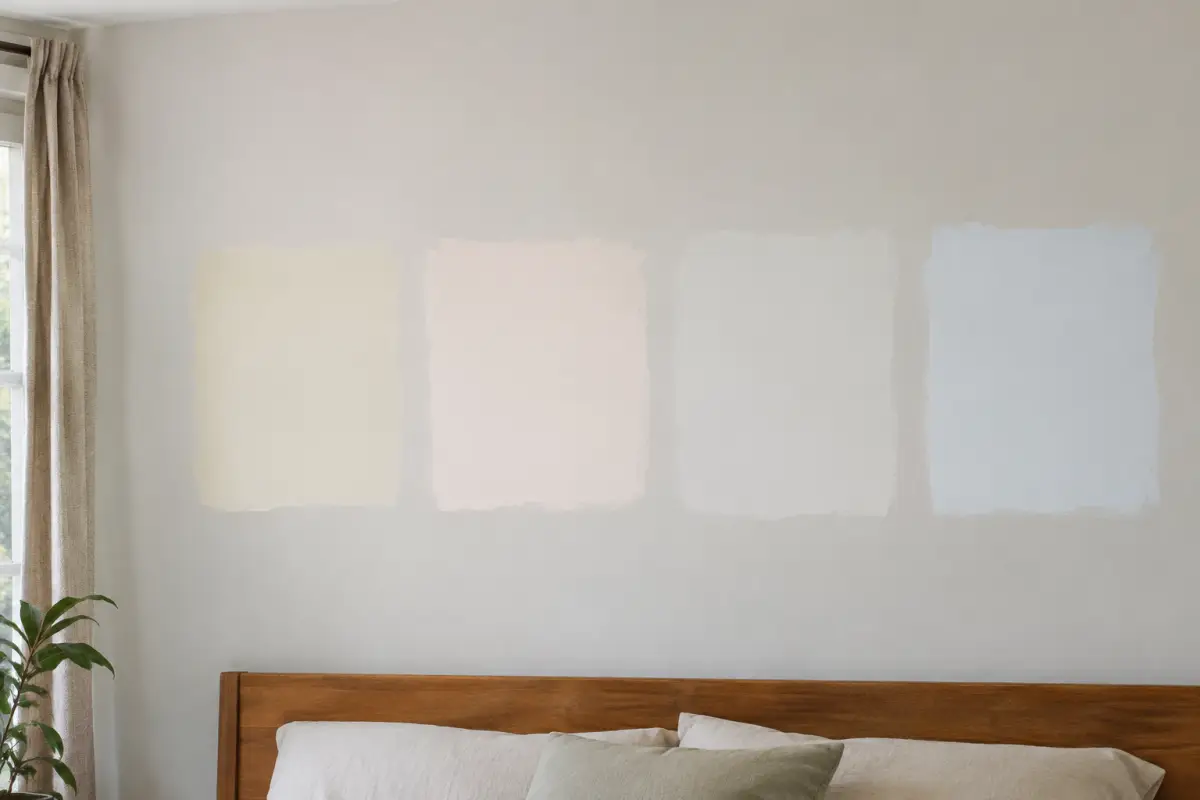
Undertone is the hint of another color inside a paint. Benjamin Moore notes that even neutrals like white and gray lean warmer or cooler depending on their undertones. A “plain” white can lean yellow, pink, gray or blue, and Behr points out those hints often are not obvious on a small chip.
The fastest way to see an undertone is to compare. Benjamin Moore’s trick is never to judge one color in isolation: put a white with a yellow undertone next to a white with a blue undertone and the difference jumps out. Holding a chip against plain white paper also stops your current wall color from fooling you.
LRV (light reflectance value) is a number for how much light a color bounces back. Sherwin-Williams explains that the scale runs from 0 to 100, with zero reflecting no light and 100 reflecting all of it. Higher numbers look lighter on the wall. You can find a Sherwin-Williams color’s LRV by searching its color number on their site and opening the full details.
Step 3: Find which way your bedroom faces
The same paint looks different in a north room and a south room, which is why a color can look perfect in the store and wrong at home. Sherwin-Williams’ way to check: point a compass at the largest windows, and the direction it shows is the room’s orientation. Your phone’s compass app works too.
Then use the table below. It pulls together what Sherwin-Williams and Benjamin Moore say about each direction.
WHAT YOUR WINDOWS MEAN FOR COLOR
North
Least light, cool and muted. Pick warm neutrals or warm undertones and a higher LRV; skip cool undertones.
South
Warm light most of the day. Most colors work; avoid ones that are too warm. Greens, blues and violets balance the glow.
East or west
Warm in the morning and cool at night, or the reverse. A neutral, or a mix of warm and cool, keeps the room balanced.
North-facing bedrooms
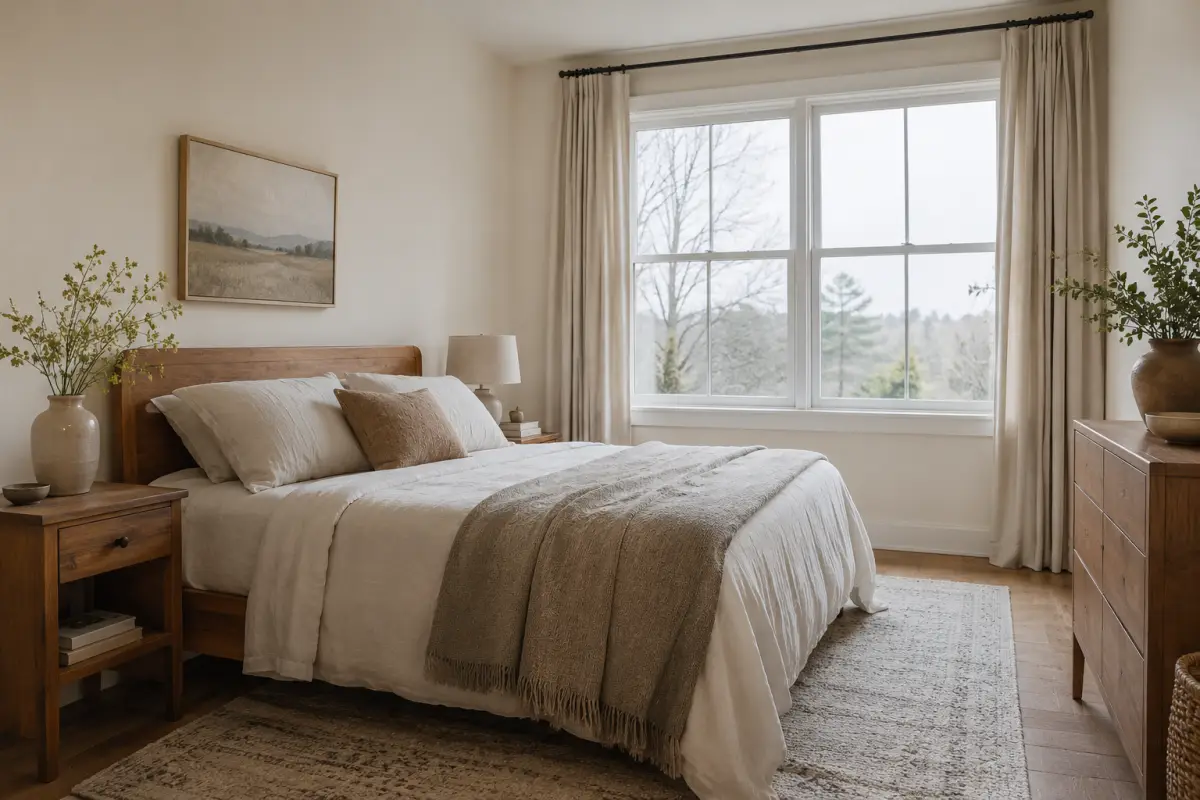
Sherwin-Williams says north-facing rooms get the least light through the day, and that cool undertones make them look colder, so choose a warm neutral or a color with warm undertones instead. Their tip is to look for colors with a higher LRV in these rooms.
Benjamin Moore describes northern light as muted and toned down. Their fix is a white with a hint of yellow, or sunny yellows, peachy pinks and orange-tinged hues. Want a dark, dramatic wall anyway? Still choose one with warm undertones.
South-facing bedrooms
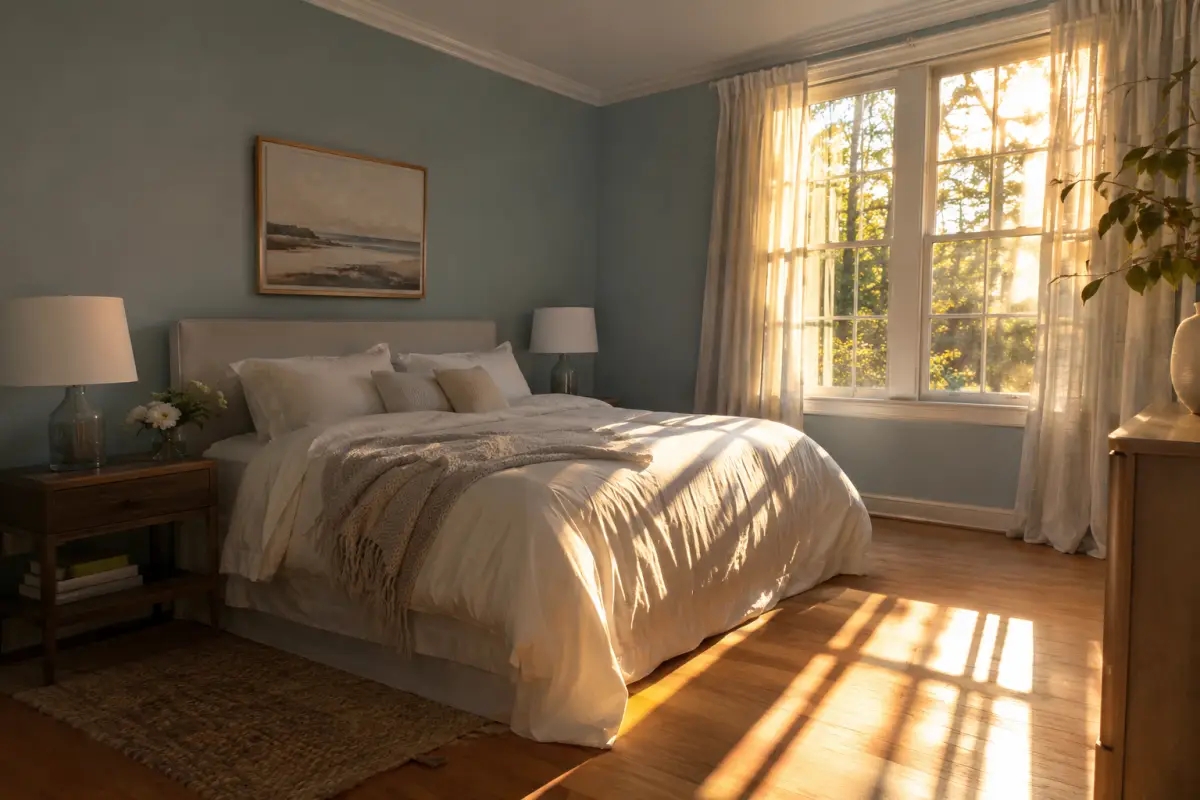
South rooms are the easy ones. Sherwin-Williams says they get consistent warm light, so most colors will work, but a color that is already very warm can look too bold at certain hours.
Benjamin Moore suggests greens, blues and violets to balance the warm golden light, and slightly darker hues so colors do not wash out. For whites, they recommend one with a hint of gray or blue to counter the amber cast.
East- and west-facing bedrooms
East rooms get warm light in the morning and cool light toward evening, and west rooms are the reverse. For a bedroom used at all hours, Sherwin-Williams suggests a neutral, or a mix of warm and cool tones that balance each other.
Step 4: Check your bulbs, too
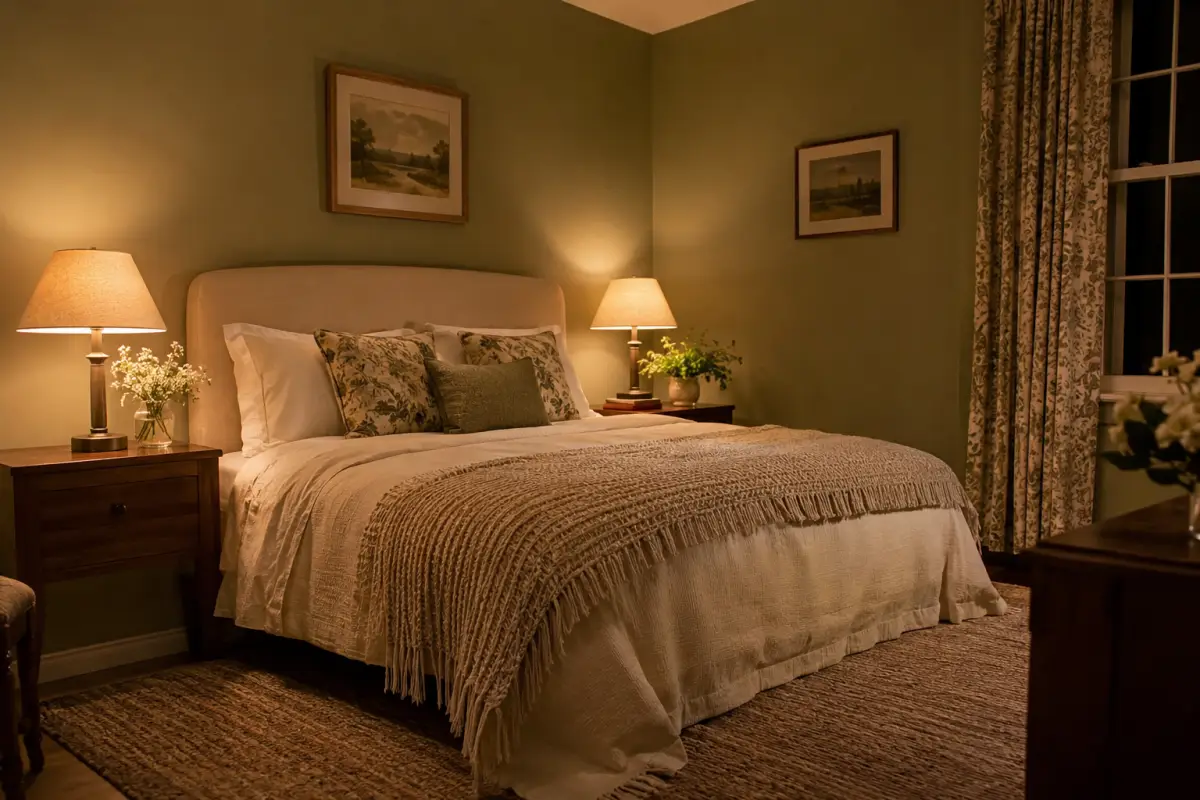
You see a bedroom mostly at night, so lamp light matters as much as sunlight. Benjamin Moore says bulbs over 3500K tend to cast cooler light, and the lower the number, the warmer the glow.
Sherwin-Williams has a simple rule for rooms that lean on lamps: with warm bulbs, choose colors as you would for a south-facing room; with white or cool bulbs, choose as you would for a north-facing room. Our guide to layered bedroom lighting covers which lamps go where.
Step 5: Split your palette with the 60-30-10 rule
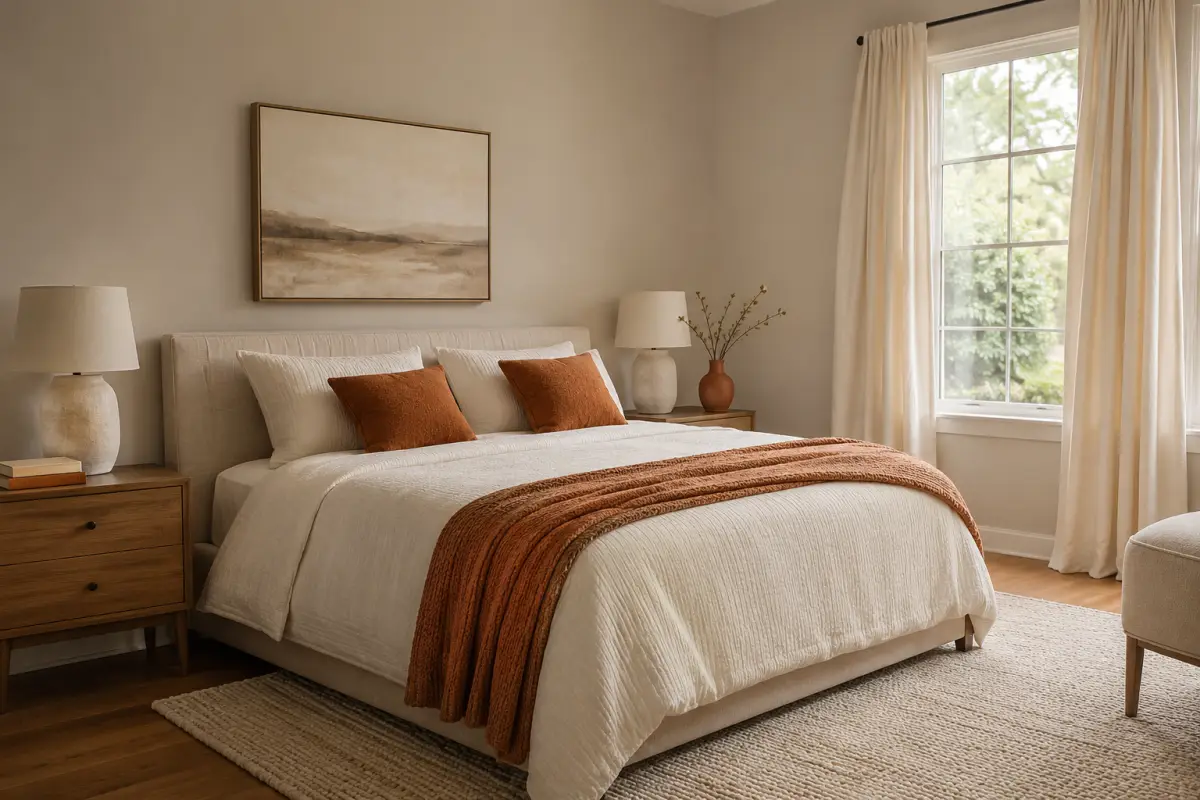
A palette is more than a wall color. Behr and Sherwin-Williams both use the 60-30-10 rule to share colors out: 60 percent main color, 30 percent secondary, 10 percent accent. Sherwin-Williams puts it as using the second color half as much as the main one, then finishing with small accents.
Here is how that maps onto a bedroom, using Behr’s own descriptions of each part.
60-30-10 IN A BEDROOM
60% main
Walls and large furniture: the backdrop.
30% secondary
Trim, bedding, an accent wall or big pieces.
10% accent
Pillows, lamps, art, a rug.
Treat it as a guide, not math. The point is that one color clearly leads, one supports it, and a little contrast keeps the room from looking flat. Bedding is the easiest place for your secondary color, and our bedding ideas show plenty of ways to layer it.
Pick a palette type that suits you
Once you know your main color, Sherwin-Williams describes four ways to build the rest of the bedroom color scheme around it:
- Monochromatic: one color in lighter and darker versions. Sherwin-Williams says building off a single color can make a room seem larger. A good pick for small bedrooms.
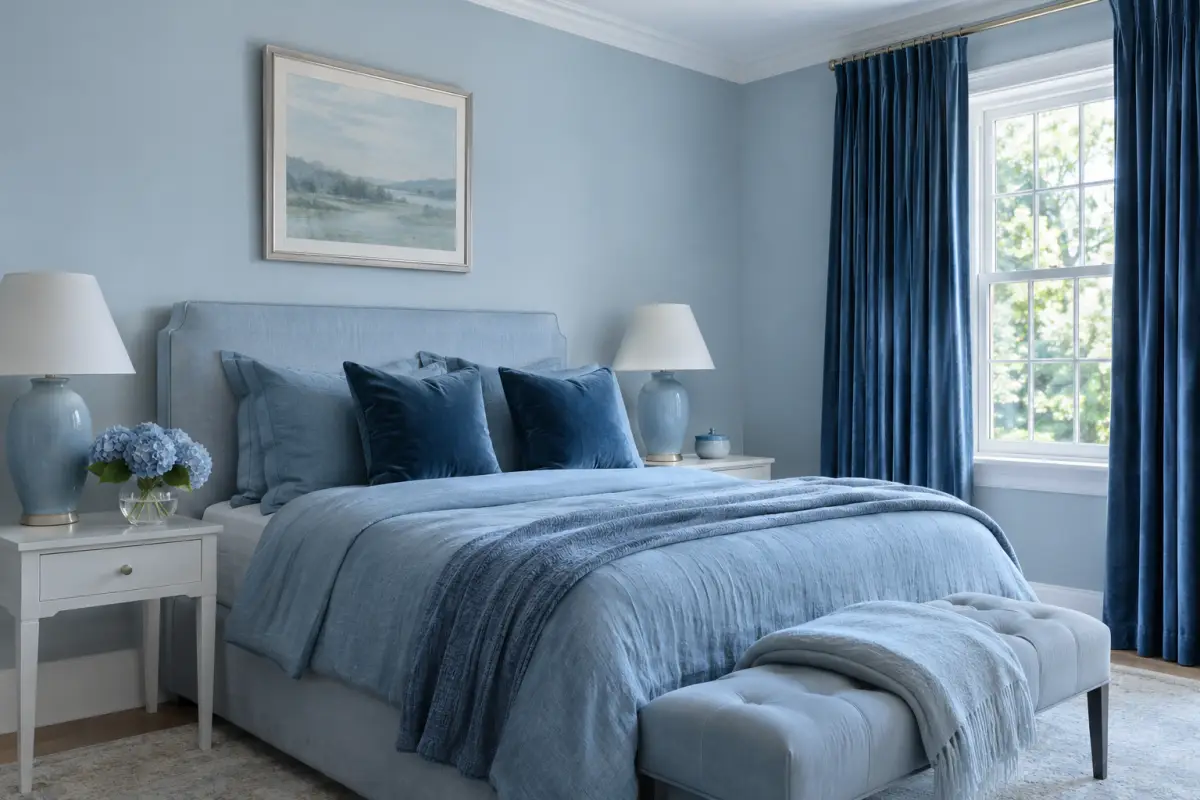
- Analogous (side by side): colors that sit next to each other on the color wheel, such as blue and green. Calm and easy.
- Complementary: opposites on the wheel, such as blue and orange. High contrast, so keep the bold one small in a bedroom.
- Split-complementary: your main color plus the two colors beside its opposite. Contrast with less shouting.
Picked a color family? Behr’s next step is to narrow it to one shade: a bright blue, a muted blue, a dusty blue or a gray blue are very different rooms.
Test swatches the right way
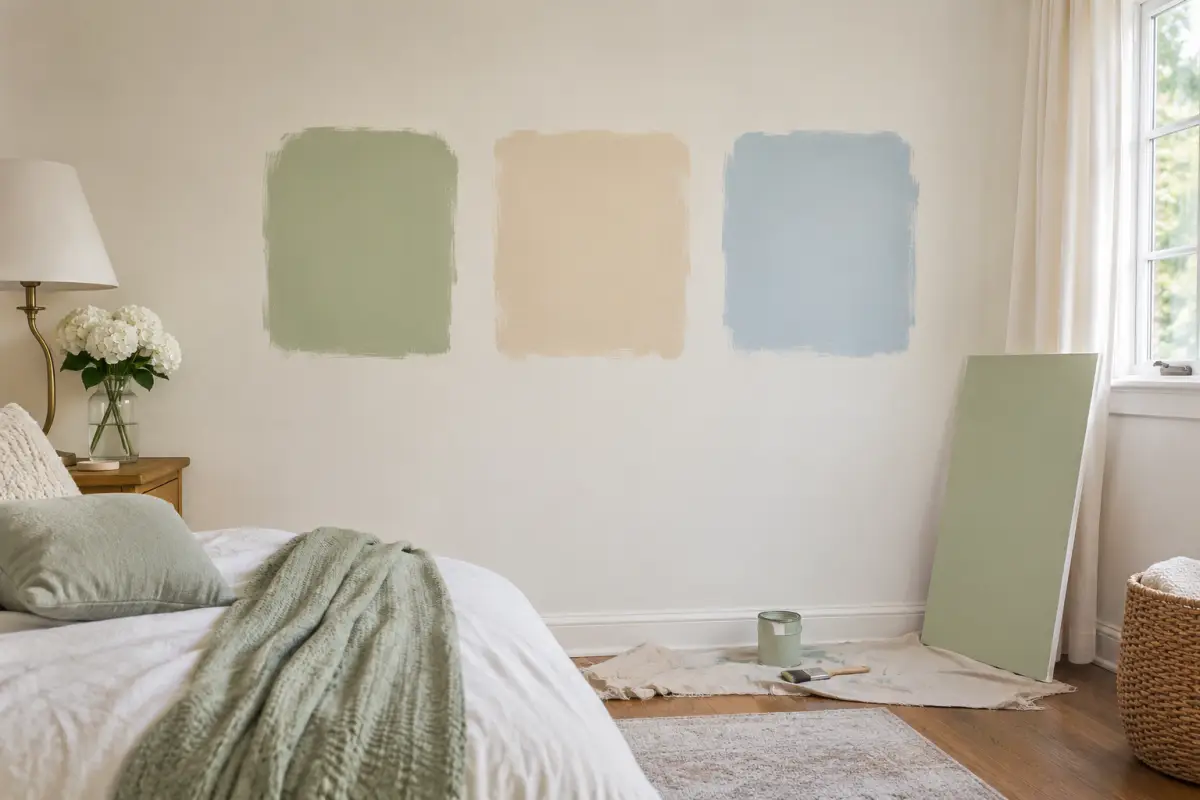
Never choose from a tiny chip. Behr’s point is that larger swatches show how the color will really look, and white undertones in particular only show up at that size.
SWATCH TEST CHECKLIST
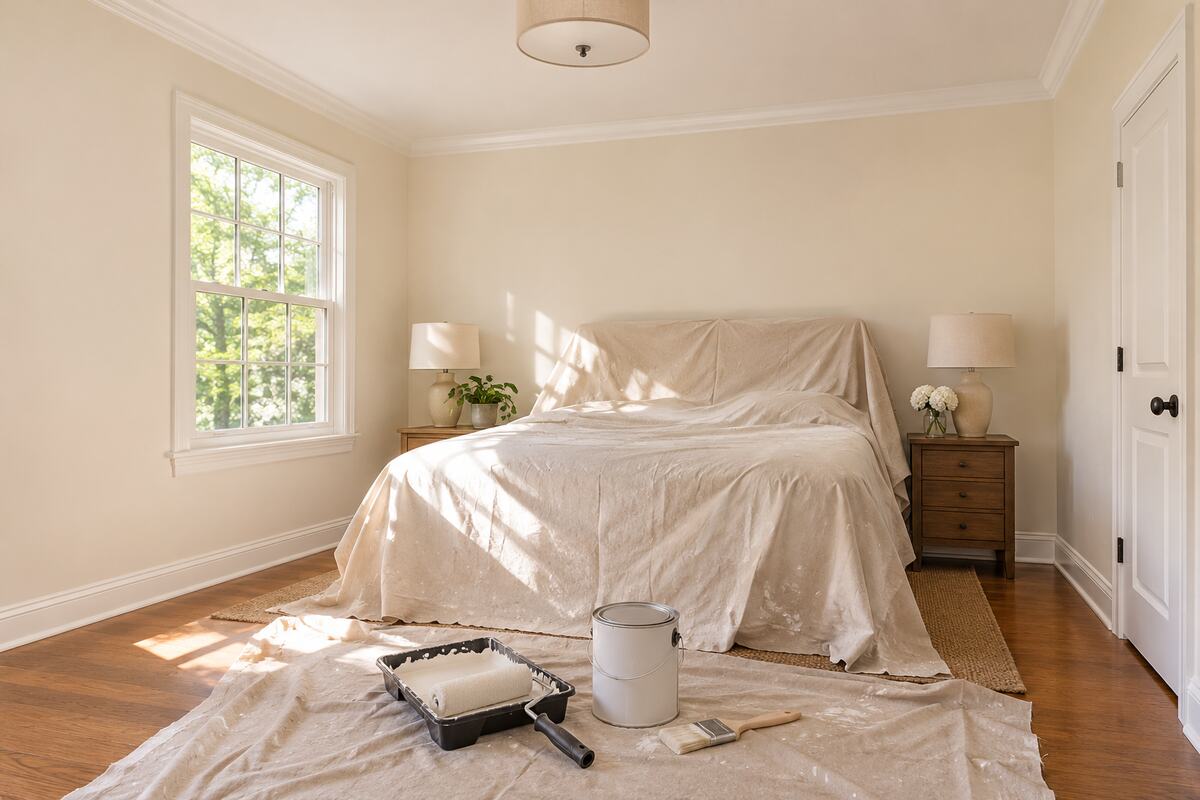
- An 8 oz Benjamin Moore sample covers about one 2 x 2 foot area in two coats.
- Brush on at least two coats before you judge the color.
- Leave space between swatches so they do not blur together.
- Paint one swatch in direct sun and one in indirect light.
- Paint one near a lamp to see it at night.
- Or paint a white foam board and carry it from wall to wall.
- Look from morning to evening, in daylight and lamp light.
Benjamin Moore suggests brushing straight onto the wall when your current wall is white or a light neutral, so the old color does not compete. Peel-and-stick samples are another option; Sherwin-Williams lists free 2 by 3 inch chips and 8 by 8 inch peel-and-stick samples. Check the price on their site, since it can change.
Bedroom color ideas: 6 example palettes
Each bedroom color palette below uses paint colors named by the paint makers in the guides we cite. Use them as starting points, then run the swatch test in your own light.
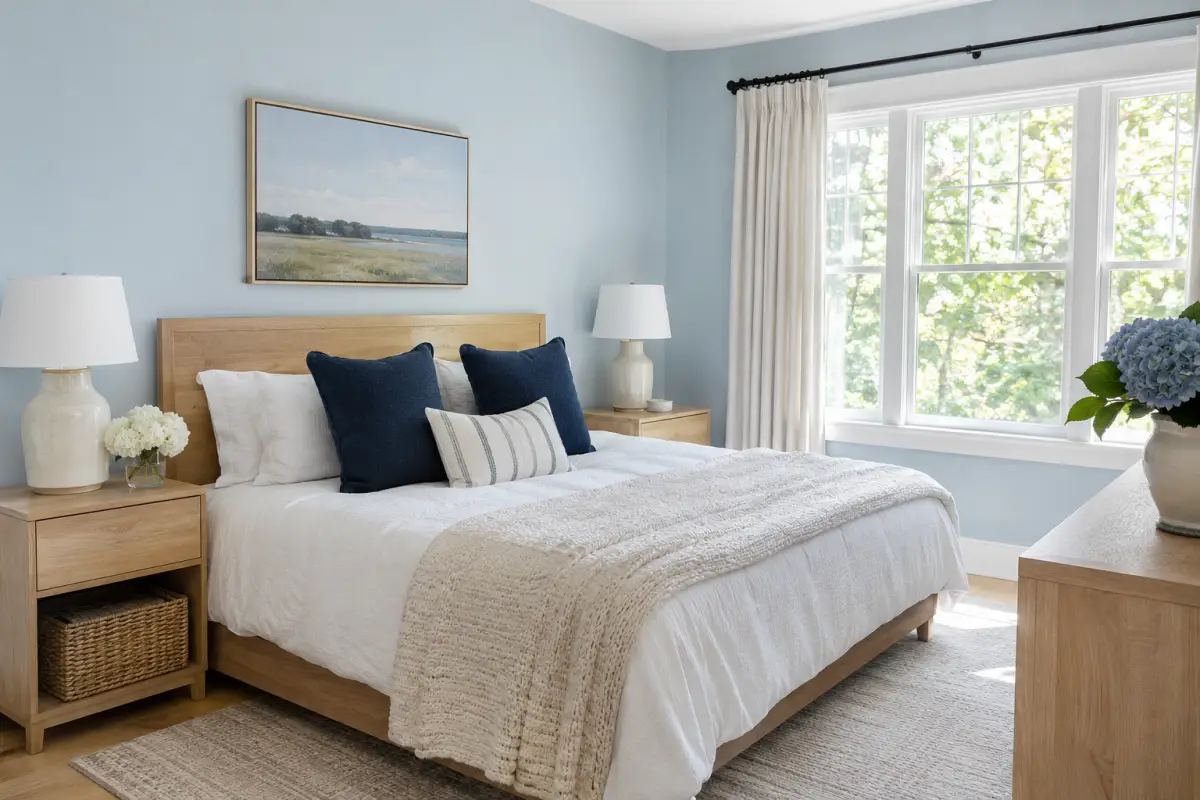
1. Light blue and white (south, east or west rooms)
Sherwin-Williams calls light blues like Sleepy Blue SW 6225 calming and says they work well in most spaces. Use it as the main wall color, white bedding and light wood as the supporting colors, and navy pillows as the accent.
If your bedroom faces north, test it beside a warmer option first, since Sherwin-Williams warns cool undertones make north rooms look colder.
2. Light gray with a navy accent wall
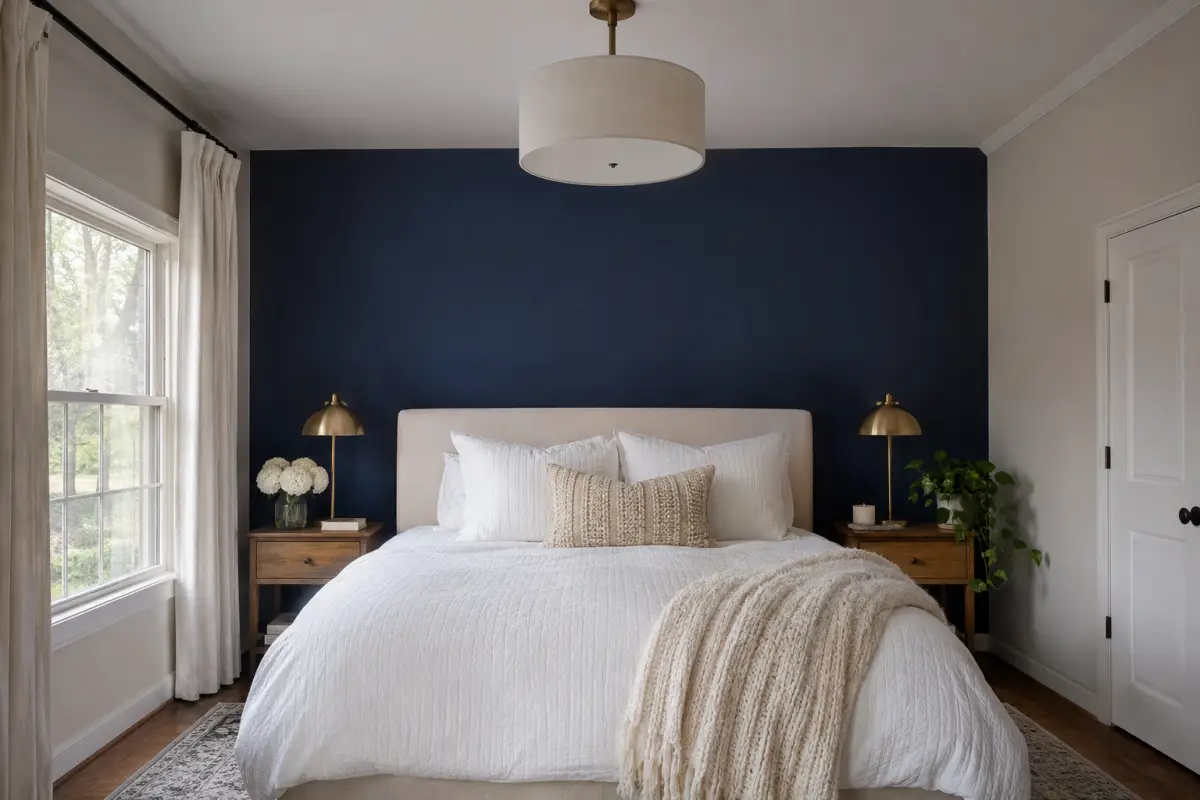
This is Sherwin-Williams’ own two-color example: Light French Gray SW 0055 on three walls and a bold blue, Naval SW 6244, on the accent wall. Put the navy behind the bed so it frames the headboard.
Sherwin-Williams notes that one wall color everywhere looks consistent, while an accent wall adds visual interest. Add brass or warm wood as the small accent.
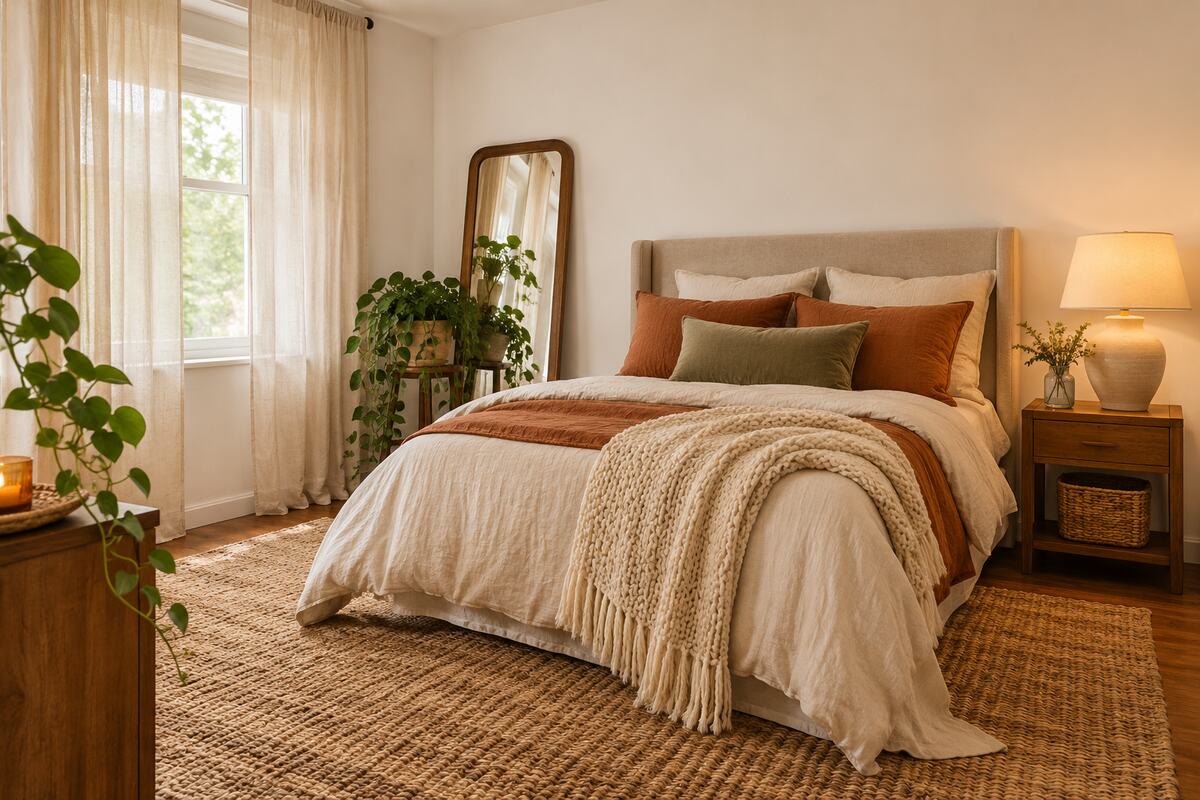
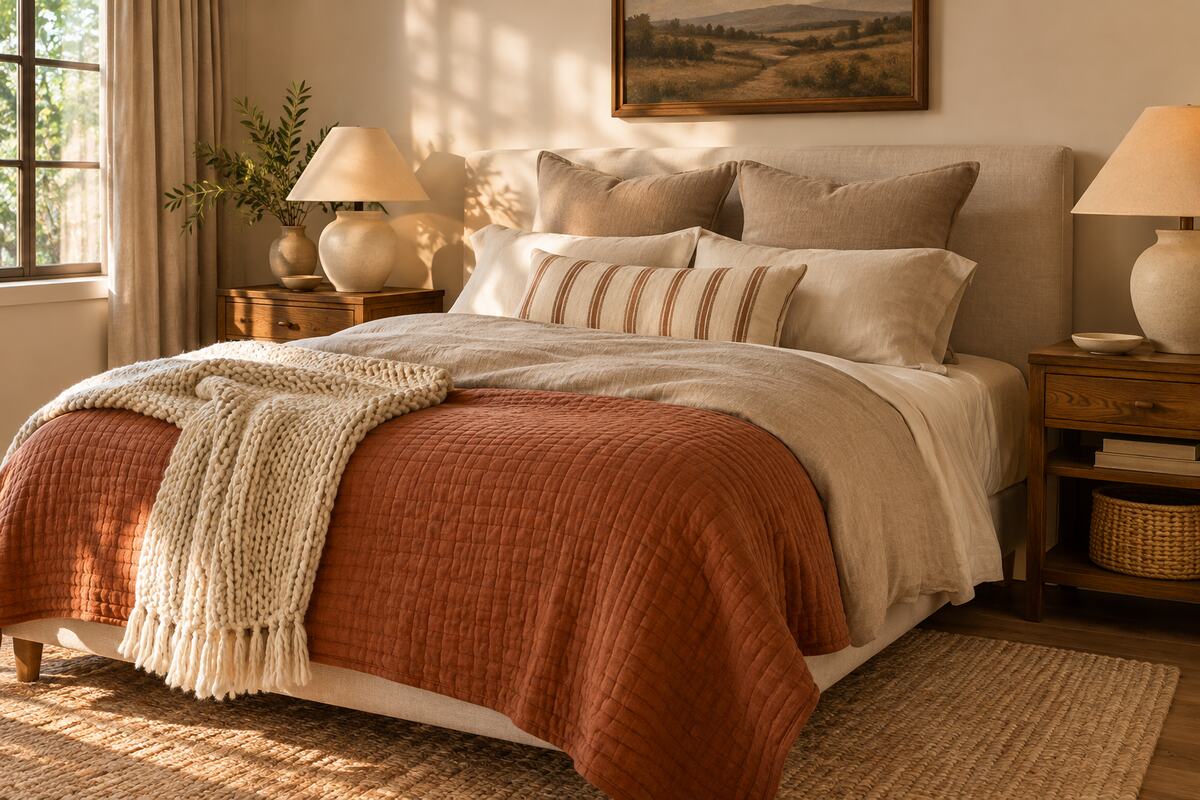
3. Warm off-white and terra-cotta (north rooms)
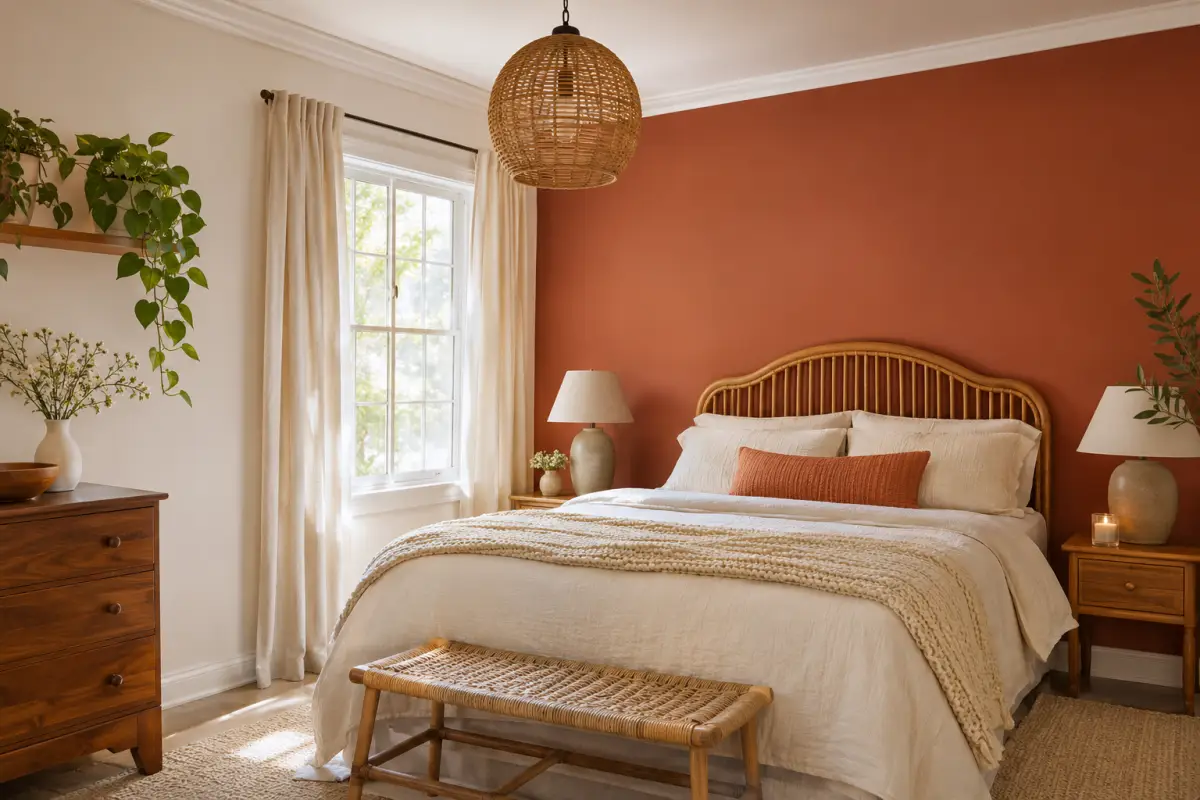
Benjamin Moore’s experts name Swiss Coffee OC-45 for its versatile undertones across exposures. Pair it with the warm terra-cotta of Potters Clay 1221, which they like for accent walls in darker spaces.
For trim and ceiling in a north room, they suggest White Dove OC-17. Finish with cream bedding and rattan or wood.
4. Deep and moody (sunny south rooms)
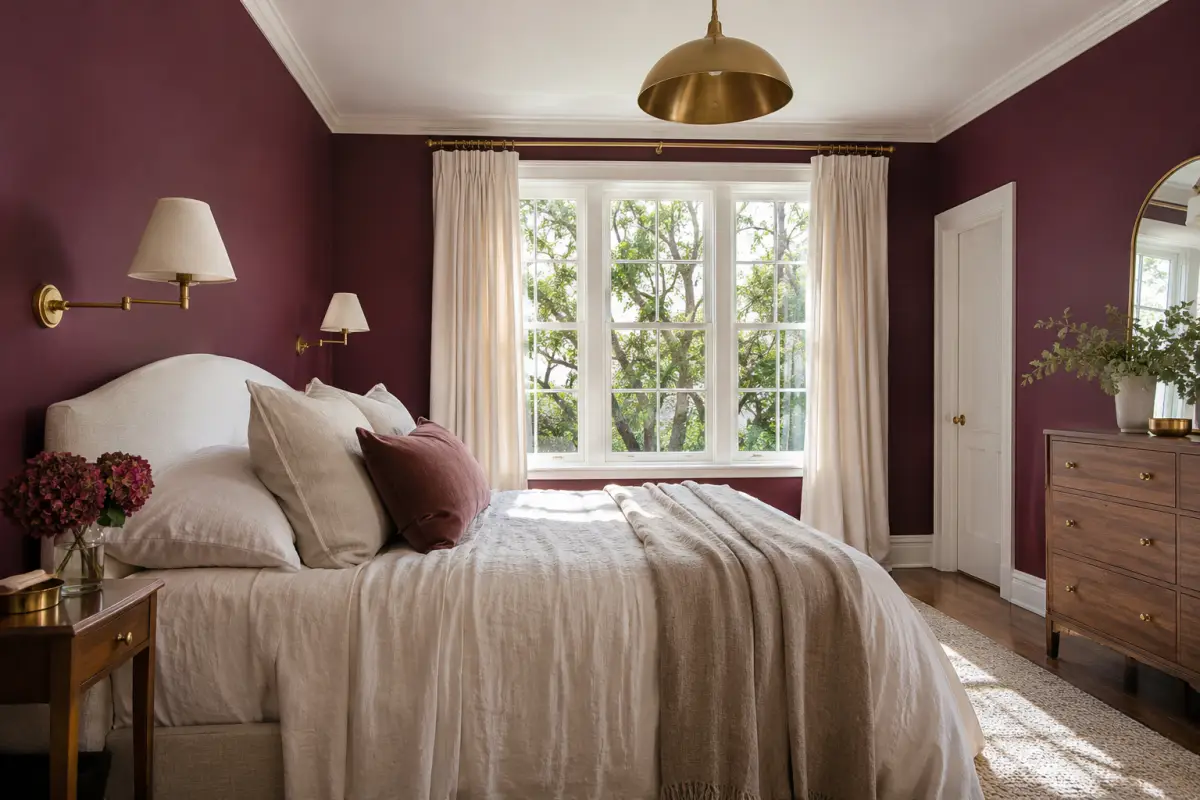
Benjamin Moore says a south room’s extra light makes it ideal for darker colors like Coastline AF-570, Mulberry Wine 1251 and Evening Dove 2128-30. Pair the walls with Chantilly Lace OC-65 on the trim and ceiling, their pick for south rooms.
Keep the bedding light so the bed stands out, and let brass or gold be the accent. A north room can go dark too, as long as the color has warm undertones.
5. Behr’s light gray, white and wood
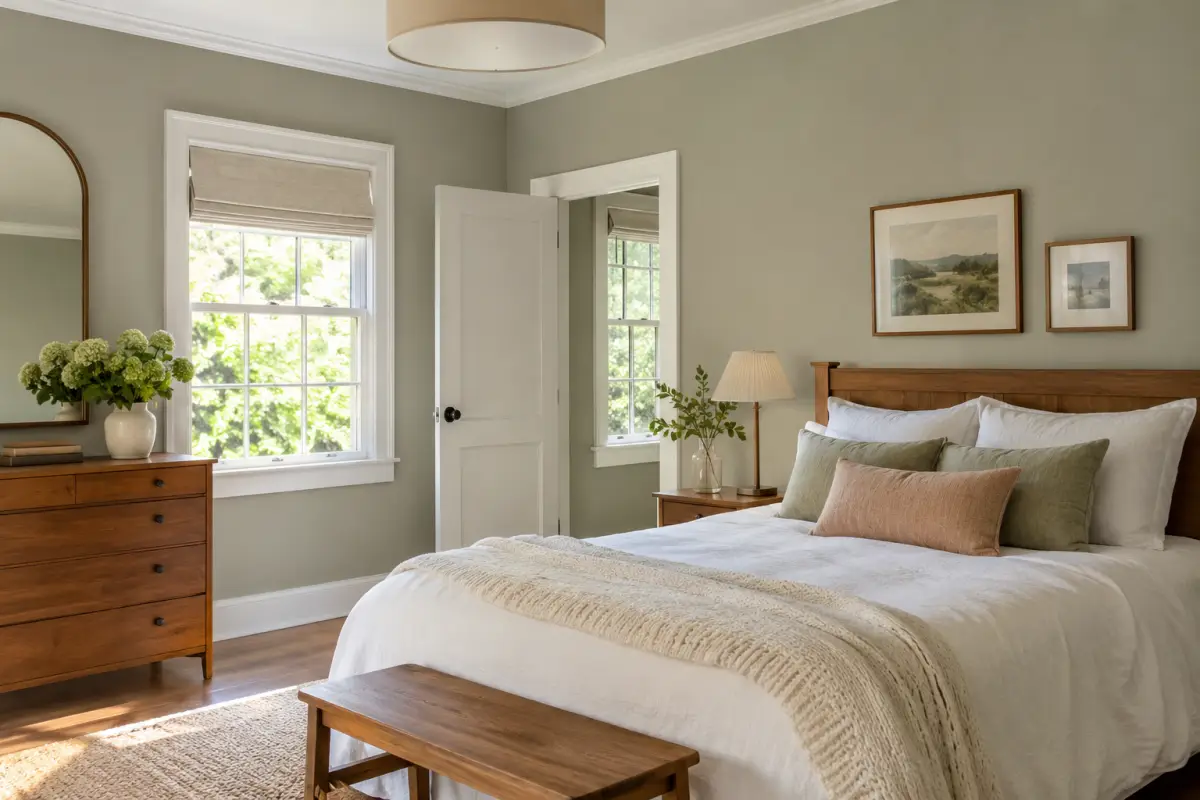
Behr builds a ready-made 60-30-10 palette around Barnwood Gray, a light gray with a subtle wood-inspired warmth and hint of green. Smoky White is the secondary color, and Behr says that secondary shade works on trim, bedding or adjoining spaces in a bedroom.
The accent share is warm wood furniture and a few subtle pops of color. If you are torn between gray and beige, our grey vs beige bedroom comparison helps you decide.
6. Warm beige for dark wood furniture
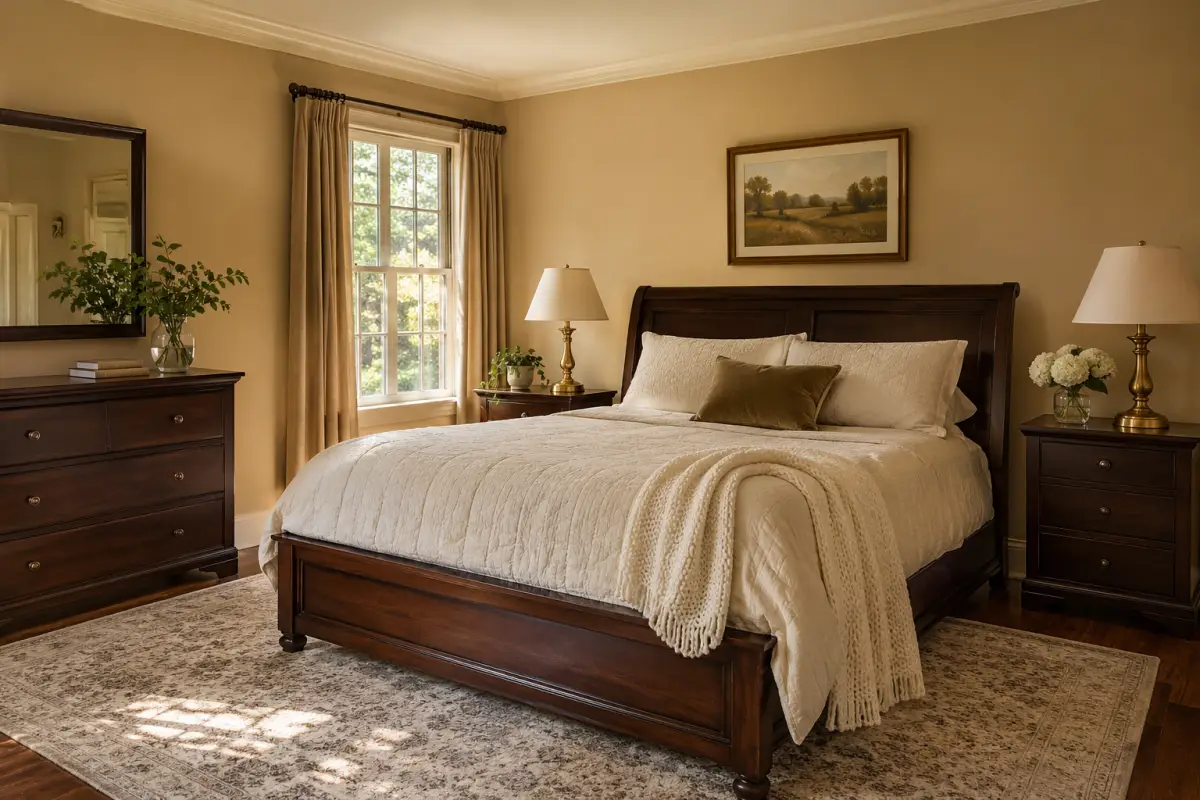
Dark furniture stands out against lighter walls, and for dark brown pieces Sherwin-Williams points to warm neutrals like Accessible Beige SW 7036. The furniture and cream bedding are the supporting colors, and a brass lamp or a plant is the accent.
Room on the small side? Sherwin-Williams says lighter shades like Alabaster SW 7008 open up small spaces. Our small bedroom ideas have more space-stretching tricks.
Chose your colors? What to do next
Picking is only half the job. Our step-by-step guide on how to paint a bedroom covers prep, primer, coats and drying time, so the color you tested is the color you get.
For more looks to borrow, browse all our bedroom color ideas or the full list of bedroom ideas by style, size and budget.
Bedroom color palette FAQ
What is the best color for a bedroom?
There is no single best color. Sherwin-Williams calls blues, greens and neutral grays calming, and Behr names blues and greens as top choices for a restful bedroom. Those are design picks, not sleep research, so choose the color you like in your own light.
What color should I paint my bedroom?
Start from what stays in the room, then match the paint to your light: warm undertones for a north room, and almost anything (but not too warm) for a south room. Narrow it to two or three options and test them as big swatches before you buy.
What is the 60-30-10 rule for a bedroom?
It shares colors out as 60 percent main color, 30 percent secondary and 10 percent accent. In a bedroom that is usually walls, then bedding or trim, then pillows, lamps and art.
Should all my bedroom walls be the same color?
Either works. Sherwin-Williams says one color on every wall looks consistent, while an accent wall adds visual interest.
What color is best for a small bedroom?
Sherwin-Williams says light, soft colors like pastels or neutrals can make a small room look larger. A monochromatic palette helps too.
Save this guide to your bedroom board so the swatch checklist is handy on paint day, then read our how to paint a bedroom guide when you are ready to start.
Sources
- How Can I Choose Color for My Space?, Colorfully BEHR (Behr Paint), 2026-02-11
- How to Choose Bedroom Colors, Sherwin-Williams
- Warm and Cool Colors, Benjamin Moore
- Utilizing Paint Samples: How to Sample Paint Colors Without Painting Your Walls, Colorfully BEHR (Behr Paint), 2026-02-26
- How to Use Paint Color Samples, Benjamin Moore
- Choosing Color Based on Room Orientation, Sherwin-Williams
- Best Paint Colors for North-Facing Rooms, Benjamin Moore
- Best Paint Colors for South-Facing Rooms, Benjamin Moore
- Tried and True Color Combinations: The 60-30-10 Rule, Colorfully BEHR (Behr Paint), 2026-03-04
- 4 Ways to Create a Successful Color Palette, Sherwin-Williams