18 Bedroom Mirror Ideas That Make the Room Brighter
These bedroom mirror ideas show you where a mirror does the most for light, which size and shape to buy, and how to lean or hang it so it stays put. Each idea ends with a short note on what to look for before you order.
Placement comes first, because the same mirror can brighten a room or reflect a blank wall depending on where it goes. Sizes, shapes and the leaning-versus-hung question follow, and the last section covers safe hanging, including options for renters.
Where to put a bedroom mirror
Start with the wall, then pick the mirror. Each of these spots does a different job, from bouncing daylight to giving you a place to get ready.
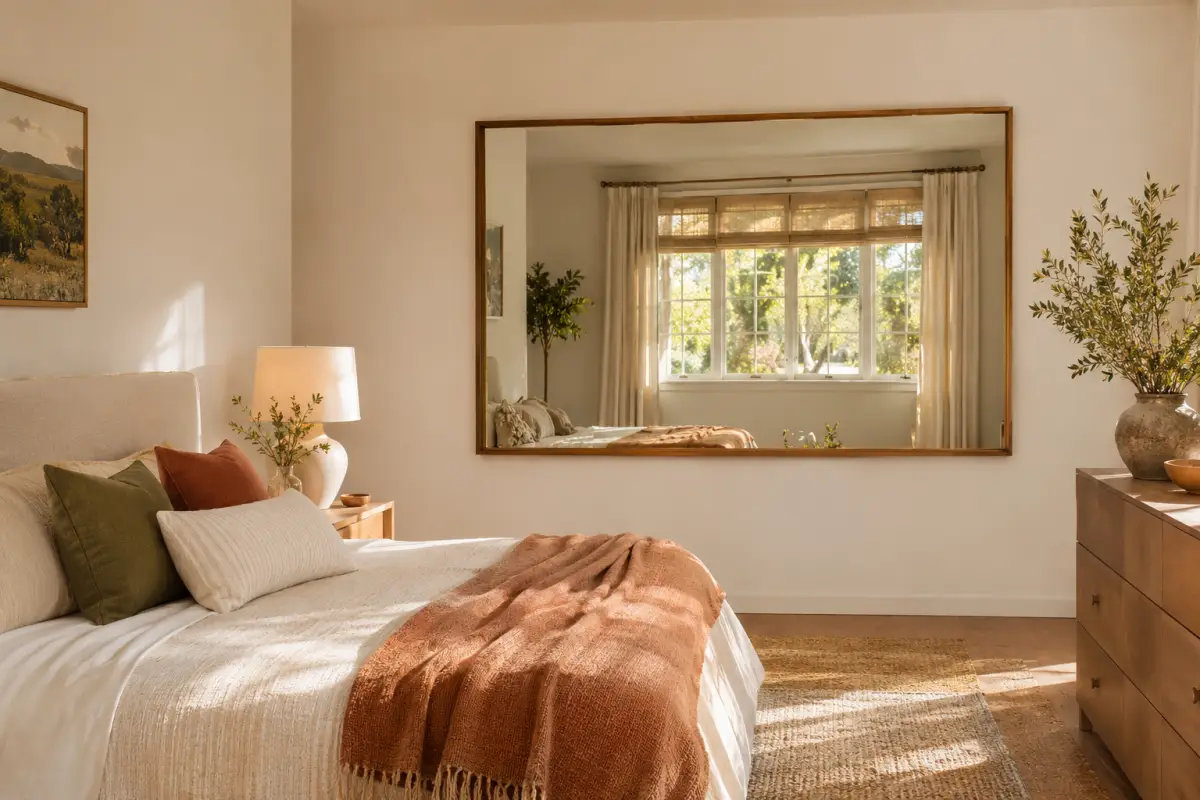
1. Across from the window
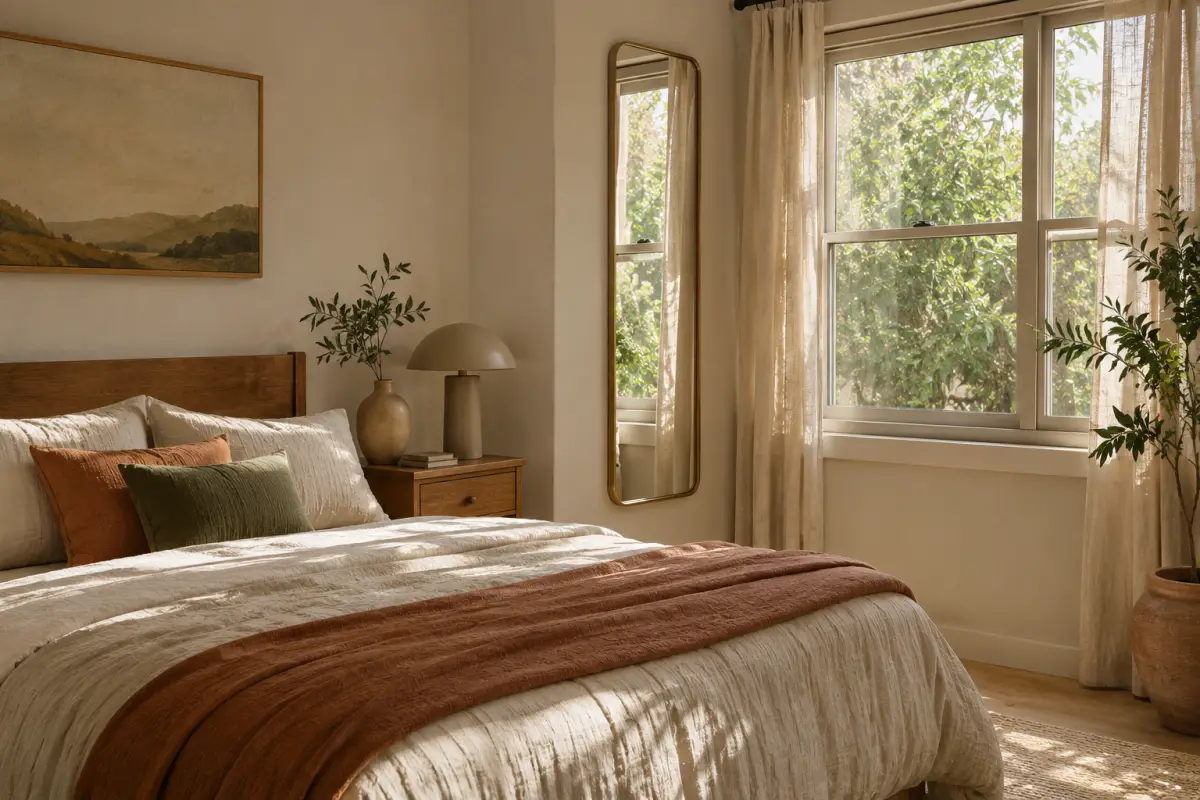
A mirror on the wall that faces the window catches daylight and sends it back into the room. Castlery’s wall mirror guide suggests placing a mirror opposite or near a window to reflect natural light and make the room feel brighter and more open.
Before you drill, stand where you usually sit or lie and look at what the mirror will show. Bouclair recommends checking the reflection from the room’s main seating spot and aiming for a window, art or plants instead of a blank wall or clutter.
Look for: the widest mirror the wall can hold, a thin frame so more of it is glass, and a view outside worth repeating.
2. Beside the window when the bed faces it
If the wall across from the window is behind your headboard or right in front of the bed, move the mirror to a side wall instead. Bouclair’s mirror buying guide warns against putting a bedroom mirror where it reflects harsh morning sun straight onto the bed.
The same guide says a mirror opposite or next to a window brightens a room, and calls it the best trick for dark north-facing spaces. A side wall still catches the light without aiming it at your pillow.
Look for: a tall, narrow mirror that fits the strip of wall beside the window frame.
3. Above the dresser
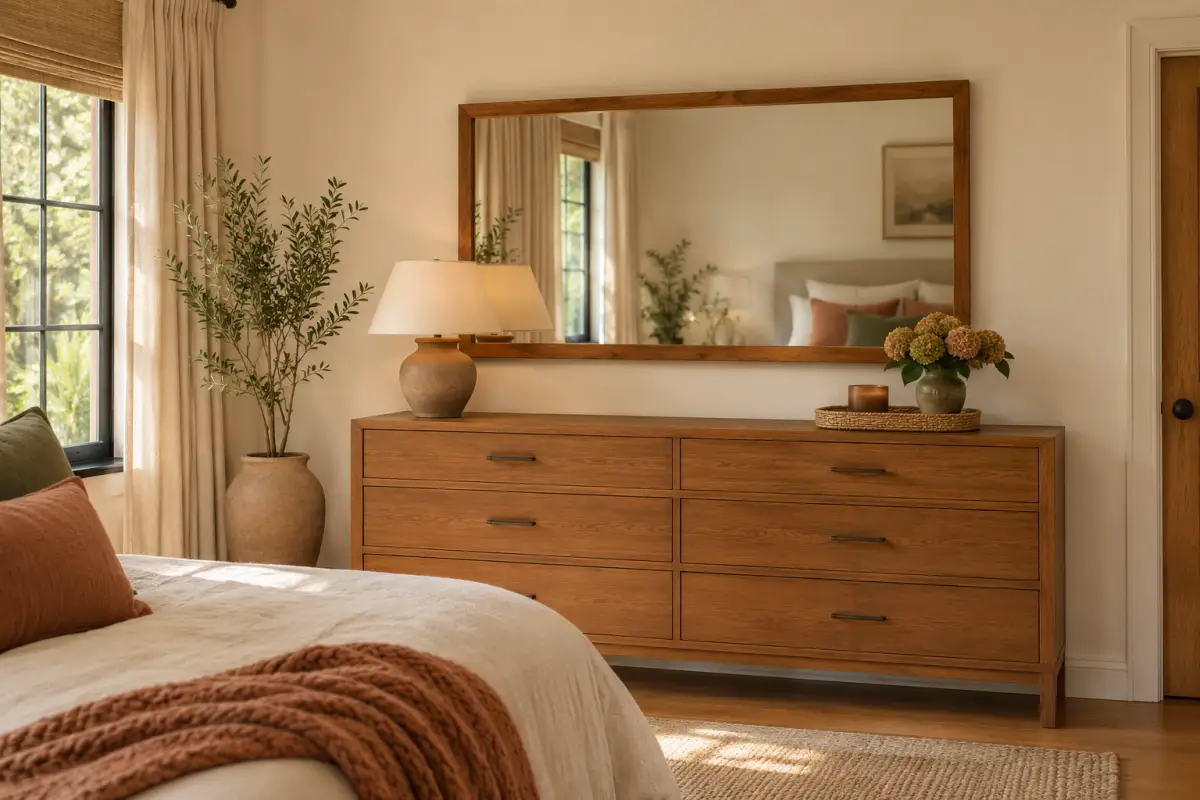
The dresser is the classic bedroom mirror spot because it gives the mirror a job and a base. Ferguson’s mirror buying guide sizes the mirror at the dresser’s width or about two-thirds to three-quarters of it. Its example: a 6-foot buffet takes a 4-foot-wide mirror.
Keep the gap small so the two pieces read as one. Pottery Barn’s art hanging guide keeps 4 to 6 inches between furniture and the bottom of a frame, and Bouclair suggests 6 to 8 inches over a console.
Sizing a mirror over a dresser
Width
Equal to the dresser, or about two-thirds to three-quarters of its width.
Gap above the top
4 to 6 inches (Pottery Barn) or 6 to 8 inches (Bouclair).
Shape
Rectangles sit naturally over dressers; round softens straight lines.
Look for: a mirror a little narrower than the dresser, with hanging hardware already on the back.
4. Above the bed, kept light
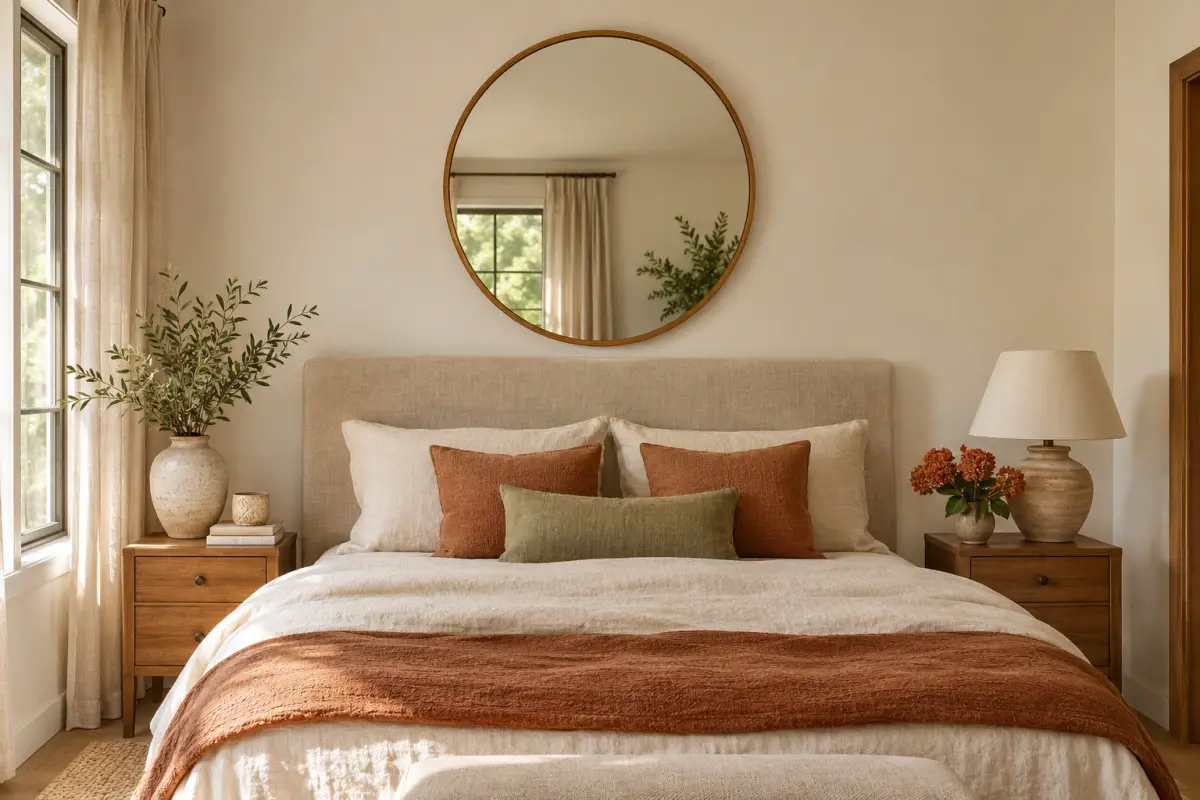
A mirror over the headboard brightens the darkest wall in many bedrooms, but it hangs over your head, so weight and hardware matter more here. Home Depot’s heavy mirror guide says the mirror’s weight decides the anchors and hardware, and suggests checking the box or setting the mirror on a bathroom scale.
The same guide says D-rings offer some of the best security for heavy pieces and hold the mirror snug to the wall. For spacing, Bouclair hangs pieces 6 to 8 inches above a headboard, and Castlery says a mirror behind a bed should respect the scale of the frame.
Look for: a lighter framed mirror with D-rings on the back, its weight printed on the box, narrower than the headboard.
5. A pair over the nightstands
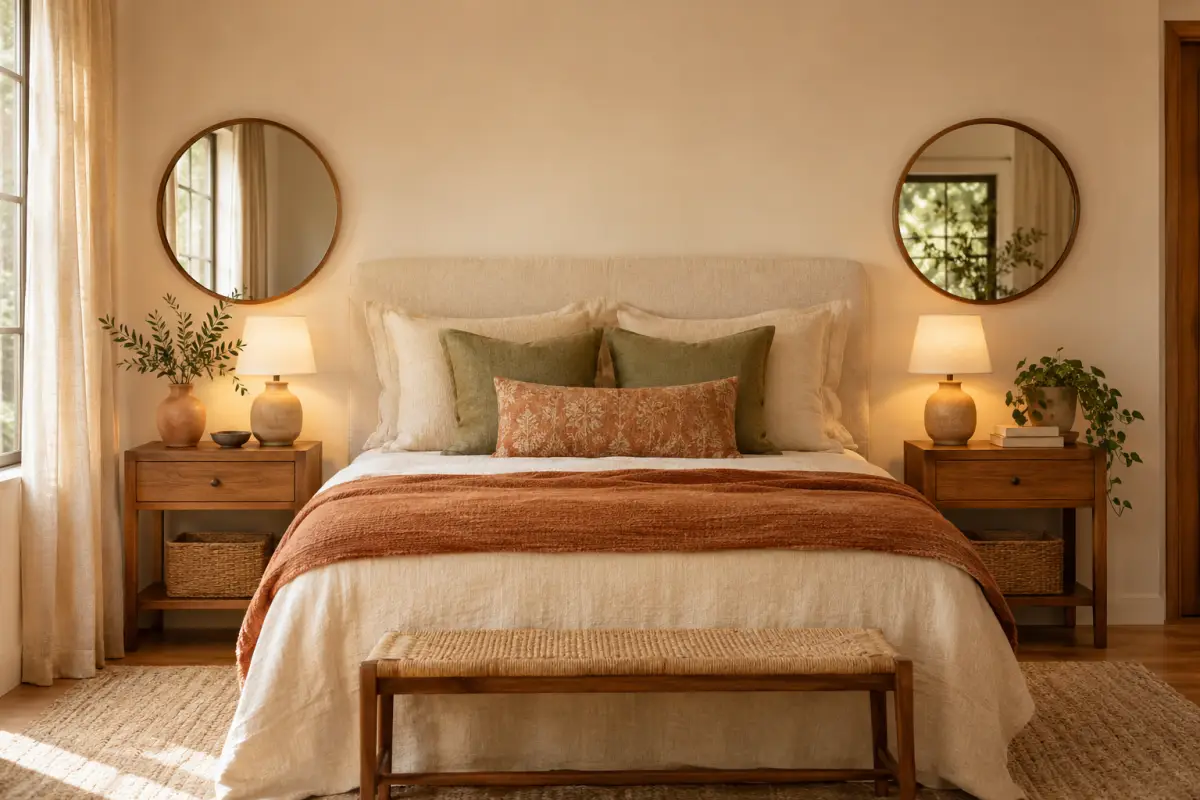
Two matching mirrors, one above each nightstand, brighten both sides of the bed and frame it like a pair of lamps. They also give each person a quick mirror check without getting up.
Hang them at standing eye level, not nightstand level. Home Depot measures up 57 inches from the floor and adds half the mirror’s height to find the top edge, while Pottery Barn keeps the midpoint of a piece about 60 inches above the floor.
Look for: two small identical mirrors, round or arched, sized so they do not crowd the bed.
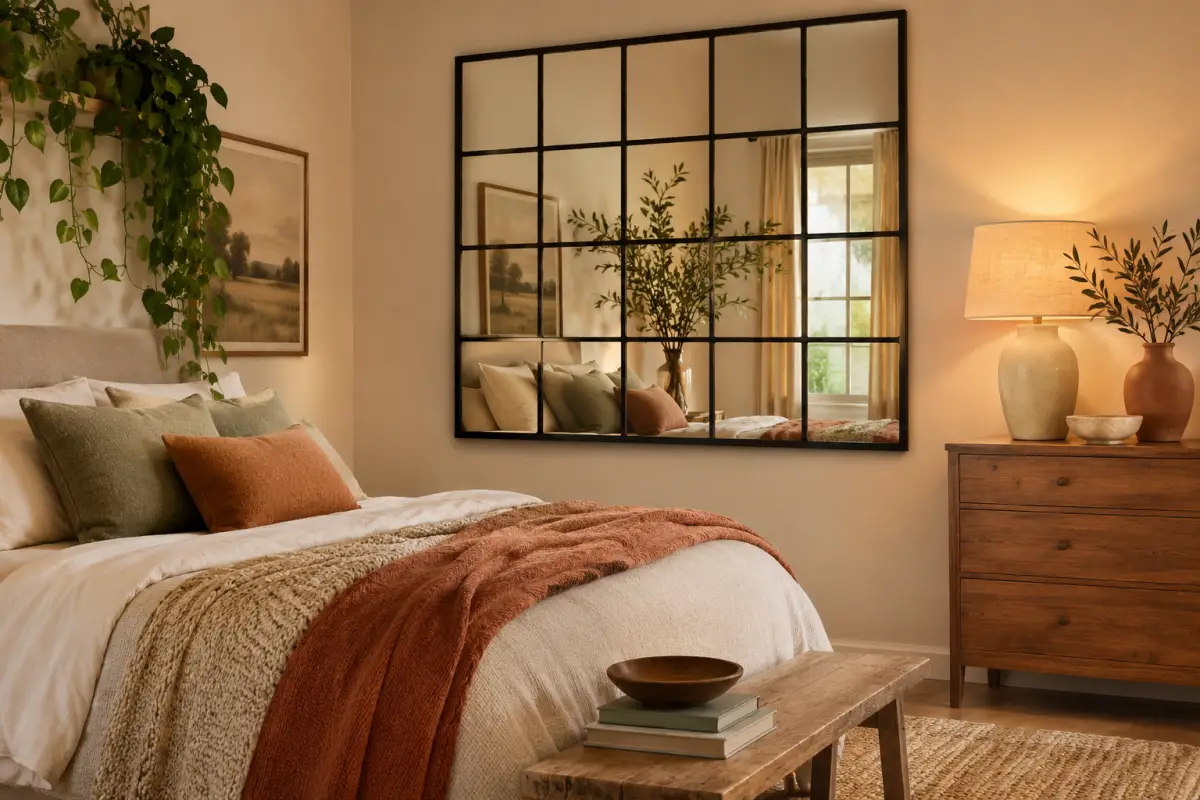
6. A windowpane mirror on a dark wall
A windowpane mirror, with frame bars that look like window panes, gives a wall without a window something that reads like one. Bouclair counts arched and windowpane mirrors among the shapes that act as art in their own right.
It helps most in a room that gets little daylight. Ferguson notes that mirrors can brighten a room with little access to daylight. Put a lamp nearby so it has light to work with after dark.
Look for: a large windowpane or arched windowpane mirror with a black or wood grid.
7. Next to a lamp for evening glow
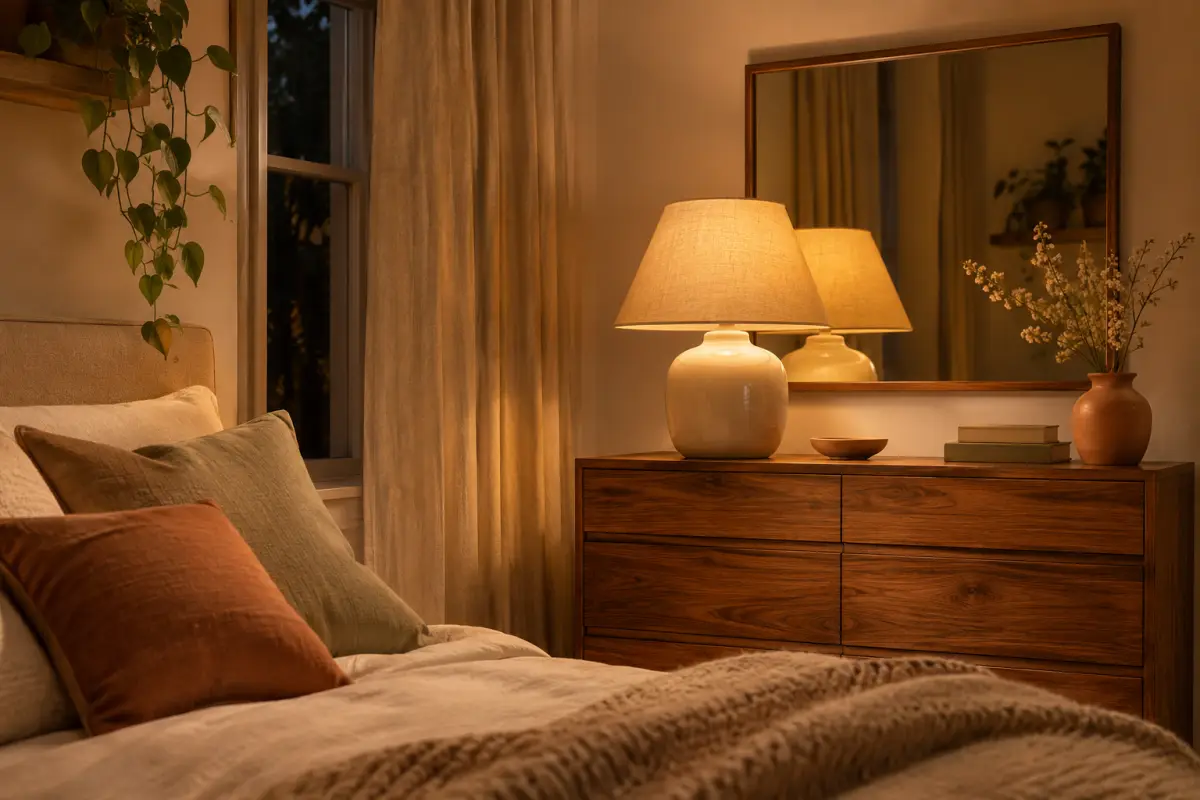
Daylight is only half the story in a bedroom. A mirror placed behind or beside a table lamp or sconce shows the lamp a second time, so the corner glows warmer at night.
This works well on a nightstand wall or a dresser top. Our guide to layered bedroom lighting covers which lamps to pair it with.
Look for: a mirror wider than the lamp shade, hung so the shade sits in front of the lower part of the glass.
8. A getting-ready corner
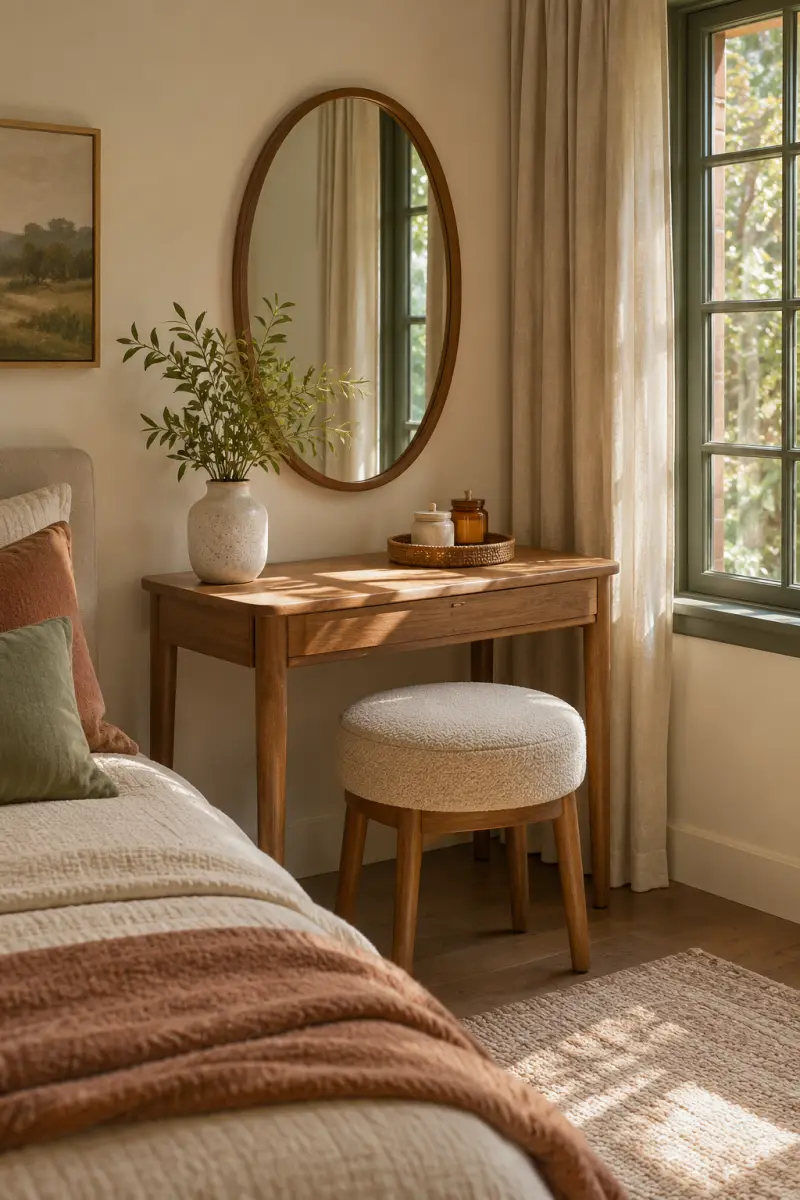
A small table, a stool and a mirror turn a spare corner into a place to do makeup or hair away from the bathroom. Light from a nearby window falls on your face instead of behind you.
Lowe’s says to hold a mirror close to eye level when you mark the wall. Here that means seated eye level, so sit on the stool while a helper holds it. For layouts, see our bedroom vanity ideas.
Look for: a mirror you can see your whole face and shoulders in while sitting, and a table deep enough for a tray.
Mirror sizes and shapes
Size changes what a mirror does: small ones are for a quick check, large ones change how big the room feels. Castlery’s mirror size guide sorts them into four bands.
Mirror size bands
Small: 12 to 24 inches
Tight spots and quick checks.
Medium: 24 to 36 inches
The usual size above a dresser.
Large: 36 to 48 inches
A focal point on a big wall.
Full-length: 48 to 72+ inches
Bedrooms and dressing corners.
9. One big mirror instead of several small ones
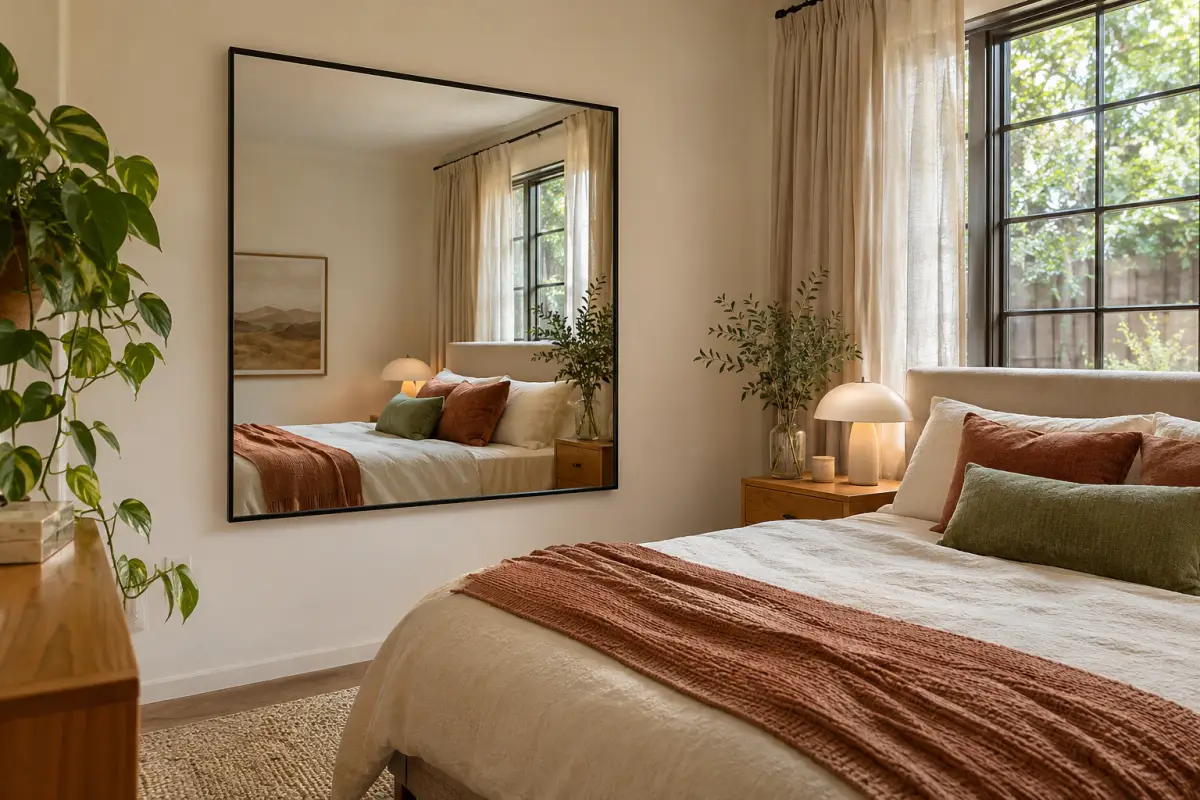
A single large mirror usually does more than three small ones. Ferguson suggests a large mirror, somewhere between 25 and 31 inches on each side, if you want it to blend into the room.
The guide says a mirror that size reflects more of its surroundings, is less distracting than several smaller mirrors, and makes the room look larger. That is good news in a small bedroom, where every bit of depth counts.
Look for: one square or rectangular mirror in that size range, with a slim frame in a finish already in the room.
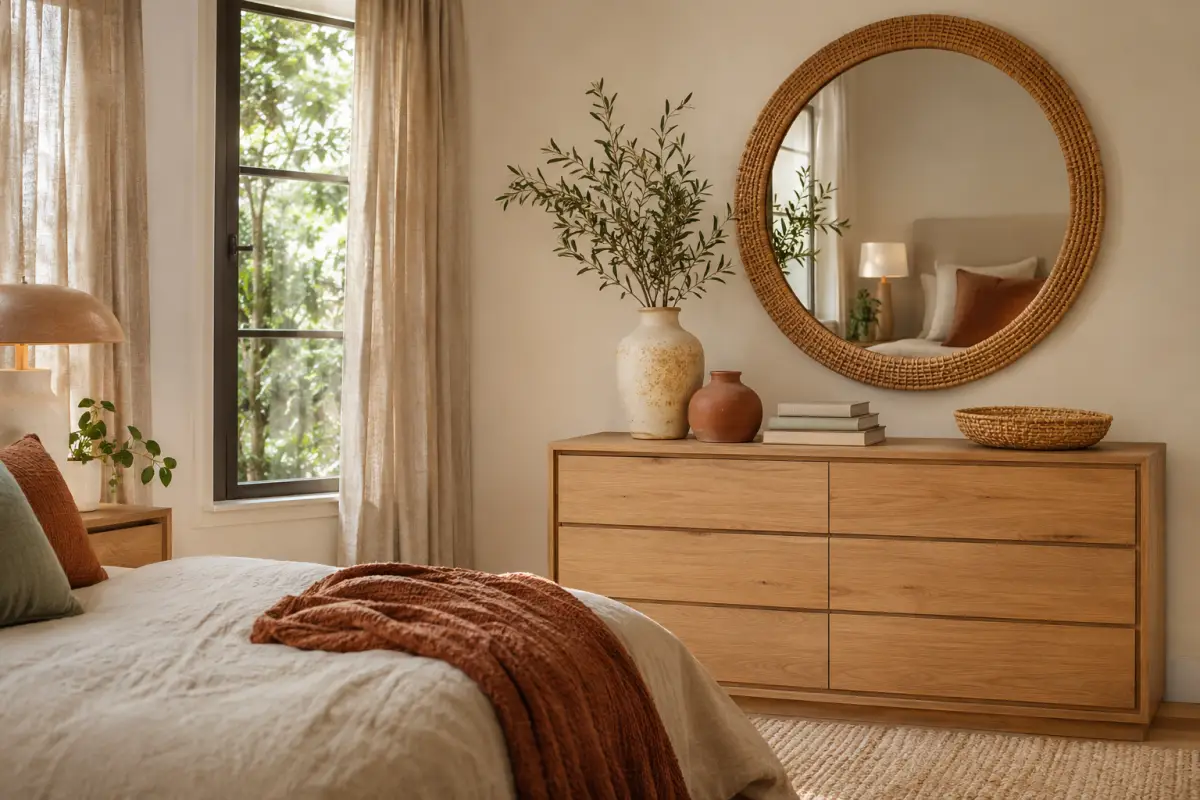
10. A round mirror to soften straight lines
Bedrooms are full of rectangles: the bed, the dresser, the windows, the door. A round mirror breaks that up. Castlery’s wall mirror FAQ says round and arched mirrors soften rooms with lots of straight lines, while rectangular ones sit naturally above dressers.
A round mirror over a rectangular dresser or headboard is one of the easiest ways to make a plain room look styled.
Look for: a round mirror with a rattan, wood or thin brass frame, sized to the furniture below it.
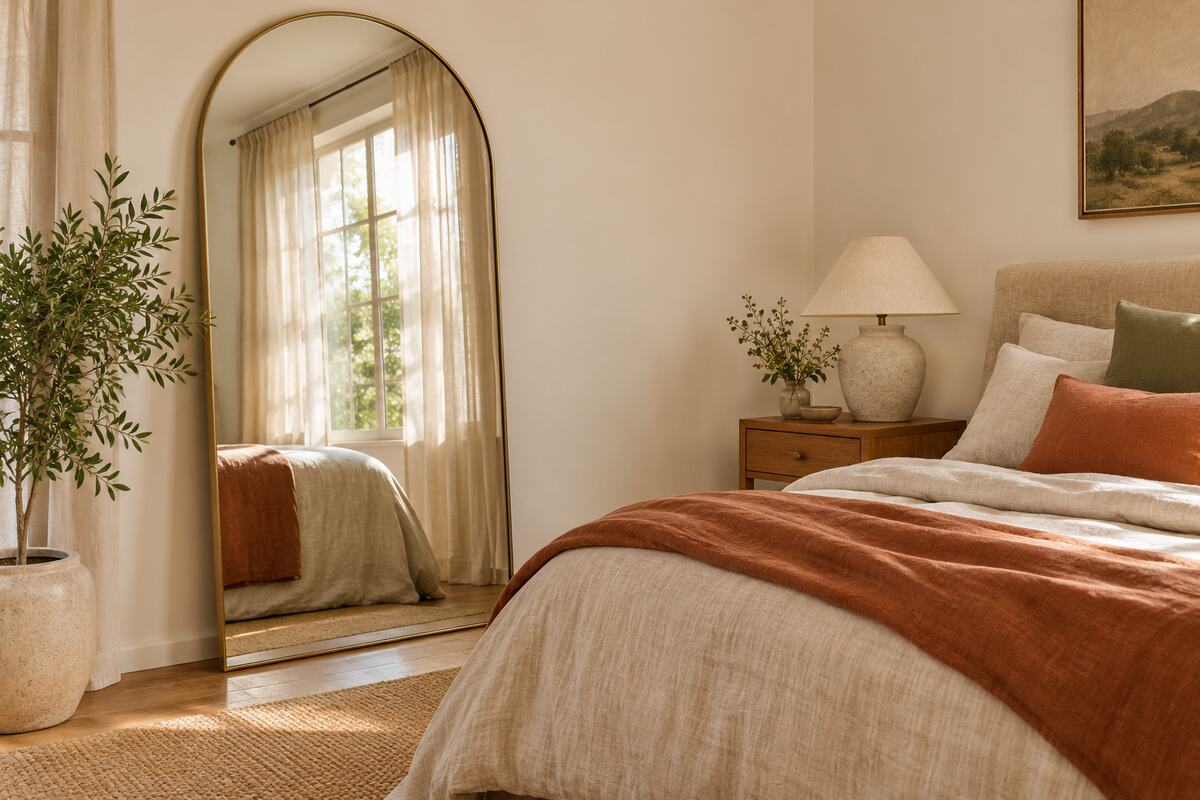
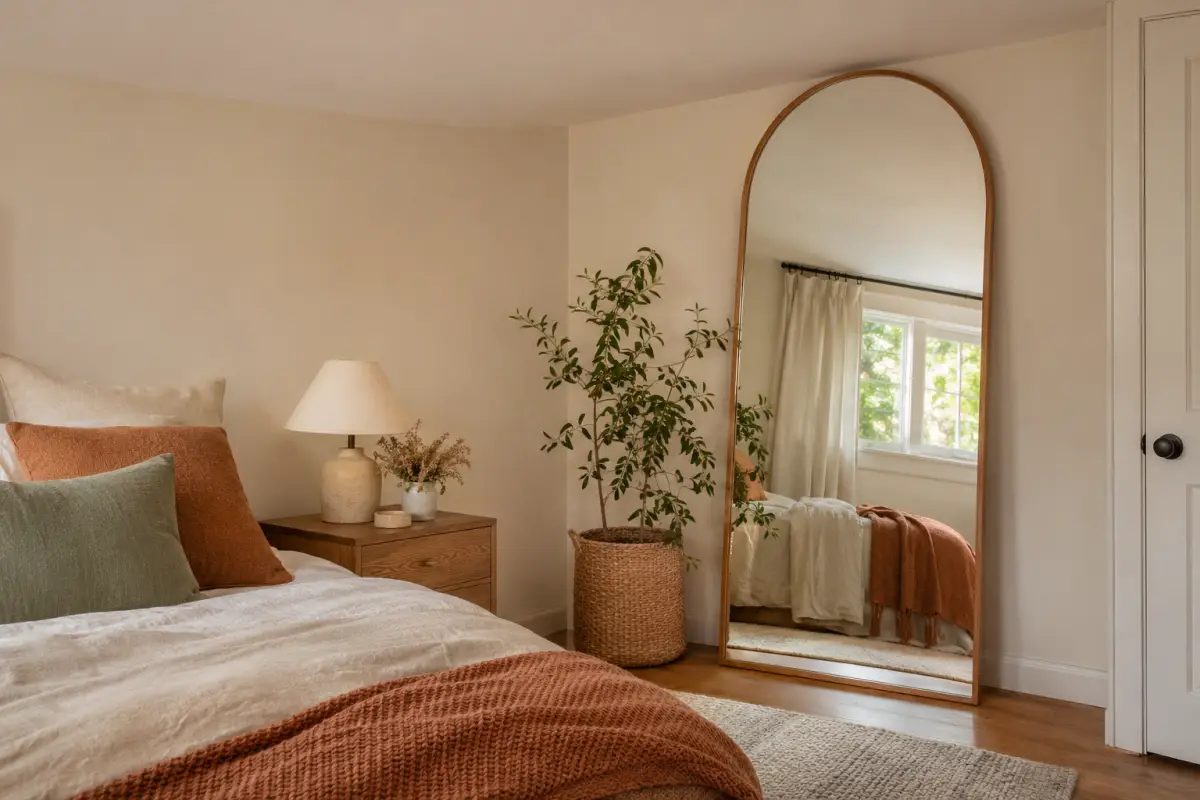
11. An arched mirror for height
A tall arched mirror pulls the eye upward, which helps in a room with a low ceiling. Castlery notes that a slightly oversized mirror can make a small room feel taller and brighter.
Leaned in a corner or hung beside the dresser, an arched shape also echoes a window, so it suits the windowpane idea above.
Look for: a tall arched mirror with a thin metal or wood frame; check whether it comes with fittings for leaning or hanging.
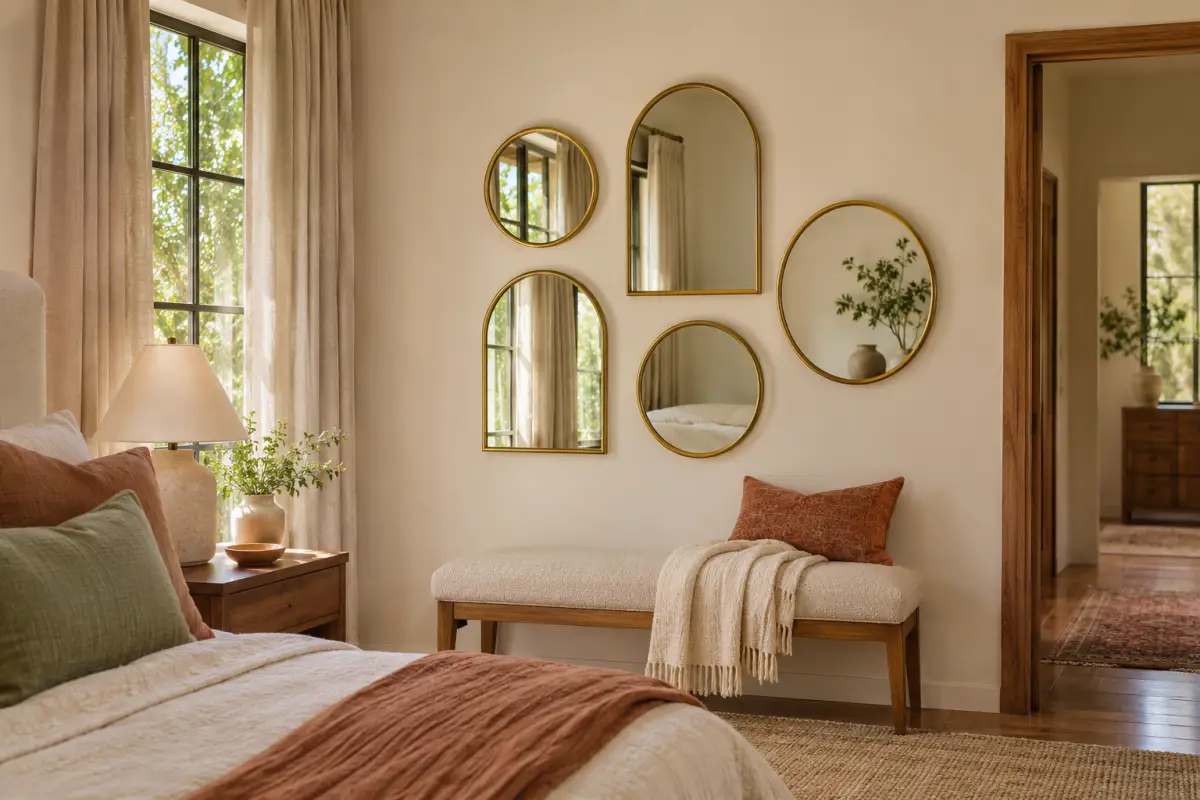
12. A small-mirror gallery wall
Several small mirrors grouped together scatter light like sequins and fill a wall that is too wide for one piece. Treat the group as one shape.
Pottery Barn’s guide places the center of a grouping about 60 inches from the floor with 2 to 5 inches between pieces. Bouclair suggests odd numbers such as 5 or 7, and paper templates taped to the wall for a day before you hammer anything. More layouts live in our bedroom wall decor section.
Look for: mirrors in a mix of shapes that share one frame finish, and kraft paper for templates.
Leaning vs hung mirrors
A leaning floor mirror looks relaxed and moves easily. A hung mirror saves floor space and can go over furniture. Neither is safe without the right fittings.
| Leaning floor mirror | Hung wall mirror | |
|---|---|---|
| Floor space | Needs a strip of floor in front | None |
| Fixing to the wall | Still anchored with the included fittings; HOVET uses 3 screws when leaned | HOVET uses 2 screws when hung |
| Best spot | Corner or beside the closet, for outfit checks | Over a dresser, bed or nightstands |
| Watch for | Sliding at the base, so use the fittings | Hardware rated for the weight |
Source: HOVET Mirror, black, 30 3/4x77 1/8”, IKEA US; How to Hang a Heavy Mirror, The Home Depot
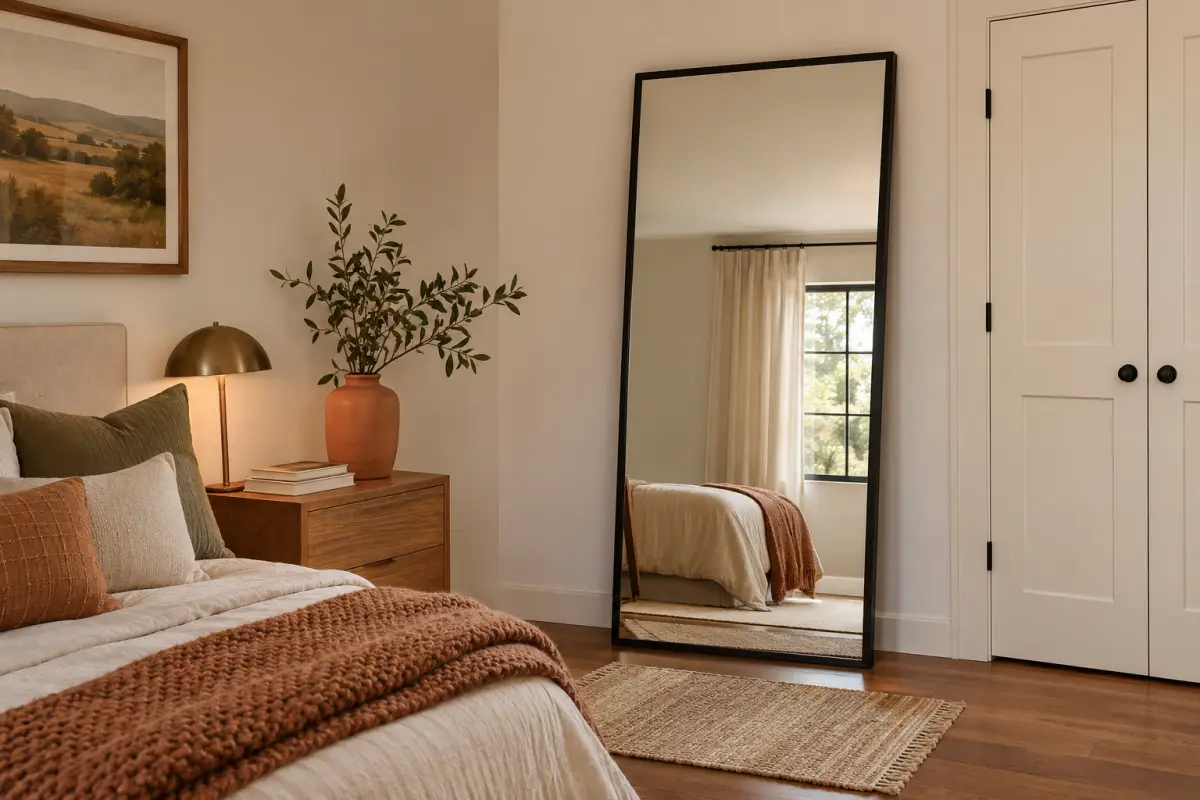
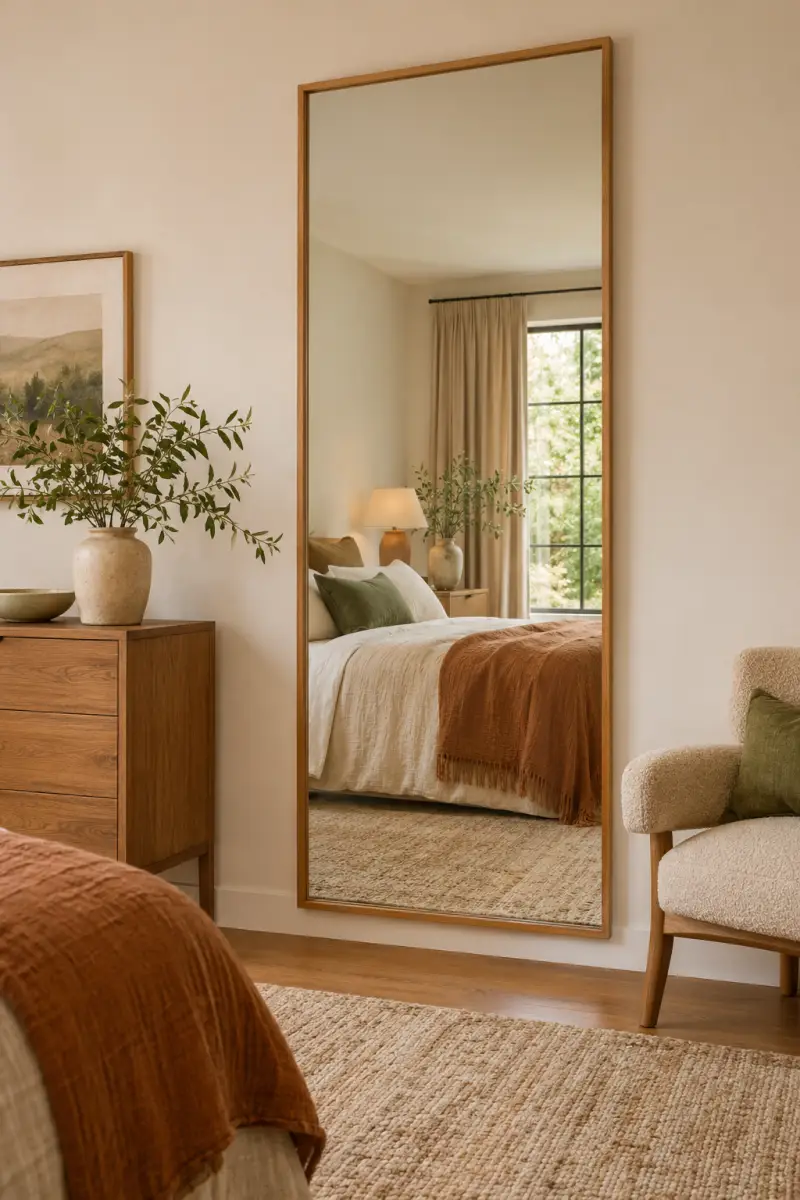
13. A leaning full-length mirror, anchored
A leaning mirror looks casual, but “leaning” does not mean loose. IKEA’s HOVET product page says that when the mirror stands on the floor, it must be anchored to the wall using the enclosed fittings, and that those fittings stop it sliding on the floor.
Bouclair describes leaners the same way: they rest against the wall and are secured at the top. Look for safety film on the back too; IKEA says it reduces damage if the glass breaks.
Look for: a floor mirror sold with wall fittings for leaning, safety film, and instructions that cover leaning as well as hanging.
14. A full-length mirror sized for the tallest person
A full-length mirror is only useful if you can see your whole outfit in it. Ferguson suggests choosing one at least half the height of the tallest person who uses it.
For any tall mirror, the same guide says to leave about a foot of reflective surface above and below your eye level when you install it. Castlery puts full-length mirrors at 48 to 72 inches and up.
Look for: the height printed on the listing, checked against the tallest person in the house before you order.
15. An over-the-door mirror
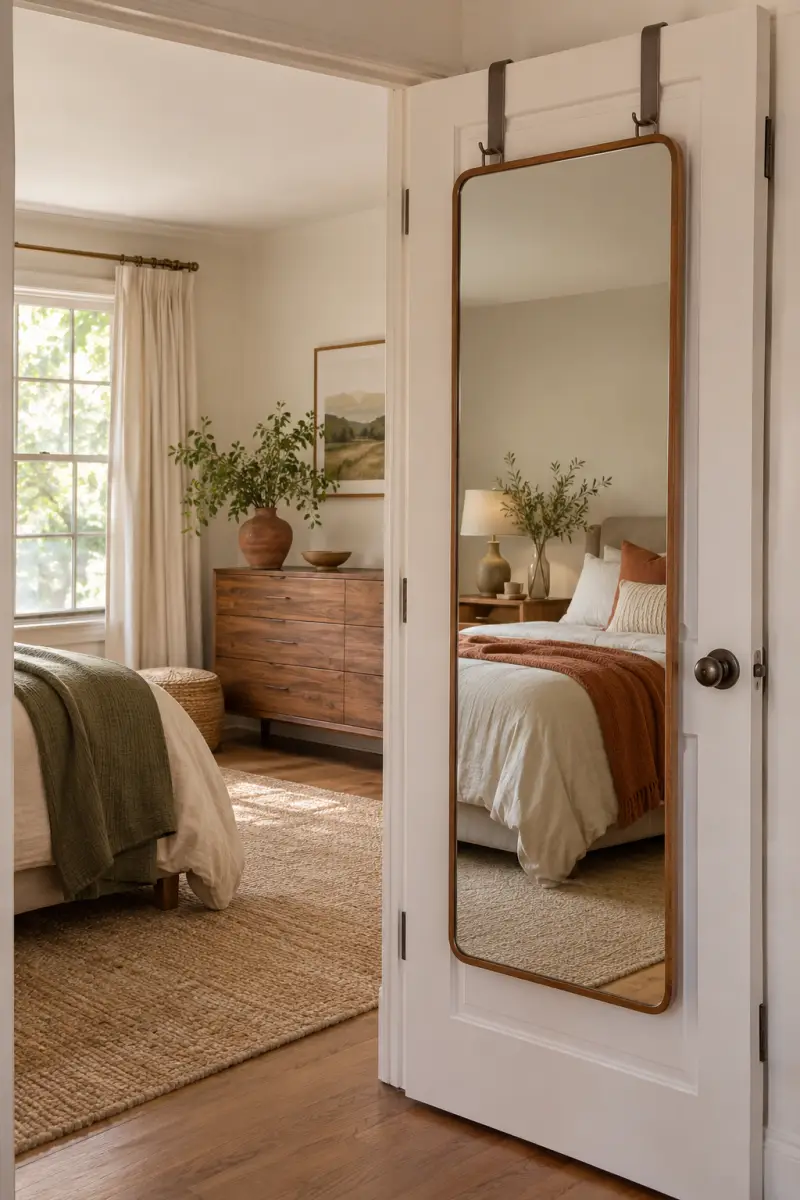
The back of the bedroom or closet door is free space that most rooms never use. A mirror there takes no floor and no wall.
Lowe’s mirror hanging guide warns that screws will not hold a mirror securely on a hollow door, and suggests over-the-door hooks or mirror-hanging clips instead. Check that the door still closes fully with the hooks in place.
Look for: an over-the-door mirror or clip set made for your door’s thickness.
How to hang a bedroom mirror safely
A mirror is heavy glass on a wall, often near a bed. These three ideas keep it there. If you rent, start with the first one; our apartment bedroom decor ideas have more no-drill options.
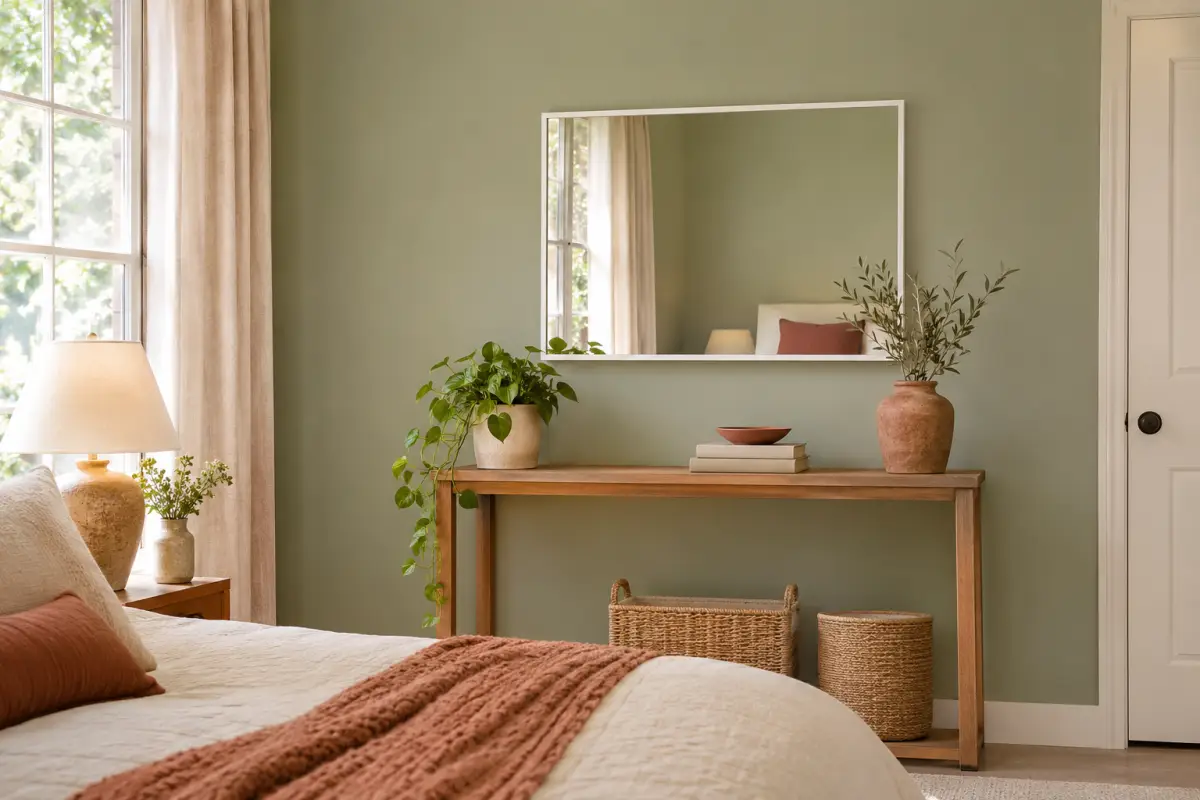
16. Renter-friendly hanging for lighter mirrors
For a lighter mirror, adhesive strips avoid holes. 3M’s hang-heavy page says Command Picture Hanging Strips can hold mirrors up to 24 by 36 inches and up to 20 pounds, and that its CLAW drywall hangers hold mirrors up to 65 pounds without studs or large holes.
Strips have limits. The Command FAQ says they are not recommended for heavily textured walls, wallpaper or brick, and that paint should be cured for at least 7 days. It also warns that adding extra strips does not always raise the weight limit.
Look for: the weight limit on the package, checked against the mirror’s weight, and a smooth painted wall.
17. Heavy mirrors: a stud, rated anchors or a cleat
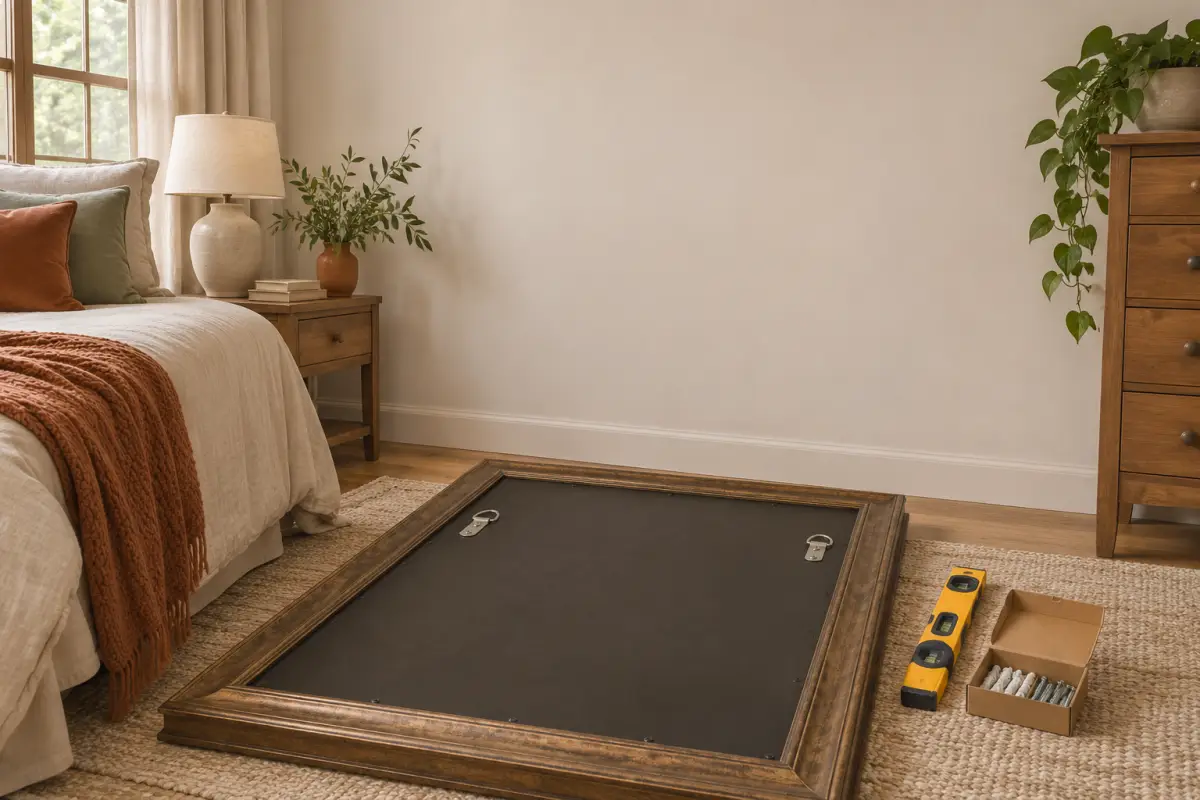
For a heavy mirror, start with the wall. Home Depot calls a stud the strongest and safest way to hang heavy wall art, and says to use a hook rated for the mirror’s weight. Where there is no stud, Lowe’s says to use drywall anchors rated to support the weight.
For very large pieces, Home Depot points to a French cleat, which comes in sizes for frames from 50 to 400 pounds. On wire, it sets two hangers in the wall to spread the weight.
Heavy mirror, in order
Look for: a mirror with its weight listed, D-rings or a cleat already attached, and bumpers for the bottom corners so the frame does not scratch the wall.
18. Check old hardware, and anchor the dresser below
Mirrors do fall. CPSC recalled IKEA LETTAN mirrors because the plastic wall fittings could break and the mirror could fall, and Crate and Barrel Josephine floor mirrors because the glass could separate from its wooden backing. You can search for your own mirror on cpsc.gov.
Home Depot suggests swapping hanging hardware that looks old or worn for something newer and safer. If the mirror sits on or above a dresser, anchor the dresser too: the CPSC’s Anchor It campaign says new dressers come with anti-tip devices to install right away, and older furniture can take inexpensive anti-tip brackets. Our guide to styling a dresser covers the rest of the top.
Look for: sturdy metal hardware on secondhand mirrors, a backing that is firmly attached, and an anti-tip kit for the dresser.
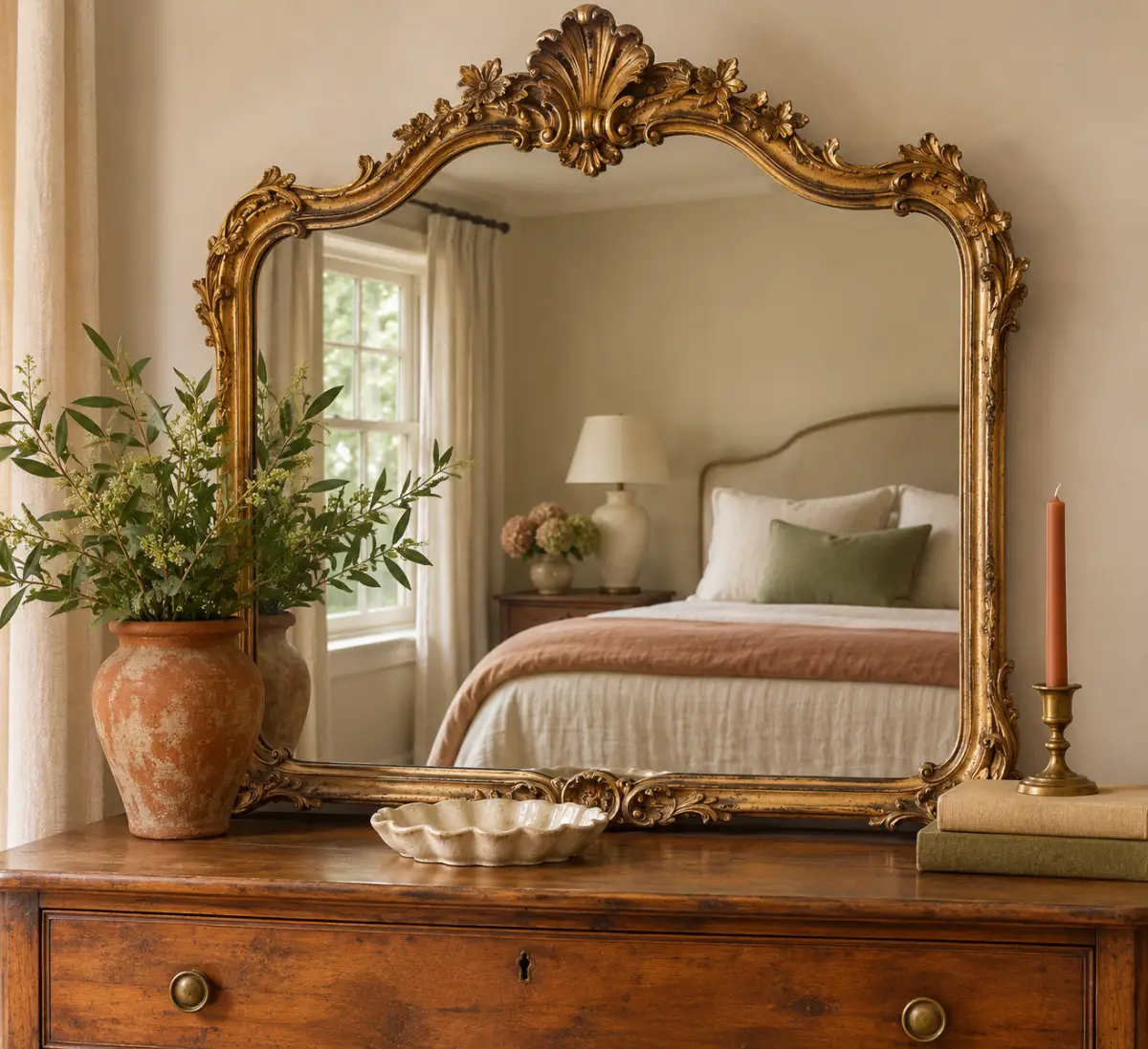
What to look for when you buy a bedroom mirror
Run through this before you check out, so the mirror fits the wall and stays on it.
Bedroom mirror buying checklist
- Its weight is listed, so you can match the hardware
- Hanging hardware is already on the back (D-rings or a cleat)
- Safety film on the back of the glass
- Wall fittings included if you plan to lean it
- Width fits the furniture below it
- Height suits the tallest person who will use it
- It reflects a window, art or plants from where you sit
Bedroom mirror FAQ
Where should a mirror be placed in a bedroom?
The best spots are across from or beside a window, where it bounces daylight, and above the dresser, where you will use it daily. Avoid a spot that sends harsh morning sun straight onto the bed.
How high should you hang a bedroom mirror?
On an open wall, Home Depot measures up 57 inches from the floor and adds half the mirror’s height to find the top edge. Over furniture, Pottery Barn keeps 4 to 6 inches between the furniture and the bottom of the frame.
Is it bad to have a mirror facing the bed?
There is no safety rule against it. It comes down to comfort: some people dislike catching their reflection at night, and a mirror across from a window can bounce morning sun onto the bed. If either bothers you, use a side wall.
Can you lean a floor mirror without anchoring it?
Follow your mirror’s own instructions. IKEA’s HOVET page, for example, says a floor-standing mirror must be anchored to the wall with the enclosed fittings.
Save this pin to your bedroom board so the measurements are handy when your mirror arrives. Next, see how a mirror fits into the rest of the wall in our step-by-step guide to decorating bedroom walls.
Sources
- Wall Mirrors (FAQ), Castlery US
- Wall Art & Mirror Buying Guide: Sizing, Placement & Gallery Walls, Bouclair
- Everything You Need to Know to Choose the Best Mirror, Ferguson Home (Build with Ferguson)
- How to Hang Wall Art, Pottery Barn
- How to Hang a Heavy Mirror, The Home Depot, 2024-06-26
- What Size Mirror Do You Actually Need for Your Room?, Castlery US, 2026-05-07
- How to Hang a Heavy Mirror, Lowe’s, 2025-11-07
- HOVET Mirror, black, 30 3/4x77 1/8”, IKEA US
- How to Hang Heavy Mirrors & Frames Without Nails, 3M
- Command Products FAQs, Command Brand (3M)
- IKEA Recalls Mirrors Due to Laceration Hazard, U.S. Consumer Product Safety Commission (CPSC), 2023-03-16
- Crate and Barrel Recalls Mirrors Due to Laceration Hazard (Recall Alert), U.S. Consumer Product Safety Commission (CPSC), 2018-07-18
- AnchorIt.gov, U.S. Consumer Product Safety Commission (CPSC)