DIY Bedroom Ideas for Small Rooms: 18 Beginner Projects That Free Up Space
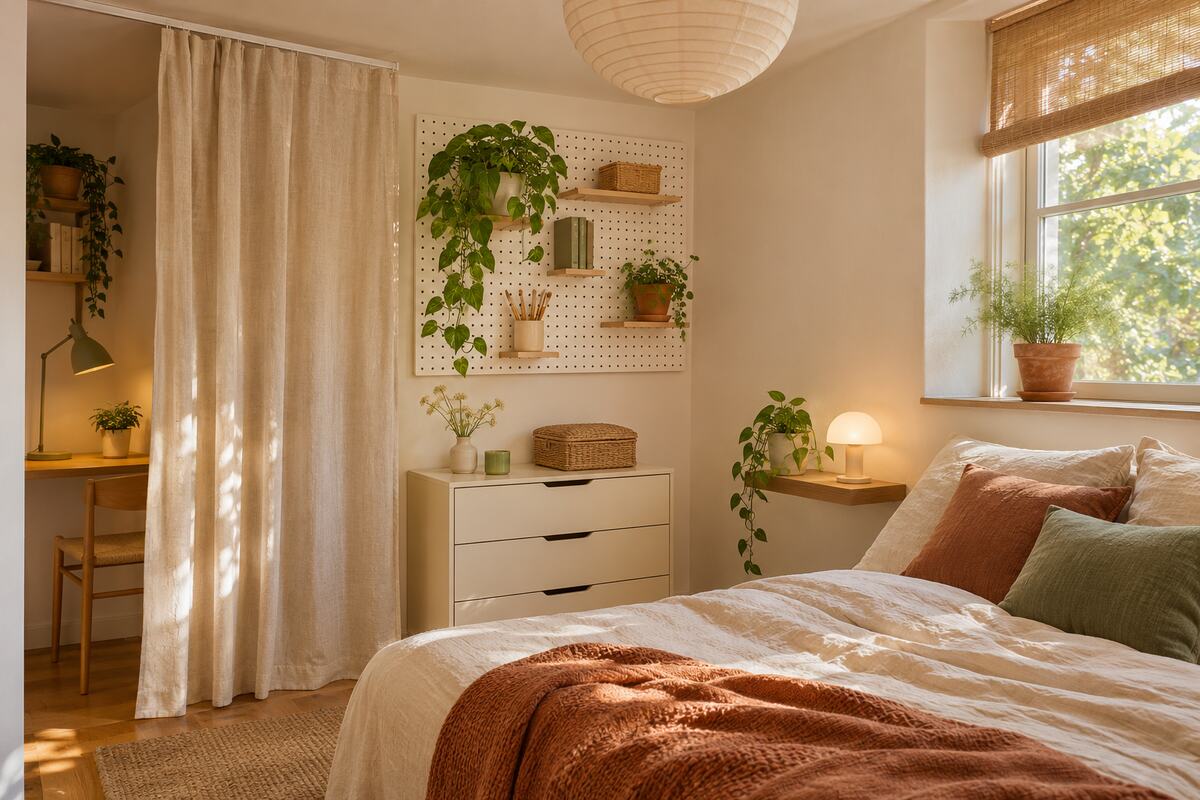
These DIY bedroom ideas for small rooms are projects a first-timer can finish, and every one either frees up floor space or makes the space you have work harder. Each project lists the skill level, whether it suits a rental, what you need and the steps.
Most need only a drill, a level and some paint. The safety notes are short and worth reading before you drill or sand anything.
Beginner tool kit for these projects
DIY bedroom storage you can build or hang
Storage that lives on the walls or under the bed leaves the floor open, which is what makes a small room feel bigger. For pieces to buy instead of build, see our small bedroom furniture ideas.
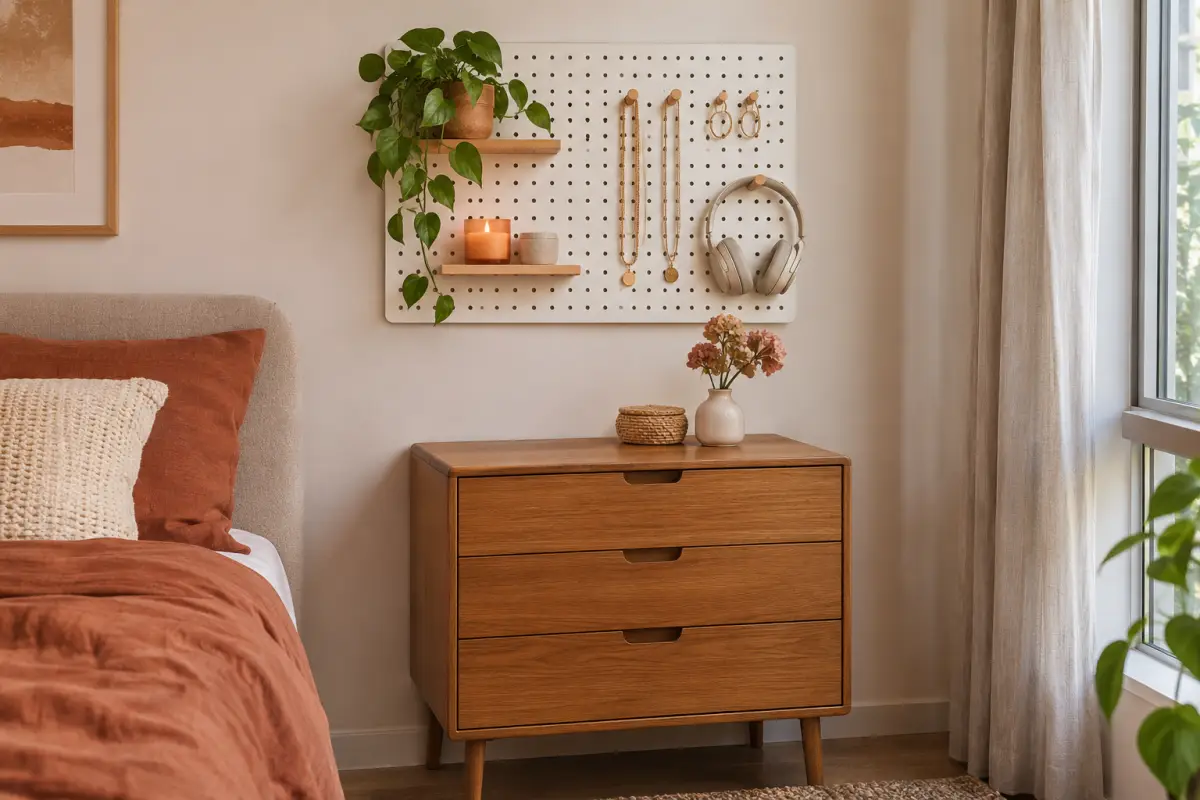
1. Hang a pegboard wall above the dresser
A pegboard holds the small things that usually pile up on a dresser top: jewelry, headphones, keys, a tiny plant. You can move the hooks and shelves around whenever your needs change, so it never feels finished in a bad way.
IKEA’s SKÅDIS pegboard comes in a 30x22 inch size listed at $29.99 at the time of writing, and its page notes that the screws for wall mounting are sold separately. Buy screws and anchors that suit your wall.
Skill: beginner. Renter note: needs a few screw holes, so check your lease.
You need: pegboard, wall screws and anchors, stud finder, drill, level, hooks or small shelves.
2. Put up a floating shelf as a nightstand
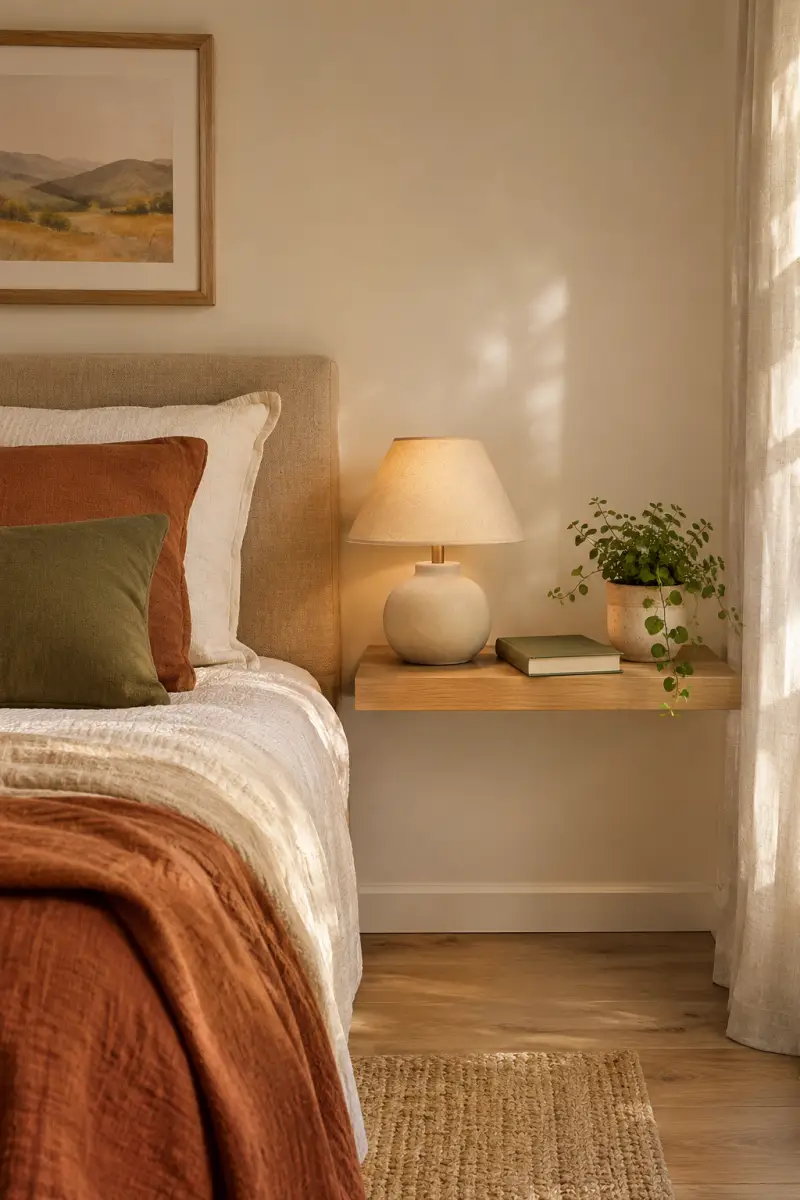
A floating shelf beside the bed holds a lamp, a book and your phone without a single leg on the floor. It is one of the best DIY bedroom ideas for small rooms where a nightstand would block the door or a drawer.
Lowe’s calls putting up a floating shelf a simple DIY project you can finish in an hour or two. Their steps, in short:
- Find the studs with a stud finder and mark them with painter’s tape.
- Level the backplate and mark the screw holes over the studs.
- No stud where you need one? Use wall anchors rated for the weight of the shelf plus what goes on it.
- Wear safety glasses while you drill.
Lowe’s also warns that wiring, pipes and ducts can sit behind the wall, especially near an outlet, switch or vent.
3. Build rolling under-bed boxes
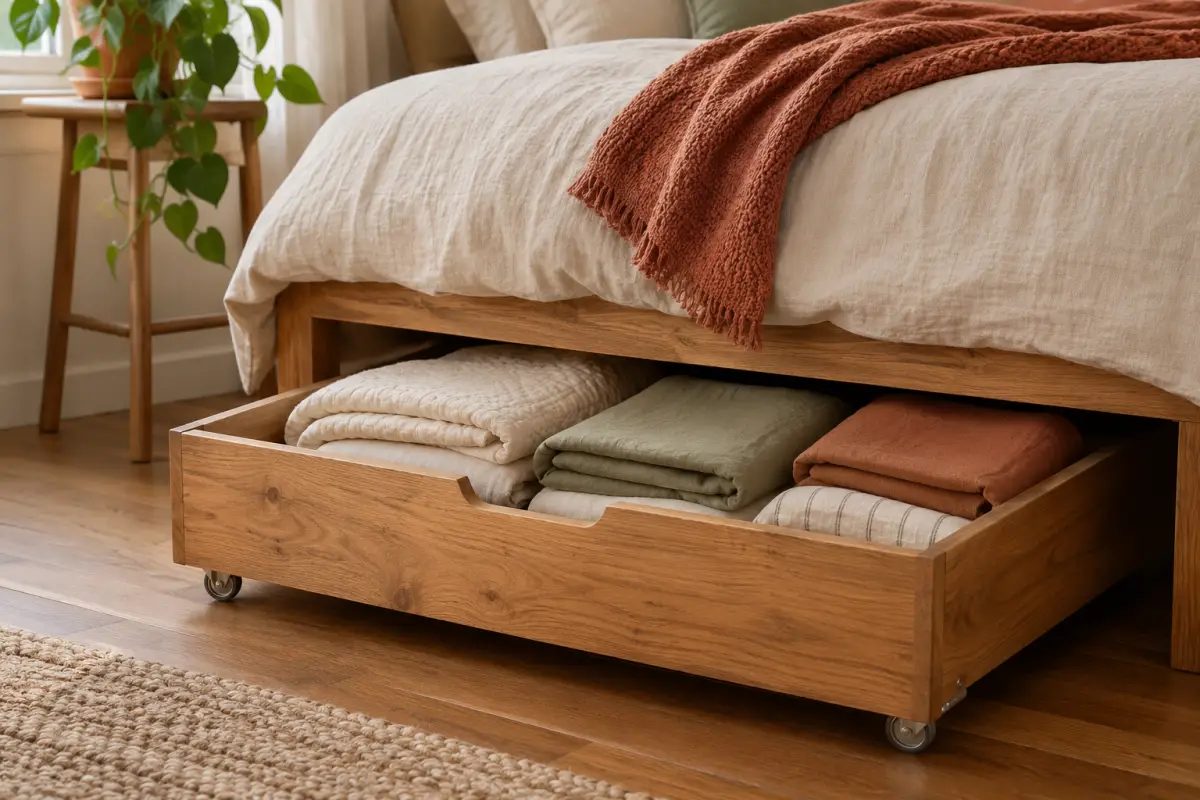
The gap under the bed is the biggest empty spot in a small bedroom. Rolling boxes make it easy to reach, so spare sheets and out-of-season clothes actually get put away.
An old dresser drawer or a shallow wooden crate works well. Screw a small caster to each corner of the bottom, then add a handle or a cutout on the front so you can pull it out.
Measure first: check the gap between the floor and the bed frame, and subtract the height of the casters. A box that scrapes the slats is a box you stop using.
Skill: beginner. Renter note: fully renter-friendly.
4. Add a second rod to the closet
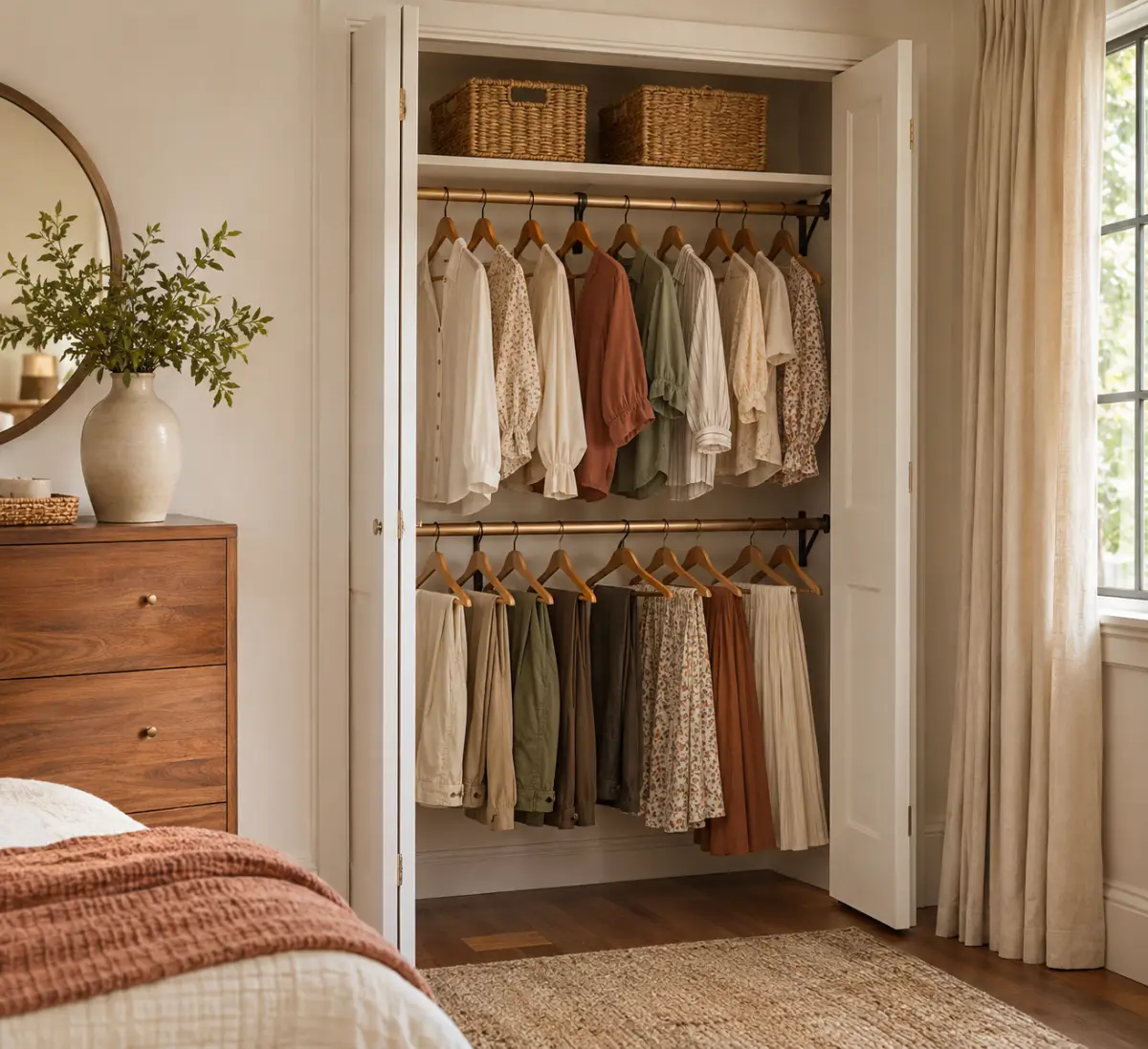
Most closets have one rod with empty air below the shirts. A second, lower rod doubles the hanging space for short pieces like tops, skirts and folded pants.
There are two easy routes. A hanging closet rod hooks over the top rod with no tools at all, or you can screw a pair of rod brackets into the closet side walls and drop a wooden dowel in.
Hang the lower rod low enough that shirts on the top rod clear it, and check the weight rating on any hanging rod before you load it.
Skill: beginner. Renter note: the hanging version needs no holes.
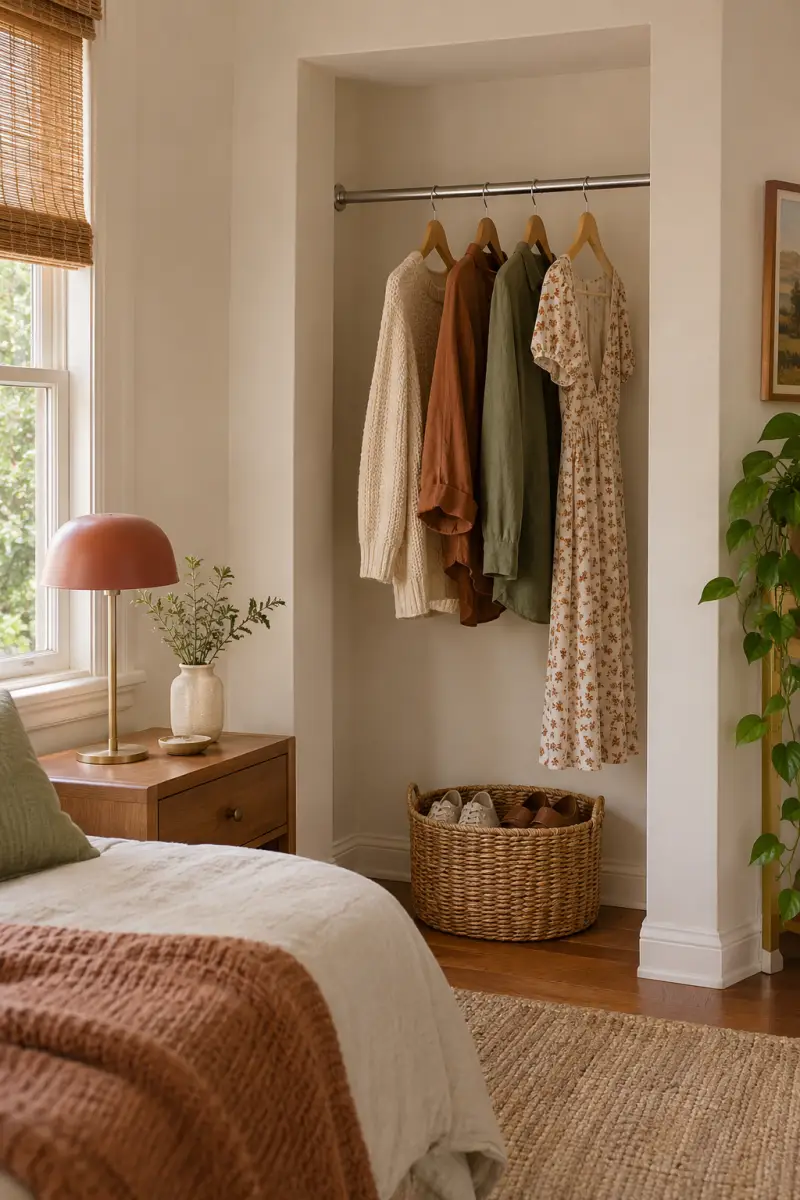
5. Make a tension-rod closet in a nook
No closet at all? An alcove, the space beside a chimney breast or a gap between a wardrobe and the wall can become one. A tension rod twists out until it presses against both walls, so it goes up in minutes.
Keep it for lighter clothes, since a tension rod is held only by pressure. Check the weight rating on the package, and add a curtain in front, as in the closet curtain idea below, so the clothes read as a soft wall instead of clutter.
Skill: beginner. Renter note: no holes at all.
You need: tension rod sized to your nook, matching hangers, a basket on the floor below for shoes.
6. Stack wooden crates into a bookcase
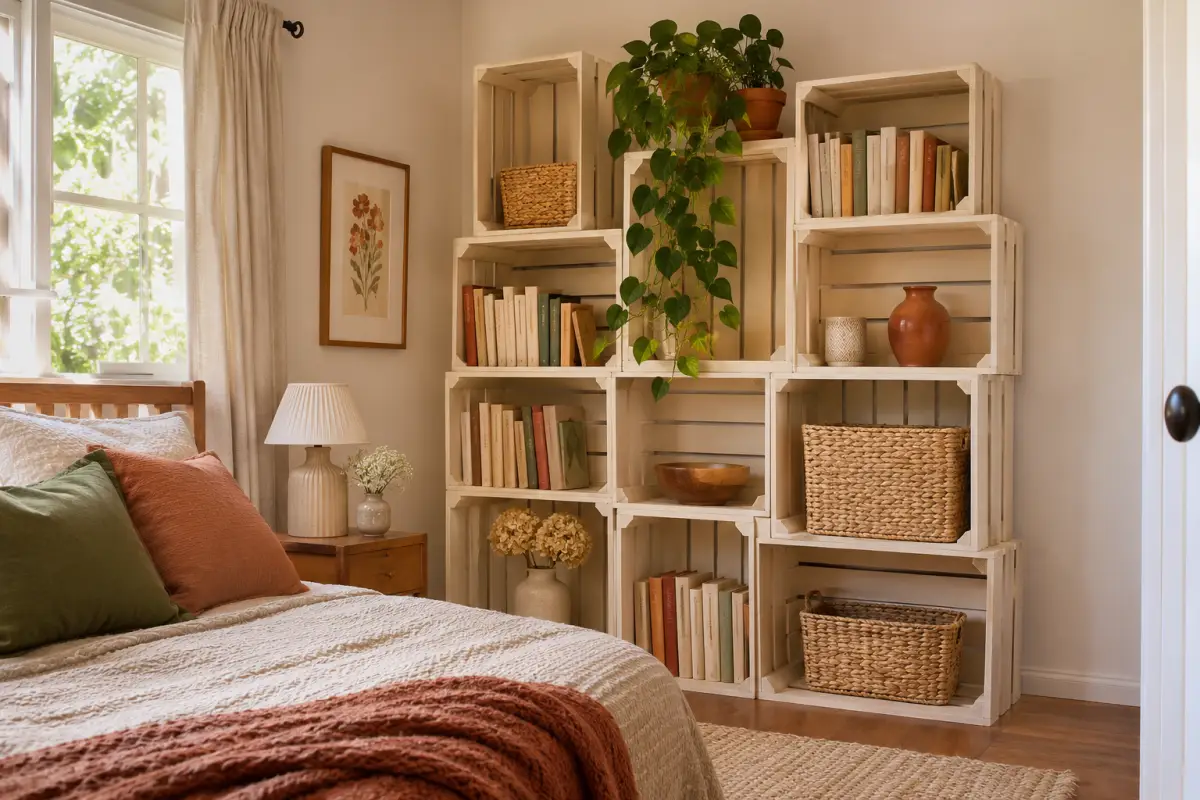
Unfinished wooden crates are an easy first build. Sand them, stain or paint them, then stack them on their sides and screw them to each other so they act as one unit.
Turn some crates sideways and some upright for a mix of tall and short cubbies. Baskets in a few of the cubbies hide the messier things.
Anything tall should be anchored to the wall. The U.S. Consumer Product Safety Commission’s Anchor It campaign notes that existing furniture can be anchored with inexpensive anti-tip brackets.
Skill: beginner. Renter note: anchoring takes a screw or two in the wall; ask first.
Renting? Sort the projects first
No holes
Under-bed boxes, hanging closet rod, tension-rod closet, lamp makeover, painted thrift furniture, new dresser hardware, no-sew curtains, painted mirror frame
A few screws
Pegboard, floating shelf, crate bookcase anchor, curtain divider track, plug-in sconces, pinboard
Ask the landlord
Painted headboard shape, wall molding, anything that changes the walls for good
DIY wall and zone projects
In a small room, the walls do the work that extra furniture would do elsewhere. For the rules on what renters can change, read our apartment bedroom decor guide.
7. Paint a headboard shape on the wall
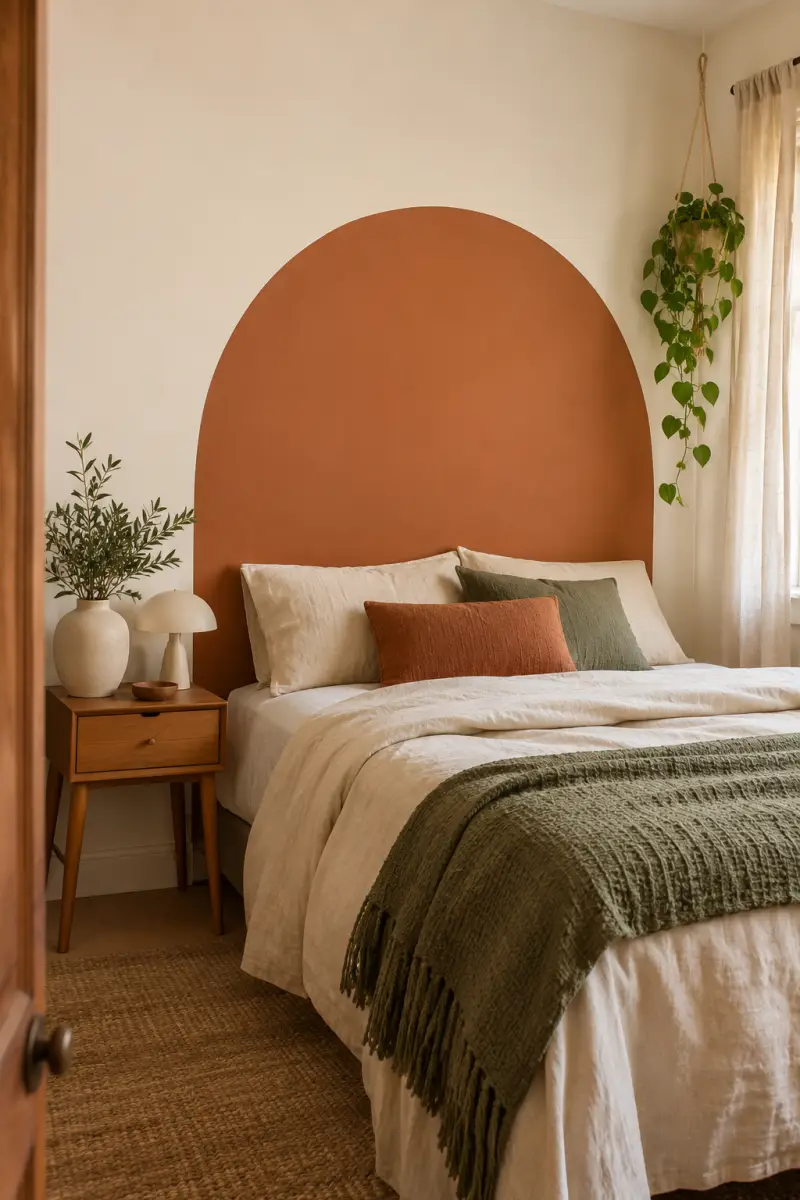
A painted arch or rectangle behind the bed reads as a headboard and takes up no space at all. That matters when every inch between the bed and the wall counts.
Sketch the shape with a pencil, using a string tied to a pencil as a compass for the curve. Tape the straight edges, paint two coats and peel the tape off slowly.
Pick a color a few shades deeper than the walls, or the same color as your bedding. Our DIY headboard guide covers the padded version if you want something to lean on.
Skill: beginner. Renter note: paint usually needs permission.
8. Hang a curtain room divider
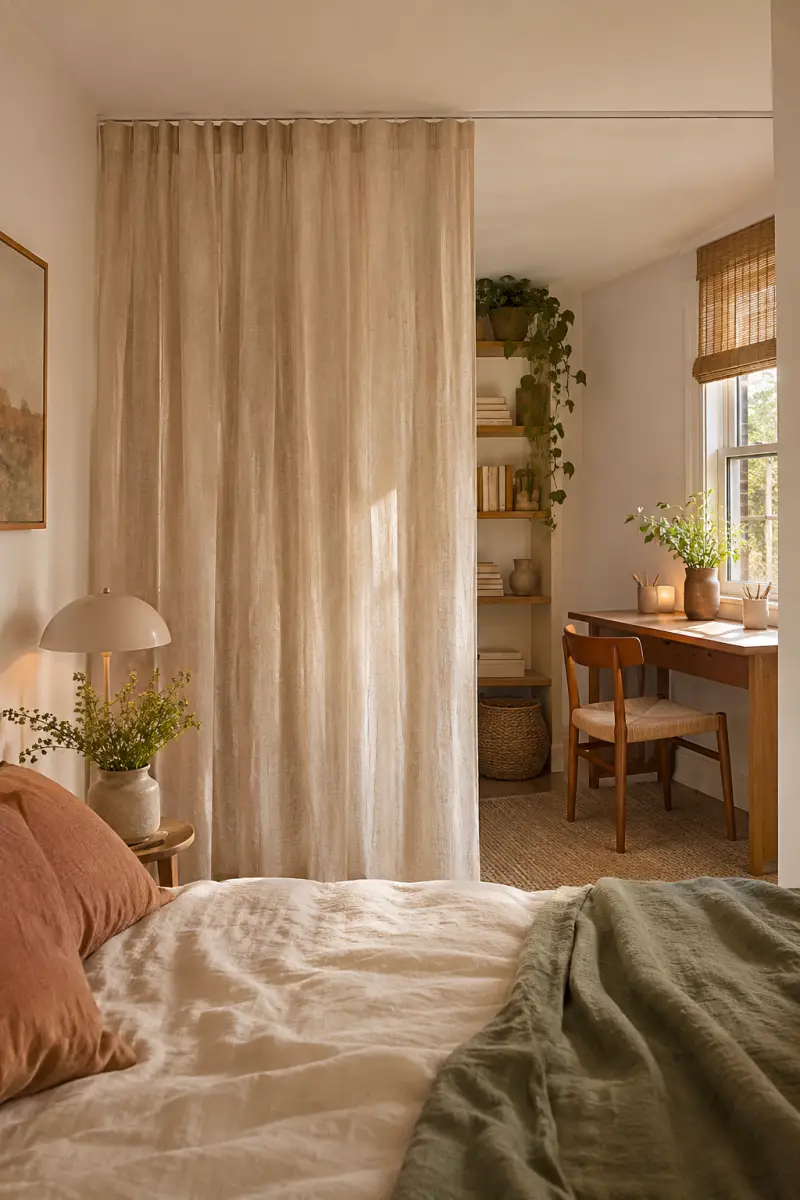
A DIY room divider made from a curtain splits a small bedroom into zones without blocking light the way a bookcase or screen would. Use it to hide a desk, a dresser or a clothes rack, and pull it open when you want the whole room back.
A ceiling-mounted curtain track bends around corners and looks tidy, while a curtain rod between two walls is the simpler build. Choose a light linen or cotton so the room still feels open with the curtain closed.
Skill: beginner. Renter note: a ceiling track needs screws; a rod between two walls may not.
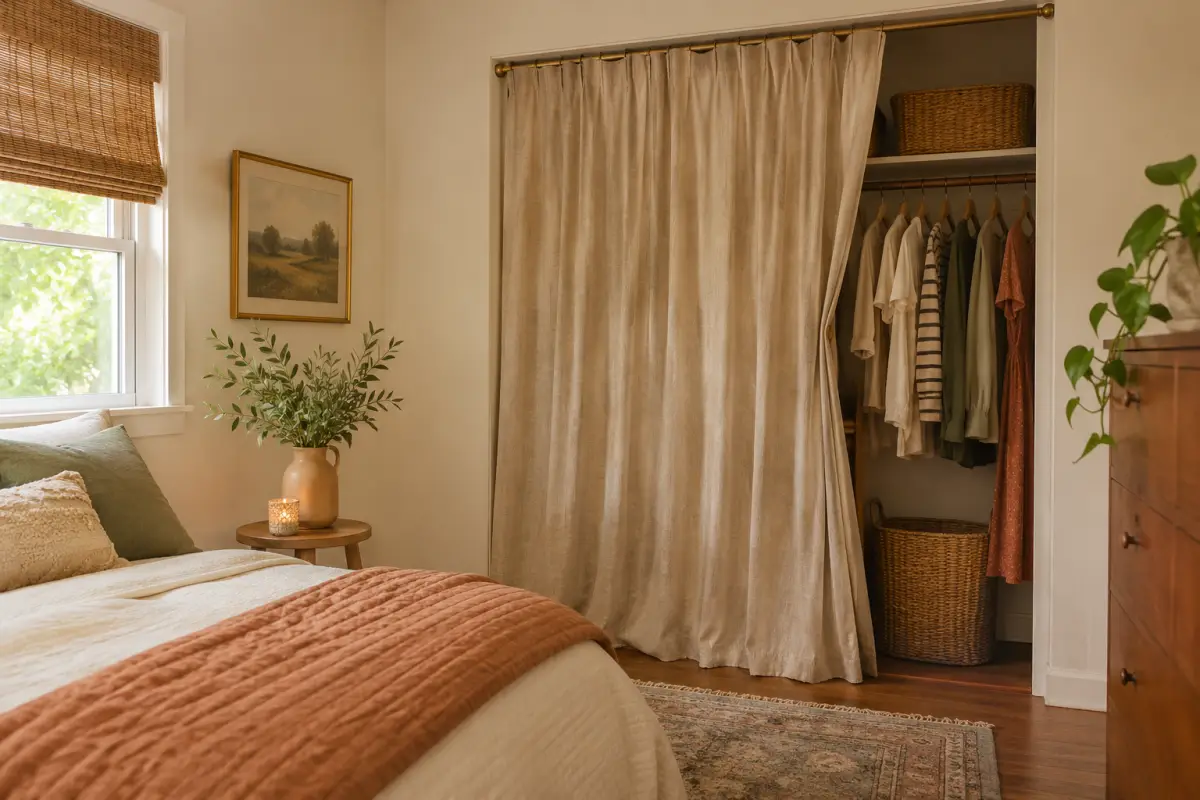
9. Swap closet doors for a curtain
Swinging closet doors need clear floor space in front of them, which a small room rarely has. A curtain on a rod across the closet opening takes no swing space at all.
Lift the doors off their hinges and store them safely, so you can put them back when you move. Mount the rod above the opening and let the curtain reach the floor.
Skill: beginner. Renter note: keep the doors and hardware; reinstall before you move out.
You need: curtain rod and brackets, one or two curtain panels, screwdriver, a labeled bag for the hinge screws.
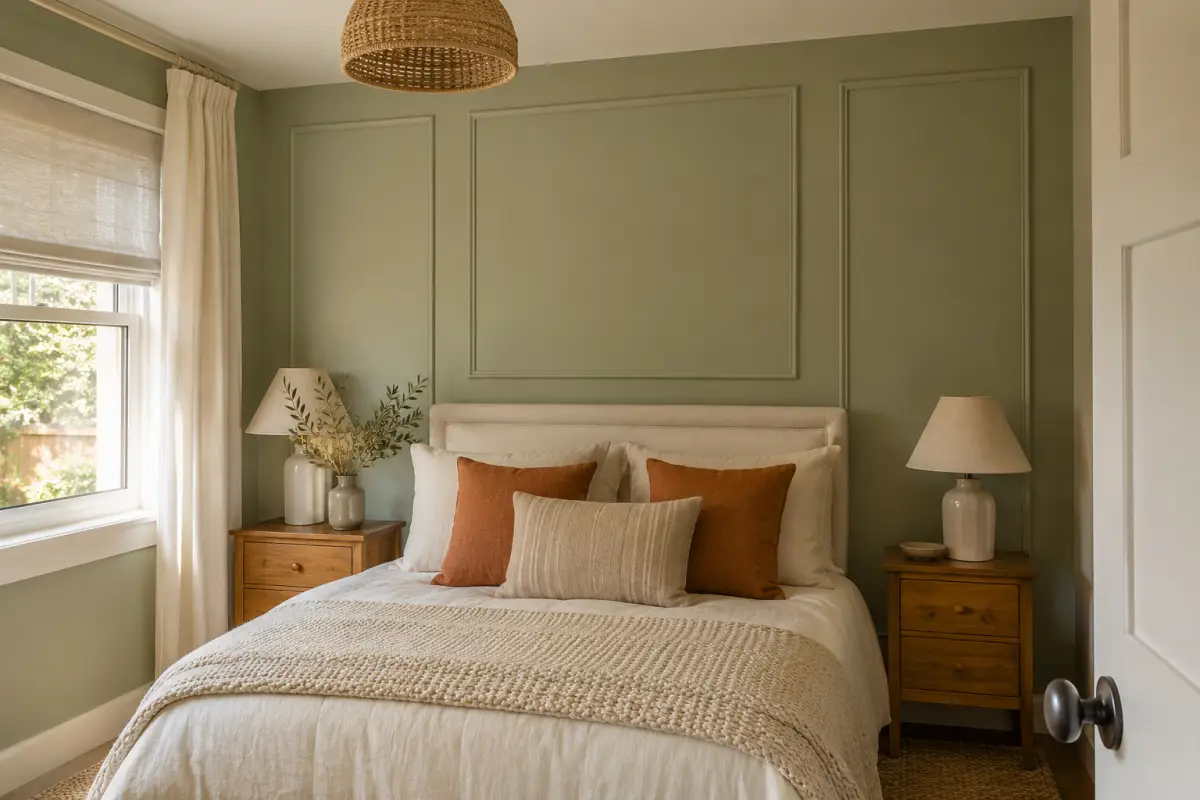
10. Add picture-frame molding to one wall
Thin wood molding in rectangles, painted the same color as the wall, gives a plain small bedroom the look of an older, paneled home. It adds character without adding a single object.
Plan the boxes with painter’s tape first, then cut the molding with a miter box and hand saw. Attach it with construction adhesive and small finishing nails, fill the holes, caulk the joints and paint wall and molding together.
Skill: advanced beginner. Renter note: permanent, so ask first.
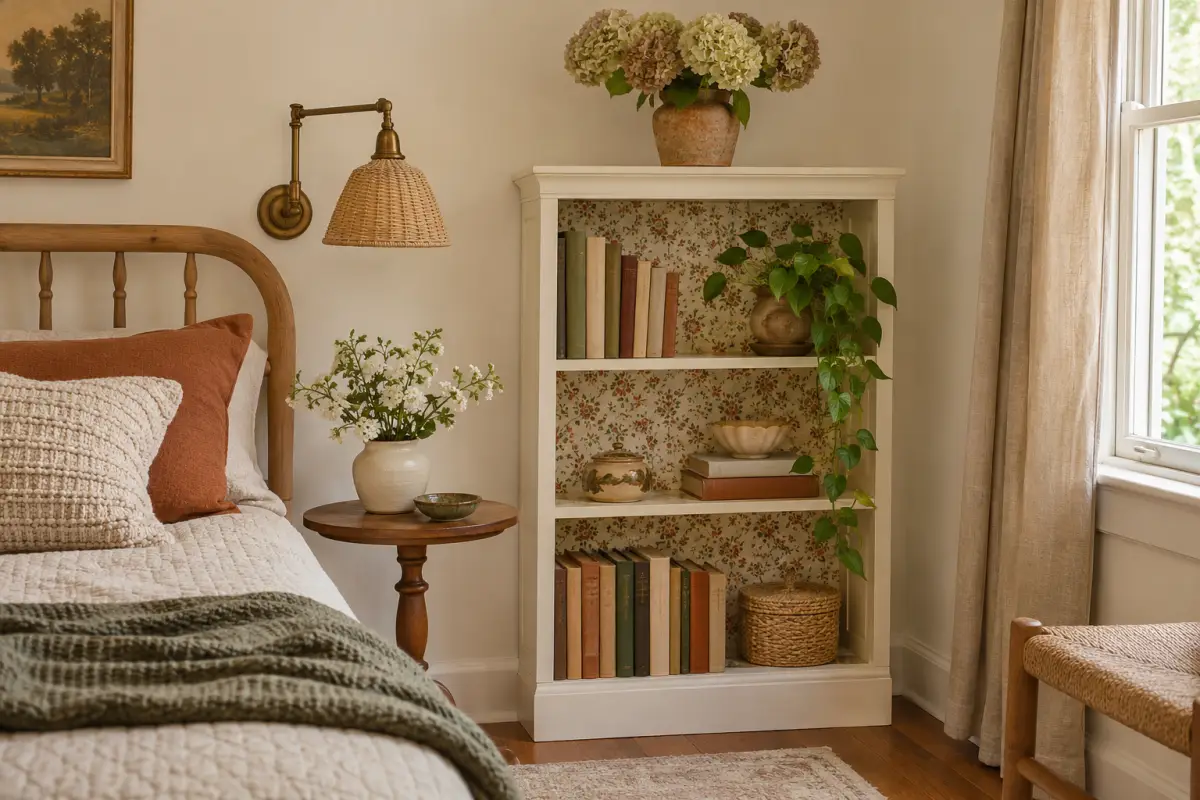
11. Line a bookcase back or drawer fronts with wallpaper
You do not need a whole wall of wallpaper to get pattern into a small room. Peel-and-stick paper on the back panel of a bookcase or on dresser drawer fronts gives a small, controlled hit of pattern.
Clean the surface, cut each piece a little larger, smooth it from the center out and trim the edges with a sharp craft knife. Our peel-and-stick wallpaper ideas cover the larger version.
Skill: beginner. Renter note: fully renter-friendly.
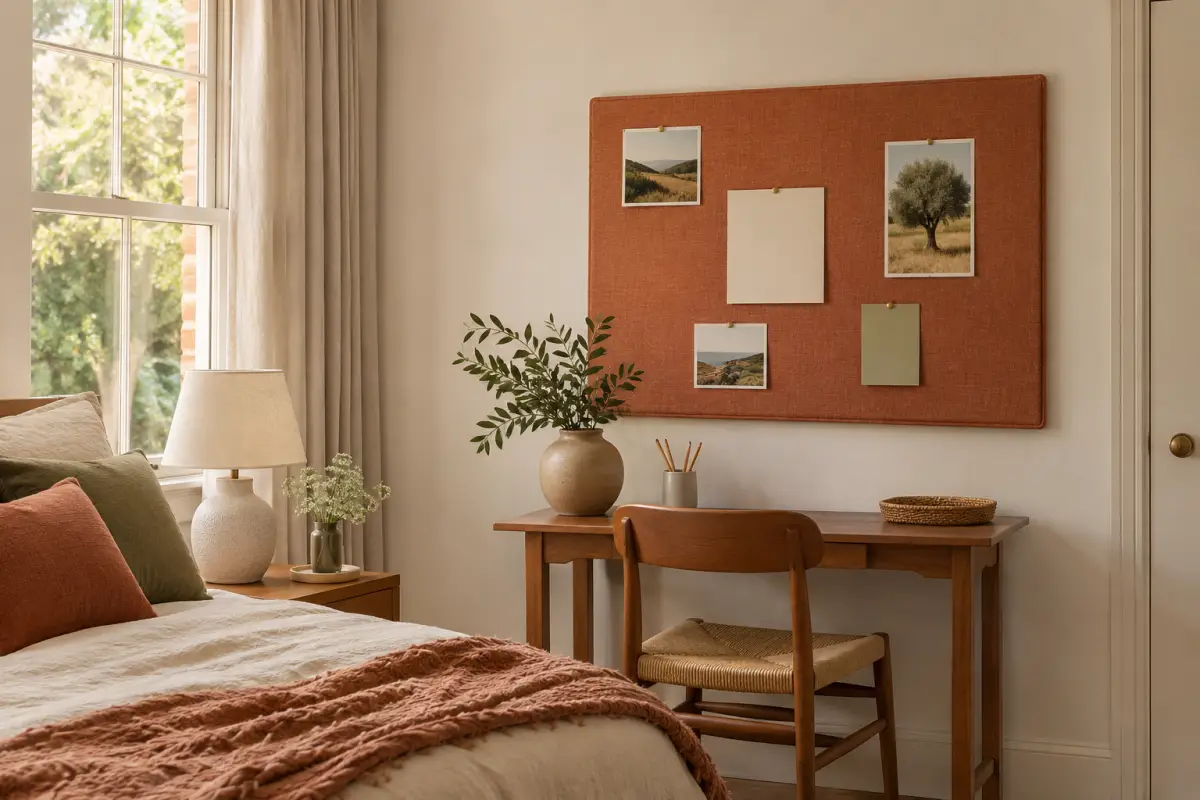
12. Cover a corkboard in fabric
A fabric-covered corkboard gives photos, invitations and notes a home other than the dresser top. It also works as soft art above a desk.
Lay the fabric face down, set the board on it and wrap the edges to the back. Staple the middle of each side first, then work out toward the corners and fold the corners like a gift.
Skill: beginner. Renter note: hang it with a single nail, or lean it on a desk.
DIY light and furniture makeovers
These projects change what you already own, which keeps them cheap and keeps the room from filling up. For more cheap moves in the right order, see our budget bedroom makeover plan.
Before you start: four safety checks
- Drilling: scan for studs and live wires first, and wear safety glasses
- Lamps: use bulbs that match the wattage on the fixture
- Old painted furniture: refinishing it can expose you to lead, so test before you sand
- Painting: open windows and follow the label precautions
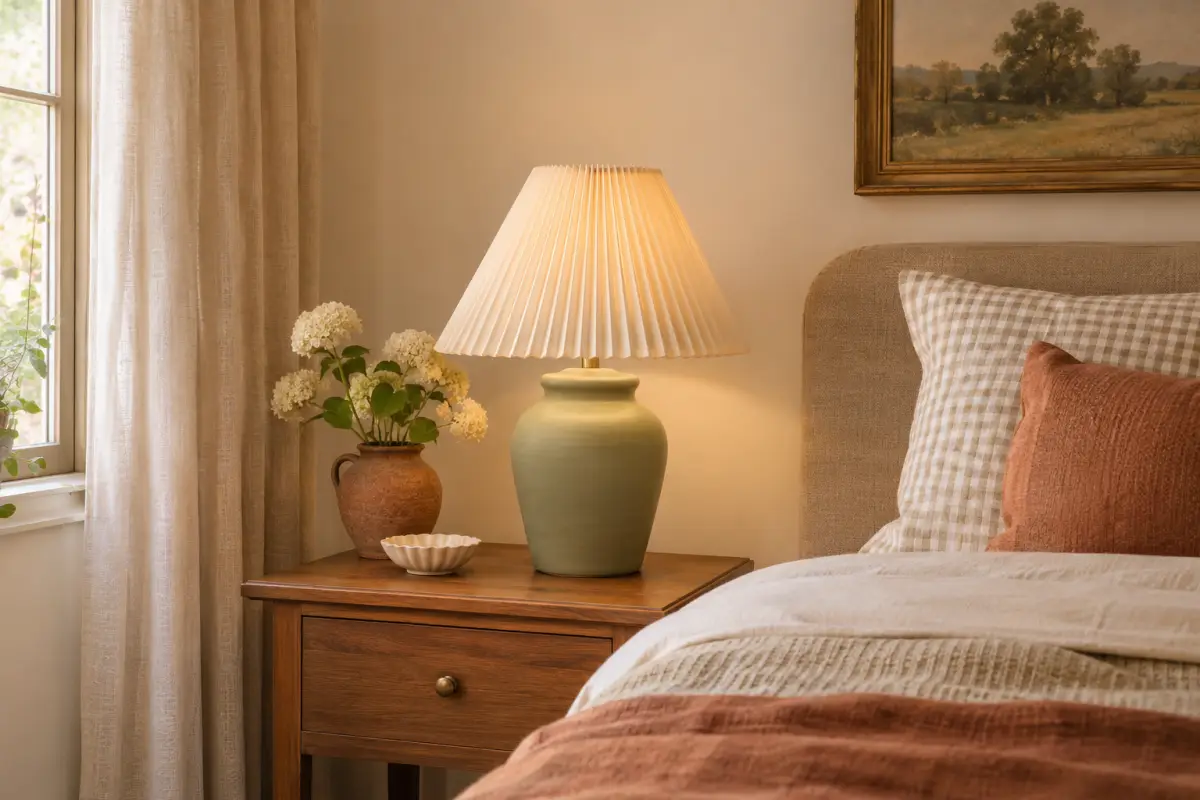
13. Give a thrift lamp a makeover
A secondhand lamp with a good shape and a tired finish is an easy win. Unplug it, clean the base, scuff it with a sanding sponge and spray it with primer and paint made for its material.
Finish with a new shade in linen or pleated paper. Before you put a bulb in, check the label on the socket: the Electrical Safety Foundation advises using bulbs that match the recommended wattage on the fixture.
If the cord is cracked or frayed, replace the lamp or have it rewired before you use it.
Skill: beginner. Renter note: fully renter-friendly.
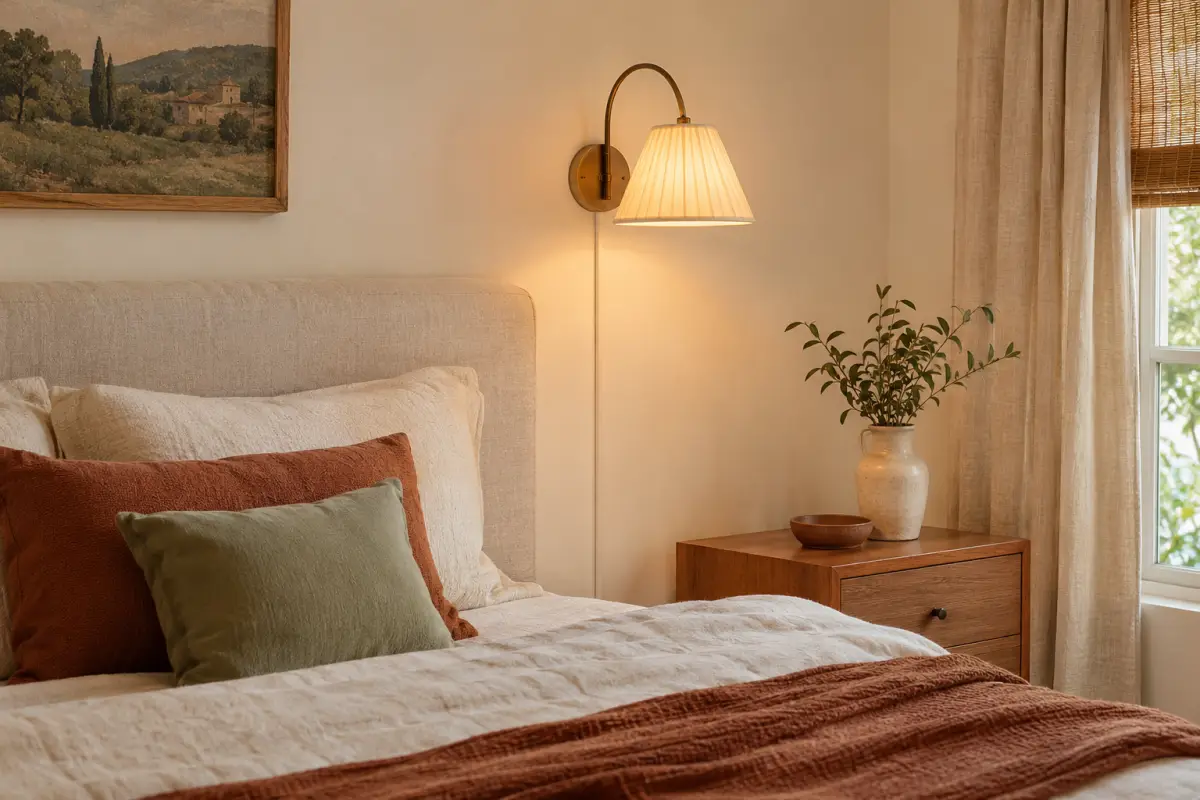
14. Install plug-in wall sconces with cord covers
Plug-in sconces light the bed and leave a tiny nightstand free. They need no electrician: the cord runs down the wall into an outlet.
Mount each sconce at a comfortable reading height, then hide the cord inside a paintable cord cover and paint it the wall color. Plug it straight into the wall outlet, since ESFI says extension cords are for temporary use only.
Skill: beginner. Renter note: a few small screws.
You need: two plug-in sconces, paintable cord covers, wall paint, drill, level.
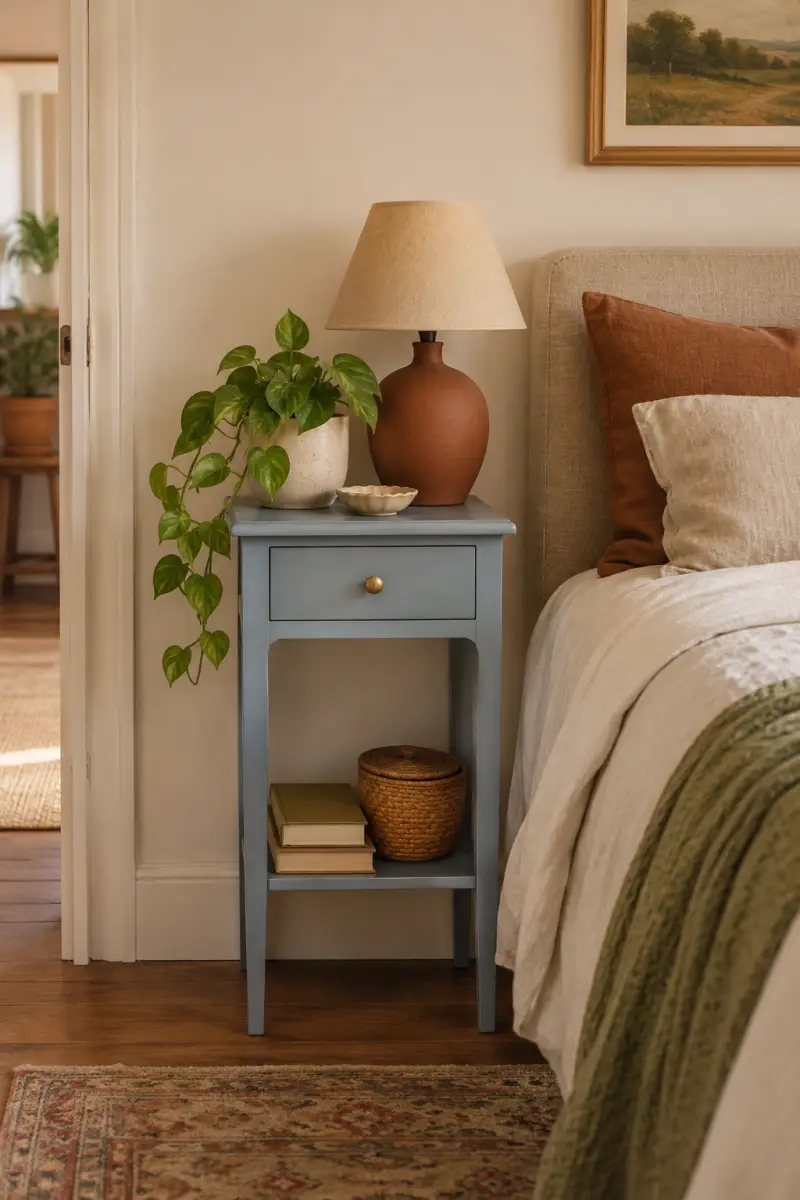
15. Paint a thrifted nightstand
A narrow secondhand nightstand in solid wood is often cheaper than a new flat-pack one and sturdier too. Clean it, sand lightly, prime and paint it in a color that ties to your bedding.
Old paint needs care. The EPA lists refinishing old furniture among the jobs that can put you in contact with lead, and notes that homes built before 1978 are more likely to have lead-based paint. Test old painted pieces with a lead test kit before you sand.
Paint in a room with open windows, since the EPA advises more ventilation when using products that release VOCs.
Skill: beginner. Renter note: fully renter-friendly.
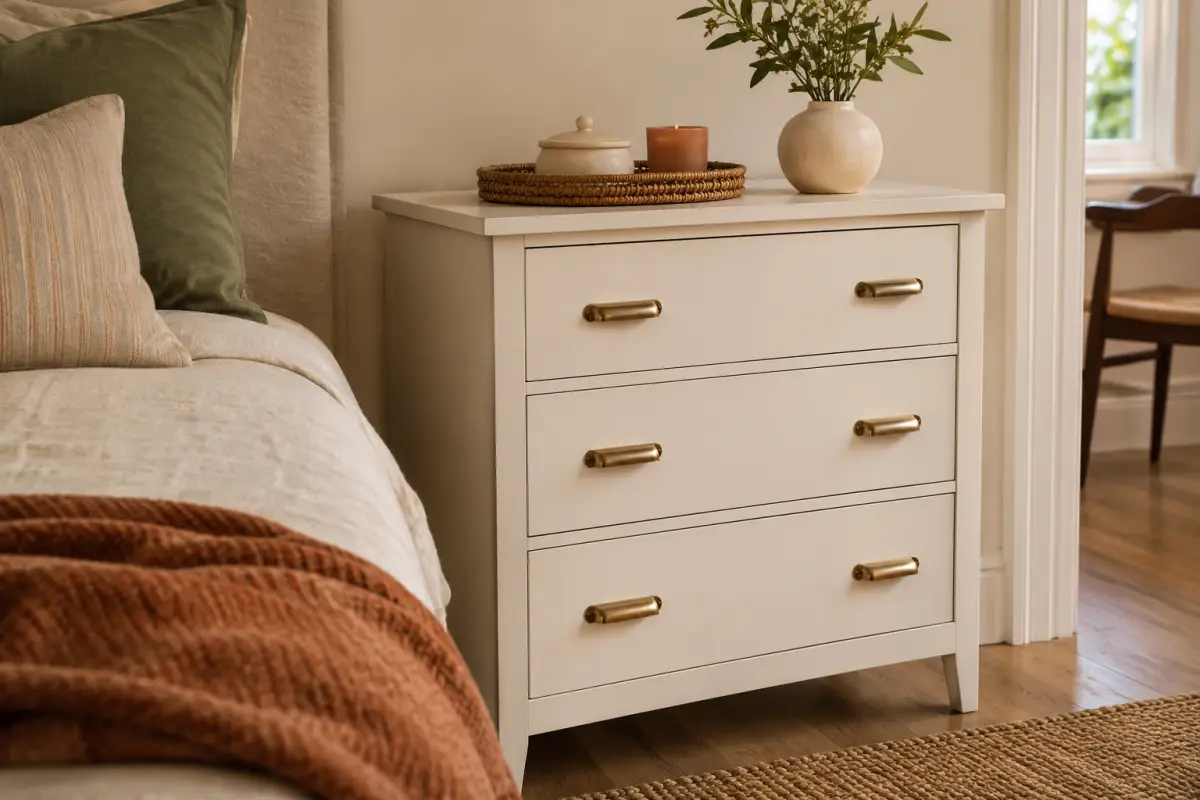
16. Swap the hardware on a dresser
New knobs and pulls are the fastest dresser makeover there is. Brass, leather or ceramic hardware makes a plain dresser look chosen.
Measure the distance between the existing screw holes before you shop, so the new pulls fit without drilling. Keep the old hardware in a bag in case you want it back.
While the drawers are out, check that the dresser is anchored: CPSC says new dressers come with anti-tip devices that should be installed right away. Our dresser styling guide covers the top.
Skill: beginner. Renter note: fully renter-friendly.
17. Make no-sew curtains and hang them high
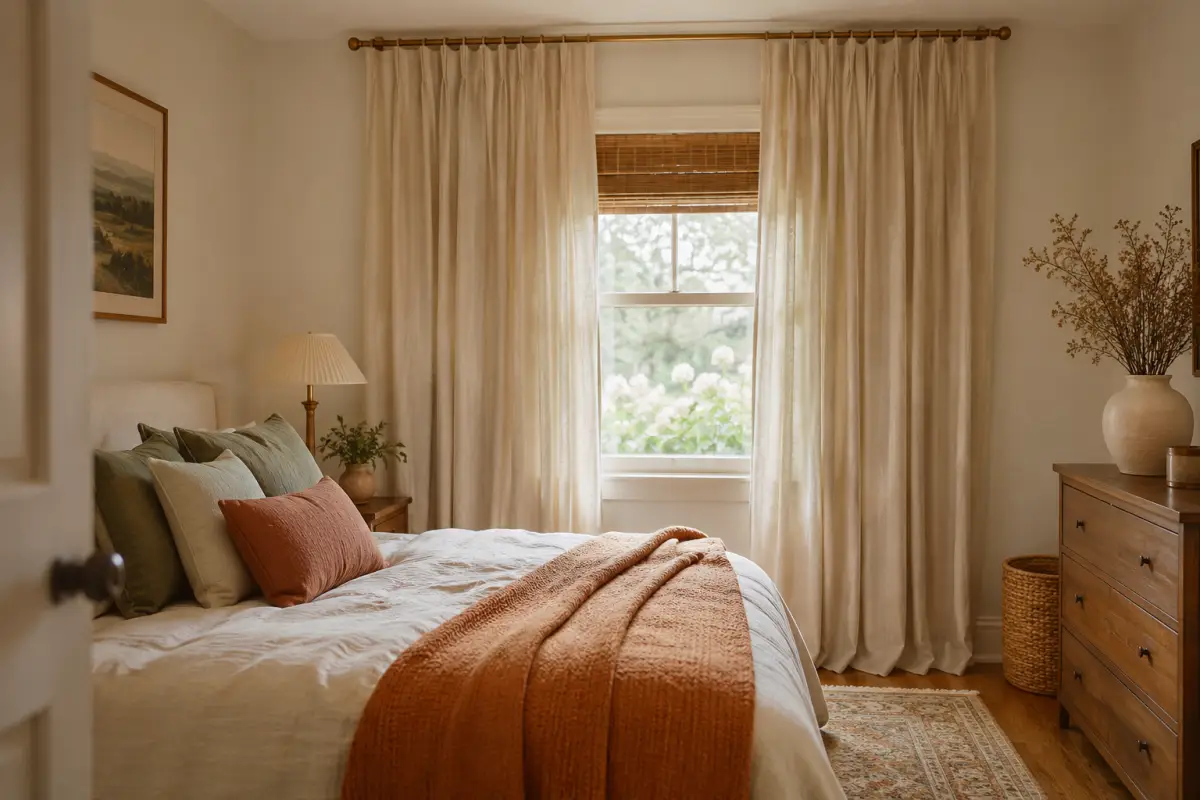
Curtains hung close to the ceiling and wider than the window make a small room look taller. Store-bought panels are rarely the right length, so hem your own.
Iron-on hem tape gives a clean hem with no sewing machine. A flat sheet or a length of linen can become a curtain the same way, with clip rings on the top edge.
Steps: measure from the rod to the floor, fold the hem to that length, slide the tape inside and press with an iron as the tape’s directions say.
Skill: beginner. Renter note: renter-friendly if you use the existing rod.
18. Paint the frame of a cheap mirror
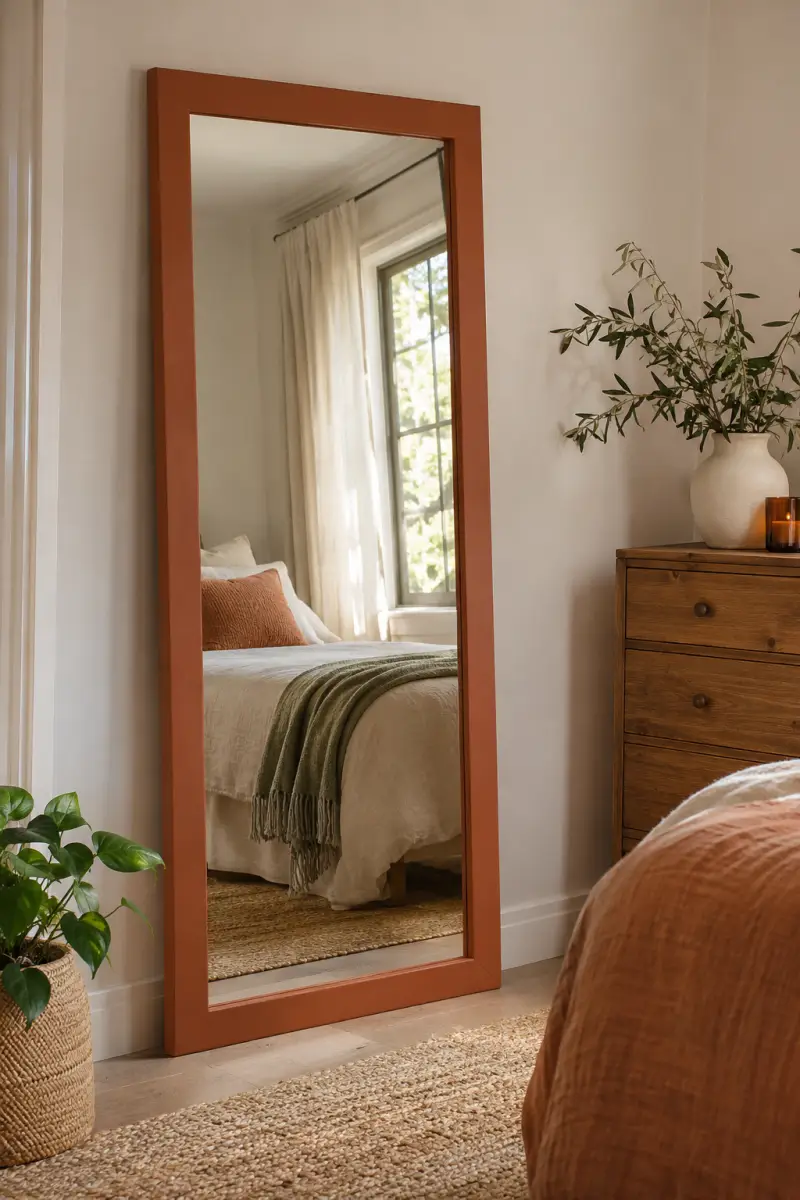
A basic full-length mirror bounces light around a small bedroom, and a painted frame makes it look like a nicer piece. Tape the glass edges, scuff the frame, prime and paint it in a warm color or a soft metallic.
If the mirror leans on the floor, secure the top to the wall so it cannot slide or tip. Our bedroom mirror ideas show where to place it for the most light.
Skill: beginner. Renter note: renter-friendly; a strap or small hook holds the top.
DIY bedroom ideas FAQ
What are some DIY ideas for a small bedroom?
Start with projects that clear the floor: a floating shelf instead of a nightstand, a pegboard instead of a cluttered dresser top, and rolling boxes under the bed. Then add one wall project, such as a painted headboard shape or a curtain divider. For general ideas beyond DIY, see our small bedroom ideas.
How do I make my small bedroom look nice?
Clear the floor, hang curtains high and use warm lamp light instead of the ceiling light. Put the bed in the right spot first; our small bedroom layout guide walks through it.
How do I make my room cute with DIY decor?
Pick a few small makeovers in one color family: a painted lamp, a fabric pinboard, new dresser pulls and a painted mirror frame. Matching colors make many small DIY room decor projects look planned rather than random.
How do I cheaply decorate my bedroom?
Work with what you have. Paint a thrifted nightstand, swap hardware, hem your own curtains and paint a headboard shape instead of buying one. More ideas live in our bedroom ideas section.
Which DIY projects are best for renters?
Rolling under-bed boxes, a tension-rod closet, a hanging closet rod, lamp and mirror makeovers, painted thrift furniture and no-sew curtains need no holes in the walls. Check your lease before painting or adding molding.
Save this post to your small bedroom board, pick one project for this weekend, and come back for the next one when it is done.
Sources
- SKÅDIS Pegboard, white, IKEA US
- How to Install Floating Shelves, Lowe’s, 2025-11-25
- AnchorIt.gov, U.S. Consumer Product Safety Commission (CPSC)
- Home Electrical Fires, Electrical Safety Foundation International (ESFI), 2021-08-17
- Protect Your Family from Sources of Lead, U.S. Environmental Protection Agency (EPA), 2026-11-12
- Volatile Organic Compounds’ Impact on Indoor Air Quality, U.S. Environmental Protection Agency (EPA), 2026-06-23