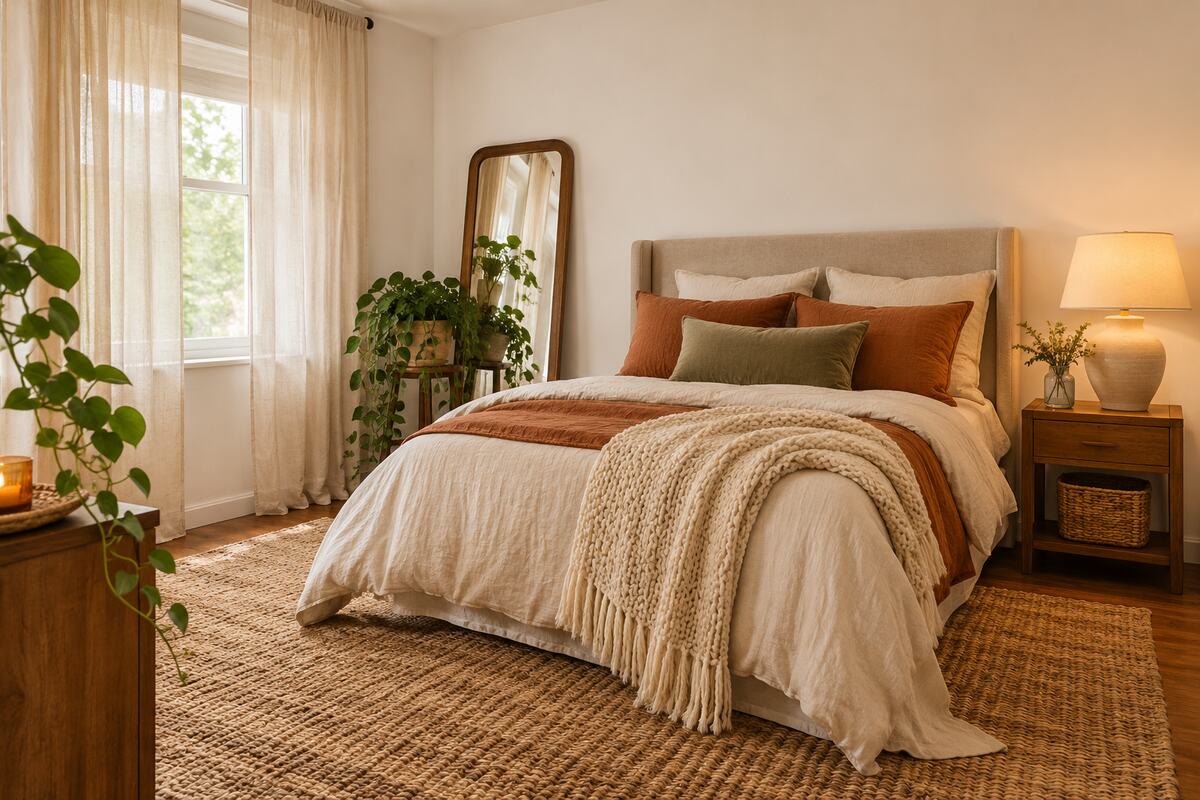
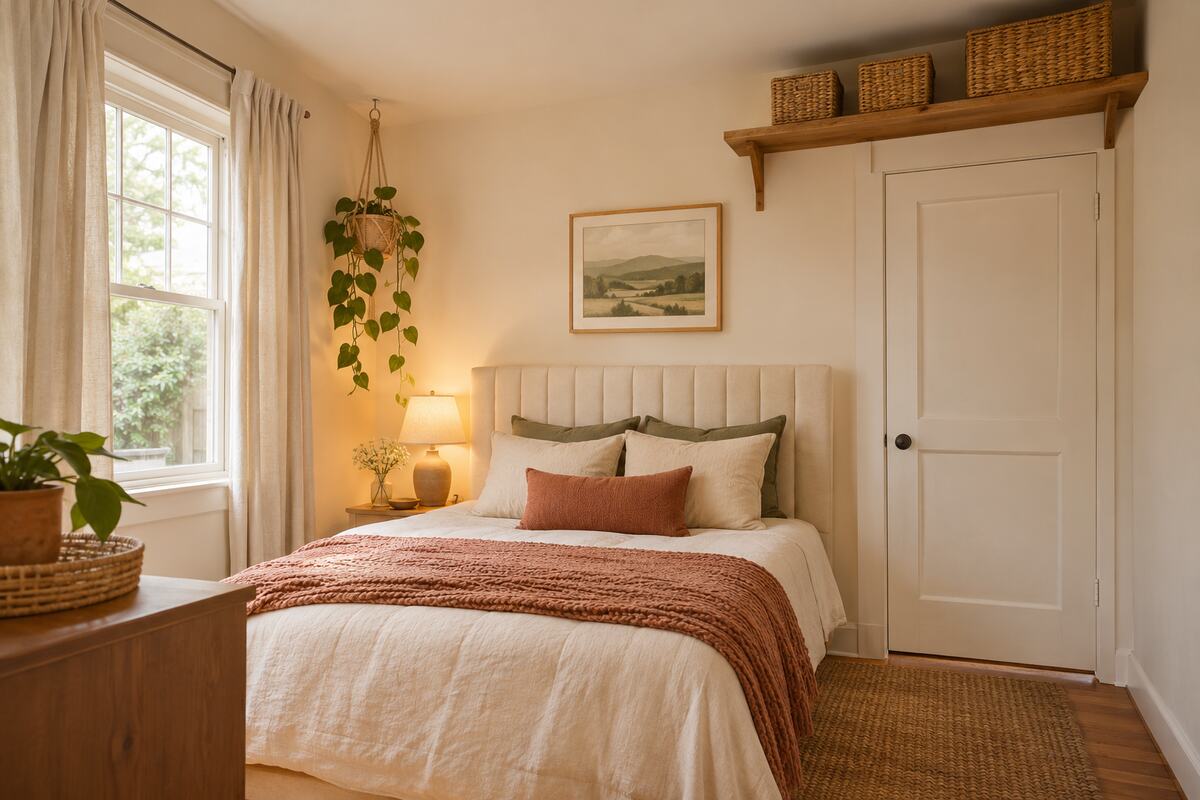
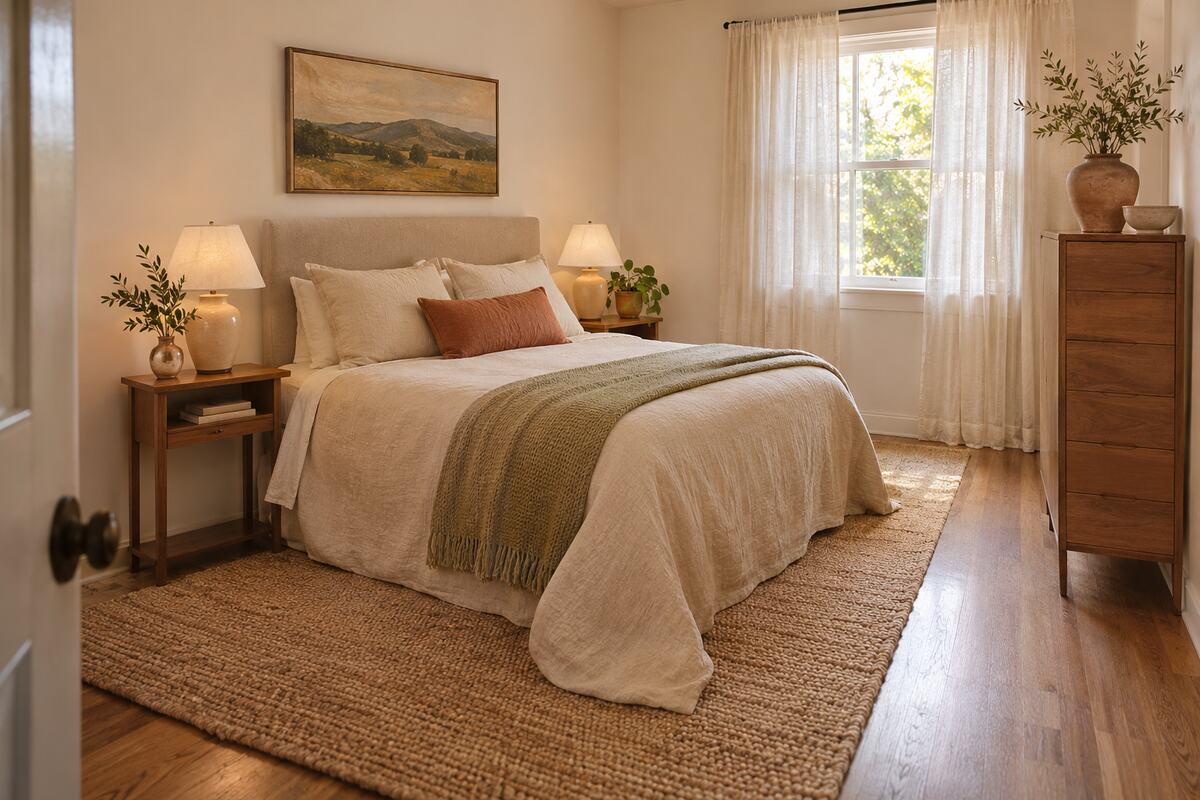
18 Small Bedroom Furniture Ideas That Save Floor Space, Plus What to Measure First
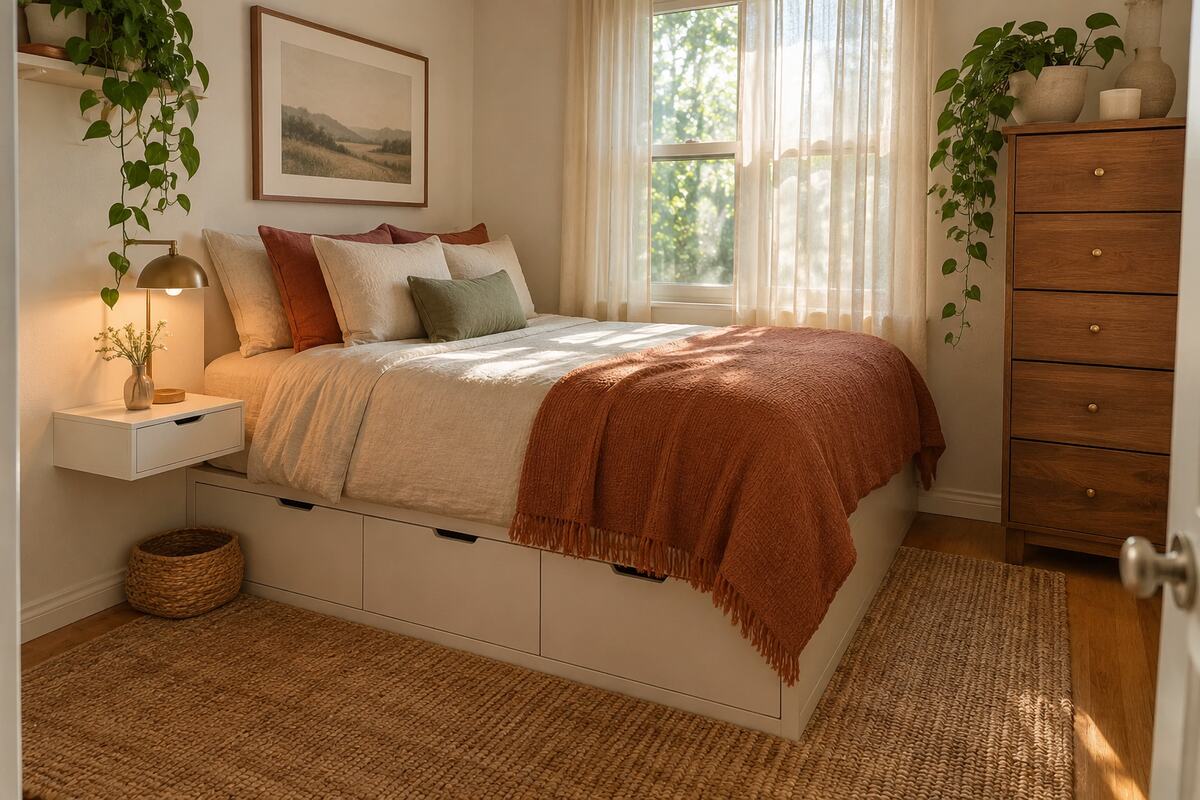
These small bedroom furniture ideas help you pick pieces that store more and take up less floor: beds with drawers, beds that fold away, nightstands that hang on the wall and dressers that grow up instead of out. Each idea ends with what to look for when you shop, so you can compare options in any store.
Real products are named only where we checked the maker’s own page, and every size comes from that page or a retailer guide. Before you buy anything, run through the measuring checklist near the end. It takes ten minutes and saves a return.
Beds that store or fold
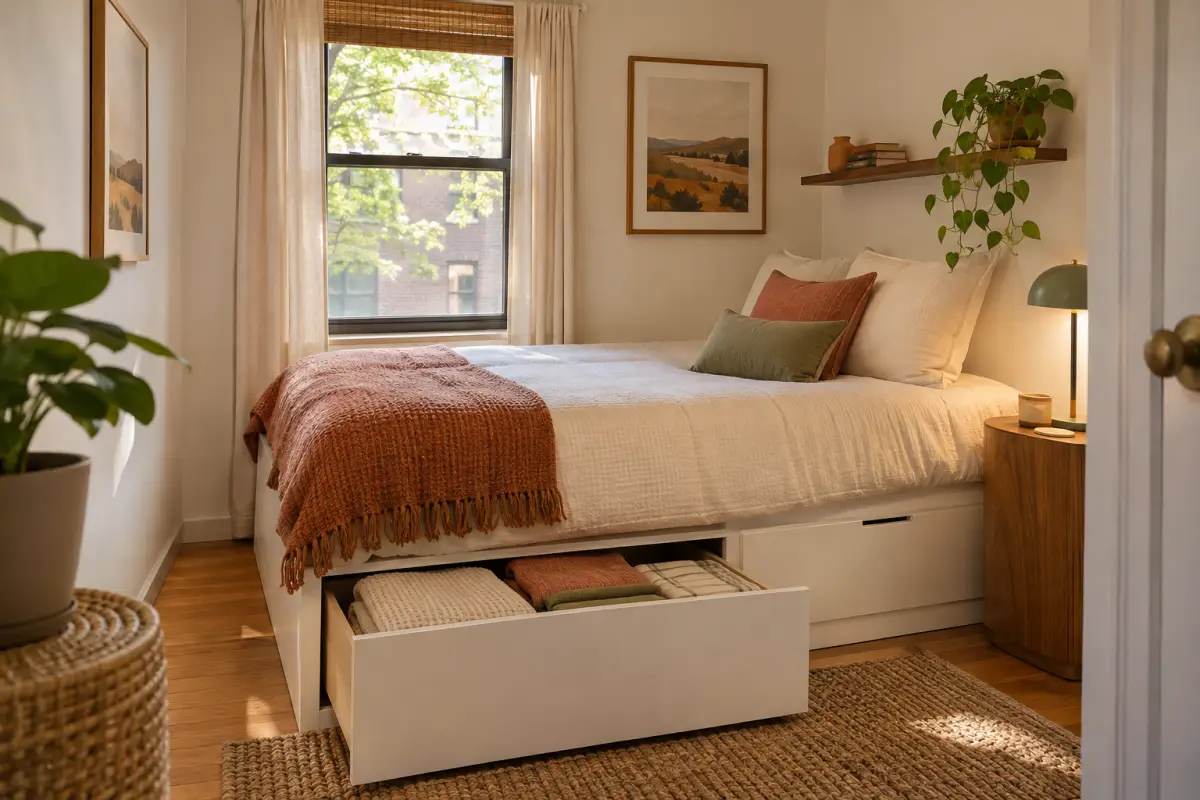
1. A storage bed with pull-out drawers
In a small room the bed is the biggest piece you own, so make it work as a dresser too. Drawers in the base hold sheets, sweaters and off-season clothes that would otherwise need a second piece of furniture.
As one example, IKEA’s MALM high bed frame with storage boxes in queen hides four large drawers on casters and measures 66 1/8 inches wide. Drawers need room to open, though: Castlery’s storage bed guide suggests 30 inches or more on the side where a drawer pulls out.
Look for: drawers on casters or runners, drawers on the side you can actually reach, and a total width that still leaves you a walkway.
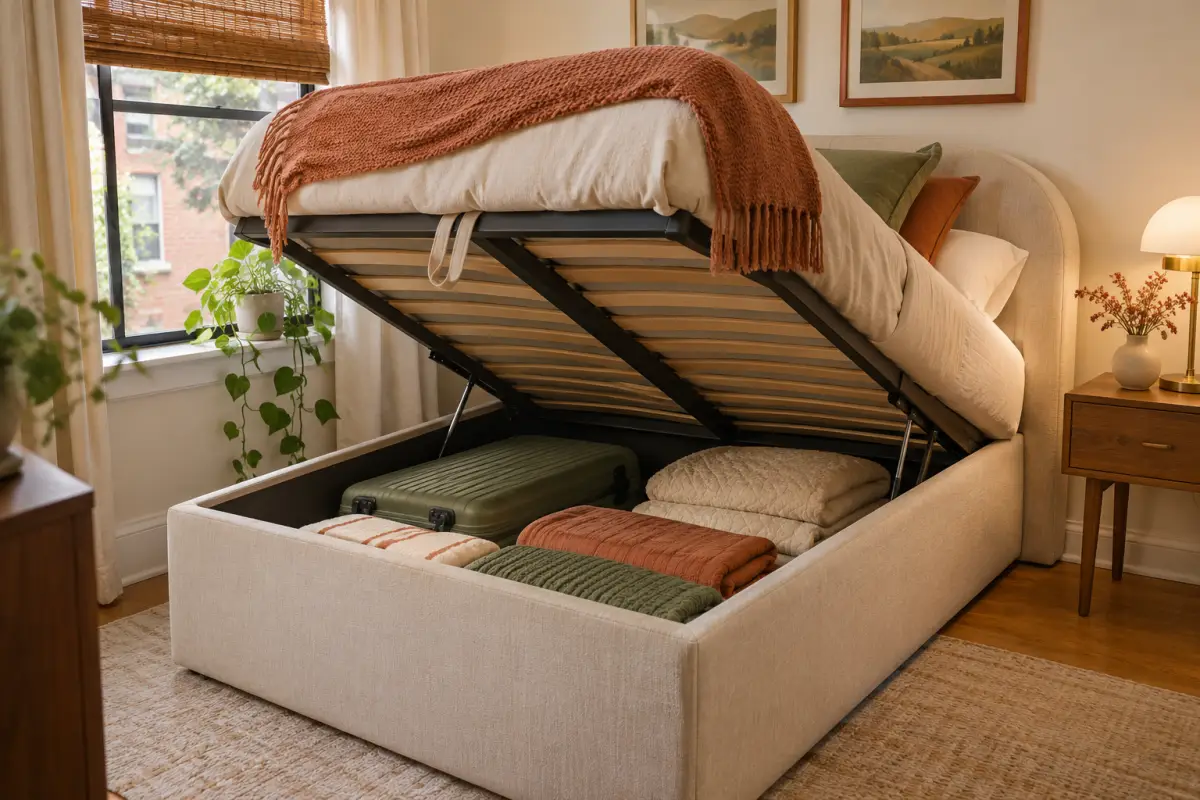
2. A lift-up storage bed when the sides are tight
If your bed sits against a wall or a dresser, side drawers may never open fully. A lift-up bed solves that: the mattress platform rises on a gas or hydraulic lift and the whole base becomes one big storage box.
It suits bulky things you reach for a few times a year, like spare duvets, luggage and holiday bins. Check what is above the bed before you buy, because the platform needs space to swing up past headboards, shelves and window sills.
Look for: gas-lift pistons, a platform that stays open on its own, and a base lined or divided so things do not slide around.
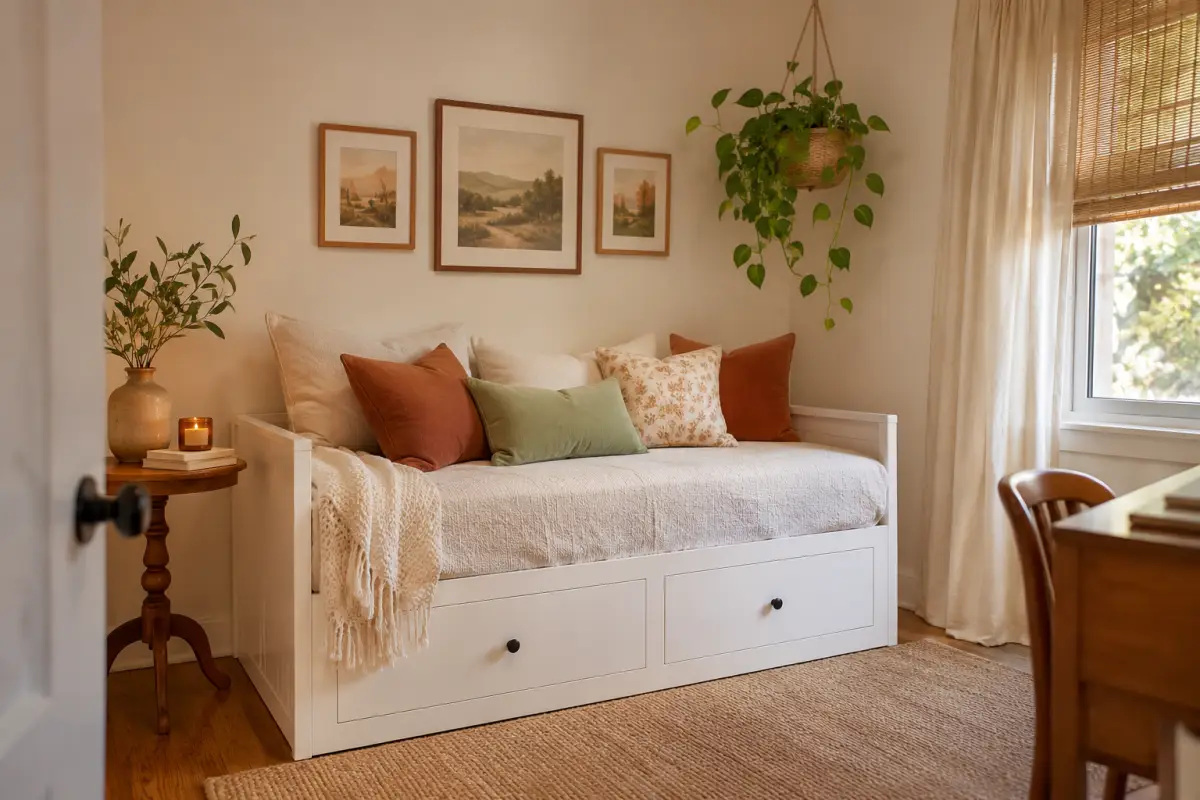
3. A daybed with drawers for a room that does two jobs
A daybed is a sofa by day and a bed at night, which makes it a strong choice for a guest room, home office or a teen’s room. With drawers underneath, it also replaces a storage chest.
IKEA’s BRIMNES daybed is one example: its page calls it a sofa by day and a bed for one or two by night, and it uses two twin mattresses. It is 41 inches wide, and the two large drawers hold duvets, pillows and bed linen.
Look for: a back and arms that make it comfortable to sit on, drawers or a trundle, and a mattress depth the frame allows.
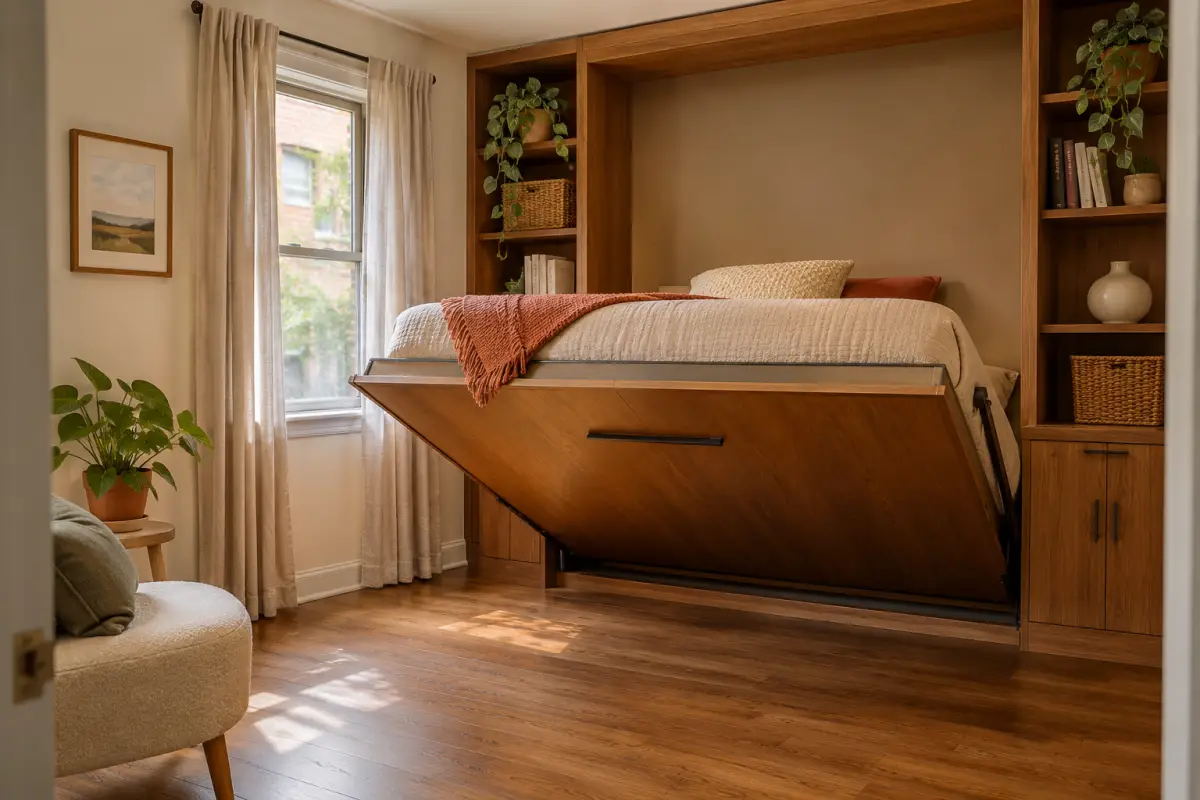
4. A Murphy bed for a room you only sleep in at night
A Murphy bed folds up into a wall cabinet, so the floor is free all day for a desk, a yoga mat or play space. It works best in a guest room or studio where the bed is not made and unmade constantly.
Plan for the open bed, not the closed cabinet. According to Lori Beds’ Murphy bed measuring guide, most Murphy beds extend between 80 and 90 inches from the wall when open. Measure from the outer edge of the baseboard, not the wall itself.
Look for: a cabinet with side shelves, a mattress depth the mechanism allows, and installation that secures the cabinet to the wall.
5. A bookcase headboard instead of two nightstands
A headboard with built-in shelves gives you a place for a book, glasses and a phone without any floor space beside the bed. That frees the sides of the bed for a walkway, which matters most when one side is close to a wall.
Some styles also add a hidden cubby or an outlet. Keep the shelves shallow so the bed does not move too far from the wall.
Look for: a shallow depth, a ledge wide enough for a phone and a glass, and a cord gap or built-in outlet.
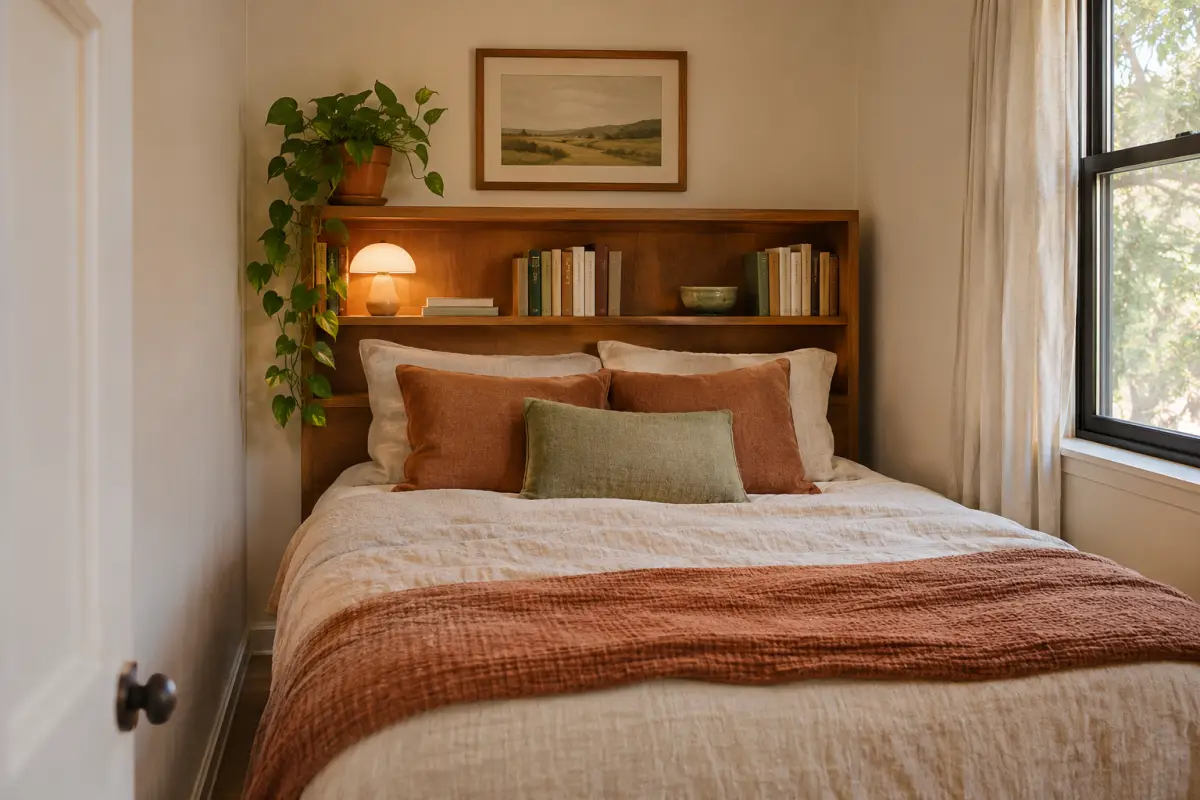
6. A bed size that fits the room, not the other way round
The best space saver is sometimes a smaller mattress. On Casper’s size guide, a full measures 53 by 75 inches and a queen 60 by 80 inches. That difference of a few inches on each side can be your walkway.
Casper suggests a room of 10 by 10 feet for a queen, with 10 by 12 feet feeling more comfortable. If you are torn, read our comparison of a queen vs king bed in a small bedroom before upgrading.
Mattress footprints compared
Twin: 38 x 75 inches
Kids, teens, daybeds and narrow rooms.
Full: 53 x 75 inches
One adult, or guests, in a small room.
Queen: 60 x 80 inches
Two adults, if the room allows a walkway.
Frames add width, so check the frame's overall size too.
Look for: the overall frame dimensions on the product page, not only the mattress size.
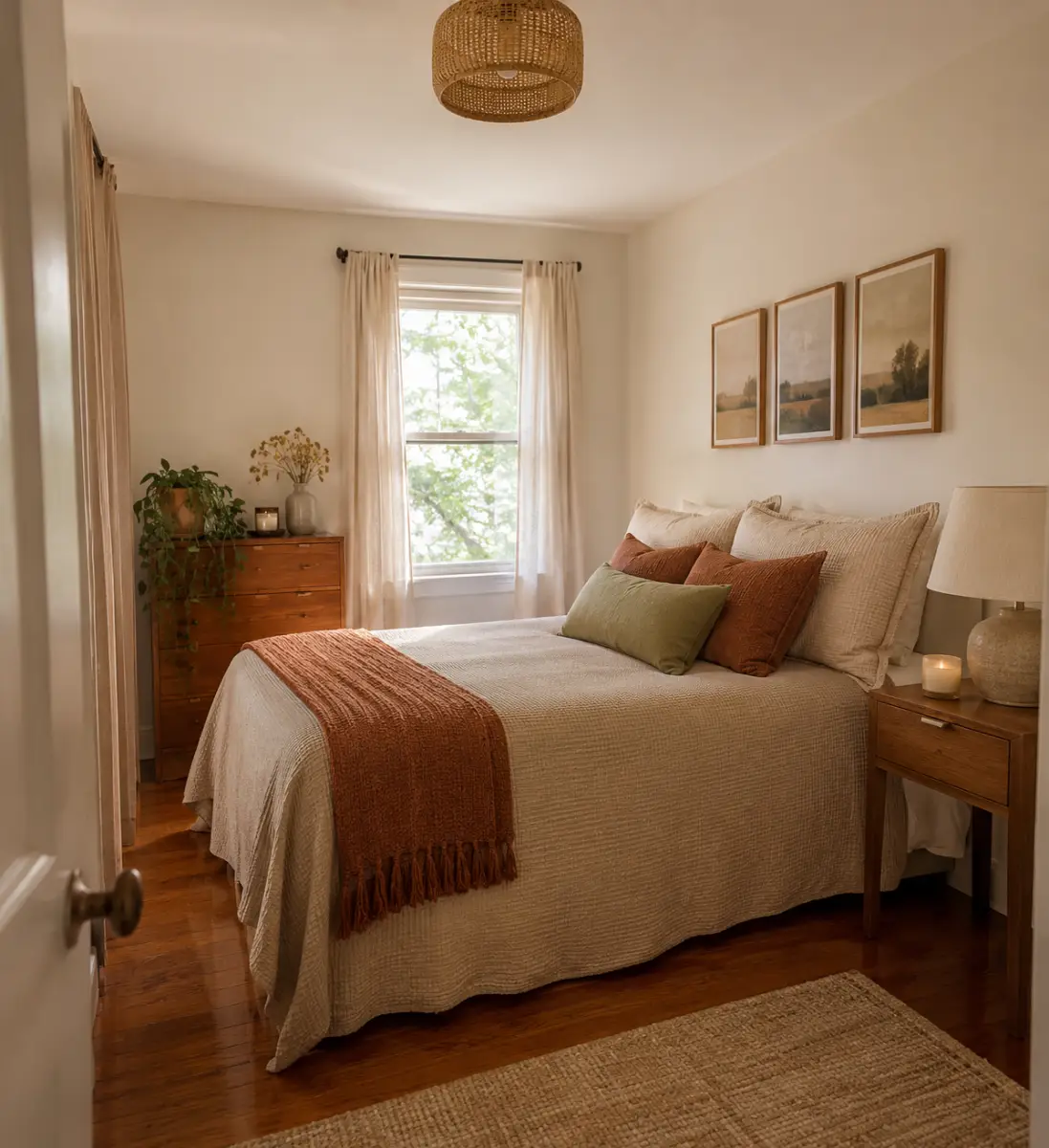
Bedside pieces that free the floor
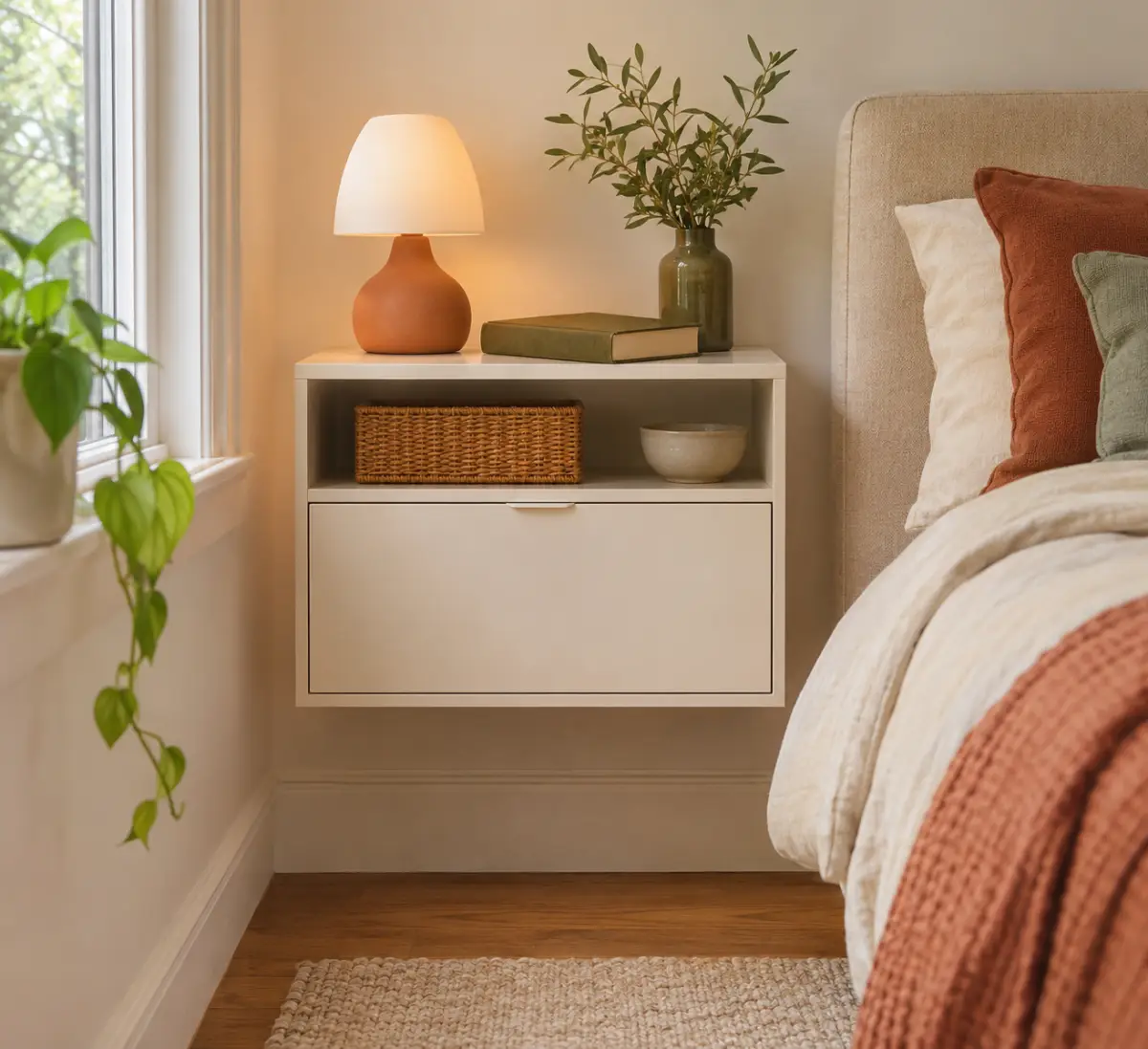
7. A wall-mounted nightstand
A wall-mounted nightstand keeps the floor under it clear, so the room looks bigger and you can still slide storage bins under the bed. You also choose the exact height to match your mattress.
IKEA’s GRÅFJÄLLET wall-mounted bedside table is 16 1/2 inches wide, with one open shelf and a flip-open door. Its page notes the screws for wall mounting are sold separately and that it must be secured to the wall.
Look for: a drawer or door to hide clutter, a top deep enough for a lamp, and wall hardware suited to your walls (ask your landlord first if you rent).
8. A floating shelf as a nightstand
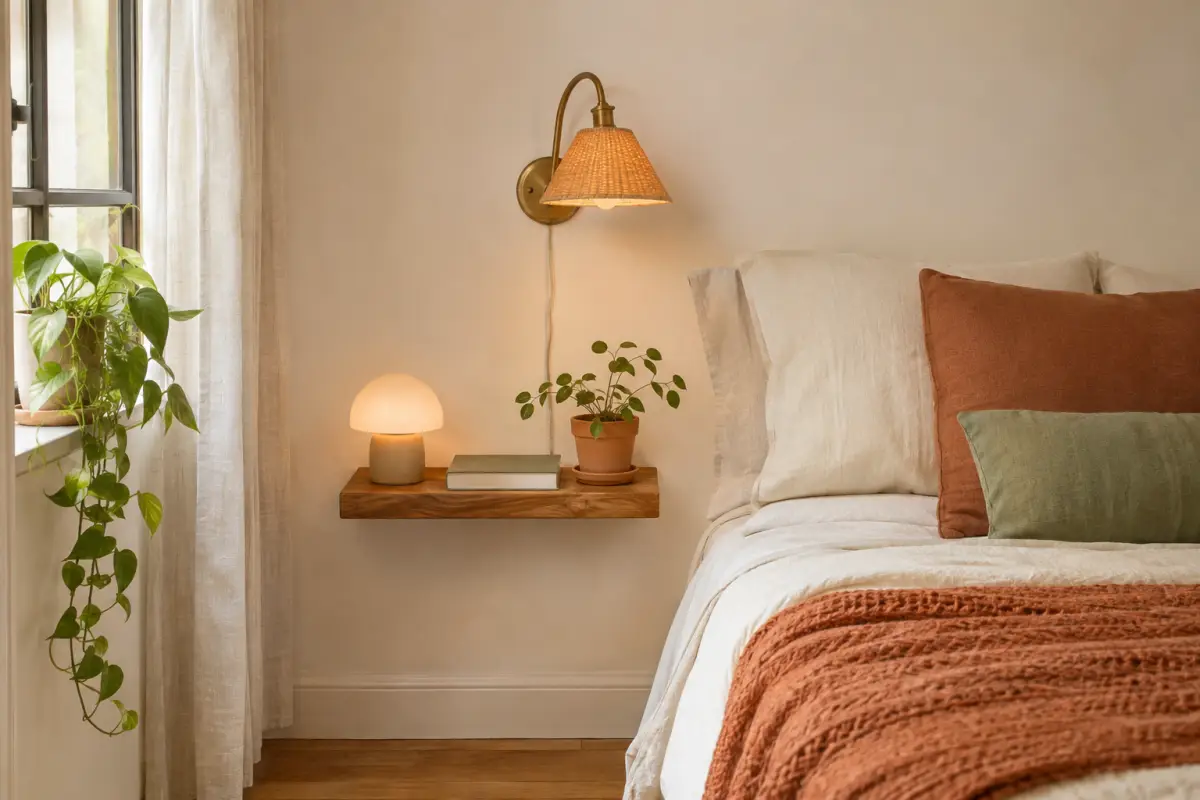
The lightest bedside option is a single floating shelf. It holds a phone, a book and a small lamp, and it costs less than most nightstands.
Pick a shelf with a lip or a small drawer if things tend to slide off at night. A plug-in wall sconce above it frees the shelf from a lamp entirely.
Look for: a solid-wood or metal-bracket shelf rated for the load, mounted at about mattress height.
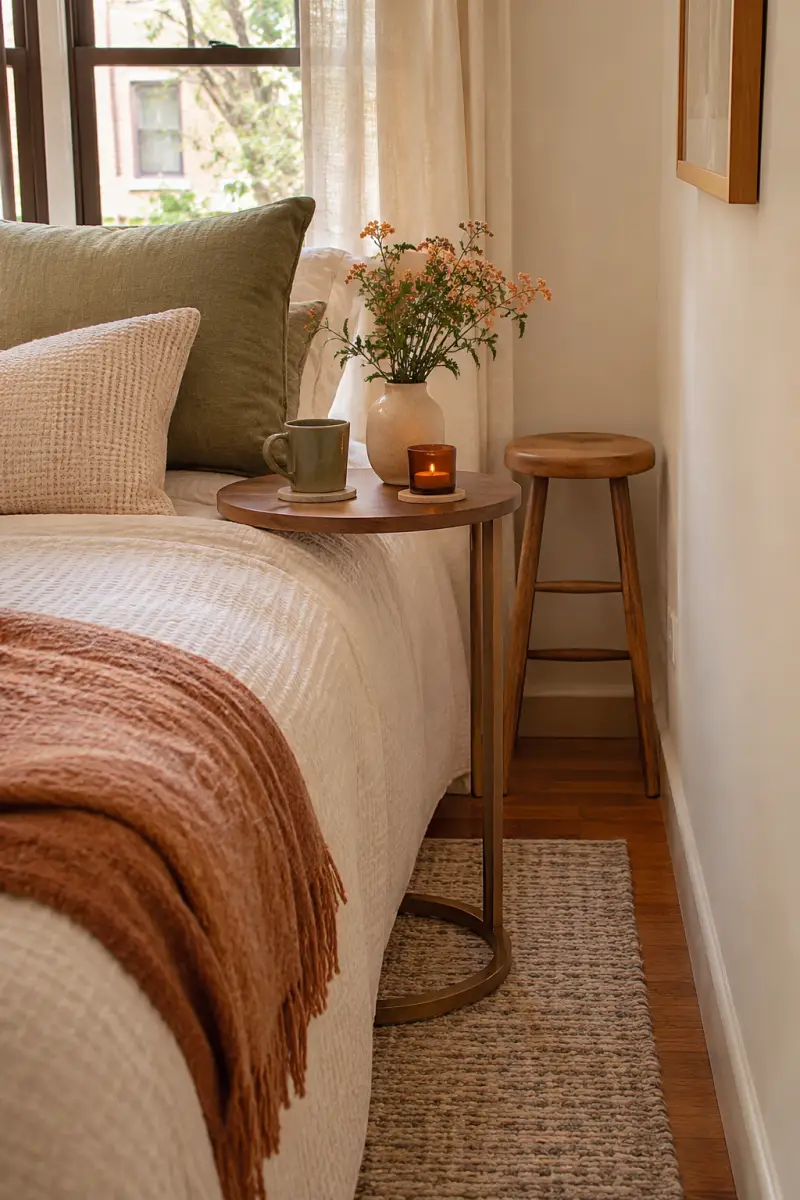
9. A slim C-table, stool or narrow nightstand
If you cannot drill, go narrow instead of wall-mounted. A C-shaped side table slides partly under the bed edge, and a sturdy stool doubles as extra seating when friends visit.
Round tops are easier to walk past than square corners in a tight gap. Keep a basket underneath for the things that would clutter the top.
Look for: a small footprint, a top at or slightly above mattress height, and a round or soft-edged top for narrow walkways.
Dressers and storage that go up, not out
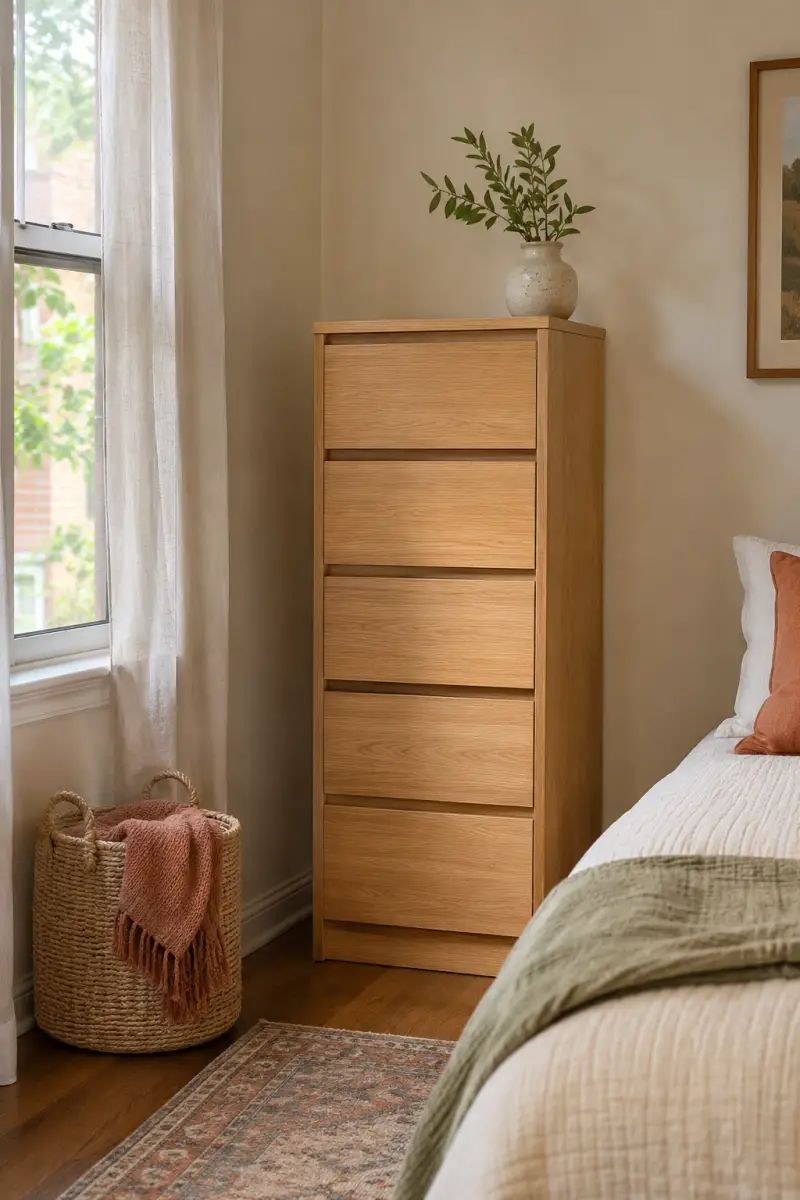
10. A narrow, tall dresser
A tall, narrow chest gives you drawers without eating a wall. IKEA’s STORKLINTA 5-drawer dresser, for example, is 15 3/4 inches wide and 47 1/4 inches tall. Its drawers pull out 10 7/8 inches, so plan that space in front.
Tall pieces tip more easily. That dresser lets only one drawer open at a time until it is anchored to the wall, and the CPSC’s Anchor It campaign says new dressers come with anti-tip devices that should be installed right away.
Look for: included anti-tip hardware, a depth that clears your door swing, and drawers that stop before they pull out completely.
11. A dresser that doubles as a nightstand
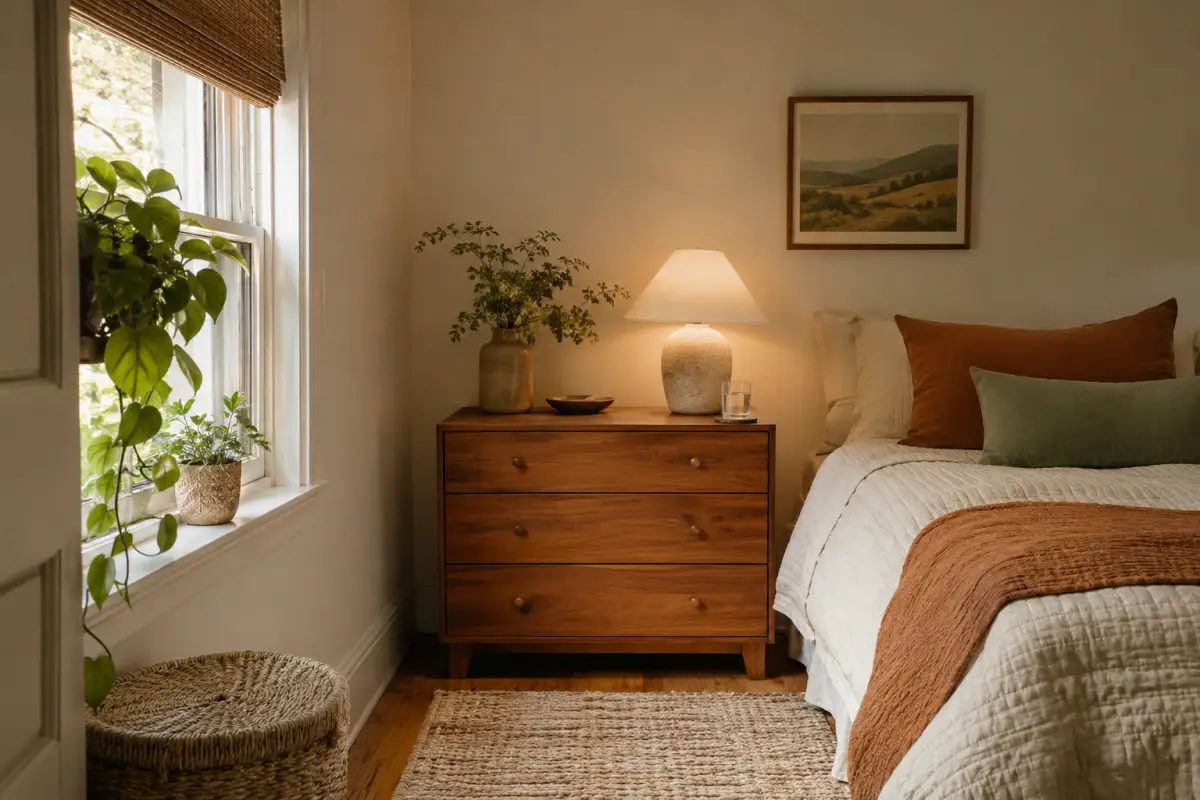
Put a low, wide chest of drawers beside the bed and skip the nightstand on that side. You get a lamp surface and three or four drawers in the same spot.
This works best when the dresser top sits close to mattress height. Keep the top styled lightly, because it is now your bedside table too; our guide on how to style a dresser has ideas that leave room for a lamp and a glass of water.
Look for: a height close to your mattress, a depth that does not block the walkway, and anti-tip brackets.
12. Tall bookcases or wall shelves
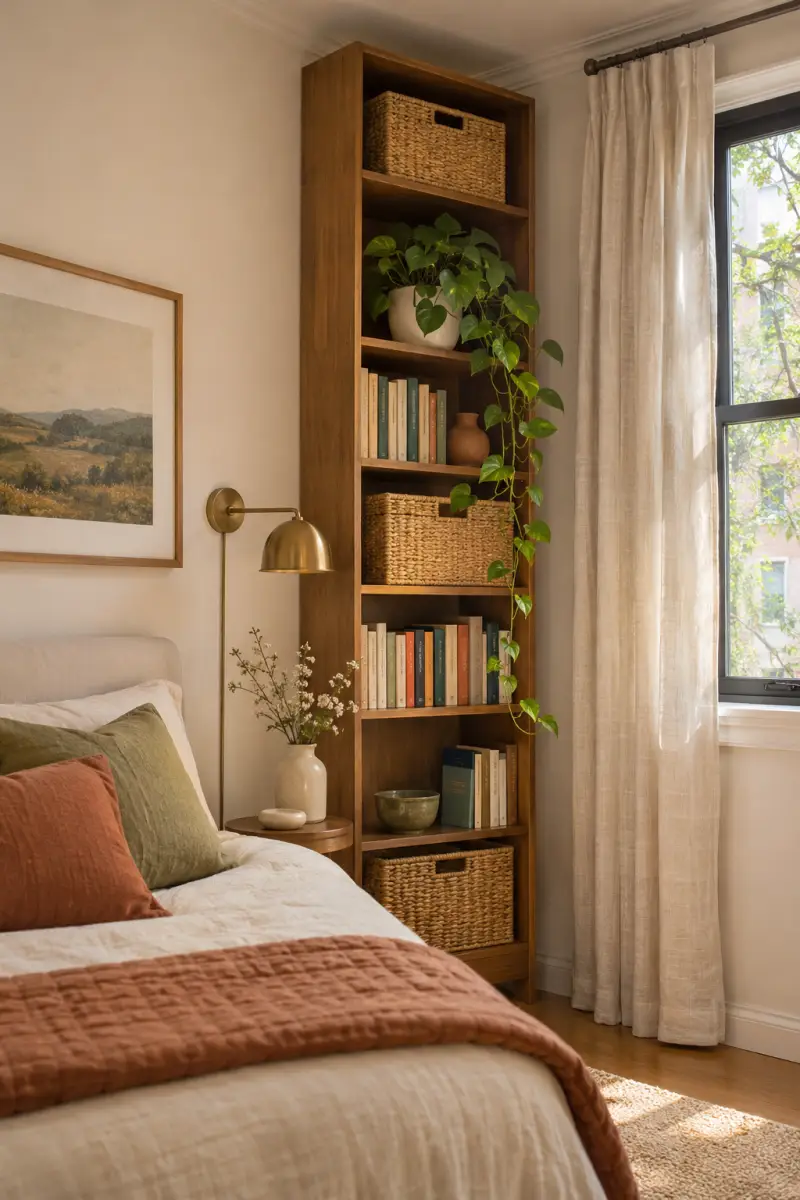
When floor space runs out, use the wall up to the ceiling. A tall, narrow bookcase in a corner or open shelves above the desk hold books, baskets and folded sweaters.
Baskets on the shelves hide the mess and keep the wall from looking busy. Anchor any tall bookcase to the wall; CPSC notes that existing furniture can be anchored with inexpensive anti-tip brackets.
Look for: a shallow depth, adjustable shelves, and wall-anchoring hardware in the box.
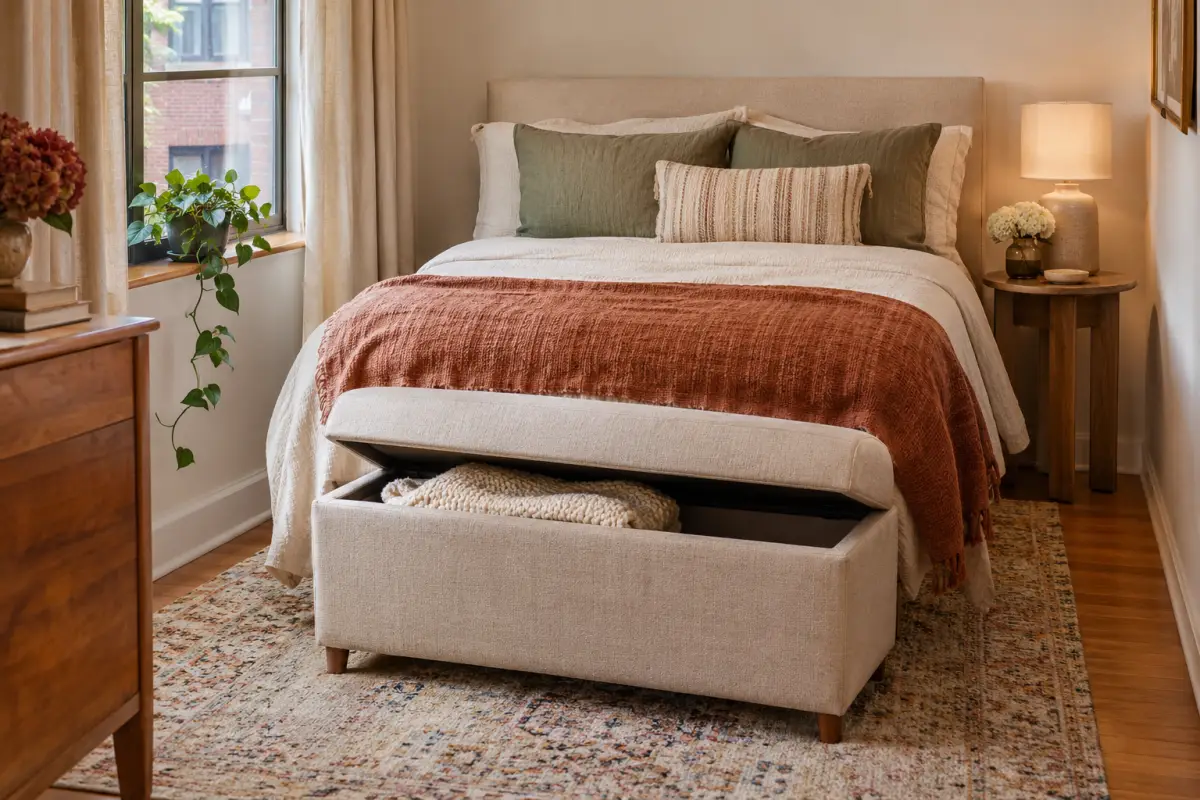
13. A storage bench or trunk at the foot of the bed
A bench with a lift-up lid gives you a seat for putting on shoes and a box for extra blankets. A wooden trunk does the same with more character.
Only add one if you can still walk around the foot of the bed. In a very narrow room, a slim ottoman you can push under a desk is the safer choice.
Look for: a slow-close lid hinge, a seat height comfortable for dressing, and a depth that keeps your walkway clear.
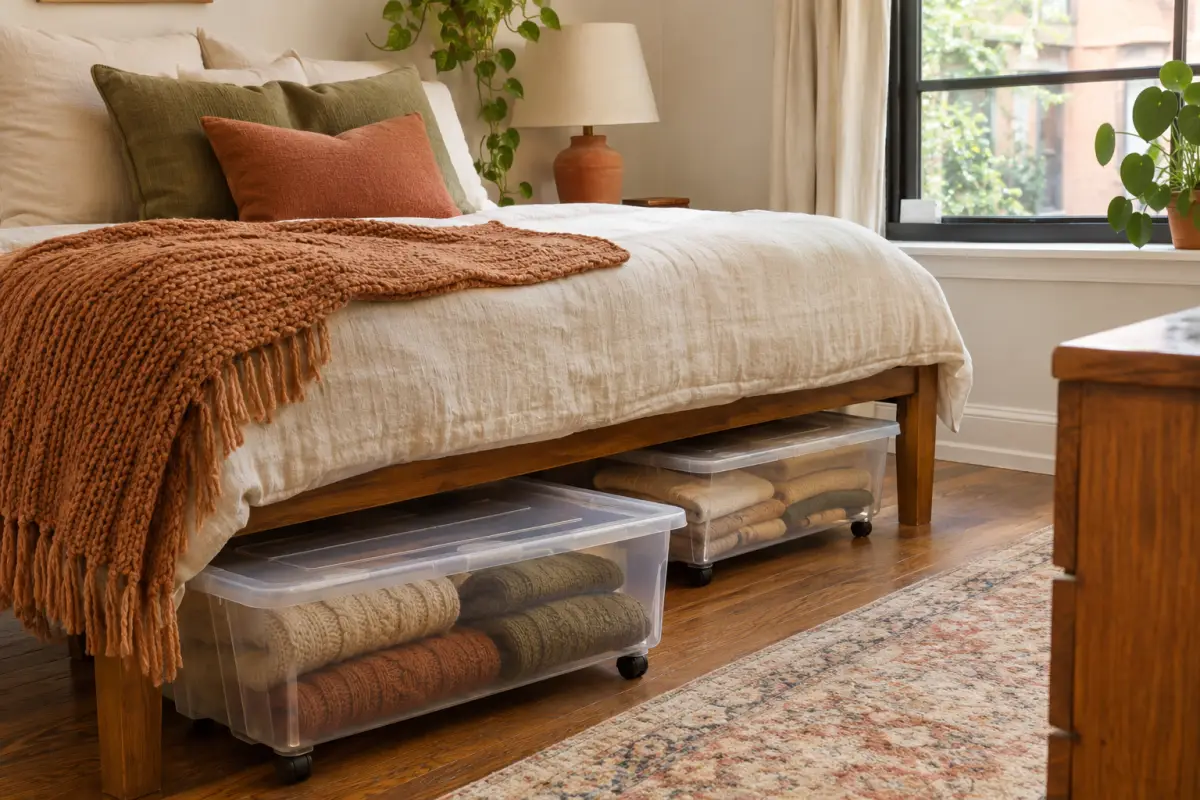
14. Under-bed bins on a standard frame
If you already own a bed you like, raise the storage game without replacing it. Castlery’s guide says most standard beds give 12 to 18 inches of clearance underneath, enough for low rolling bins.
Measure your own bed before buying bins, then pick lidded ones on wheels so dust stays out and they slide out easily.
Look for: lidded bins on casters, a height that clears your bed frame, and clear sides so you can see what is inside.
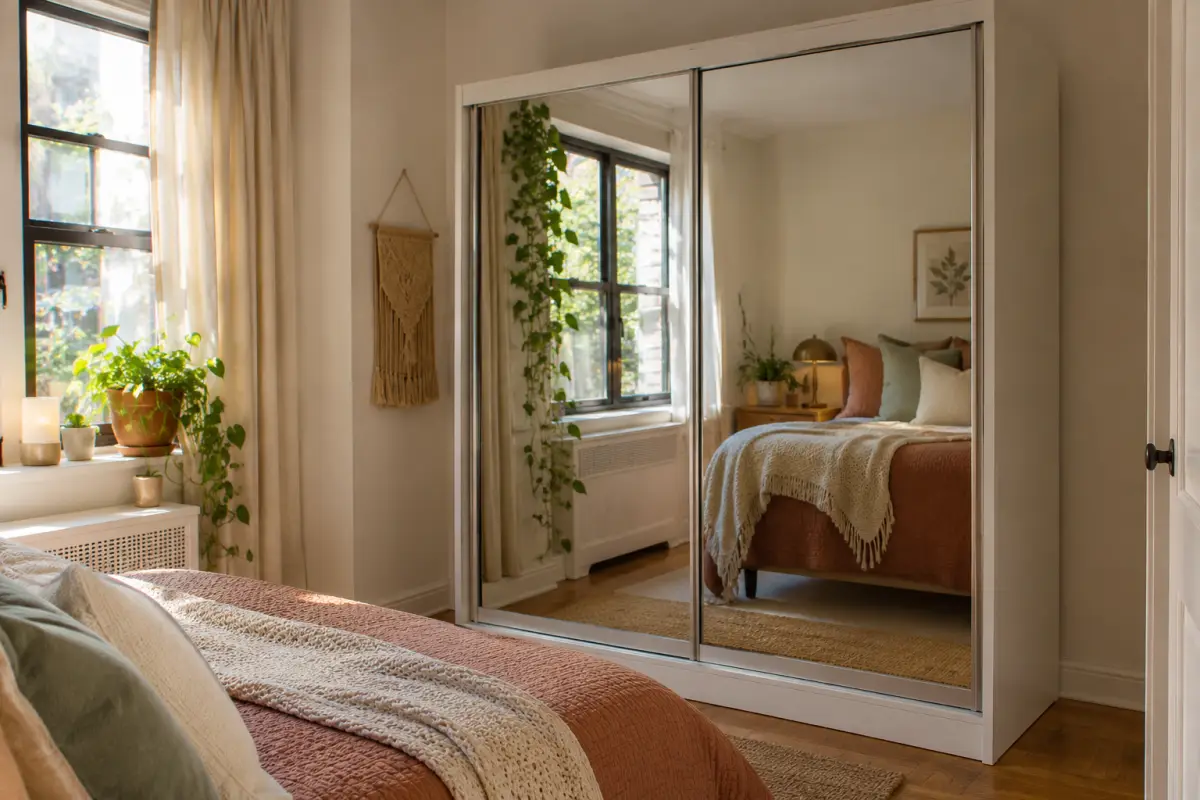
15. A wardrobe or armoire when there is no closet
No closet? A freestanding wardrobe holds hanging clothes in less floor space than two dressers. Mirrored doors double as a full-length mirror and bounce light around the room.
Choose sliding doors if a swinging door would hit the bed. Like a tall dresser, a wardrobe should be anchored to the wall.
Look for: sliding or mirrored doors, an inside rail plus shelves, and anti-tip hardware.
Pieces that look lighter
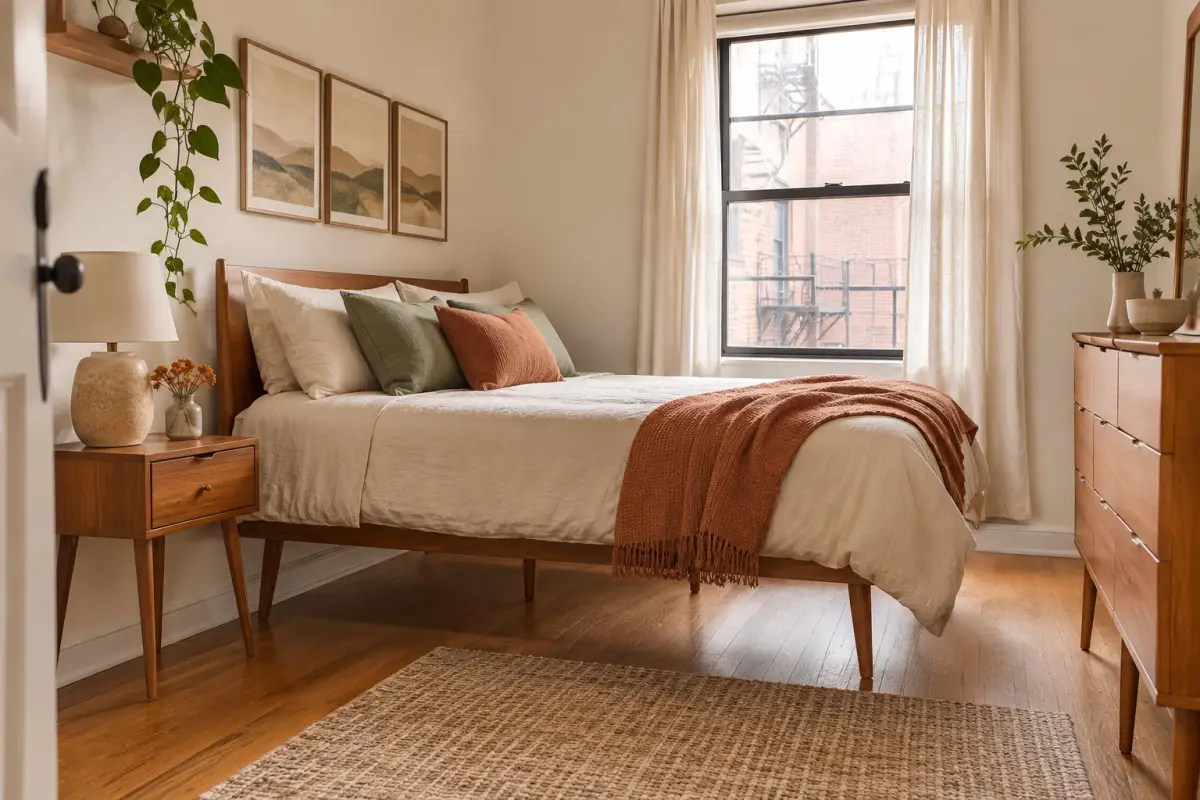
16. Leggy furniture that shows the floor
Furniture on raised legs lets you see the floor underneath, which makes a small room feel less crowded. A nightstand, dresser or bed frame on legs reads lighter than the same piece sitting flat on a plinth.
Mix leggy pieces with one solid storage piece so the room still has enough drawers.
Look for: tapered wood or slim metal legs, and enough height underneath to clean easily.
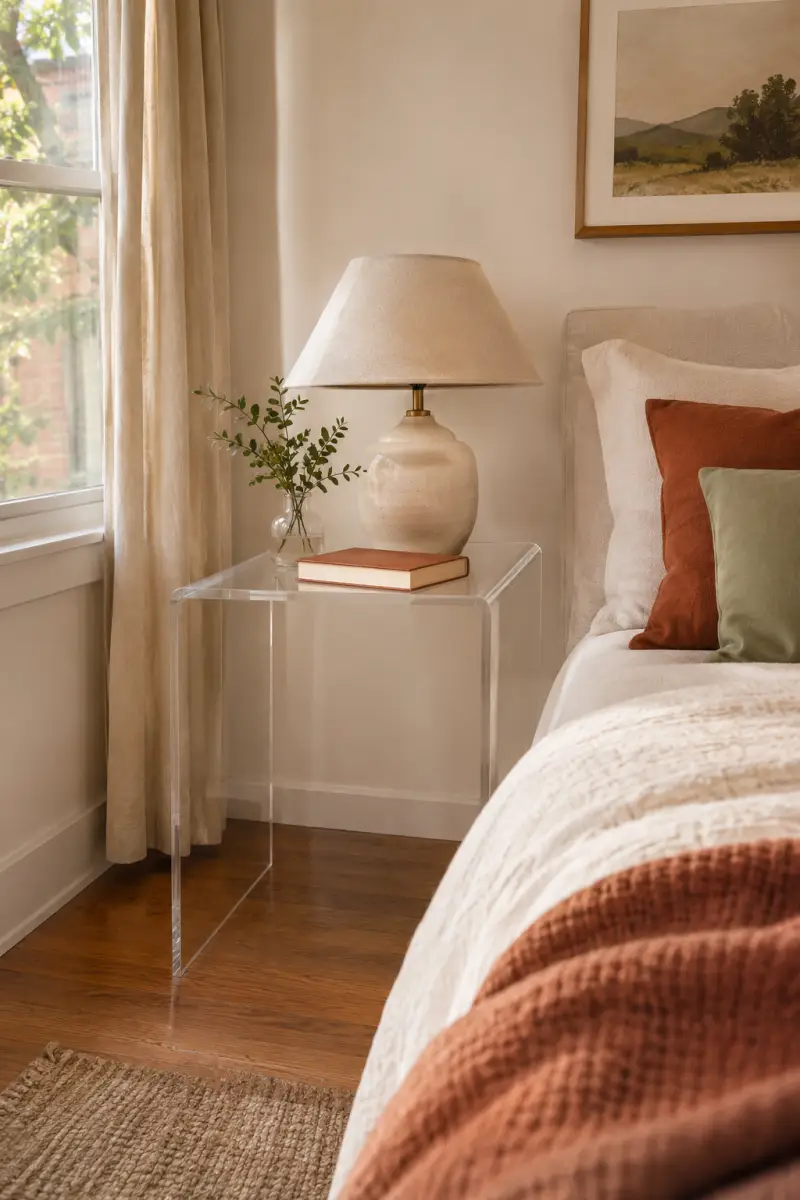
17. Clear, glass or open-frame pieces
Acrylic, glass and thin metal frames take up space without blocking the view. A clear side table or an open metal bookcase almost disappears in a small room.
Use them where you need a surface but not storage, like a bedside table or a desk chair.
Look for: thick, scratch-resistant acrylic or tempered glass, and rounded edges if the piece sits in a walkway.
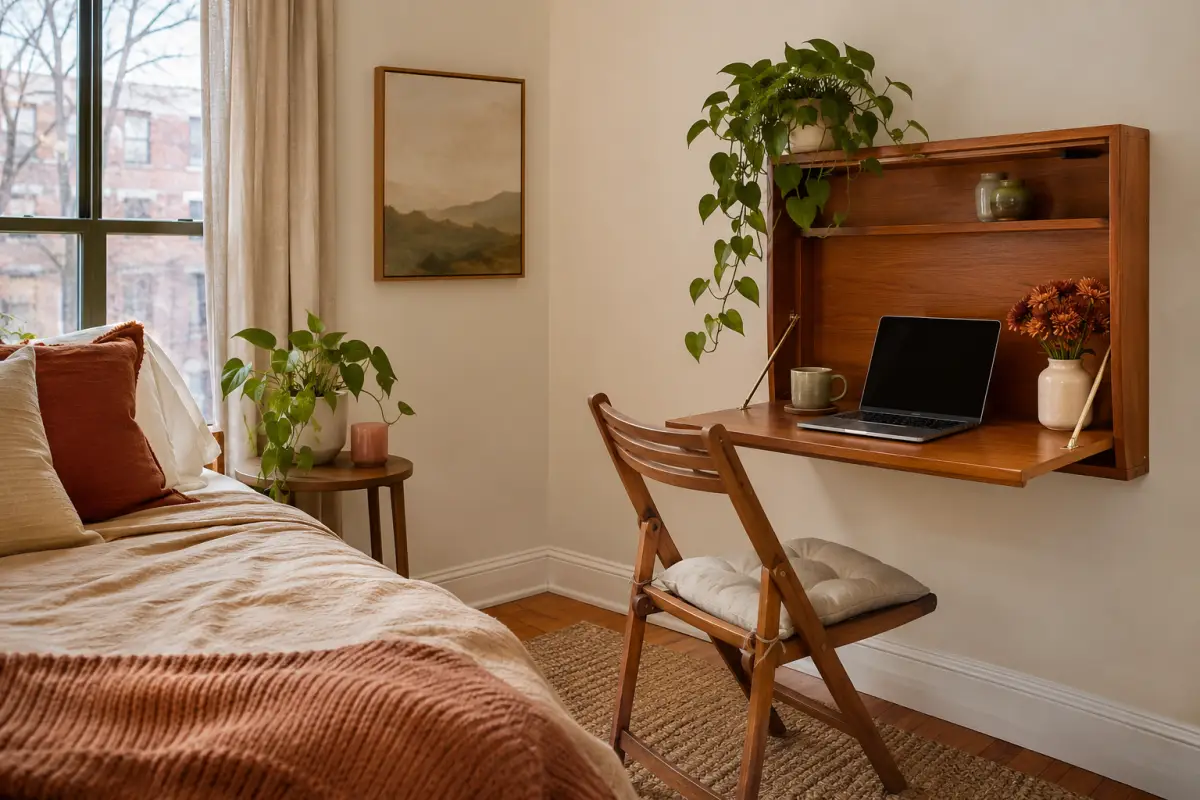
18. A fold-down wall desk
If your bedroom is also your office, a wall-mounted desk that folds flat gives you a work surface by day and a clear wall by night. Some fold-down desks include cubbies for a laptop and chargers.
Pair it with a folding or stackable chair, or a stool that tucks under the bed when you are done.
Look for: a sturdy fold-down mechanism, a work surface deep enough for a laptop, and hardware rated for your wall type.
Pick by problem
| Your problem | Try first |
|---|---|
| No room for a dresser | Storage bed or lift-up bed |
| No space beside the bed | Wall-mounted nightstand, floating shelf or bookcase headboard |
| Room is also an office or guest room | Daybed, Murphy bed or fold-down desk |
| No closet | Wardrobe with sliding mirrored doors |
| Room feels crowded | Leggy or clear furniture |
| Renting, cannot drill much | Slim C-table, under-bed bins, storage bench |
For more ways to make a small room feel bigger with paint, mirrors and light, see our small bedroom ideas. For where each piece should go, follow our guide to laying out a small bedroom.
What to measure first
Measure the room and draw it on paper before you shop, then check every product page for overall dimensions. These are the numbers that decide whether a piece fits.
Tape-measure checklist
Walkway beside the bed
Castlery suggests 18 to 24 inches on any side you use to get in and out.
Drawer side
Allow 30 inches or more where a drawer pulls out.
Under the bed
Most standard beds give 12 to 18 inches of clearance underneath. Measure yours before buying bins.
Murphy bed, open
Most extend 80 to 90 inches when open, measured from the baseboard edge.
Doors and windows
Note where the room door, closet doors and windows swing or sit, and keep them clear.
Outlets and vents
Mark them so a dresser or headboard does not block them.
Mark each piece’s footprint on the floor with painter’s tape and walk around it for a day. If you keep bumping into the tape, the piece is too big.
Small bedroom furniture FAQ
What furniture should be in a small bedroom?
Start with the bed, then add only what you use daily: a place for a lamp and phone, and enough storage for your clothes. In many small rooms a storage bed plus a wall-mounted nightstand covers all of it, and you can skip the dresser.
What is the best bed for a small bedroom?
A bed with built-in storage is the most useful choice, because it replaces another piece of furniture. If the room is used for other things during the day, a daybed or Murphy bed gives the floor back. Check that the frame’s overall size leaves a walkway.
How do I fit a dresser in a small bedroom?
Go tall and narrow, or use a low dresser as a nightstand. Leave room in front for the drawers to open, and anchor it to the wall with the anti-tip kit that comes with it.
Are wall-mounted nightstands safe for renters?
They need screws in the wall, so ask your landlord first. If drilling is not allowed, a slim C-table or a narrow nightstand gives you a similar small footprint.
Browse the rest of our small bedroom ideas and guides for more space-saving help. Save this post to your small bedroom board so the measuring checklist is there when you shop, and read our IKEA bedroom ideas next for budget pieces you can hack.
Sources
- MALM High bed frame/4 storage boxes, white, Queen, IKEA US
- Storage Bed Clearance: Will It Fit? How to Measure, Castlery, 2026-07-29
- BRIMNES Daybed frame with 2 drawers, white, Twin, IKEA US
- How Much Space Do You Need for a Murphy Bed? A Complete Guide, Lori Beds, 2025-04-25
- Mattress Sizes and Bed Dimensions Guide, Casper
- GRÅFJÄLLET Wall-mounted bedside table, white, IKEA US
- STORKLINTA 5-drawer dresser, oak effect/anchor/unlock function, IKEA US
- AnchorIt.gov, U.S. Consumer Product Safety Commission (CPSC)