20 Bedding Ideas for a Bed You'll Want to Crawl Into
These bedding ideas give you a combination to copy for every kind of bed, each with a short recipe: which sheets, which main layer and which extras. After the ideas, a short buying guide covers what to check on the label, from weave and thread count to size and pocket depth.
Start with the fabric that suits how you sleep, then pick a color combination and finish with layers. The bed is the biggest thing in the room, so getting it right does more for a cozy bedroom than almost anything else.
Bedding ideas by fabric and feel
The fabric decides how the bed feels in the middle of the night, not only how it looks in a photo. Pick this first.
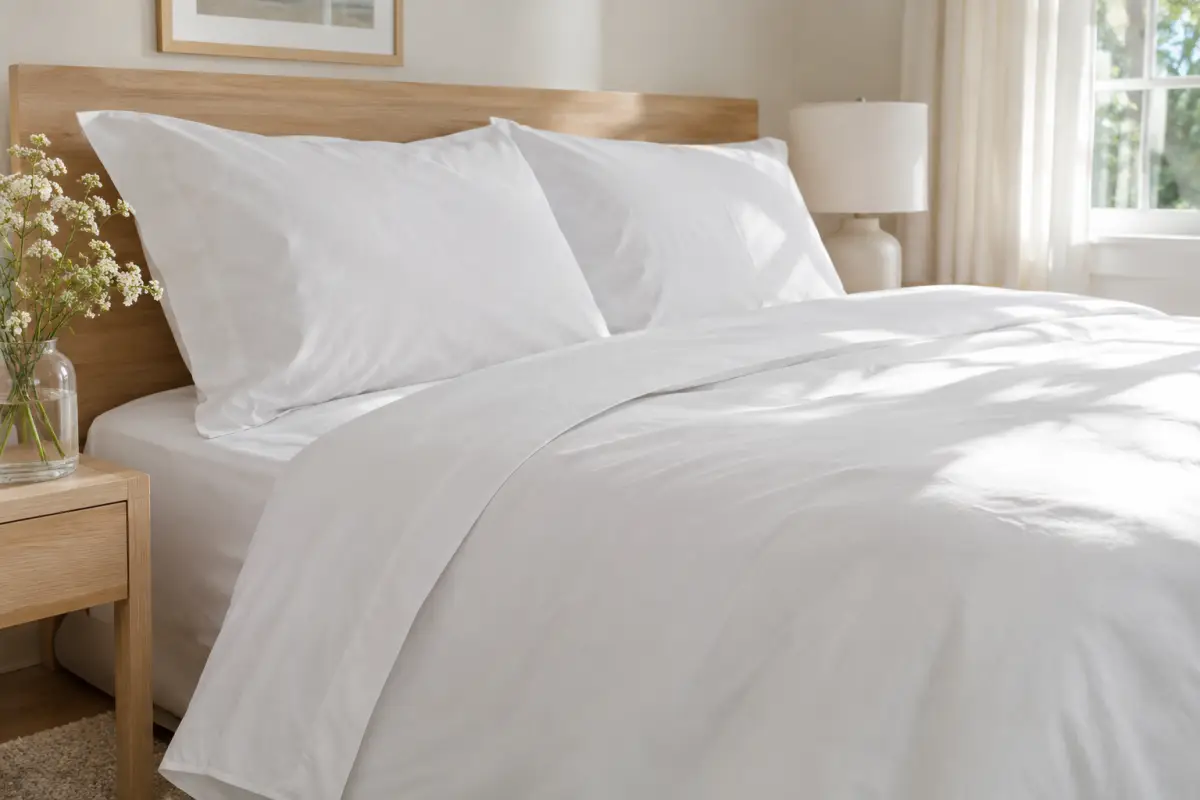
1. Crisp white percale for a hotel bed
White percale is the bed you remember from a good hotel: cool, matte and smooth. Percale is woven one thread over, one thread under, which The Company Store’s percale vs sateen guide credits for its durability, breathability and crisp feel.
It may wrinkle more than sateen, and it gets softer over time. If you sleep hot, this is the first fabric to try.
The combo: white percale sheets, white duvet in a percale cover, a folded white top sheet over the duvet, one textured throw for contrast.
2. Sateen in a deep color for a polished bed
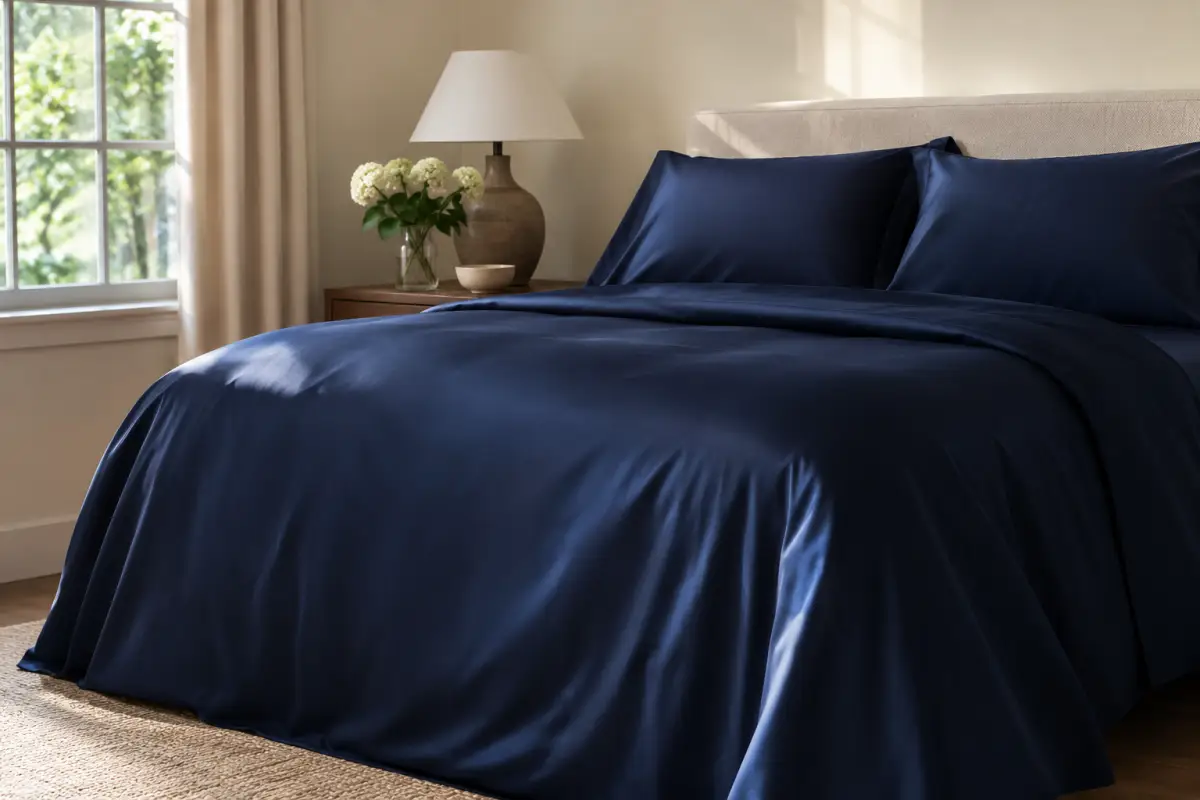
Sateen has a soft sheen and drapes close to the mattress, so a deep color like navy or forest looks rich instead of flat. The weave puts one yarn under and three or four over, which gives sateen its smooth hand and luster.
It resists wrinkles and feels a little heavier, which makes it cozier in winter. Choose it if you like a bed that looks made even when you are in a hurry.
Percale vs sateen at a glance
Percale
Crisp, cool, matte, may wrinkle. Typical thread count 200 to 400.
Sateen
Smooth, slightly heavier, soft sheen, resists wrinkles. Typical thread count 300 to 800.
The combo: navy sateen sheets and duvet cover, white or cream pillow shams, a brass lamp nearby to catch the sheen.
3. Washed linen in oatmeal
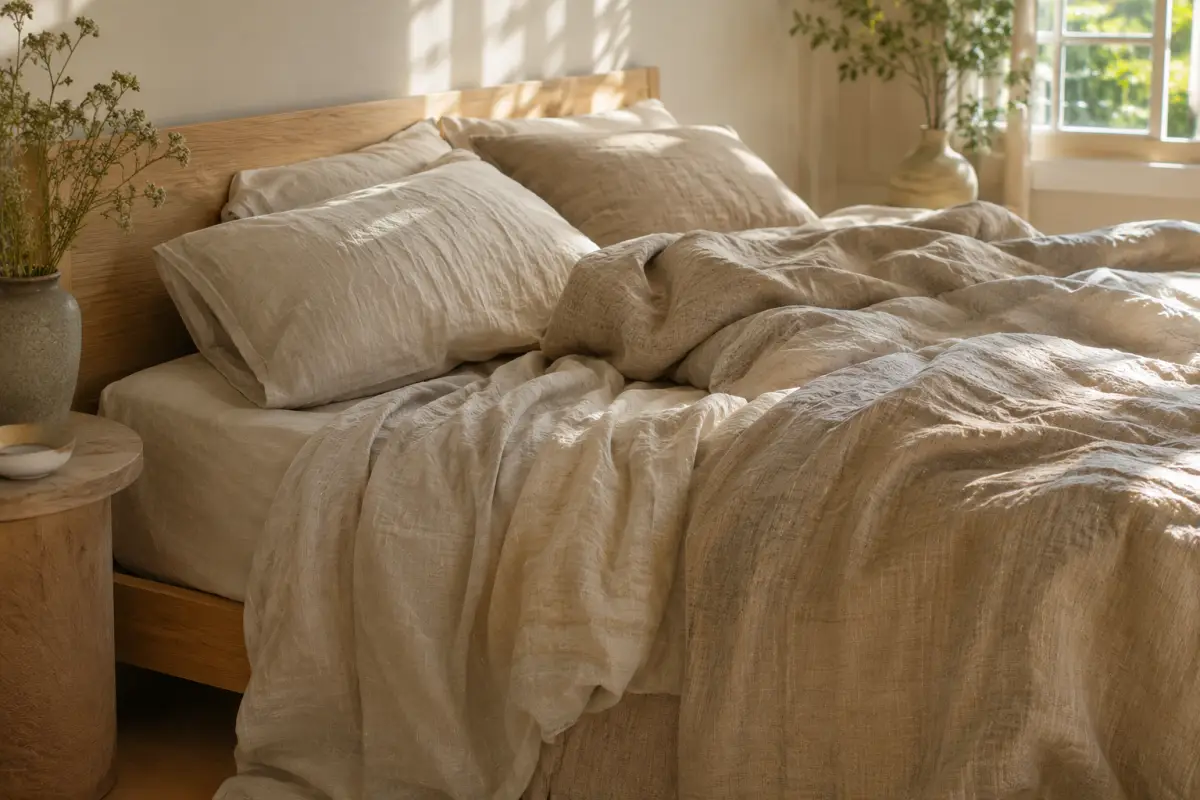
Washed linen looks relaxed on purpose: soft creases, a heavy drape and a natural flax color. Wrinkles are part of the fabric, so embrace them.
Linen can shrink if it is washed hot. Parachute’s linen care guide recommends lukewarm water, warm enough to clean but not hot enough to break down the fibers, and a low dryer setting or air drying.
The combo: oatmeal linen sheets, a flax or white linen duvet cover, two cotton pillowcases if linen feels too textured on your face, a waffle throw.
4. Flannel for winter nights
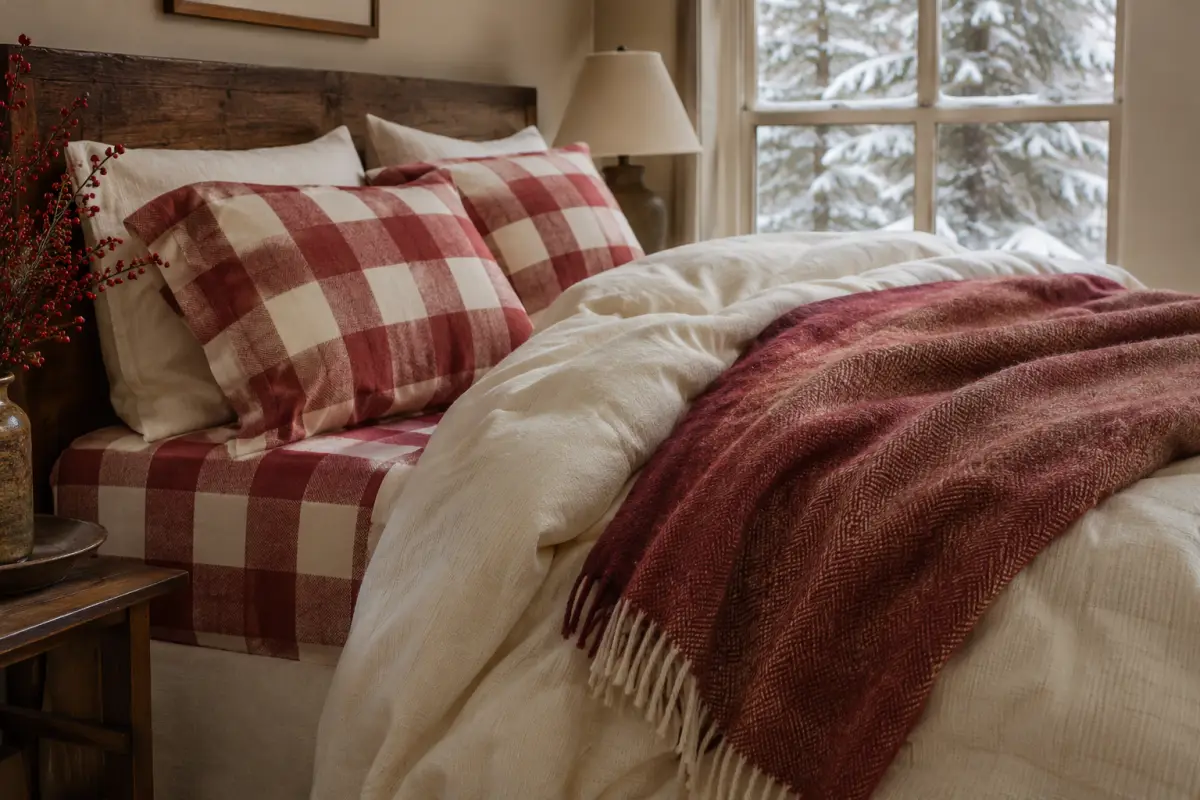
Flannel is cotton made with a thicker yarn and a gently brushed, fuzzy surface. It feels warm the moment you get in, and it is the easiest way to make a cold bedroom cozy without turning up the heat.
Flannel is sold by weight, not thread count. The Company Store’s sheet buying guide says the best flannel weighs 5 or 6 ounces per square yard. More cold-weather ideas are in our cozy winter bedroom ideas.
The combo: buffalo check or plaid flannel sheets, a wool blanket, a thick duvet, a solid cream sham to calm the pattern.
5. Jersey knit for a T-shirt soft bed
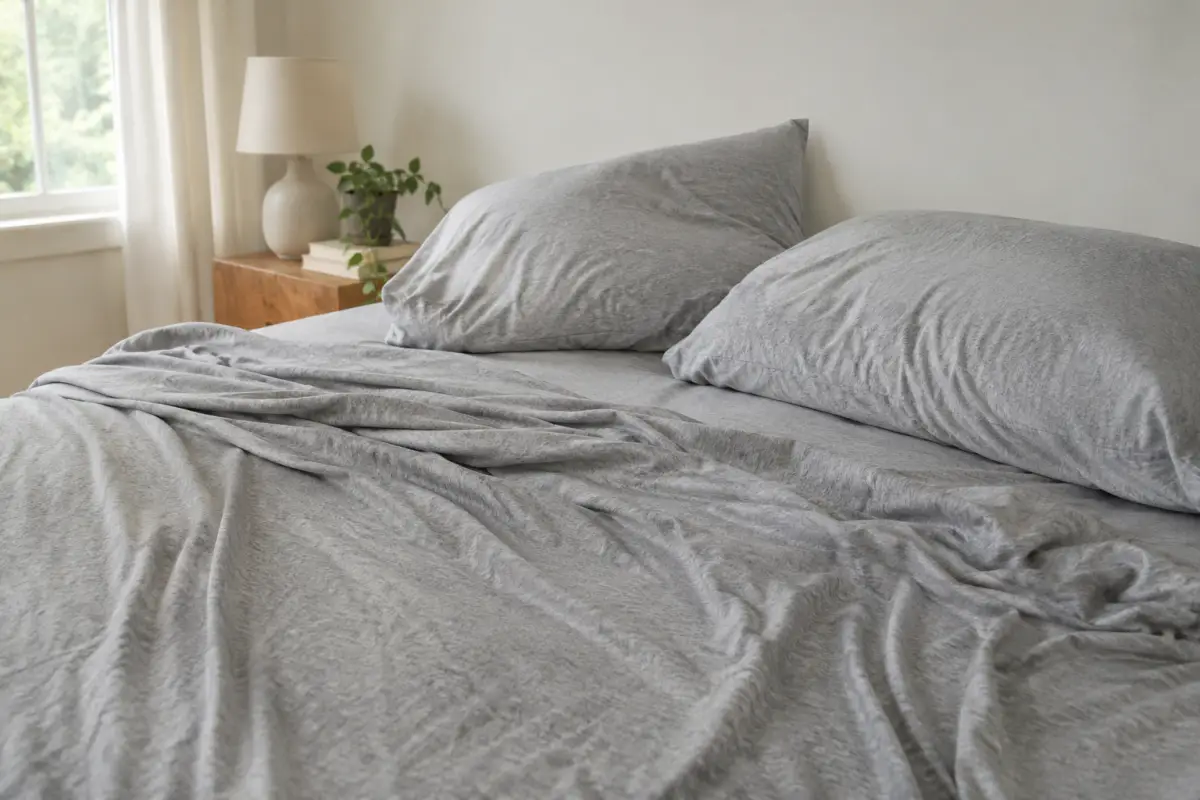
Jersey sheets are knitted, not woven, so they stretch a little and feel like your favorite T-shirt. They suit anyone who finds crisp sheets scratchy, and they are an easy pick for a teen or guest bed.
Heather grey hides everyday wear and pairs with almost any duvet.
The combo: heather grey jersey sheets, a white or grey duvet, a chunky knit throw, simple pillows.
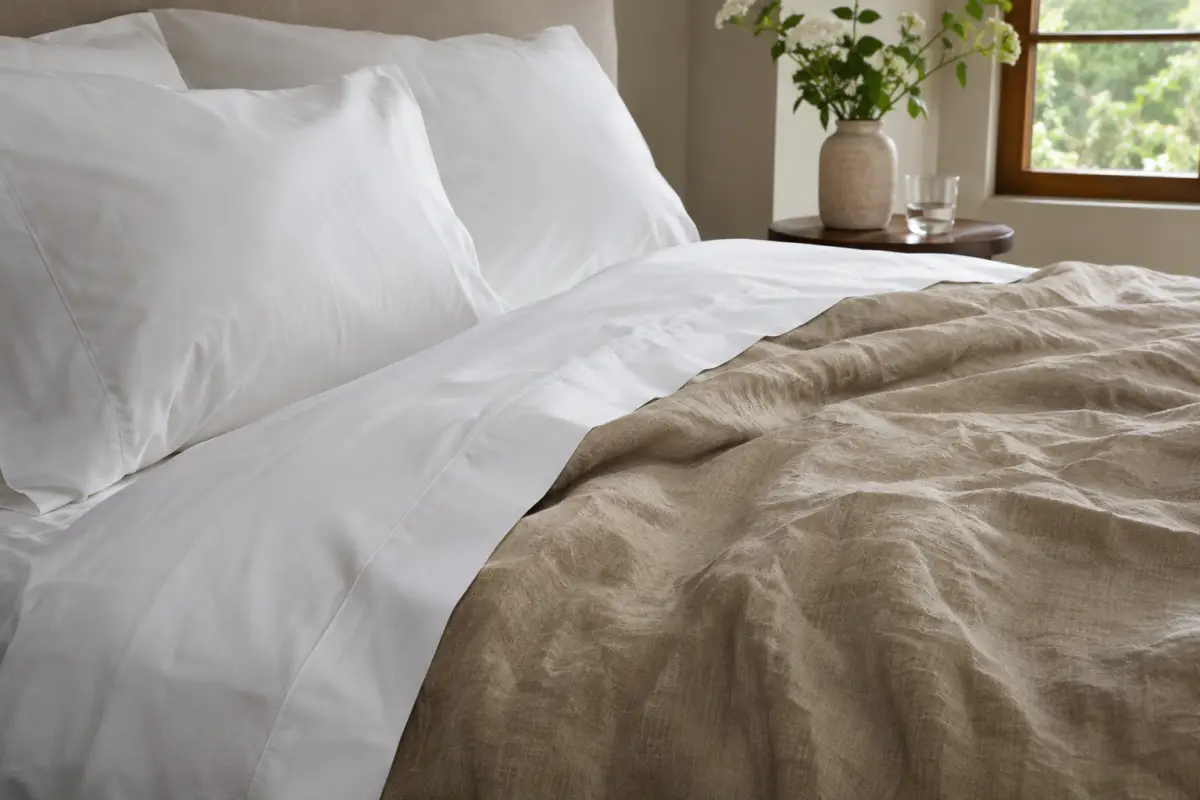
6. Crisp percale under a rumpled linen duvet
You do not need one fabric for the whole bed. Crisp white percale sheets folded over a linen duvet give you a cool sheet next to your skin and a relaxed, textured top layer.
The contrast between smooth and rumpled is what makes the bed look styled.
The combo: white percale sheets, an oatmeal or clay linen duvet cover, the top sheet folded back over the duvet edge, two linen euro shams.
Pick sheets by how you sleep
You sleep hot
Percale, linen or bamboo for airflow and moisture wicking.
You sleep cold
Sateen, flannel or jersey knit for softness and warmth.
Based on The Company Store's sheet buying guide.
Bedding color combinations
Keep the sheets quiet and let the duvet, quilt and pillows carry the color. For help choosing a palette for the whole room, see our guide to choosing a bedroom color palette.
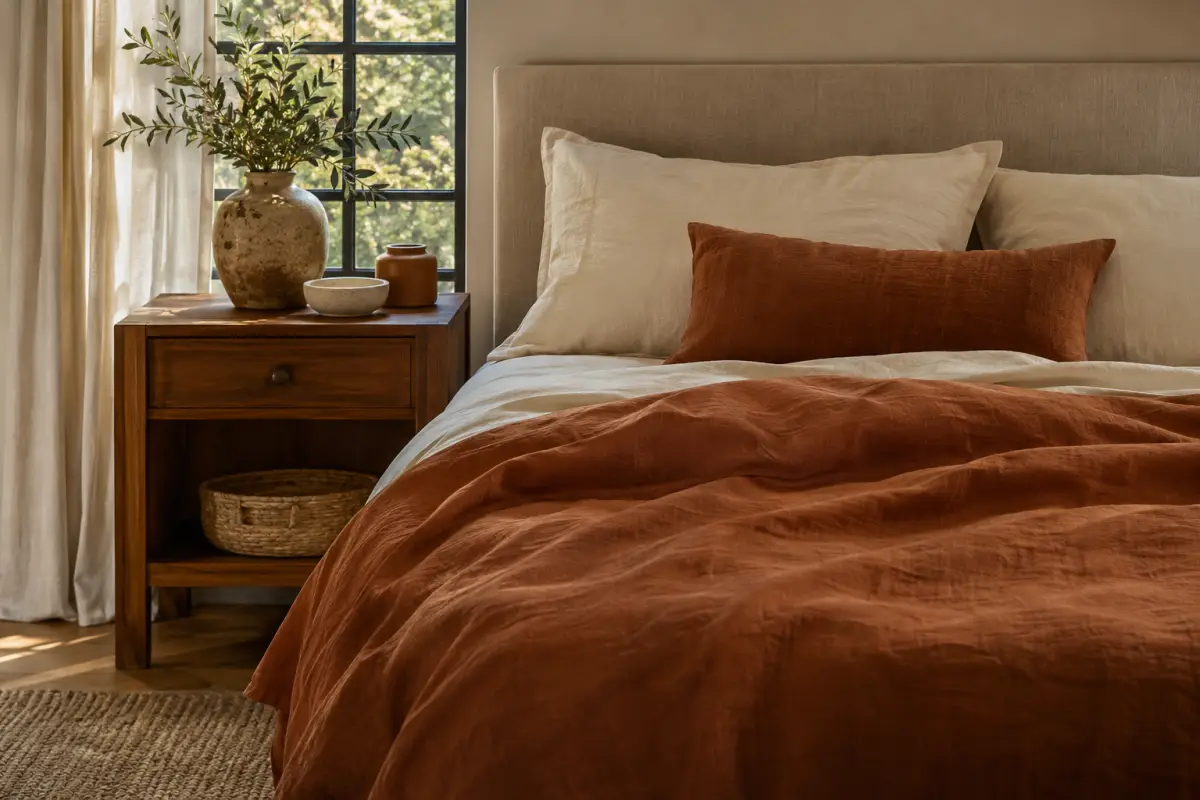
7. Terracotta and cream
Terracotta is warm without being loud, and cream keeps it from feeling heavy. It works with wood furniture and with white walls alike.
Use terracotta on one big layer, like the duvet, and repeat it once on a small pillow.
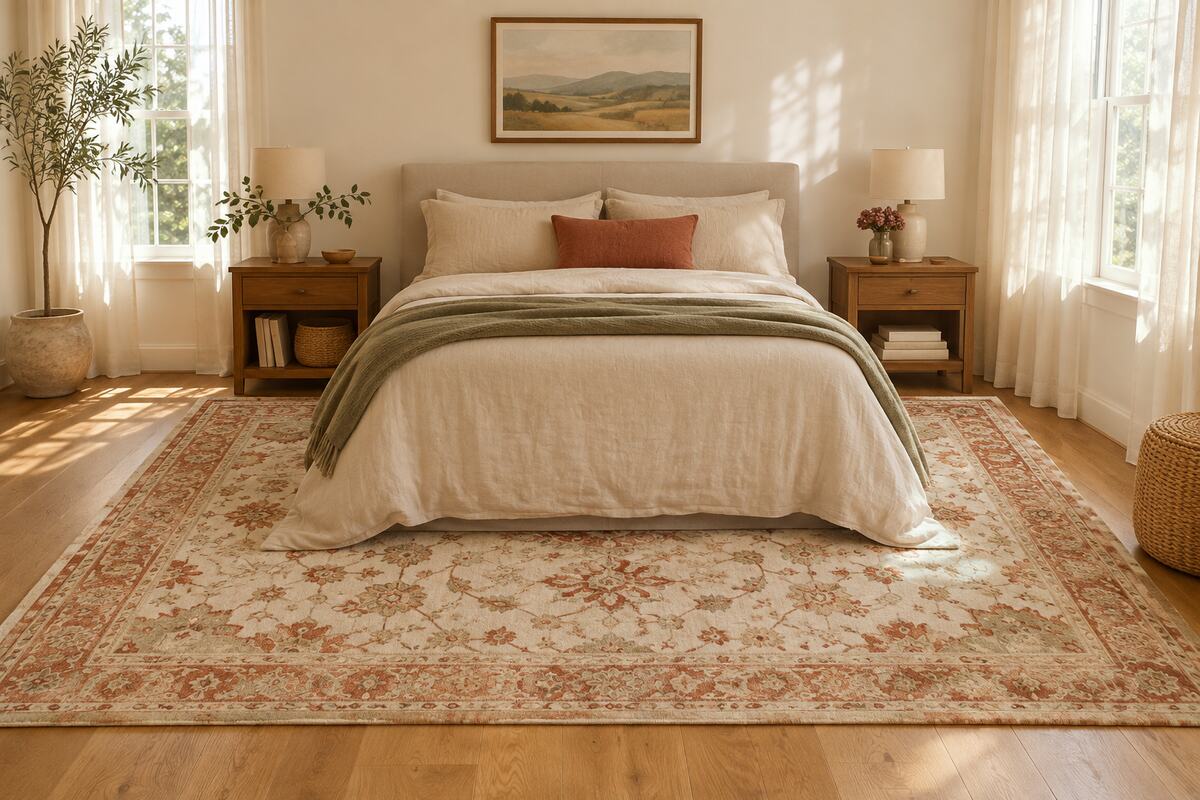
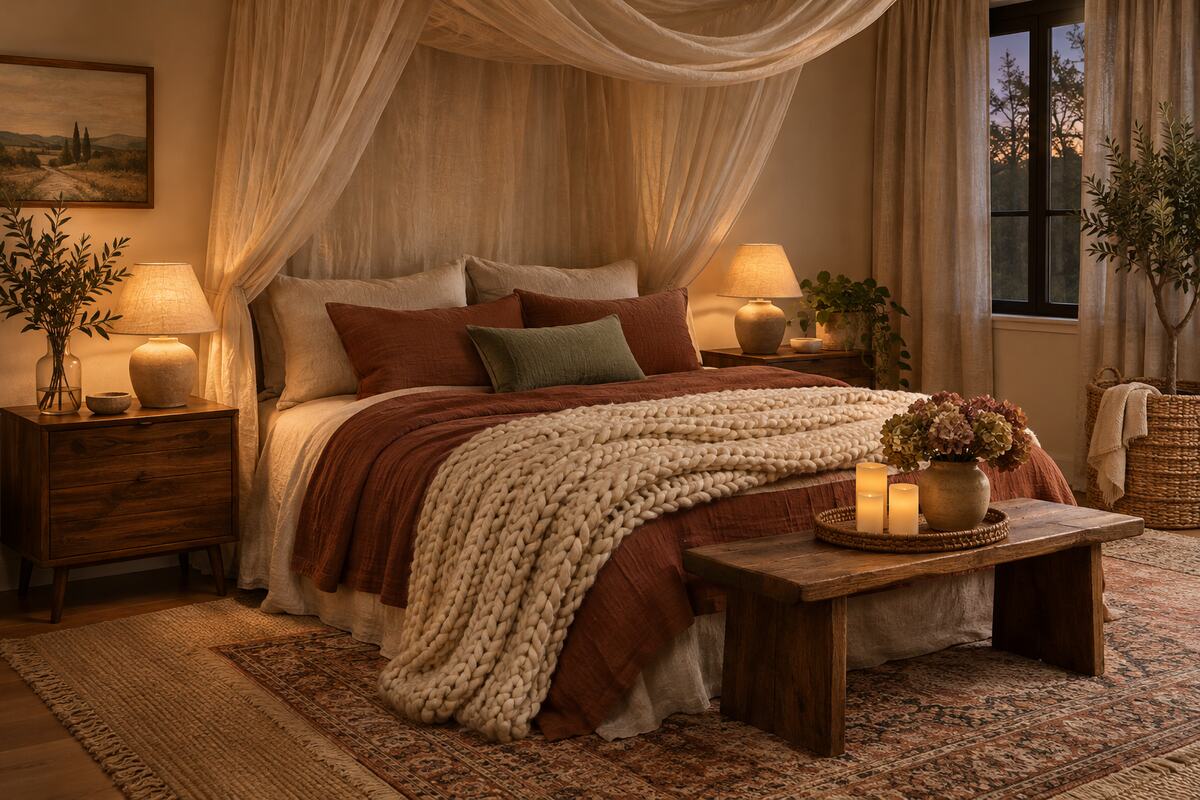
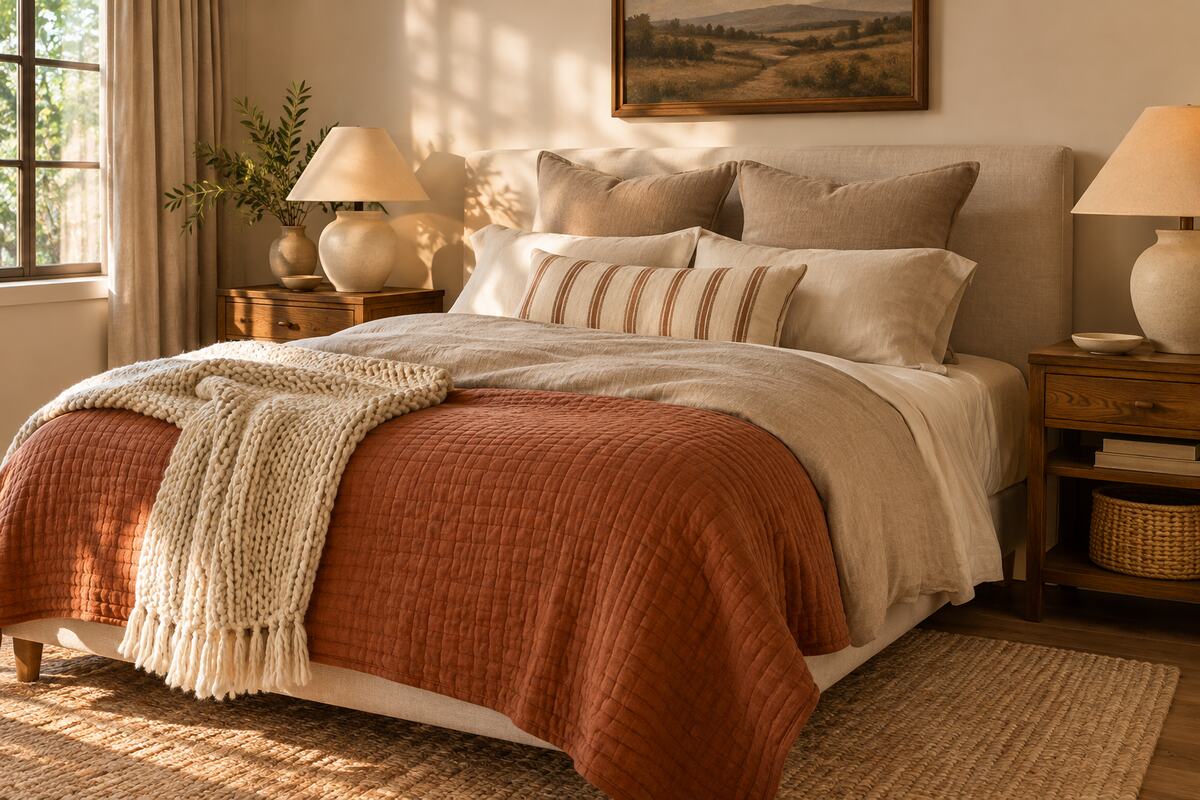
The combo: cream sheets, a terracotta linen duvet cover, cream shams, one terracotta lumbar pillow.
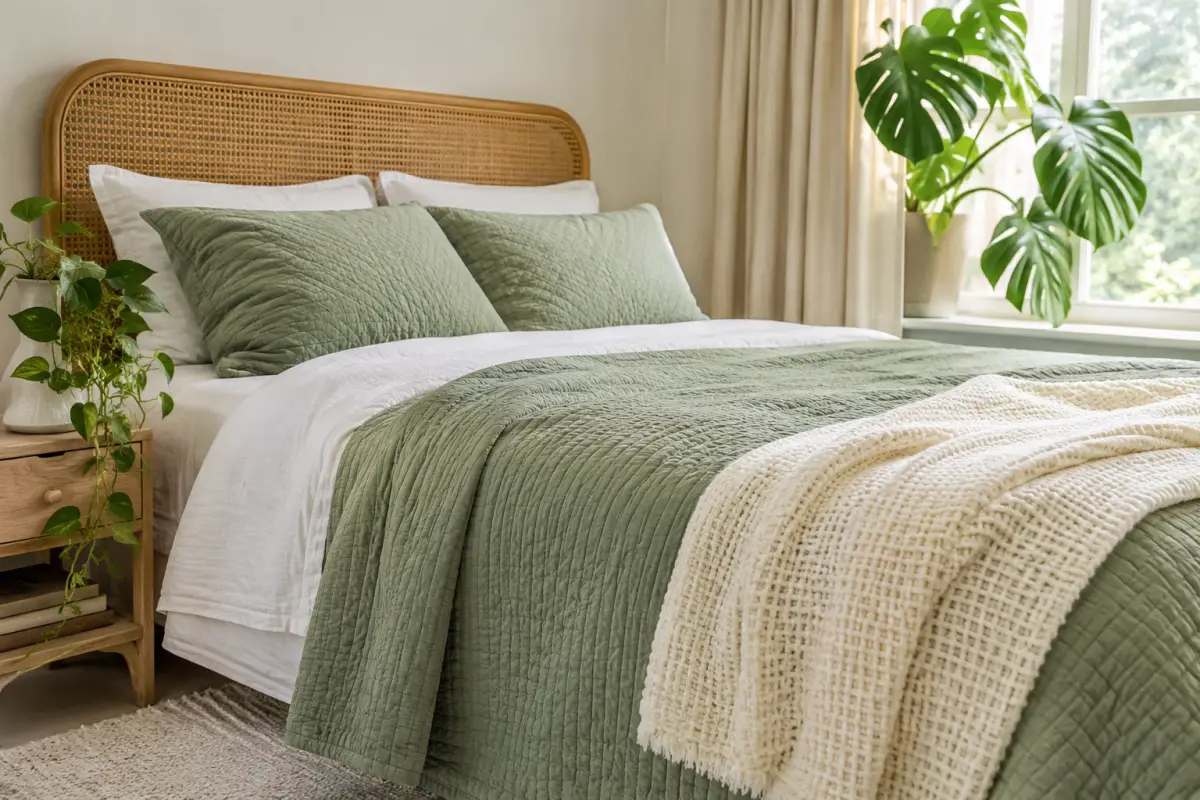
8. Sage and white
Sage green is soft enough to sleep under and still feels fresh. White sheets keep it crisp, and plants in the room repeat the green.
A sage quilt is a cheaper way to try the color than a full duvet cover.
The combo: white sheets, a sage quilt or coverlet, sage pillowcases, a white waffle throw.
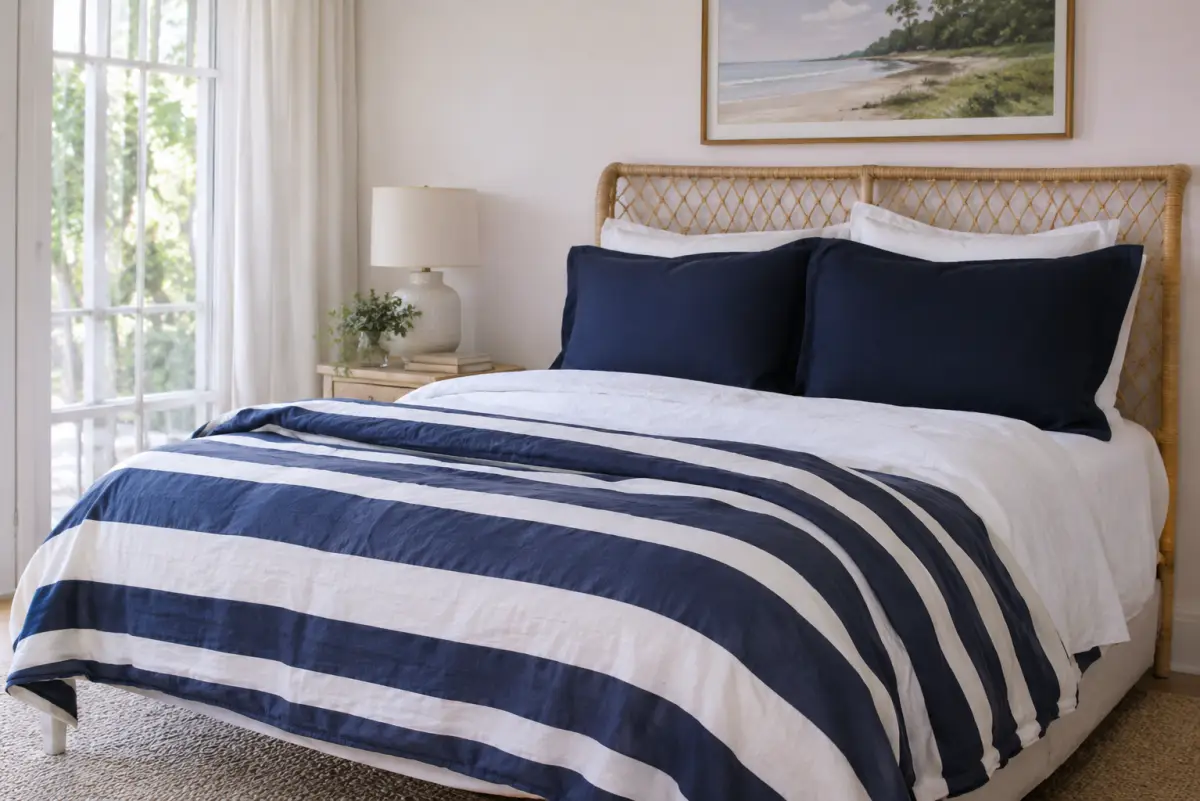
9. Navy and white stripes
A navy stripe looks tailored and hides small marks better than solid white. Pair the stripe with solid navy shams so the pattern has a frame.
It suits coastal rooms and guest rooms that need to look neat with little effort.
The combo: white sheets, a navy and white striped duvet cover, solid navy shams, white sleeping pillows.
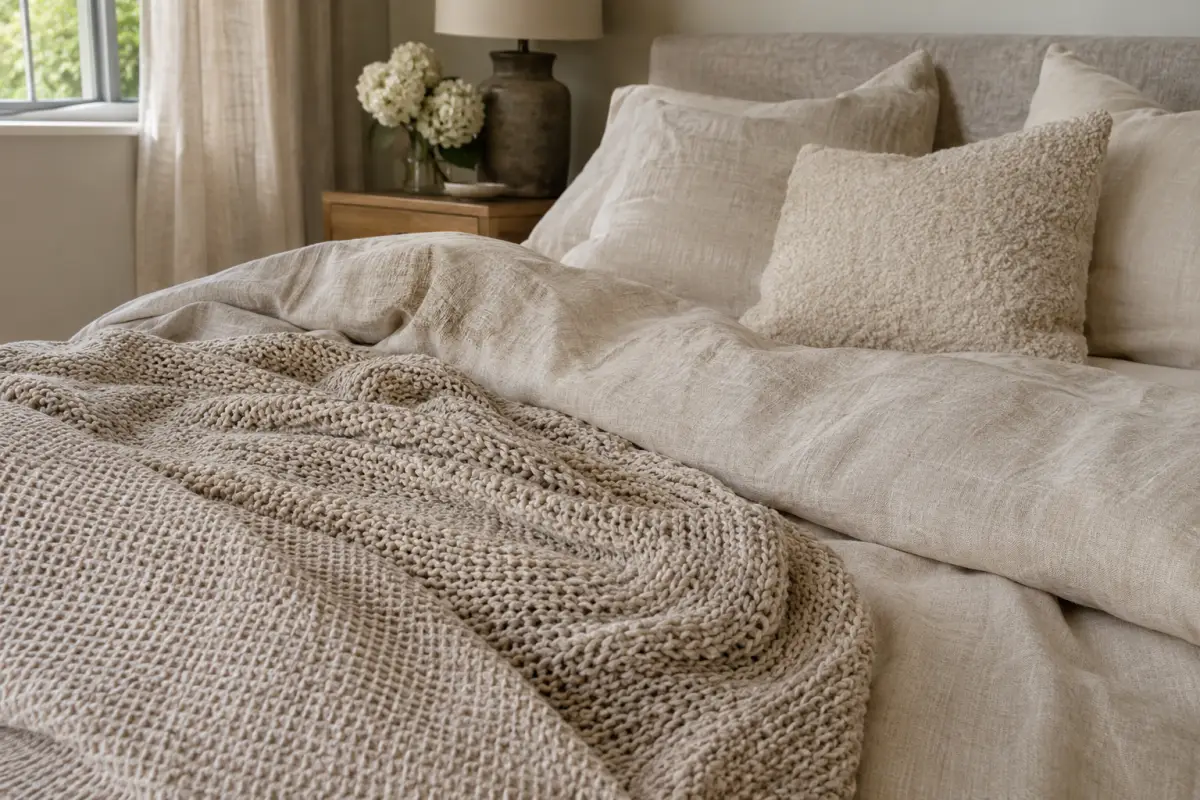
10. Tonal oatmeal, sand and cream
A tonal bed uses one color family and lets texture do the work: linen, boucle, knit and waffle in shades of oatmeal and sand. It looks calm in photos and in person.
If a single-color bed looks flat, add a fabric with more texture, not a new color.
The combo: sand sheets, an oatmeal linen duvet, a cream boucle pillow, a knit throw and a waffle blanket in similar shades.
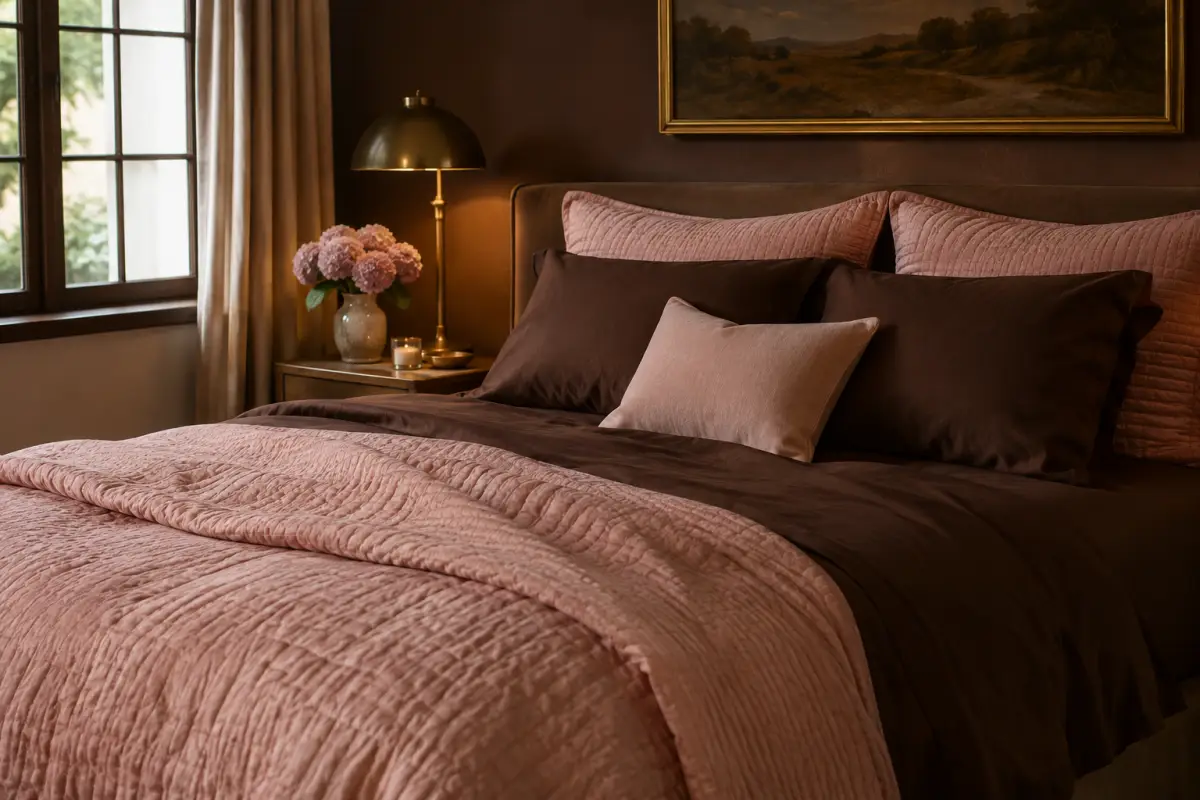
11. Chocolate brown and blush
Brown sheets are back for a reason: they feel warm and they forgive coffee in bed. Blush pink softens the brown so the bed does not look heavy.
This combination works best with warm light and brass or wood accents.
The combo: chocolate brown sheets, a blush quilt, pillows mixing brown and pink, a cream throw to break it up.
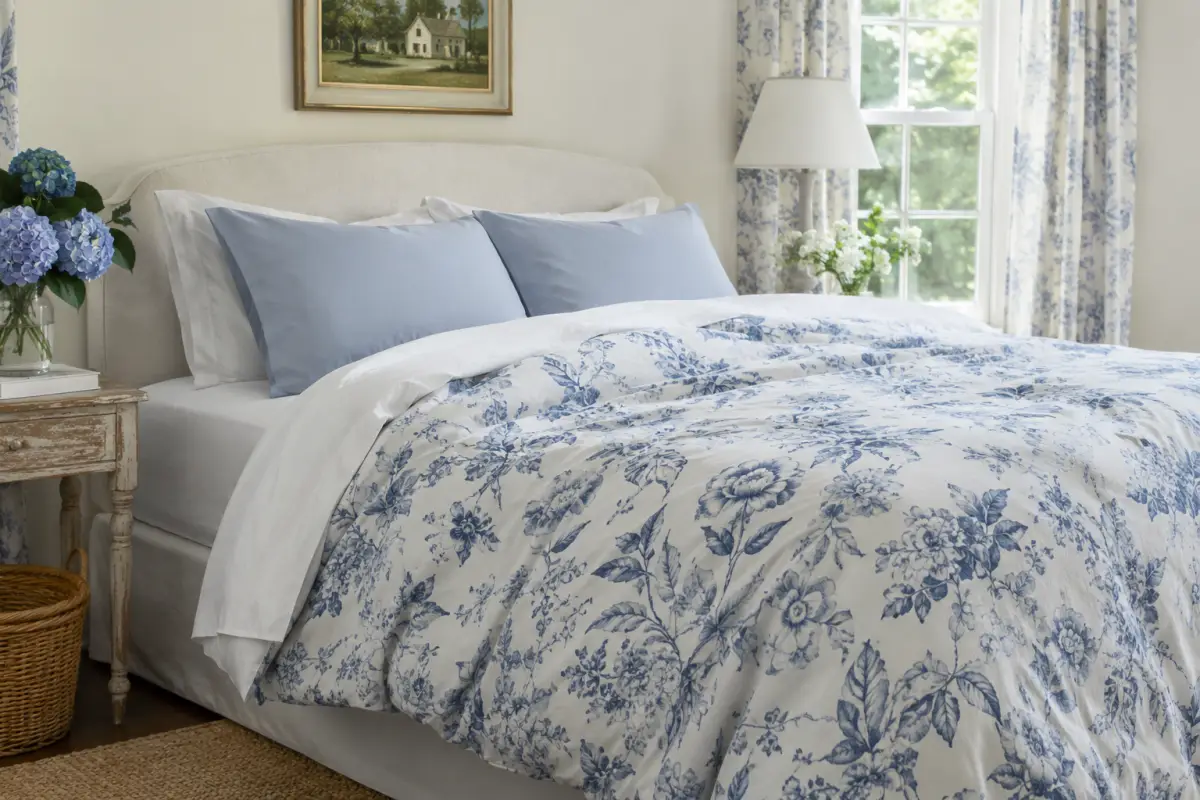
12. Blue floral with solids
A floral duvet is the star, so everything else should be solid. Pull the palest blue from the print for the pillowcases and keep the sheets white.
This is the easiest way to add pattern without the bed looking busy.
The combo: white sheets, a blue and white floral duvet cover, pale blue pillowcases, a white quilt folded at the foot.
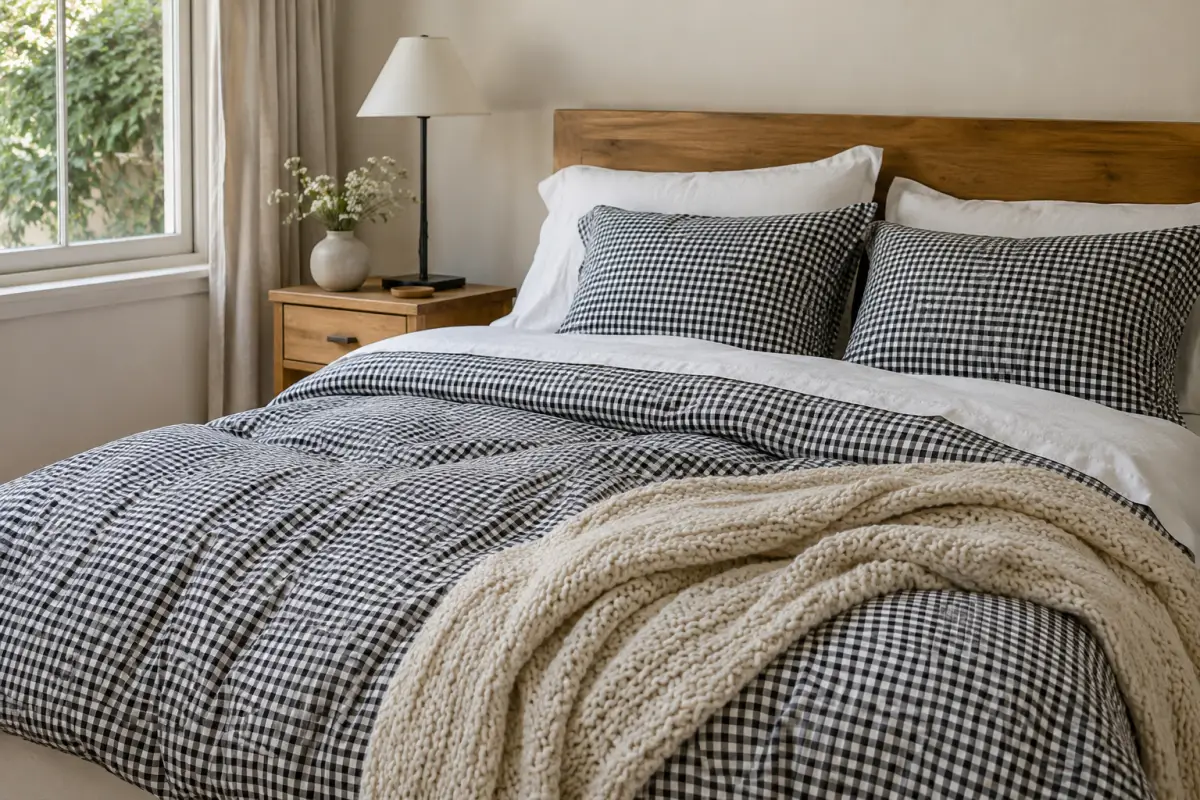
13. Black and white gingham
Small gingham checks look fresh and a little playful, and they work in farmhouse, cottage and modern rooms. Black and white is the boldest version, so soften it with cream.
A cream knit throw and wood headboard keep the check from feeling stark.
The combo: white sheets, a black and white gingham duvet cover, cream knit throw, one solid black lumbar pillow.
Bed layering and pattern ideas
Layers make a bed look inviting and let you adjust warmth through the night. Change the layers by season and keep the same sheets. For autumn swaps, see our fall bedroom decor ideas.
14. White bed with one bold quilt
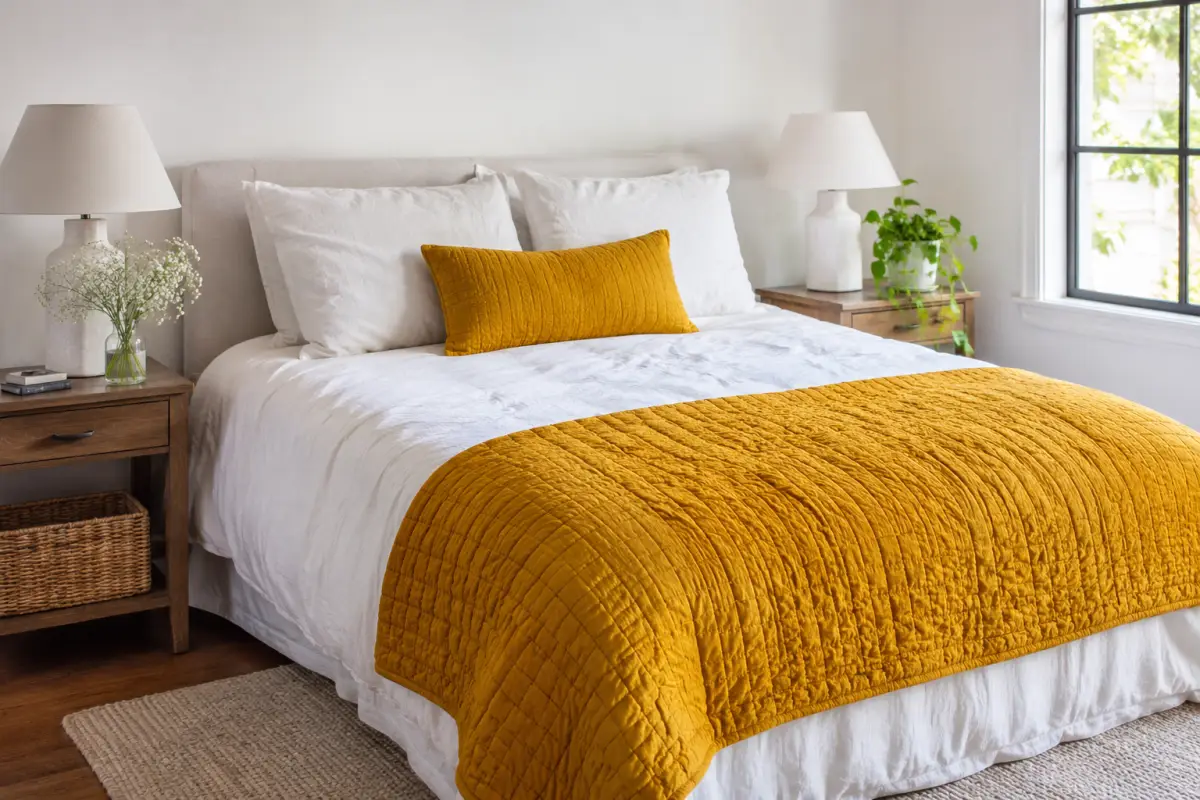
Keep the whole bed white, then fold a bold quilt across the bottom third. Mustard, rust or cobalt all work, and you can swap the quilt each season for the price of one layer.
Repeat the color once on a lumbar pillow so the quilt looks planned.
The combo: white sheets and duvet, a bold solid quilt folded at the foot, one matching lumbar pillow.
15. A quilt-only summer bed
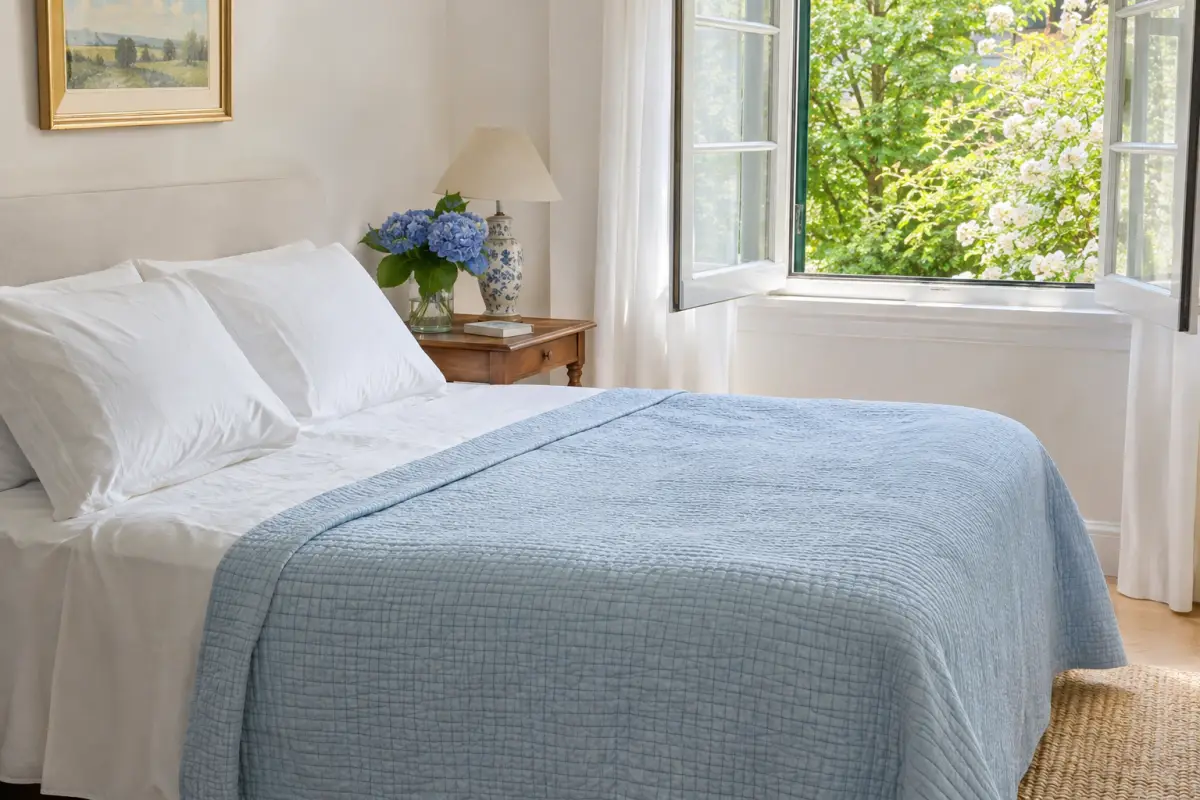
In warm months, put the duvet away and sleep under sheets and a thin cotton quilt or coverlet. The bed looks lighter and you sleep cooler.
Percale sheets suit this look because they feel cool and airy.
The combo: white percale sheets, a thin cotton coverlet or quilt, two pillows, nothing heavy on top.
16. The layered bed, bottom to top
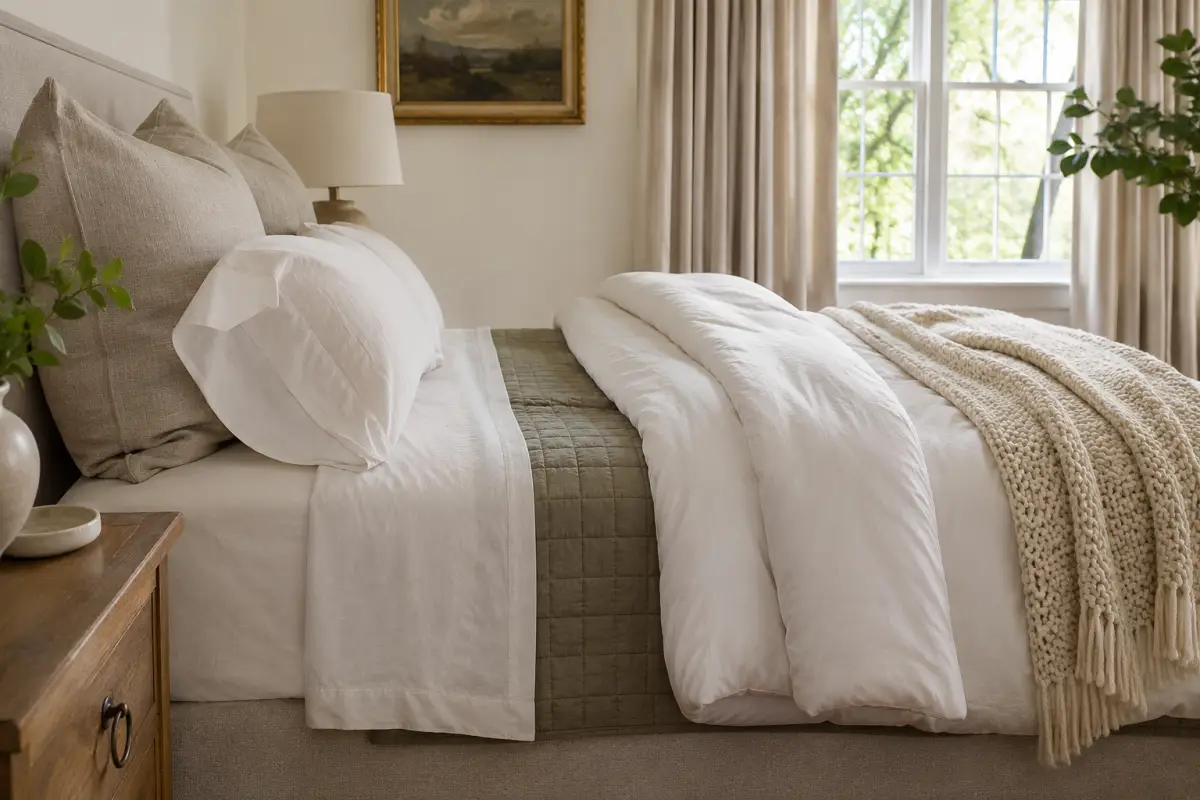
A layered bed follows a simple order. Start with the fitted and flat sheet, add a light quilt, fold the duvet back in thirds, and finish with a throw at the foot.
Pillows go in rows: sleeping pillows in front, euro shams behind, and one decorative pillow last. Folding the top layers back lets each layer show.
The combo: fitted and flat sheet, quilt, duvet folded back, knit throw, sleeping pillows, euro shams, one lumbar pillow.
17. Mix patterns by scale
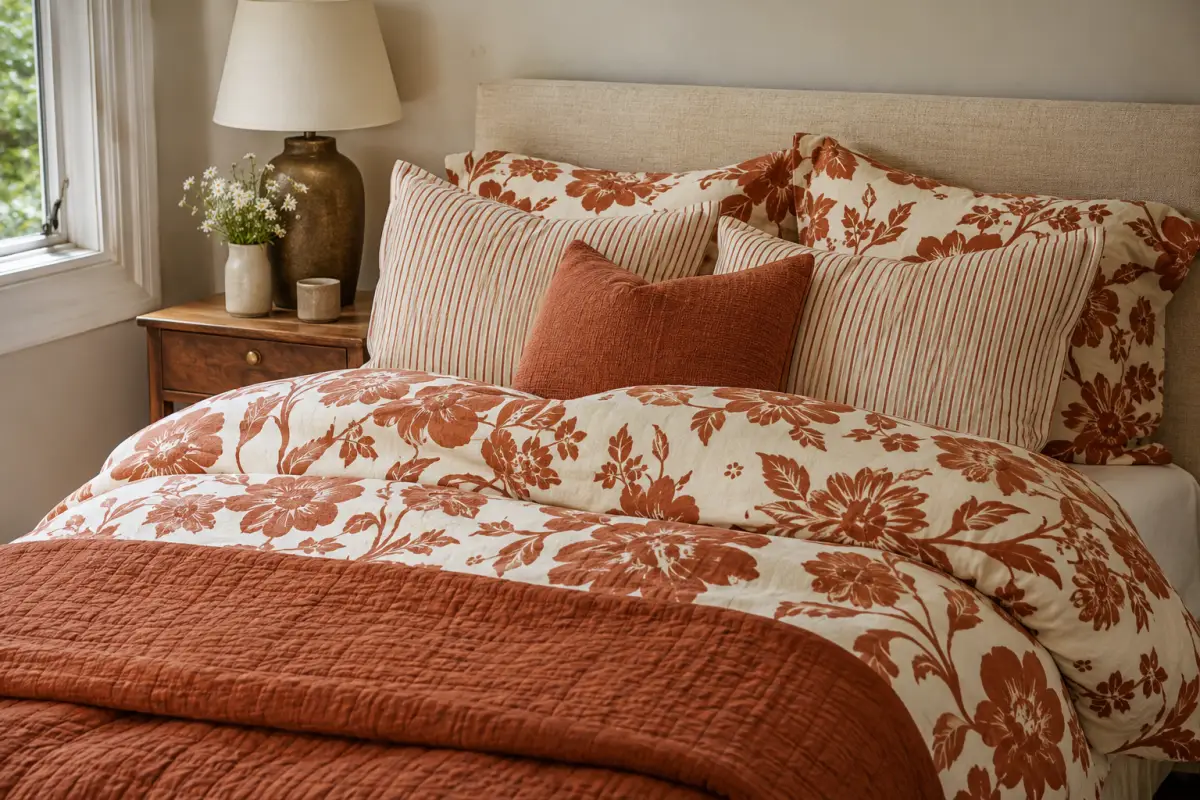
Two patterns look good together when they share colors and differ in size. Pair one large print, like a big floral, with one small print, like a narrow stripe, and add a solid.
Rust and cream, blue and white, or green and cream are forgiving color families for a first try.
The combo: large-scale floral duvet, small-stripe pillowcases, a solid quilt in a color from both prints.
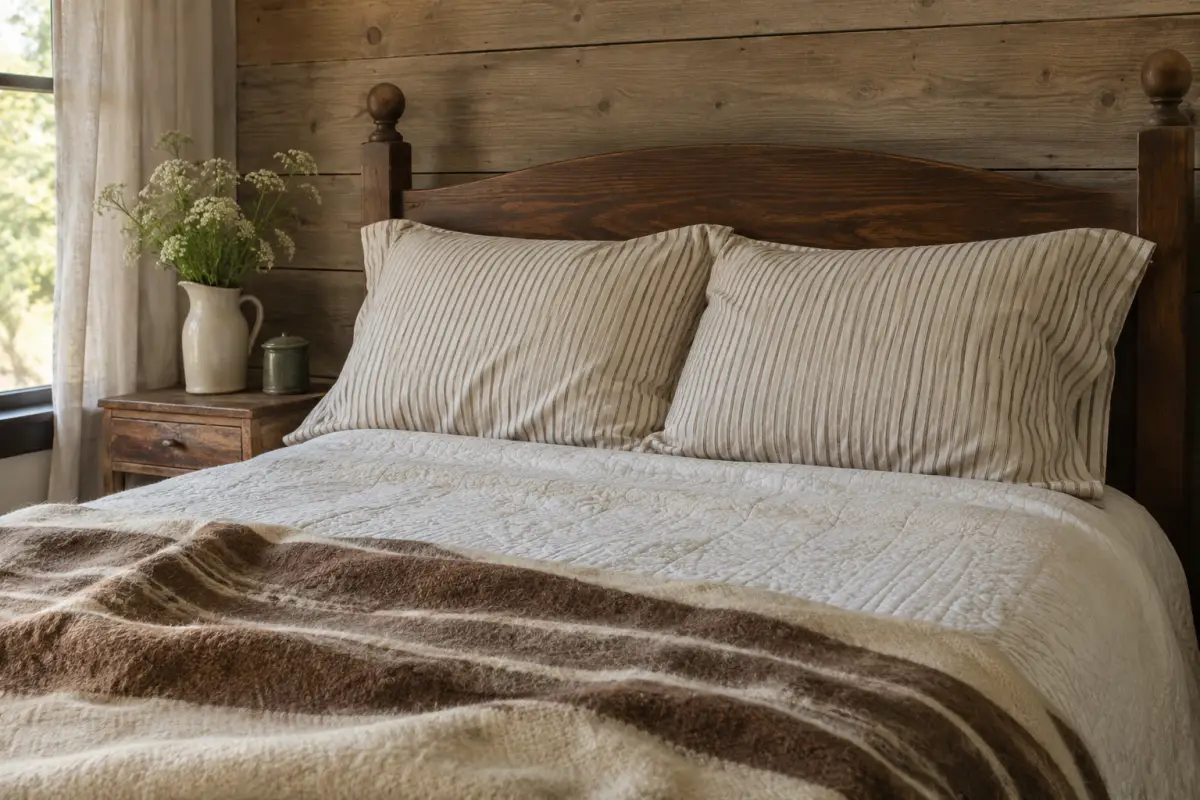
18. Ticking stripe farmhouse bed
Ticking stripe is a narrow, old-fashioned stripe that looks at home on a farmhouse bed. Use it on pillowcases or shams and keep the rest simple.
A vintage wool blanket adds warmth and a little history.
The combo: white sheets, ticking stripe pillowcases, a white quilt, a vintage wool blanket at the foot.
19. Velvet over linen
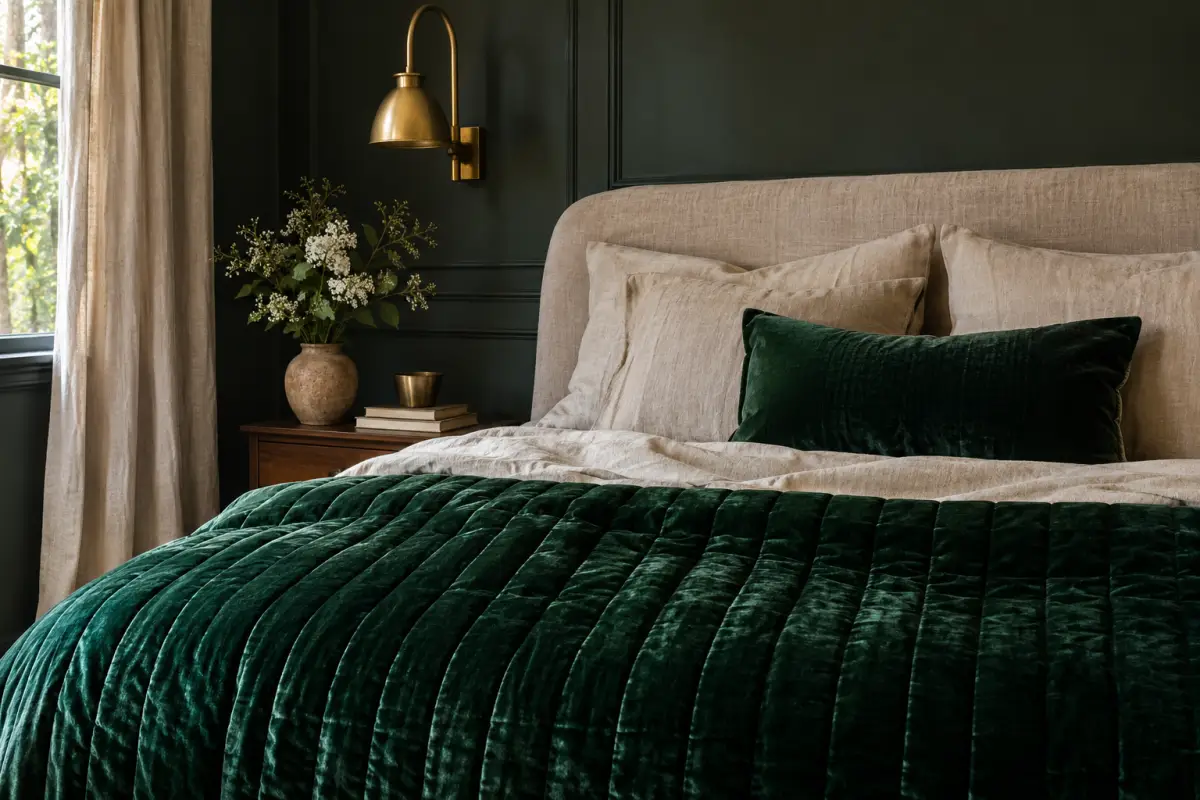
Velvet and linen are opposites: one is plush and glossy, the other dry and textured. Laid together, a velvet quilt over linen sheets looks rich in a moody room.
Jewel tones like emerald, plum or deep rust suit velvet best.
The combo: natural linen sheets, an emerald channel-stitched velvet quilt, linen shams, a brass reading light.
20. A pillow recipe that always works
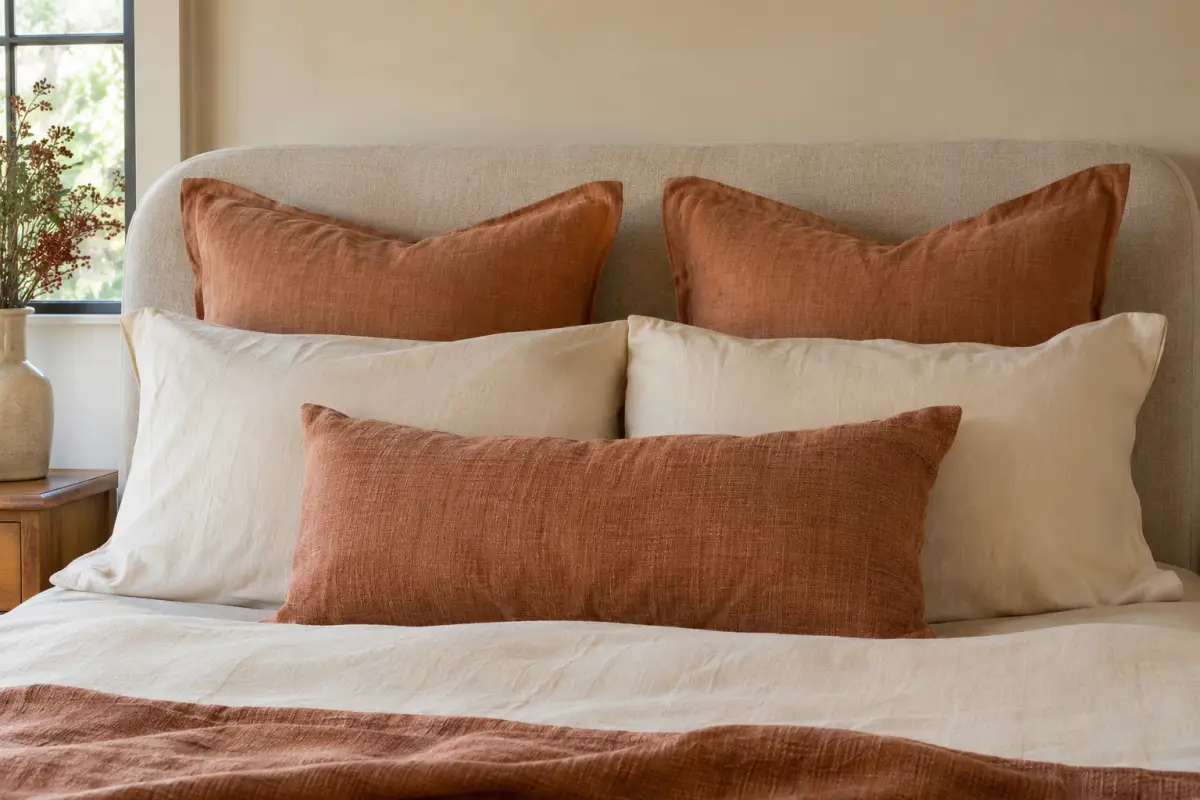
Most styled beds use the same pillow order. Two large square euro shams stand at the back, two sleeping pillows sit in front, and one long lumbar pillow goes in the middle.
Keep the shams in a solid and let the lumbar pillow carry pattern or color.
The combo: two euro shams, two sleeping pillows in matching cases, one lumbar pillow in your accent color.
What to look for before you buy bedding
Pretty bedding that does not fit, pills after a month or feels too hot is money wasted. Check these before you buy.
Size: measure the mattress, not the bed frame
Sheets need to match your mattress in width, length and depth. A standard queen mattress measures 60 by 80 inches and a king 76 by 80 inches, according to The Company Store’s sheet size guide.
Measure the depth from the bottom seam to the top seam, or to the top of your topper if you use one. If you are still choosing a mattress size, our queen vs king bed comparison can help.
Pocket depth: the fix for sheets that pop off
Fitted sheets come with different pocket depths. Standard pockets fit mattresses up to 12 inches deep, deep pockets fit 13 to 16 inches, and extra-deep pockets fit anything over 16 inches.
Duvet cover size: a little room is fine
Duvet covers are sized to drape over three sides of the bed, and an oversized cover can fit better on a thick mattress. If the cover is too big, the insert will not fill it properly, and if it is too small, it will be hard to close.
Size cheat sheet (inches)
Queen mattress
60 x 80
King mattress
76 x 80
Full/queen duvet cover
90 x 96
King duvet cover
108 x 96
Pocket depth: standard up to 12, deep 13 to 16, extra-deep over 16.
Sizes vary by brand, so check the listing before you buy.
Thread count: higher is not always better
Thread count is the number of threads in a square inch of fabric, and The Company Store puts the sweet spot for woven cotton at 200 to 600. It suggests skipping sheets that claim more than 800, since some makers inflate the number with multi-ply yarn.
The issue goes back years. In a 2002 request to the Federal Trade Commission, the textile industry’s trade group said a fabric with 250 four-ply yarns per square inch is a 250 thread count fabric, and calling it 1,000 would be misleading. Fiber and weave tell you more than the big number on the box.
Fiber: look for long-staple cotton
Egyptian and Supima cotton have extra-long fibers, which make a smoother, stronger and softer fabric. If the label only says “cotton,” the weave and feel in the store will tell you more than the thread count.
Labels: what OEKO-TEX means
An OEKO-TEX Standard 100 label means the textile was tested for harmful substances, from the yarn to the finished product. According to OEKO-TEX, every thread, button and accessory is tested against a list of over 1,000 substances.
Care: read it before you fall for it
Check the care label before you buy, especially for linen and dark sateen. Parachute suggests washing sheets and pillowcases once a week and avoiding detergents with optical brighteners, which can weaken and discolor fabric.
Bedding ideas FAQ
What is the coolest bedding option?
Percale, linen and bamboo are the usual picks for hot sleepers because they let air move and wick moisture. Pair them with a thin quilt instead of a heavy duvet in summer.
What thread count is best for sheets?
For woven cotton, a thread count between 200 and 600 is the range The Company Store recommends. Above 800, the count is often inflated with multi-ply yarn, so do not pay extra for it.
What are the types of bedding?
The main pieces are the fitted and flat sheet, pillowcases and shams, and a main layer: a comforter, or a duvet insert inside a removable duvet cover. Quilts, coverlets, blankets and throws are the lighter layers you add on top or swap by season.
What is the current trend in bedding?
Instead of chasing one trend, pick a look you will still like in a few years. Washed linen, tonal neutrals, mixed patterns and warm colors like terracotta and brown are all easy to copy from the ideas above, and you can change the look later with a new quilt or pillow covers.
Save this pin to your bedroom board so the combinations are there when you shop, and if your whole room needs a refresh, our cozy bedroom ideas pick up where the bed leaves off. For more, browse all our cozy bedroom ideas and bedding.
Sources
- Percale vs. Sateen Sheets: Which Should You Choose?, The Company Store
- How To Choose Bed Sheets: A Buying Guide, The Company Store
- How to Wash, Dry and Care for Your Linen Sheets, Parachute Home
- Guide to Bed Sheet Sizes and Measurements, The Company Store
- How To Choose a Duvet Cover: Size and Buying Guide, The Company Store
- Request for FTC Staff Opinion concerning Thread Count (staff letter to the American Textile Manufacturers Institute, with ATMI’s request), U.S. Federal Trade Commission, 2002-03-18
- OEKO-TEX STANDARD 100, OEKO-TEX Association