19 Winter Bedroom Ideas for a Cozy, Draft-Free Room

These winter bedroom ideas fix the cold first and then make the room feel cozy. You get draft checks you can do with a tissue, window and floor layers, flannel and wool bedding, the right humidity for dry winter air, and space heater rules from the CPSC and NFPA.
Most of them are renter-friendly. Work from the top: a sealed window does more than another throw, and the heater section matters most if you plan to run one. For lamps, candles and canopies, see our cozy bedroom ideas; this post is about getting through winter.
Stop the drafts first
A drafty bedroom never feels warm, however many blankets are on the bed. Find the leaks, then close them.
1. Find drafts with a tissue
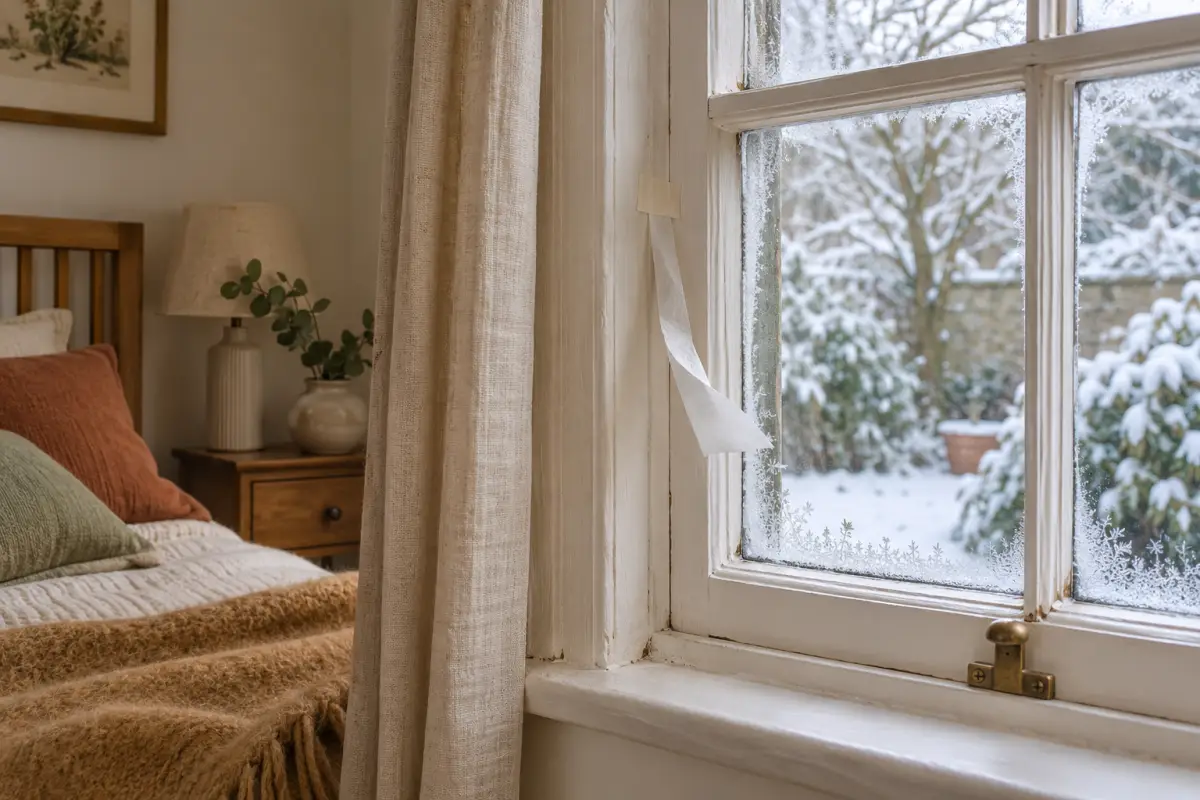
You do not need special tools to find a draft. The Building America Solution Center’s weatherstripping guide suggests feeling around window and door frames with your hand, or holding a piece of tissue next to the frame to see if it moves.
Leaks are easier to notice when all windows and exterior doors are closed and the exhaust fans are running, because that pulls outside air in through the gaps. Mark every spot where the tissue flutters with a bit of painter’s tape.
Three quick draft tests
Tissue test
Hold a tissue beside the window or door frame. If it moves, air is getting in.
Light test
At night, turn the porch light on and the room lights off. Light around the door means gaps.
Dollar bill test
Close the door on a bill. If it slides out easily, air is probably leaking.
Copy it: a tissue or strip of toilet paper, painter’s tape to mark leaks, a windy evening.
2. Weatherstrip the windows that open
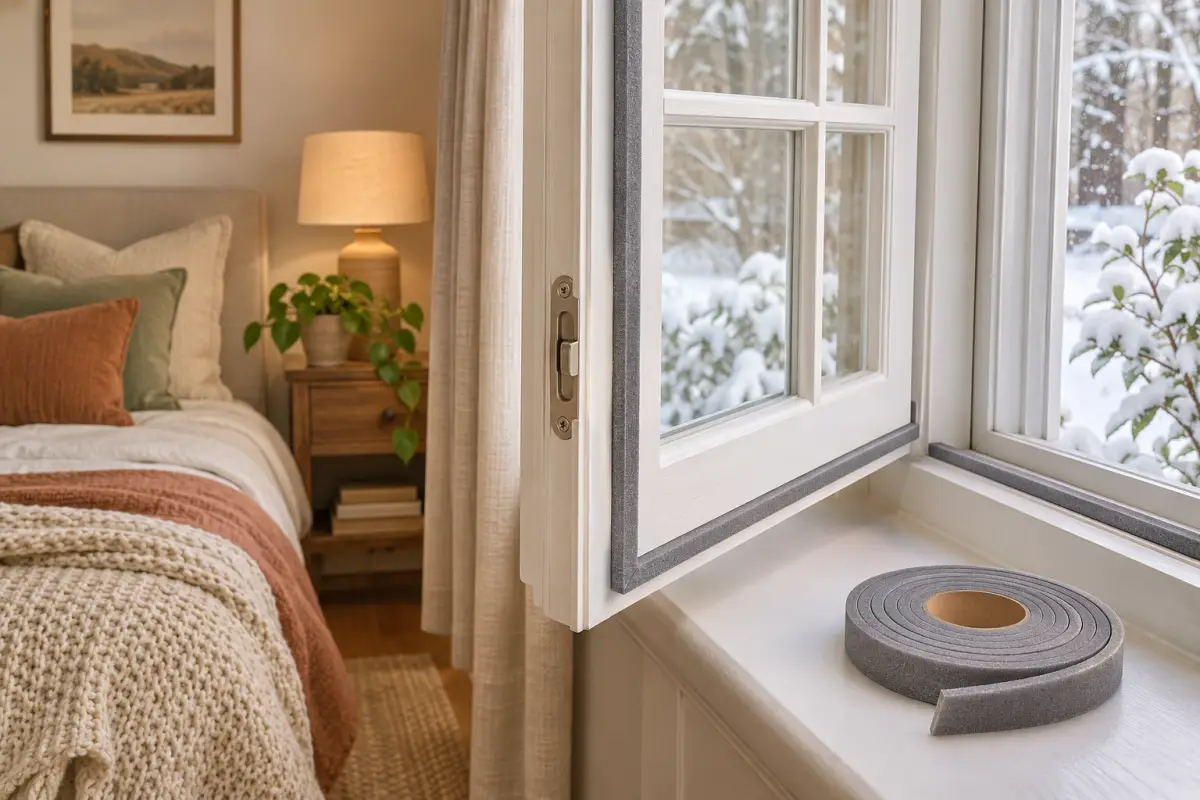
Weatherstripping closes the gap where a window sash meets its frame. For a quick fix, the guide lists self-adhesive foam tape.
After you press it in, open and close the window to make sure it still shuts completely. If it binds, trim the strip or switch to a thinner one.
Renting? Test the adhesive on a hidden corner of the frame first, so it peels off cleanly when you take it down in spring.
Copy it: self-adhesive foam weatherstrip tape, scissors, a damp rag to clean and dry the frame before you start.
3. Block the gap under the door
A cold hallway or an exterior wall can send a steady draft under the bedroom door. Run the light test from the first idea at night and you will see exactly how big the gap is.
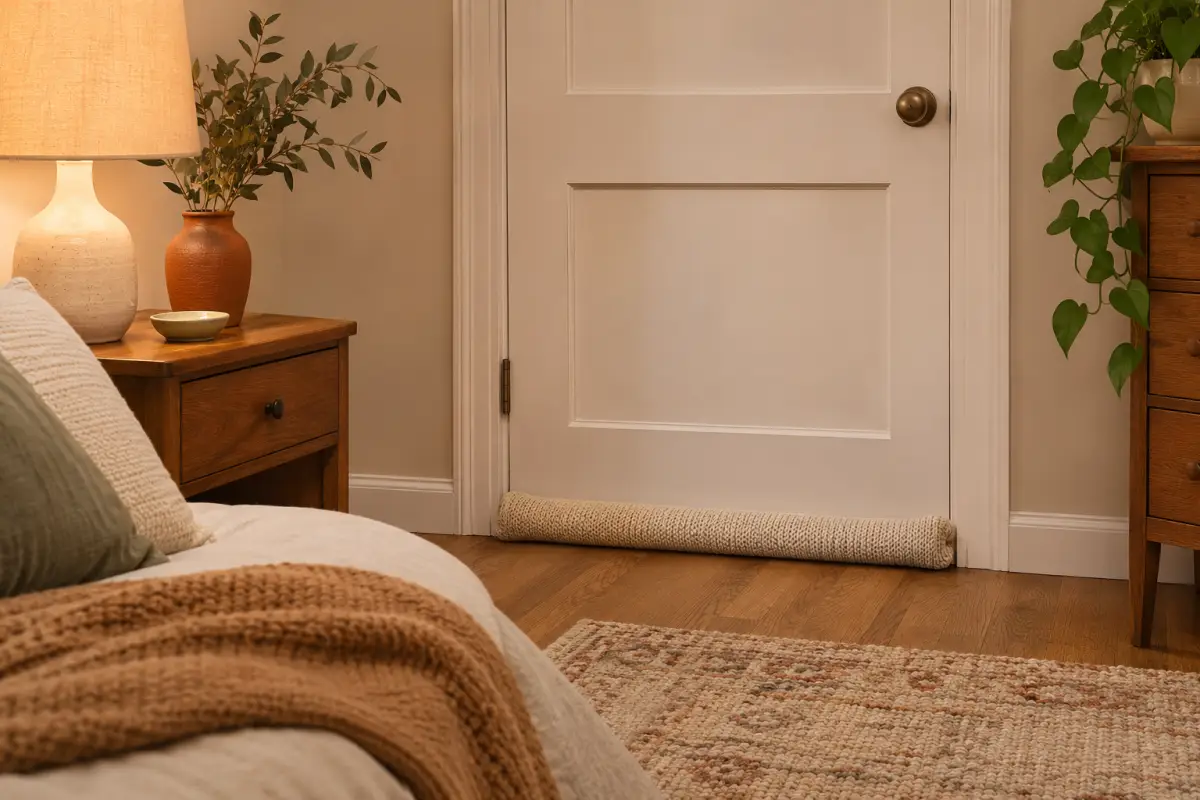
A fabric draft stopper sits along the bottom of the door and costs nothing to install. Pick one in knit, linen or wool in the same colors as your bedding, and it looks like part of the room instead of a fix.
If you own the home, a stick-on or screw-on door sweep stays attached when the door opens.
Copy it: a fabric draft stopper cut to your door width, or a door sweep for a permanent fix.
4. Shrink-film your leakiest window
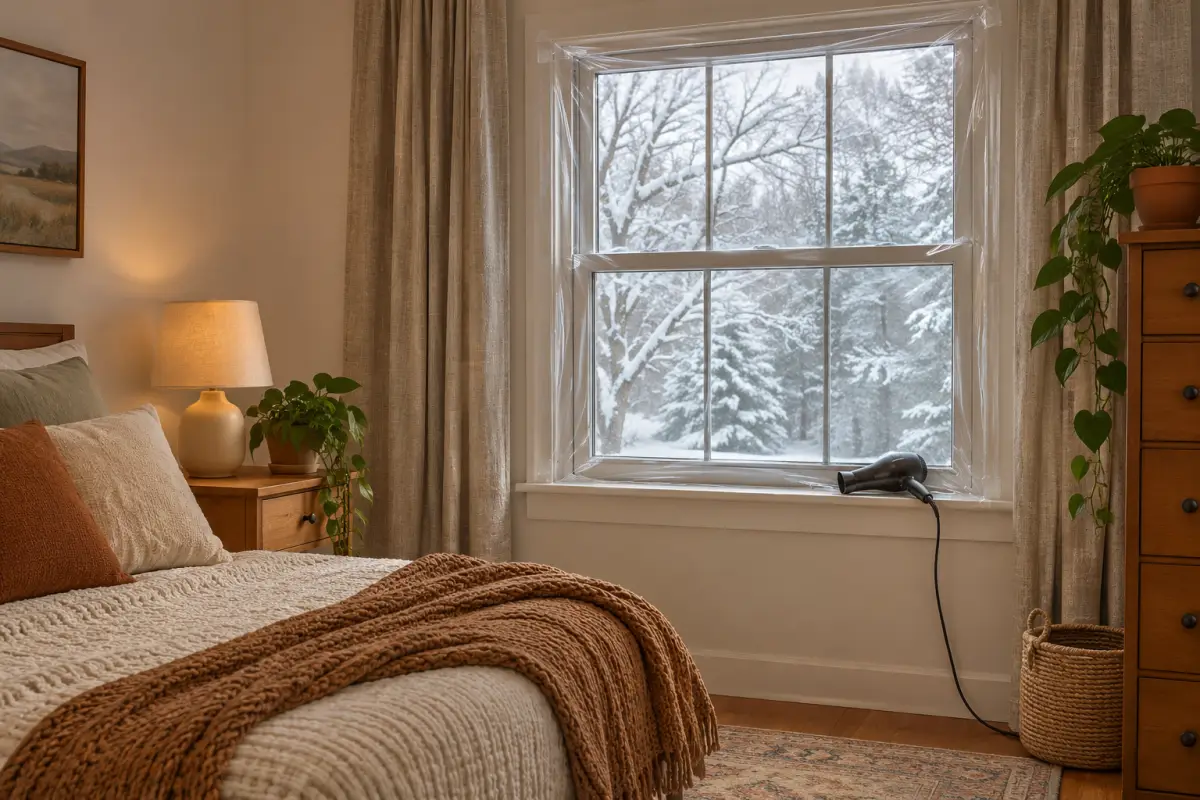
Clear window insulation film covers a drafty window you will not open until spring. Check the frame first: one kit’s instruction sheet says to install it only on metal, painted wood or vinyl, never on wallpaper, wallboard, plaster or veneer.
The steps on that sheet are tape around the frame, film stretched across it with at least 1 inch of overhang, then a hair dryer on its highest setting held 4 to 6 inches from the film to shrink out wrinkles. Trim the extra film when it is smooth.
Copy it: an indoor window insulation kit, scissors, a hair dryer, a clean and dry frame.
Dress the windows for winter
Once the leaks are sealed, the glass itself is the next cold spot. These ideas cover it at night and use the sun by day.
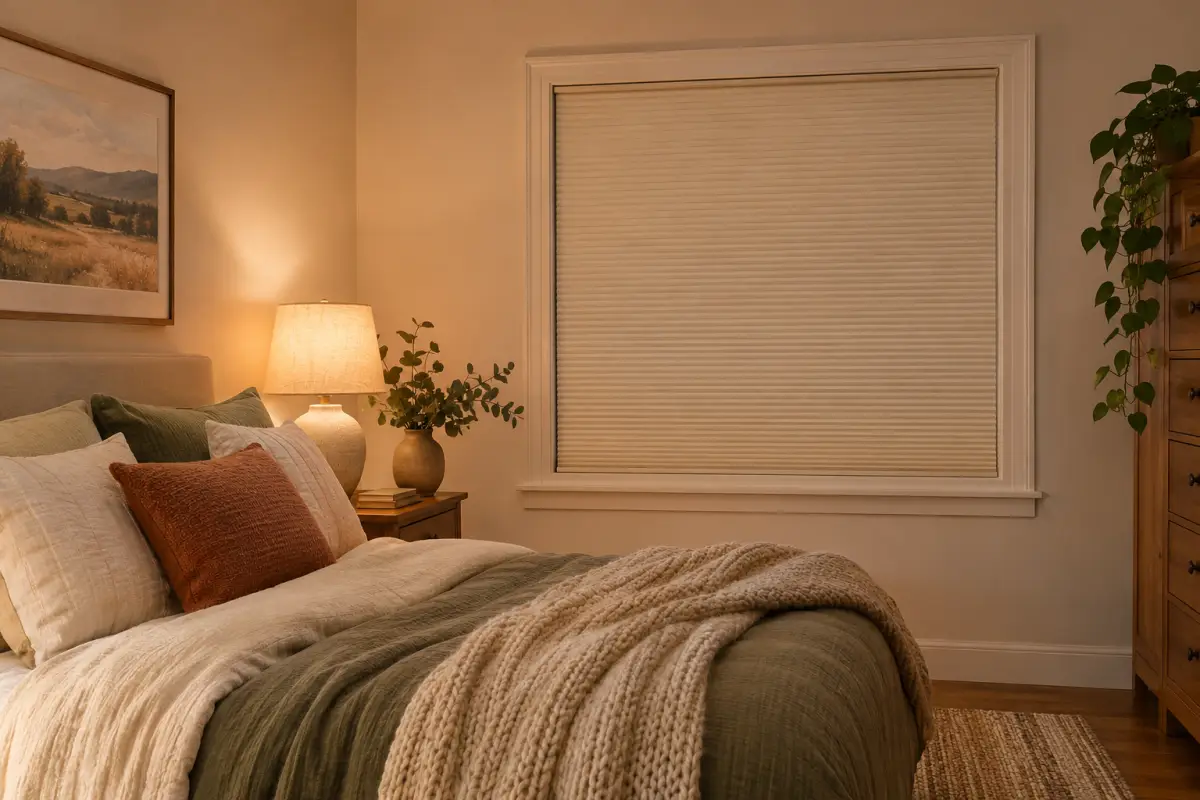
5. Hang cellular shades
Cellular, or honeycomb, shades trap air within each cell and between the shade and the window, according to a Department of Energy fact sheet. The same sheet says they reduce nighttime heat loss through windows and minimize cold drafts near them.
In the tests behind it, cellular shades saved up to 20% on heating energy compared with having no shades. An inside mount, sized to the window opening, gives the snuggest fit.
Copy it: cellular shades measured to the inside of the frame, a cordless lift, a cream or oatmeal color that matches the walls.
6. Open up on sunny days, close up at dusk
Winter sun through the glass is free warmth, so raise the shades all the way on bright mornings. Pull them down as soon as the sun goes, before the room cools.
Pair the shades with lined curtains for the coldest nights. Our cozy bedroom ideas show how to layer sheers and heavy drapes on one double rod.
Copy it: a daily habit (shades up after breakfast, down at sunset), lined curtains on a rod that extends past the frame.

7. Move the bed away from the window
Sleeping with your head against cold glass feels drafty even when the window is sealed. If you can, put the headboard on an inside wall and keep the windows on the side.
In a small room the window wall is sometimes the only wall that fits the bed. Then add a solid headboard and close the shades at night; our guide to laying out a small bedroom has other ways to make it work.
Copy it: an inside wall for the headboard, curtains or shades you close at night, a solid upholstered headboard.

Warm up cold floors
Bare wood, tile and laminate feel icy first thing in the morning. A rug and a few things within reach of the bed fix that.
8. Put a big, thick rug under the bed
A dense wool or high-pile rug turns the coldest surface in the room into the softest. Size it so you step onto rug, not floor, on both sides of the bed; our post on bedroom rug placement gives the sizes for each bed.
Add a rug pad underneath for extra cushion and to stop it sliding. Already have wall-to-wall carpet? Read rug on carpet in the bedroom before you layer one.
Copy it: a wool or dense synthetic rug that reaches past both sides of the bed, a felt or rubber rug pad.

9. Keep winter layers by the bed
The worst part of a winter night is getting up cold to find another blanket. Keep the extras where you can reach them.
A bench at the foot of the bed holds a folded wool blanket, and a lidded basket beside it keeps slippers and a spare throw out of sight. In the morning, the folded stack doubles as styling.
Copy it: an upholstered bench or blanket ladder, a lidded woven basket, one spare wool blanket and slippers.

Switch to flannel and wool
This is where a winter bedroom starts to look like one. Swapping the bedding changes both the warmth and the mood.
10. Swap in flannel sheets
Flannel is cotton or synthetic fiber that is woven and then brushed for a soft, fuzzy finish, and those raised fibers trap warm air. That is why it feels warm the second you get in.
When you shop, The Company Store’s flannel buying guide says to compare material, weight (listed in ounces or GSM) and finish. Compare weights within the same unit, since brands list them differently. Our bedding ideas cover the rest of the bed.
Copy it: cotton flannel sheet set in cream, plaid or heather grey, matching pillowcases, a second set to swap on laundry day.
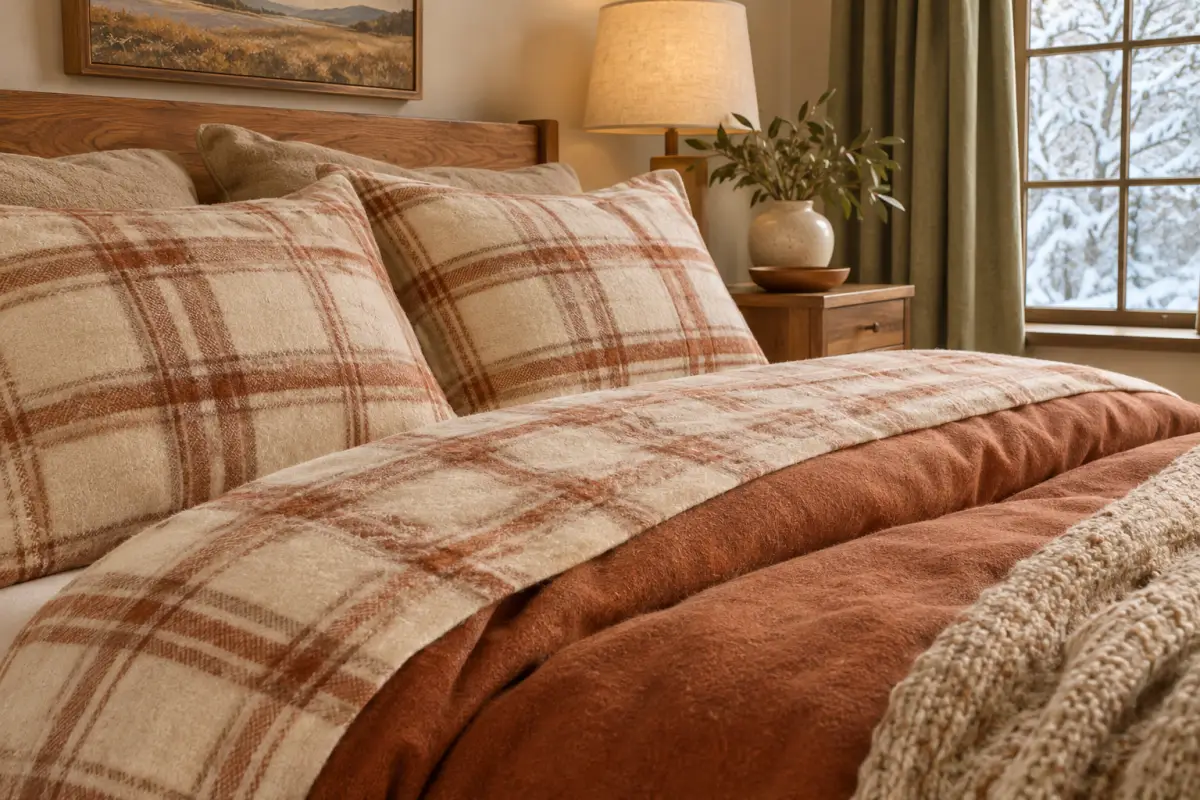
11. Add a wool blanket under the duvet
A wool blanket between the top sheet and the duvet adds a warm middle layer without making the bed look bulky. In the morning, fold it in thirds at the foot of the bed and it becomes the accent.
Stripes, plaid or a simple blanket stitch in cream, camel or forest green all read as winter without saying “holiday.”
Copy it: one wool or wool-blend blanket sized to the mattress, a duvet you already own.

12. Dress the bed in winter colors
Winter decor can last from December to March if you skip the ornaments. Forest green, camel, cream and charcoal feel seasonal without being Christmas.
Swap in a plaid flannel duvet cover, a chunky knit throw and a vase of bare branches, then switch back in spring. For tinsel and trees, head to our Christmas bedroom decor post, and find more seasonal swaps in seasonal bedroom decor.
Copy it: a plaid or solid green duvet cover, a chunky cream throw, camel or wool pillow covers, bare branches in a tall vase.

13. Make the bed in layers you can kick off
Warm bedding does not mean a hot room. The CDC’s sleep advice includes keeping your bedroom at a cool temperature.
Layers let you do both: sheet, light quilt, wool blanket and duvet, so the room stays cool while the bed stays warm. If you wake up hot, push one layer off instead of getting up to change anything.
Copy it: top sheet, a light quilt, a wool blanket and a duvet, each one easy to fold back on its own.

Fix dry winter air
Heating dries the air, and you notice it in your nose, lips and skin by morning. A humidifier helps, if you keep it in range and clean.
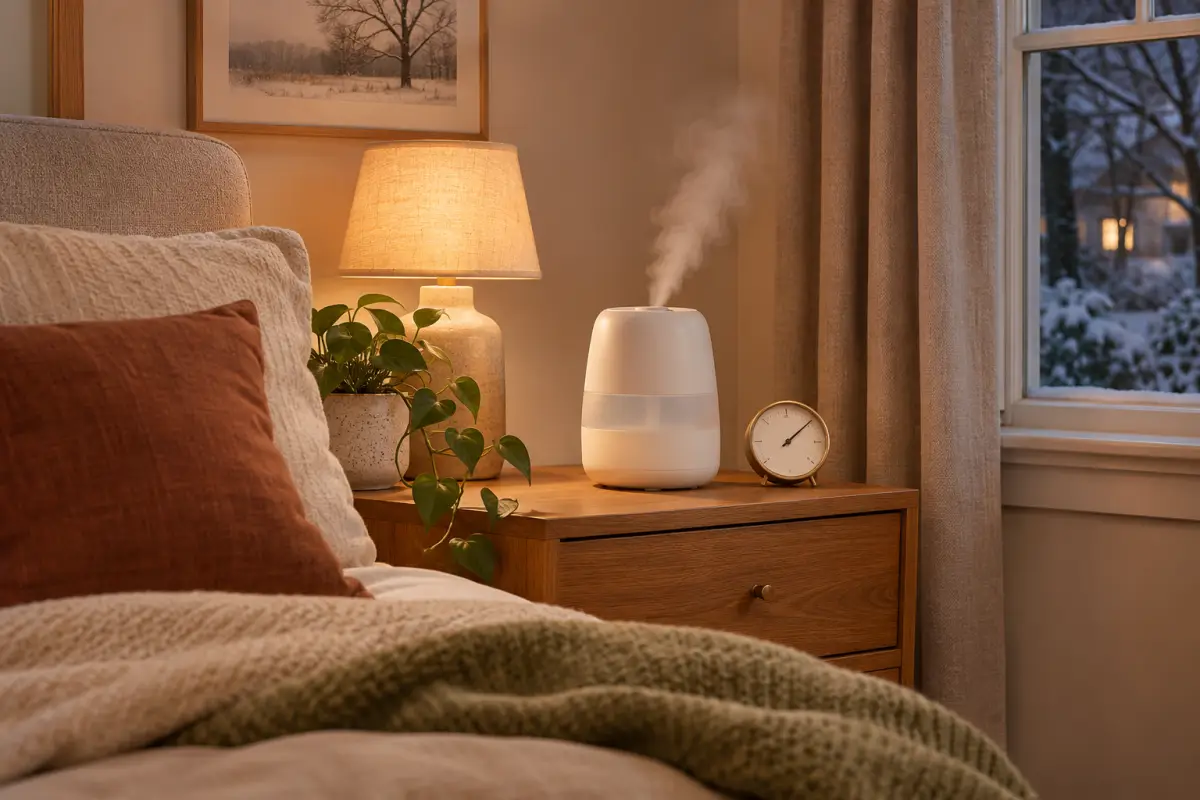
14. Run a humidifier, and watch the number
The EPA’s humidifier guide says humidifiers relieve dry nose, throat, lips and skin, and help with winter nuisances like static electricity. It also warns not to humidify above 50 percent.
EPA’s mold guide puts the ideal indoor range between 30 and 50 percent, and says a humidity meter costs about $10 to $50 at many hardware stores. If water starts to condense on the windows, move the humidifier or turn it down.
Copy it: a small humidifier for the nightstand or dresser, a hygrometer (humidity meter) on the far side of the room.
15. Clean the humidifier on a schedule
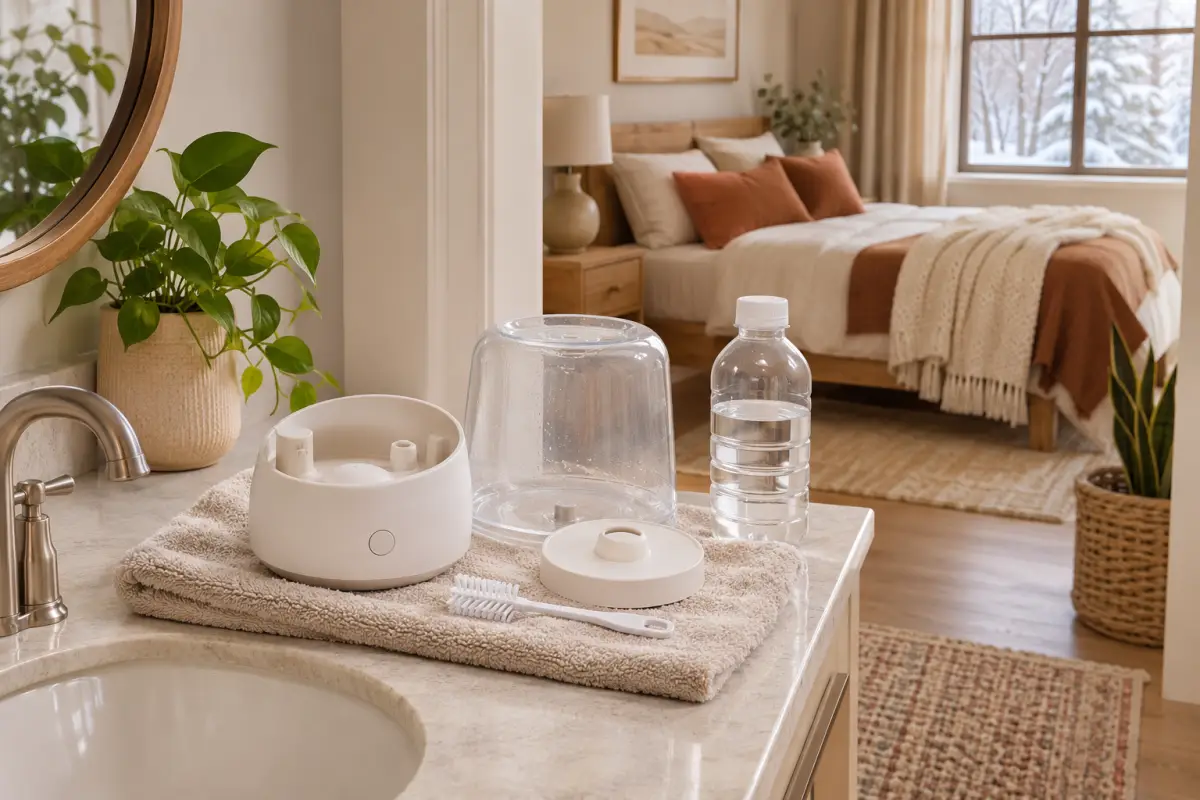
Microorganisms often grow in humidifiers with standing water in the tank, and minerals build up as scale. The EPA’s care steps are short enough to stick on the fridge.
Humidifier care, from the EPA
Daily
Empty the tank, wipe it dry and refill with low-mineral water such as distilled.
Every third day
Clean the humidifier to stop scale and microorganisms building up.
End of season
Clean it again and make sure every part is dry before storage.
Copy it: distilled water, a small brush for the tank, a towel to dry the parts, a reminder on your phone.
Use a space heater safely
A space heater can take the chill off a cold bedroom, but it needs rules. Based on 2020-2024 averages, the NFPA says space heaters and heating stoves were involved in 30% of home heating equipment fires but 73% of the deaths.
Nearly half of heating equipment fires (46%) happen from December through February, according to the NFPA’s heating safety page. Treat these four ideas as the non-negotiable part of this post.
16. Buy a heater with the right safety features
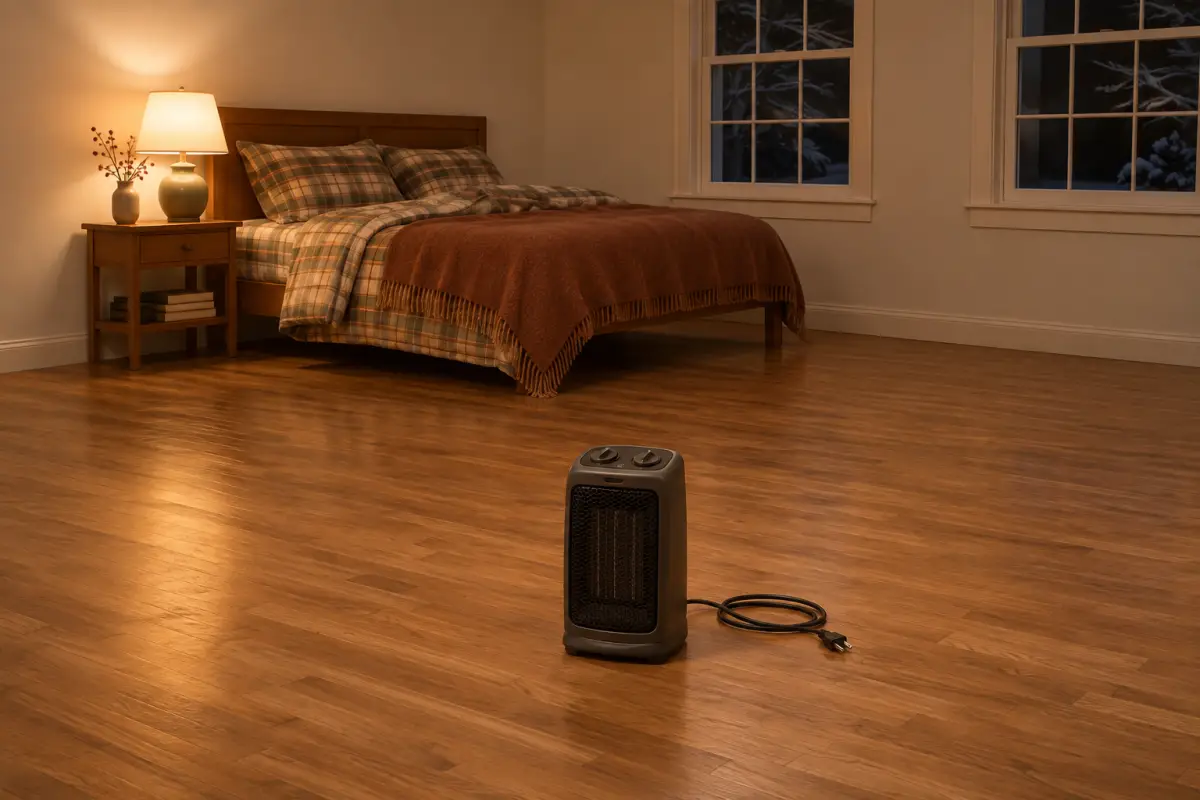
Start with the box, not the price. The NFPA’s portable heater tip sheet says to buy a heater with the seal of a qualified testing laboratory, a thermostat and overheat protection.
It should also have an auto shut-off that turns it off if it tips over. Reusing an older heater? Check it has these features before you plug it in.
Copy it: a testing-lab seal on the box, a thermostat, overheat protection, tip-over shut-off.
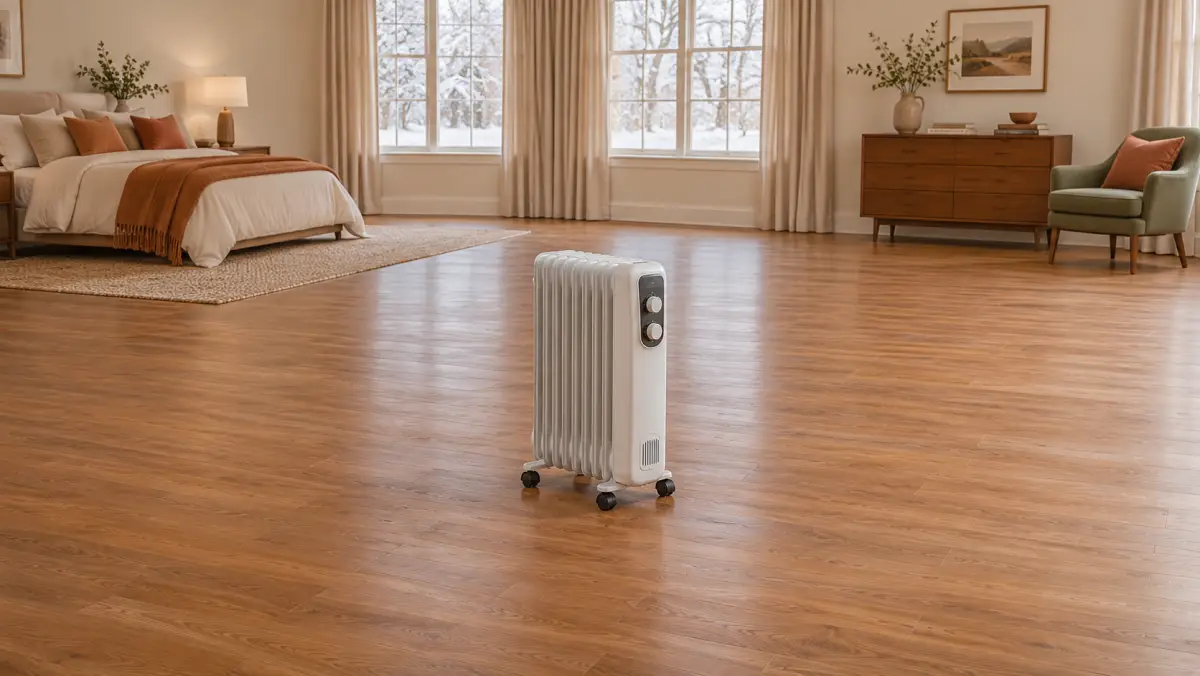
17. Give it three feet and its own outlet
The CPSC’s winter heating safety tips say to keep portable heaters at least three feet from drapes, furniture, bedding and other things that can burn. NFPA adds people to that list.
Plug it straight into a wall outlet, never into an extension cord or power strip. A CPSC heater safety poster also says never to run the cord under rugs or carpeting, and to set the heater on a stable, level surface where it will not be knocked over.
Space heater do and don't
Do
Keep it 3 feet from beds, curtains, furniture and people. Plug it straight into the wall. Set it on a stable, level surface.
Don't
Use an extension cord or power strip. Run the cord under a rug. Leave it on while you sleep.
Copy it: a clear spot on the floor at least three feet from the bed and curtains, a wall outlet nearby.
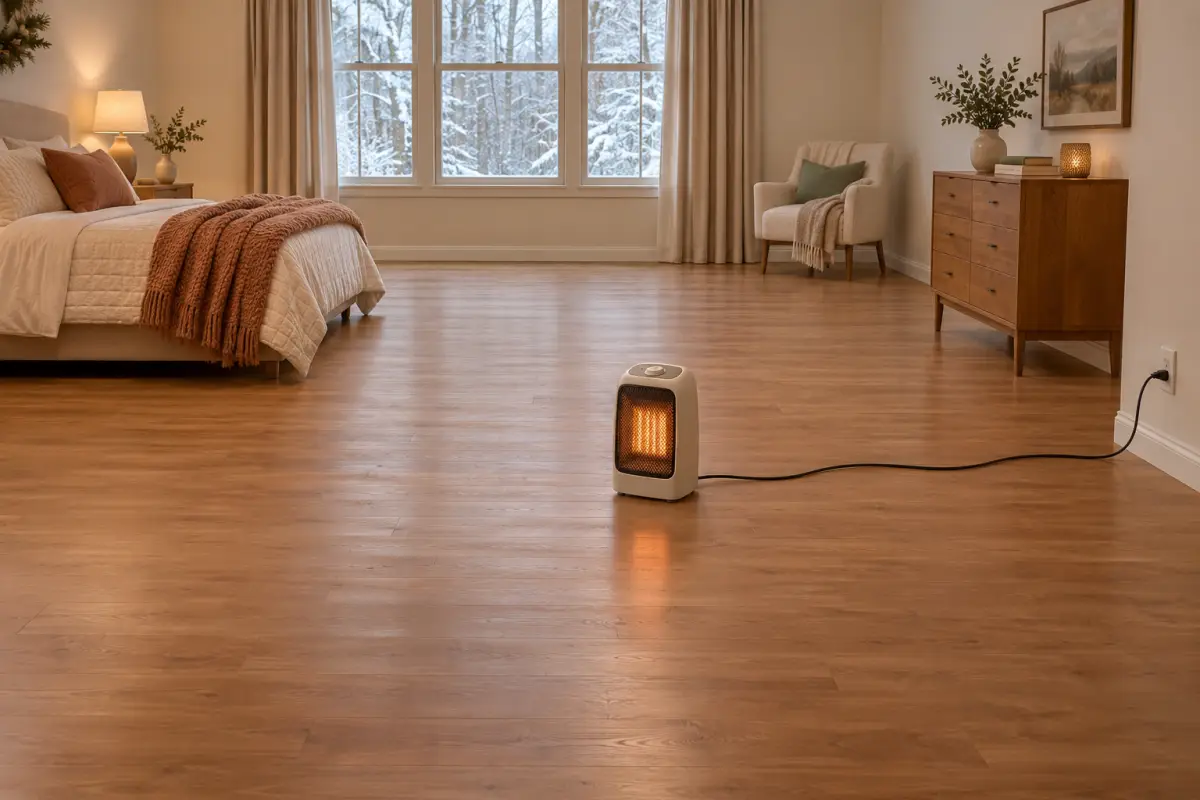
18. Turn it off before you sleep
The CPSC’s advice is short: turn off heaters when sleeping. NFPA goes further and says space heaters should be turned off and unplugged when you leave the room or go to bed.
So use the heater to warm the room while you read or get ready, then switch it off and let flannel, wool and a closed shade hold the heat. If you want a warm bed all night, our cozy bedroom ideas cover electric blanket safety.
Copy it: a bedtime routine (heater off and unplugged, shades down, extra blanket at the foot of the bed).
19. Check your smoke and CO alarms
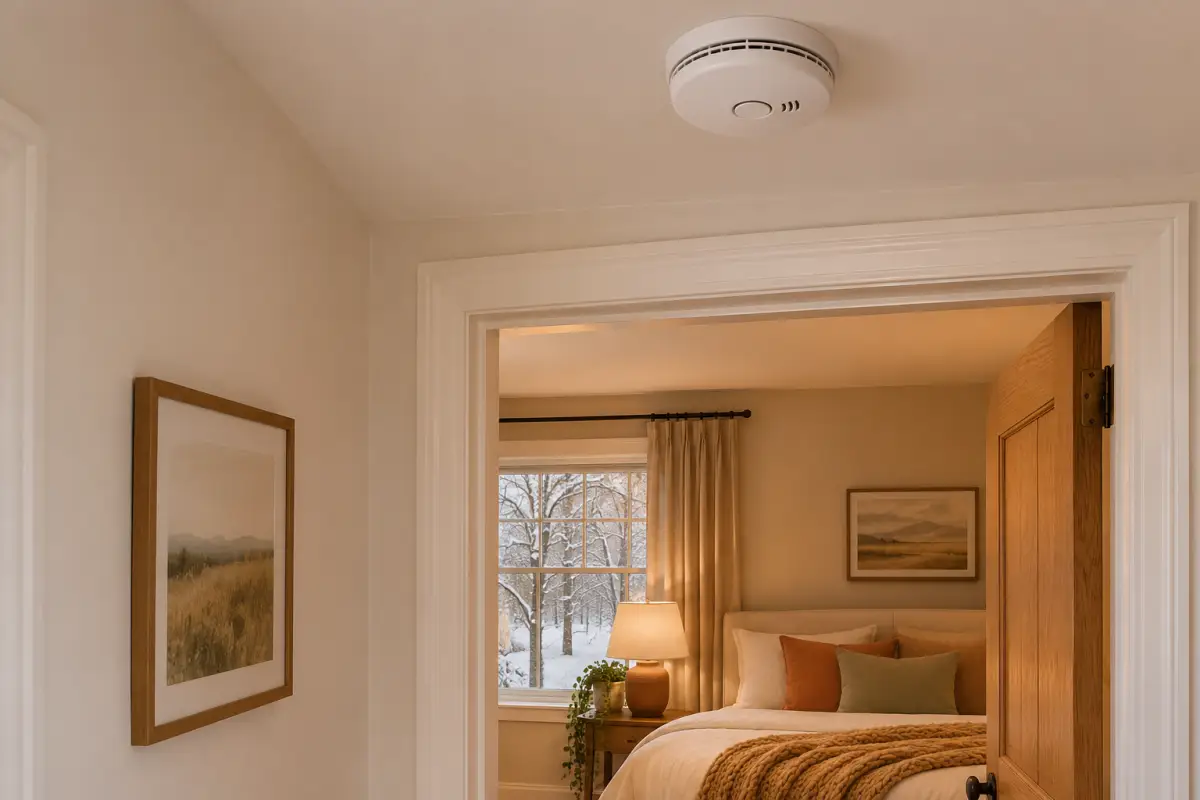
Heating season is a good time to check the alarms. The CPSC says to install smoke alarms on every level of the home and inside each bedroom, and CO alarms on every level and outside sleeping areas.
Test them every month to make sure they work. Put a recurring reminder in your phone so it happens without thinking.
Copy it: a smoke alarm inside the bedroom, a CO alarm in the hallway outside it, a monthly test reminder.
Winter bedroom ideas FAQ
How do I keep my bedroom warm in winter?
Start with drafts: find them with a tissue and seal them with weatherstripping, a door draft stopper or window film. Then cover the glass at night with cellular shades or lined curtains, put a thick rug under the bed and switch to flannel sheets and a wool blanket.
Is it safe to sleep with a space heater on?
No. The CPSC says to turn off heaters when sleeping, and NFPA says to turn them off and unplug them when you go to bed. Warm the room before bed instead, and let warm bedding do the work overnight.
What humidity should my bedroom be in winter?
The EPA puts the ideal indoor humidity between 30 and 50 percent, and says not to humidify above 50 percent. A small humidity meter tells you where you are.
How do I make my bedroom cozy for winter without Christmas decor?
Use winter colors and textures: forest green, camel and cream, plaid flannel, chunky knits, wool and bare branches. They last all season, and you can add holiday pieces from our Christmas bedroom decor ideas in December if you want them.
Save this pin to your winter or bedroom board so the draft tests and heater rules are there on the first cold night. Then read our bedding ideas to finish the bed.
Sources
- Add Weatherstrip to Windows and Doors, Building America Solution Center (Pacific Northwest National Laboratory for the U.S. Department of Energy), 2025-10-03
- Indoor Window Insulation Kit: instructions for use, Thermwell Products Co. (manufacturer instruction sheet, hosted by The Home Depot)
- Interior Cellular Shades Boost Home Energy Performance (fact sheet), U.S. Department of Energy, Building Technologies Office, 2021-11-22
- Buying Guide: How to Choose the Best Flannel Sheets and Bedding, The Company Store, 2023-09-03
- About Sleep, Centers for Disease Control and Prevention (CDC), 2024-05-15
- Use and Care of Home Humidifiers, U.S. Environmental Protection Agency (EPA), 2026-04-29
- A Brief Guide to Mold, Moisture and Your Home, U.S. Environmental Protection Agency (EPA), 2026-02-18
- Heating safety, National Fire Protection Association (NFPA)
- Portable Electric Space Heater Safety (safety tip sheet), National Fire Protection Association (NFPA), 2018
- Keep Warm and Safe This Winter: Tips for Using Generators, Furnaces and Space Heaters, U.S. Consumer Product Safety Commission (CPSC), 2026-01-23
- 7 Highly Effective Portable Heater Safety Habits (Neighborhood Safety Network poster), U.S. Consumer Product Safety Commission (CPSC)