Bedroom Lighting Ideas: How to Light a Bedroom in Layers, Step by Step
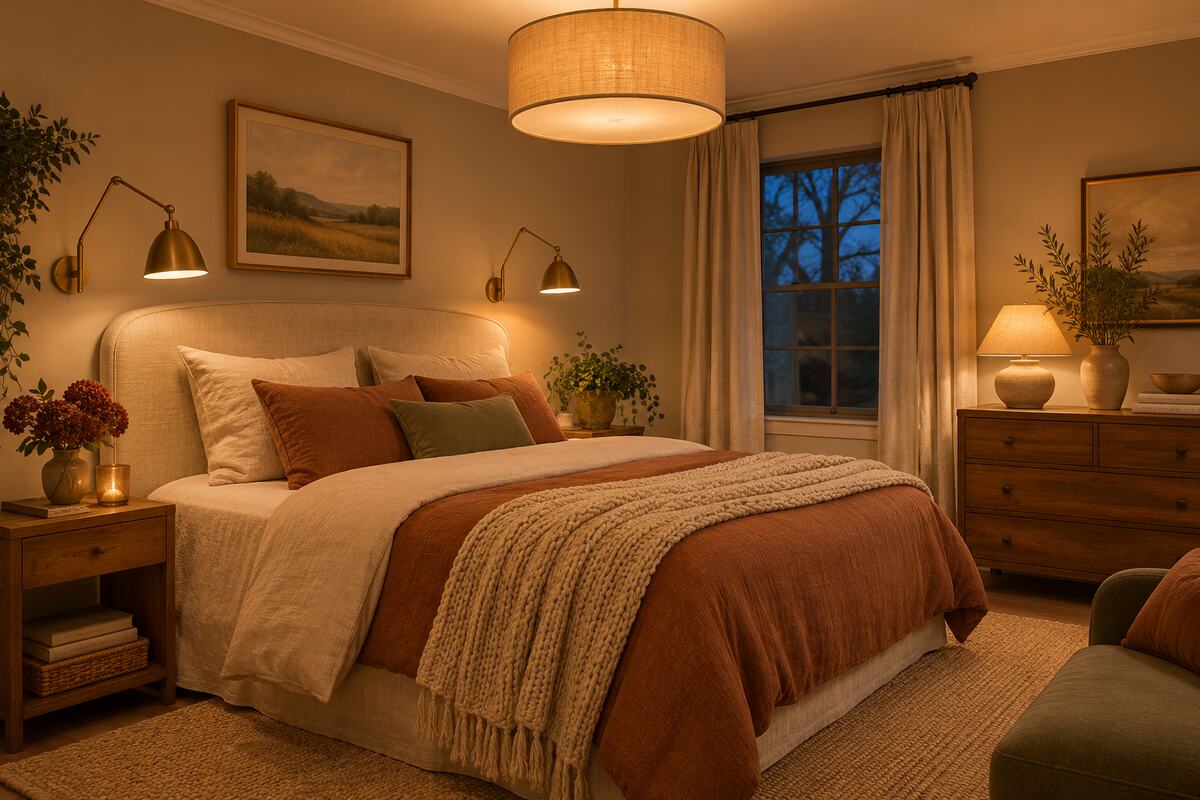
These bedroom lighting ideas work as one plan instead of a pile of pretty fixtures: you build the room in layers (overhead, reading, accent), then put it all on dimmers. Each step tells you which bulb color, how bright, and where it goes, with the numbers taken from the Department of Energy, ENERGY STAR, lighting makers and sleep research.
Most of it works in a rental. Plug-in sconces, lamps and smart bulbs cover every layer if you cannot touch the wiring.
AT A GLANCE
The three layers
Ambient (soft overall light), task (reading light at the bed), accent (low glow on art, shelves or the headboard wall).
What you need
Warm white dimmable LED bulbs, a ceiling fixture or floor lamp, two bedside lamps or plug-in sconces, one or two accent lights, LED-rated dimmers, plug-in dimmers or smart bulbs, a dim night light.
Difficulty
Easy if you use lamps and plug-in pieces. A hardwired fixture or wall dimmer is a job for an electrician.
1. Decide what each part of the room needs to do
Before buying anything, list what you actually do in the bedroom after dark. Reading in bed, getting dressed, doing makeup at a vanity and finding the bathroom at night all need different light.
Give each activity its own light source, in the spot where it happens. The ceiling light then stops doing every job badly, and you can leave it off most evenings.
Do this: stand in the doorway at night and note the dark corners, the spot where you read, and the path to the door. Those three notes are your shopping list.
2. Choose one warm color temperature for every bulb
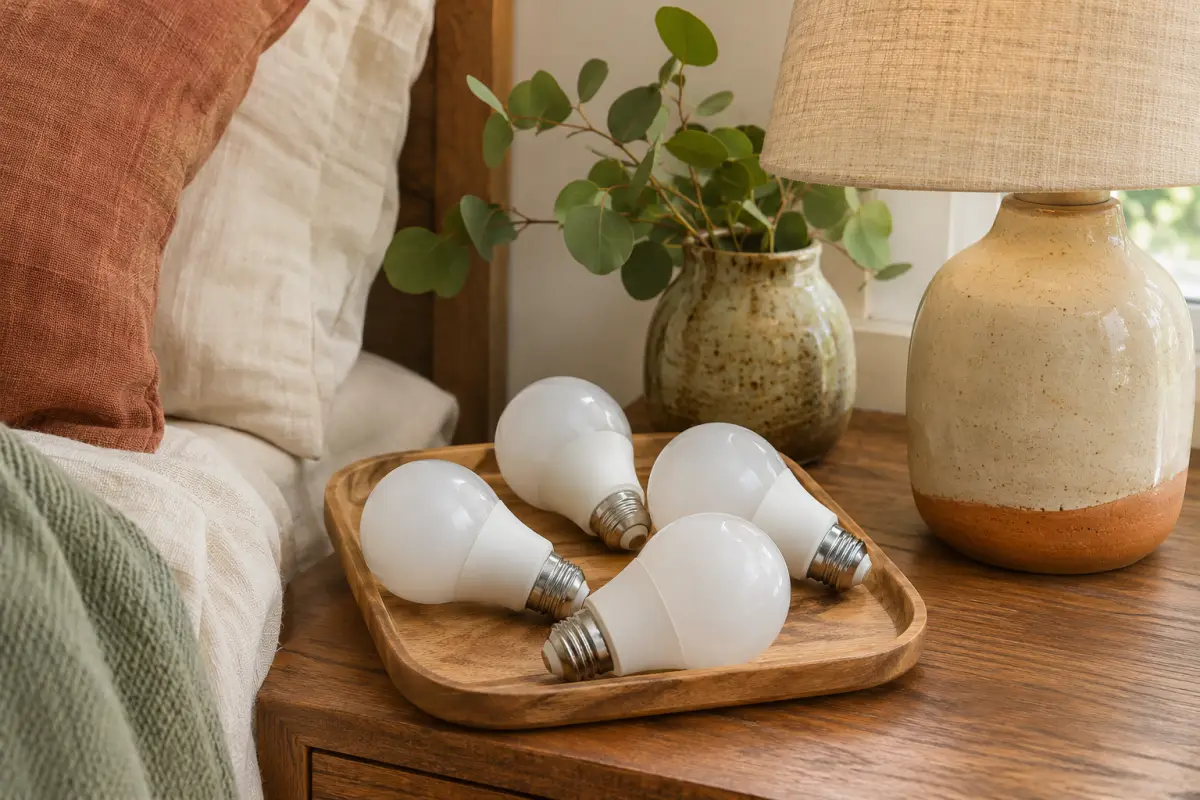
Color temperature is the warm-to-cool look of white light, measured in Kelvin. ENERGY STAR’s light bulb purchasing guide puts it plainly: lower K means warmer, yellowish light, and higher K means cooler, bluer light.
For a bedroom, stay at the warm end. The Department of Energy’s bulb buying guidance lists 2,700K as warm and “friendly, personal” for homes, and 3,000K as soft and “warm, pleasing”.
Pick one number and use it in every lamp and fixture in the room. DOE notes that a big jump, such as from 2,700K to 4,100K, is noticeable and can leave people unhappy with the light.
Color temperature, from the DOE table
2,700K warm
Friendly, personal. Best for bedside and evening light.
3,000K soft
Warm, pleasing. Good overhead or for a vanity.
3,500K neutral
Offices and reception areas. Starts to feel less cozy.
4,100K cool
Offices and classrooms. Skip it in the bedroom.
The box says “soft white” or “warm white” on most warm bulbs, but check the Kelvin number itself. That number is printed on the Lighting Facts label as light appearance, along with lumens and energy cost.

3. Buy bulbs by lumens, not watts
Watts tell you how much power a bulb uses; lumens tell you how much light it gives. ENERGY STAR’s rule is “look for lumens, not watts”.
If you know the old bulb you liked, match its lumens. DOE’s comparison table gives these equivalents for standard incandescent bulbs and the LEDs that replace them:
| Old incandescent | Light output | LED power use |
|---|---|---|
| 40 watts | 450 lumens | 4.5 to 7 watts |
| 60 watts | 800 lumens | 5.9 to 10.5 watts |
| 75 watts | 1,100 lumens | 9.5 to 14 watts |
| 100 watts | 1,600 lumens | 10.5 to 18 watts |
Source: Purchasing Energy-Efficient Light Bulbs, U.S. Department of Energy (Federal Energy Management Program)
A practical split: brighter bulbs where you read or dress, and lower-lumen bulbs in accent lamps. A dimmer, covered below, lets one bulb do both bright and low.
While you are reading the box, look at the CRI too, which describes how true colors look under the bulb. DOE says a higher CRI means a better light source, and that ENERGY STAR-qualified bulbs need a CRI of 80 or greater. A higher number helps most at a closet or vanity, where you match clothes and makeup.
4. Set a soft ambient layer overhead
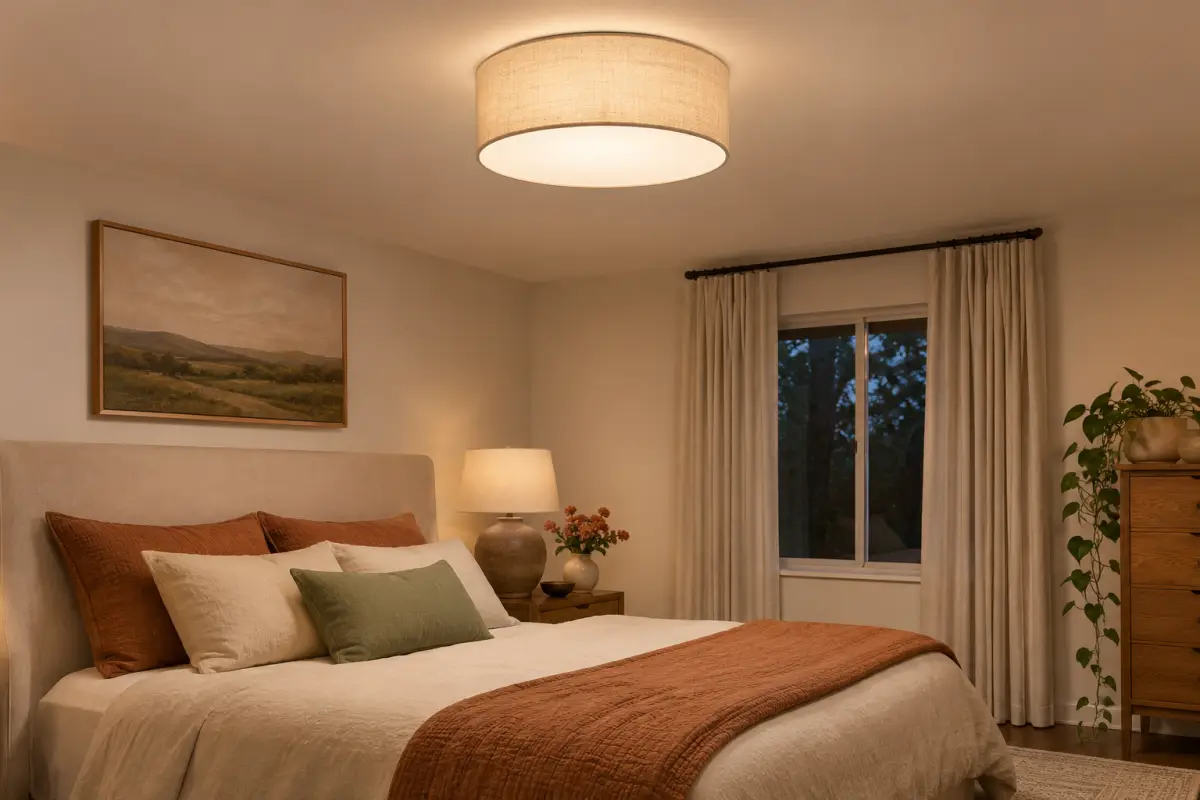
Ambient light is the general glow that lets you walk around and tidy up. In most bedrooms that is a ceiling fixture, and a diffused one (fabric drum, paper, frosted glass) is kinder than a bare bulb.
If your fixture is a closed dome, check the bulb box before you buy. DOE warns that fully enclosed fixtures trap heat, which can shorten the life of some LEDs, so look for bulbs labeled for enclosed fixtures.
No ceiling light, or a harsh one you cannot change as a renter? A floor lamp that throws light up at the ceiling does the same job, and you can plug it into a smart plug so it switches on from the door.
5. Add a reading light on each side of the bed
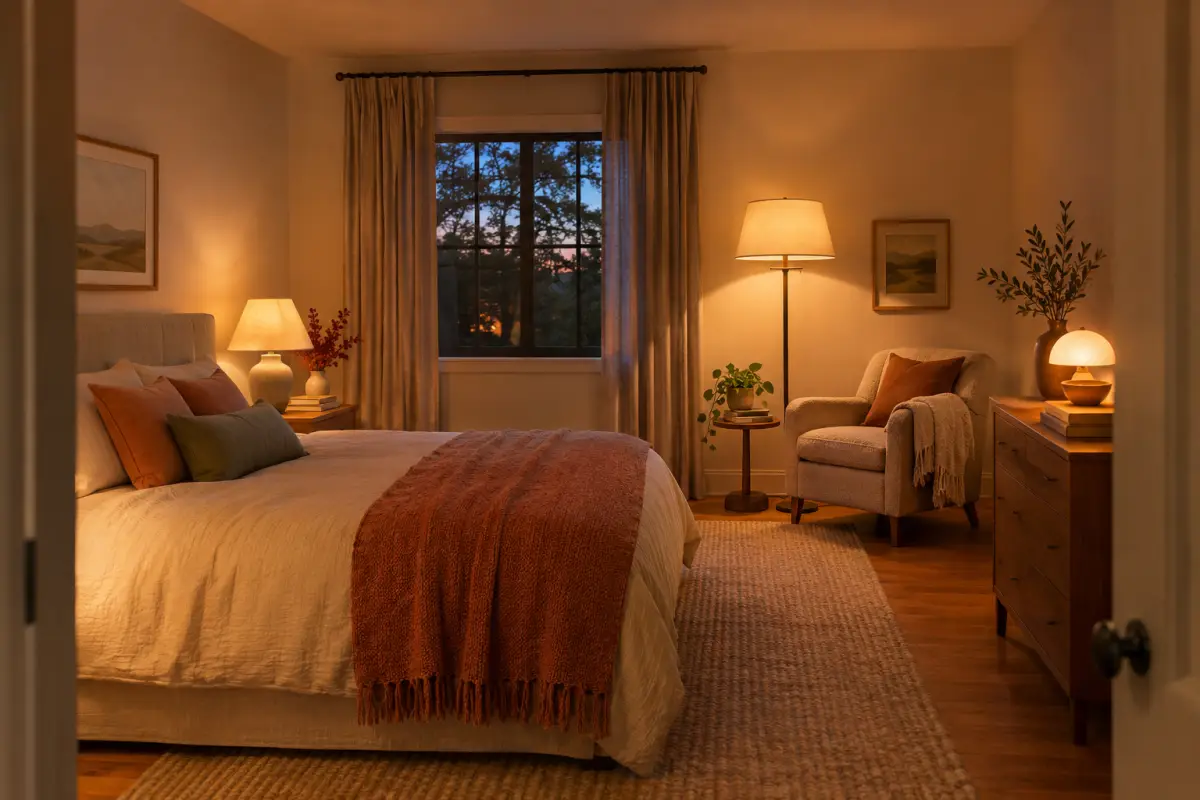
This is the task layer, and it matters most if two people share the bed. Each side should have its own light that you can switch from bed without getting up.
Height is what makes a reading light comfortable. Lighting New York’s bedside lamp guide says the bottom of the shade should sit at eye level when you sit up in bed, which usually means a lamp around 20 to 28 inches tall, depending on your setup.
For wall sconces, the same retailer suggests 20 to 28 inches above the top of the mattress as a starting point, higher for tall beds. Too low causes glare and too high is hard to reach, so sit up against your pillows and have someone mark your eye level on the wall first.
Sconces or lamps?
Wall sconces vs bedside lamps
Choose sconces if
Your nightstands are tiny or you use floating shelves, you want the whole top free, or you like a swing arm you can aim at a book. Plug-in versions need no electrician.
Choose lamps if
You rent and do not want holes or cord covers, you rearrange often, or you want a fabric shade glowing at bed height. Lamps also move with you.
Either way
Shade bottom near seated eye level, a switch you can reach lying down, a warm dimmable bulb.
Small room? Our guide to laying out a small bedroom shows where the bed and nightstands go before you mark sconce holes.
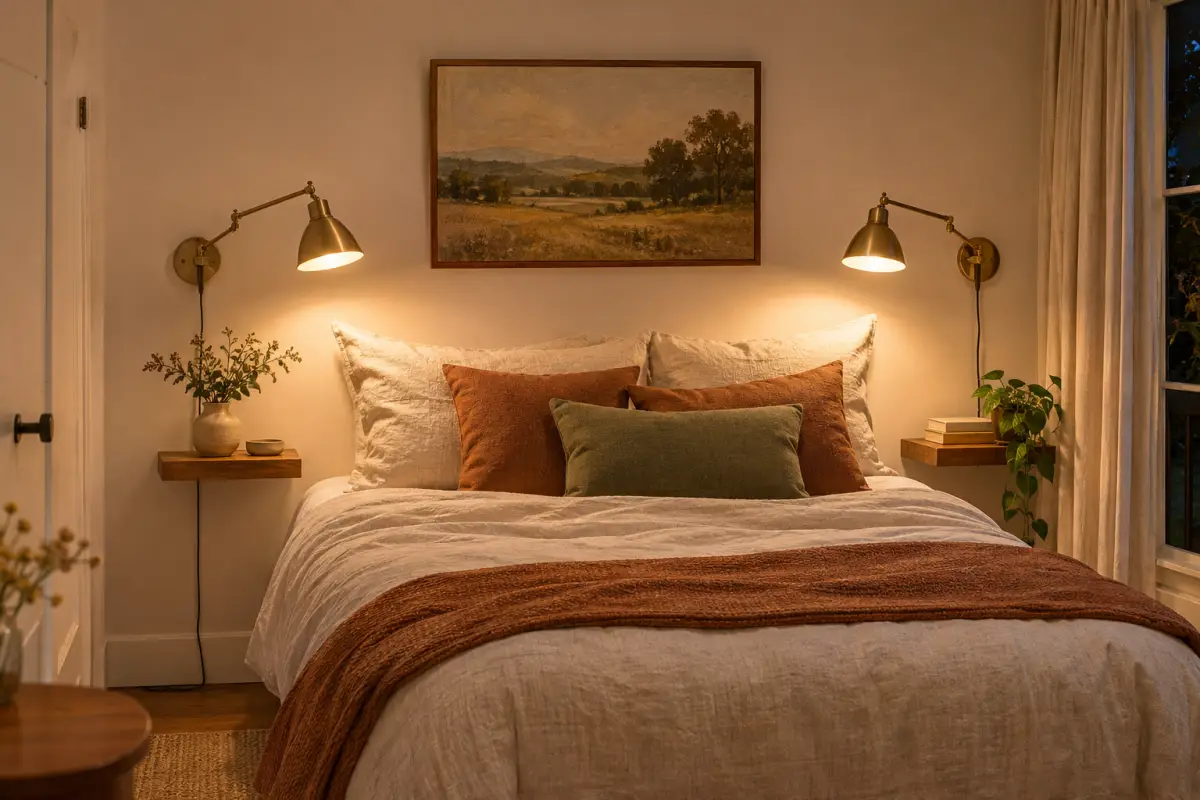
6. Layer in low accent light
Accent light is what makes a bedroom feel finished at night. It sits low and soft and lights a thing, not the whole room: a picture light over art, a small lamp on the dresser, a glow behind the headboard or on a bookshelf.
One or two accent lights are enough. Put them on the side of the room away from the bed, so the far corners are not dark when the bedside lamps are low.
A small lamp on the dresser is the easiest start, and our steps for styling a bedroom dresser show how to place it with books and art. For candlelight and string lights, the safer ways to do both are in our cozy bedroom ideas.

7. Put every layer on a dimmer
Dimmers turn one set of lights into several moods: bright for cleaning, medium for reading, a low glow before sleep. They only work well when the bulb and the dimmer suit each other.
Start with the bulb. Philips Hue’s guide to dimming LED bulbs warns that dimming a non-dimmable LED can cause flickering, buzzing or even damage, so check the box for a “dimmable” label. ENERGY STAR notes that you can find certified bulbs that are dimmable.
Then match the dimmer. GE Lighting’s dimming compatibility page recommends a dimmer rated for LED loads with a low-end trim, says older incandescent or halogen dimmers are not recommended for LEDs, and warns that mixing dimmable and non-dimmable bulbs on one dimmer can cause flickering.
Renter options: plug-in cord dimmers for lamps, or smart bulbs. Philips Hue says its smart bulbs adjust brightness without needing specialized wall dimmers, and its wireless dimmer switch mounts on the wall or works as a remote with no electrical work.
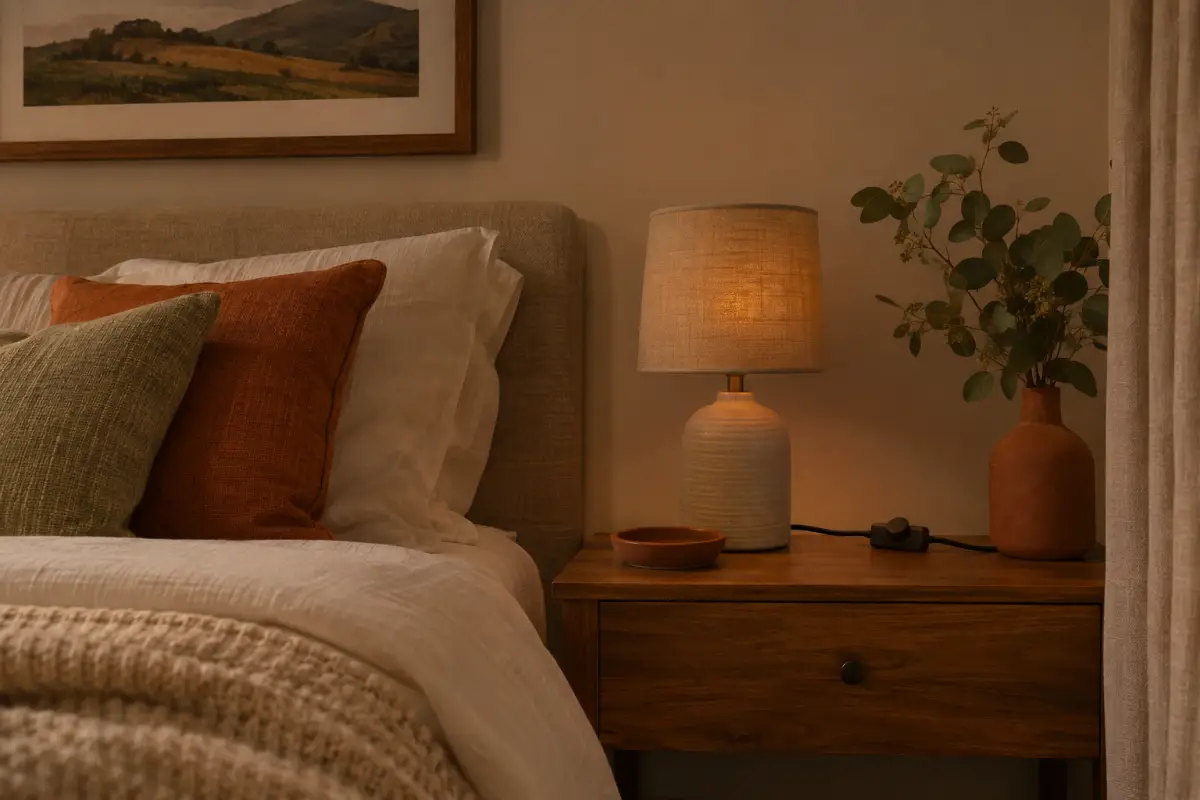
8. Turn the room down in the hour before bed
Lighting is also part of sleeping well. The NIH’s National Heart, Lung, and Blood Institute suggests using the hour before bed as quiet time and avoiding bright artificial light, which “may signal the brain that it’s time to be awake”.
Room light alone can make a difference. In a study of 116 healthy adults, ordinary room light before bedtime, compared with dim light, delayed the start of melatonin in 99% of people and shortened melatonin time by about 90 minutes.
Warm bulbs help here. An expert consensus in PLOS Biology on evening light at home found that many common warm white LEDs, 2,700 to 3,000K, can meet its evening target at a dim level of about 30 lux.
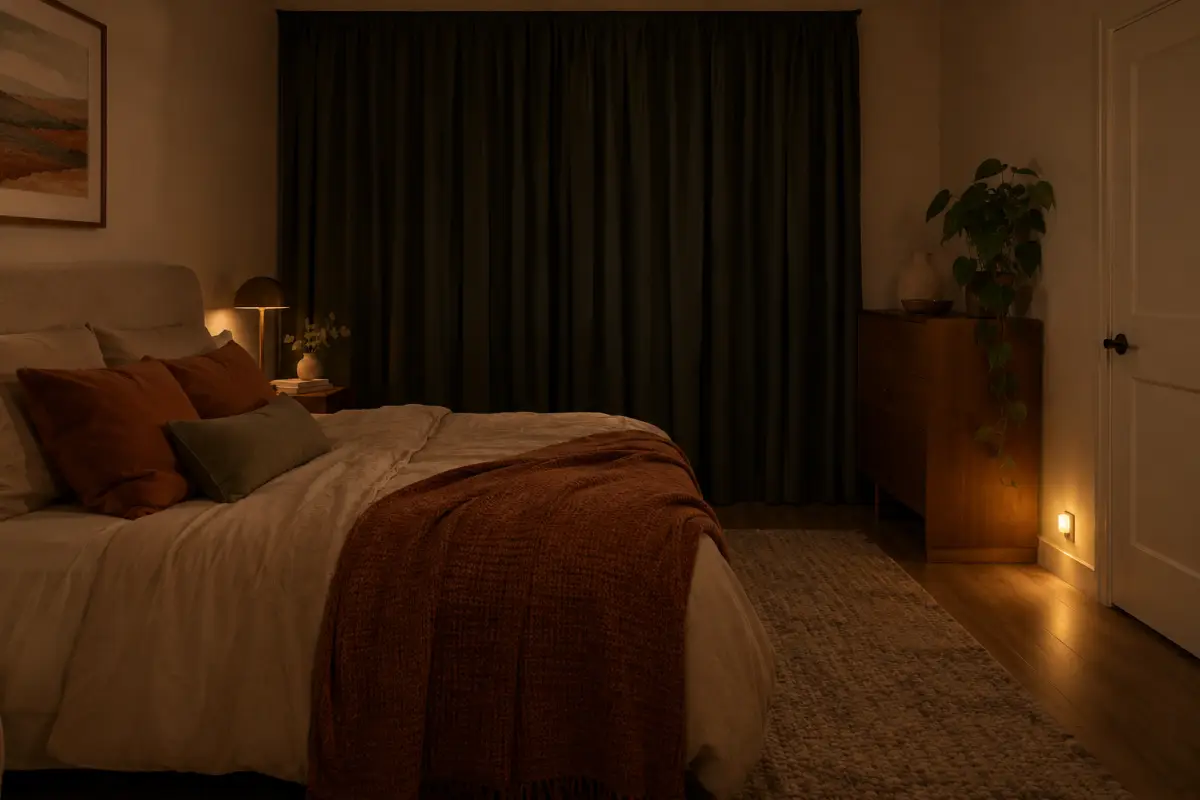
At lights-out, the same paper says the sleep environment should be as dark as possible, using blackout blinds and low orientation lighting where needed. NHLBI agrees: keep the bedroom dark, and a dim night light is fine if you need one.
A simple evening light routine
- After dinner: ceiling light off, lamps and accent light on
- About an hour before bed: dim everything low and warm
- Reading in bed: one bedside light, aimed at the page
- Lights out: dark room, blackout curtains, a dim night light by the path if needed
Common bedroom lighting mistakes
- Mixing bulb colors. A cool bulb in one lamp makes the warm ones look orange. Use one Kelvin number for the whole room.
- Relying on the ceiling light alone. One overhead source flattens the room and lights your face from above. Add the reading and accent layers.
- Buying a dimmer and forgetting the bulb. Non-dimmable LEDs on a dimmer flicker and buzz. Check both labels.
- Hanging sconces before sitting in bed. Mark your seated eye level first, since bed and pillow heights vary.
- Bright light right up to bedtime. Dim the room in the last hour, not at the moment you get into bed.
- Paint chosen in daylight only. Warm bulbs change how wall colors look, so test swatches at night. Our guide to choosing a bedroom color palette walks through it.
Bedroom lighting FAQ
What is the best lighting for a bedroom?
Layers: a soft ambient light overhead or from a floor lamp, a reading light on each side of the bed, and one or two low accent lights, all with warm white bulbs on dimmers. That mix covers cleaning, reading and winding down without the ceiling light doing everything.
What color light is best for a bedroom?
Warm white. DOE describes 2,700K as warm and suited to homes, with 3,000K as soft and still warm. For the evening, research on light and sleep found common 2,700 to 3,000K warm white LEDs can meet its evening target when kept dim.
How many lumens does a bedroom need?
There is no single official number, because room size, wall color and use all change it. Build it from the bulbs instead: a standard 60-watt replacement gives about 800 lumens, so put brighter bulbs where you read and dress and lower ones in accent lamps, then use dimmers to turn everything down at night.
Is 3000K too bright for a bedroom?
Kelvin is color, not brightness. DOE lists 3,000K as a soft, warm light used in homes, so it suits a bedroom; brightness comes from the lumens and the dimmer.
How do I light a bedroom with no ceiling light?
Use a floor lamp that bounces light off the ceiling for ambient light, lamps or plug-in sconces at the bed, and a small accent lamp across the room. Put them on smart plugs or smart bulbs so you can switch them from the door.
Can I put smart bulbs on a regular dimmer?
Smart bulbs are made to dim themselves. Philips Hue says its bulbs adjust brightness without needing specialized wall dimmers, using an app, voice or its own wireless switch. Check your bulb maker’s instructions before putting any smart bulb on a wall dimmer.
Save this guide to your bedroom board so the numbers are there when you shop for bulbs, and browse our cozy bedroom section for the textiles and colors that look best under warm light.
Sources
- Light Bulb Purchasing Guide, ENERGY STAR (U.S. Environmental Protection Agency), 2020-03-16
- Purchasing Energy-Efficient Light Bulbs, U.S. Department of Energy (Federal Energy Management Program), 2023-06-01
- Find the Perfect Height: Bedside Lamp Size Guide, Lighting New York
- Find the Perfect Bedside Wall Sconce Height, Lighting New York
- Can LED bulbs be dimmed?, Philips Hue (Signify)
- CYNC Lighting Products Dimming Compatibility, GE Lighting (CYNC)
- Sleep Deprivation and Deficiency: Healthy Sleep Habits, National Heart, Lung, and Blood Institute (NIH), 2022-03-24
- Exposure to room light before bedtime suppresses melatonin onset and shortens melatonin duration in humans (Gooley et al., J Clin Endocrinol Metab), The Journal of Clinical Endocrinology & Metabolism, via PubMed (NIH), 2010-12-30
- Recommendations for daytime, evening, and nighttime indoor light exposure to best support physiology, sleep, and wakefulness in healthy adults (Brown et al., PLOS Biology), PLOS Biology, via PubMed Central (NIH), 2022-03-17