Spare Bedroom Ideas: 6 Ways to Use the Extra Room, Plus How to Make It Do Two Jobs
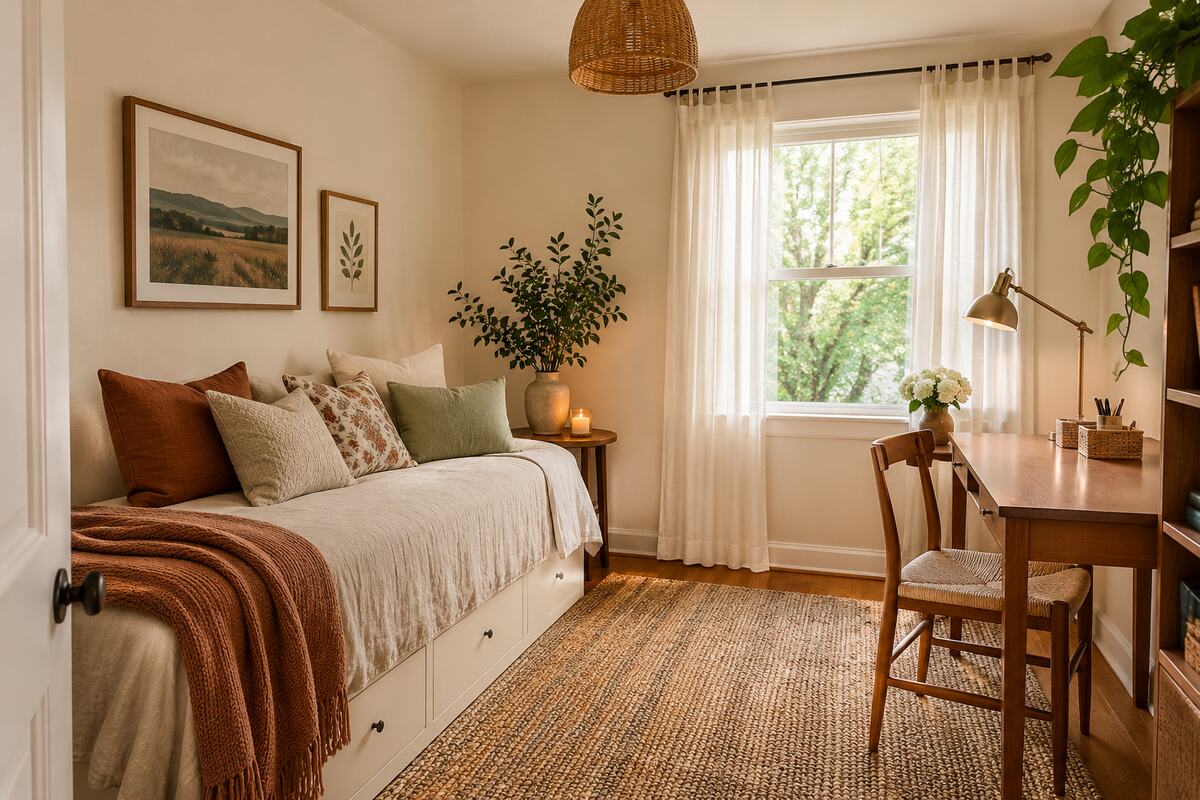
These spare bedroom ideas help you turn the extra room into a space you use every week, not a place where boxes and the ironing board end up. You get six ways to use the room, a quick way to pick the right one, and a plan for making one room do two jobs.
Most spare rooms still need to sleep a guest now and then, so every idea below says what it pairs well with. If guests are the main reason you keep the room, our guest bedroom ideas cover the comforts that make visitors feel at home, so this post sticks to the setup.
Start with what the room has to do
Before you buy anything, answer three questions. They decide the use far better than a mood board does.
How often do guests stay? If it is a few nights a year, a full guest room wastes the space the rest of the time. Give the room a daily job and add a bed that folds, slides or pulls out.
What do you do every week that has no home? Work calls at the kitchen table, a sewing machine that lives in a closet, workouts in the living room. The thing you set up and pack away most often is usually the best use for the room.
What does the room already have? Daylight, a big closet, a door that closes and its spot in the house all point to some uses and away from others.
Match the room to the use
Good daylight
Office, craft room or reading room: the jobs where you look closely at something.
Big closet
Dressing room, or any use that needs to hide supplies when guests come.
Next to your bedroom
Dressing room or quiet reading room. Skip noisy uses here.
Near the living area
Playroom or home gym, where noise and an open door bother no one.
6 spare bedroom ideas that get used
Each idea lists what to set up first and what it shares the room with best. Start with the basics and add the extras once you know how you use the space.
1. A home office that still sleeps guests
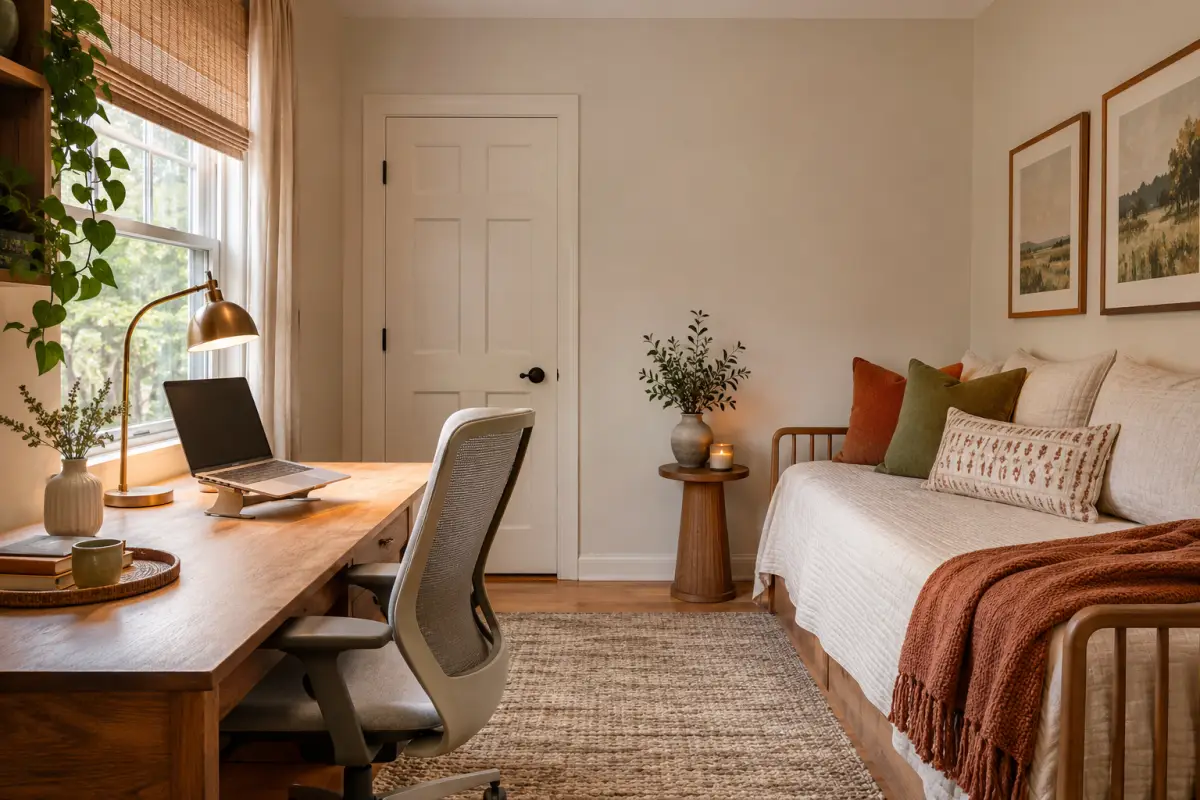
This is a popular double-duty setup, and it works because the desk is busy most days while guests come only now and then. Put the desk on the window wall and the bed on the opposite wall, so each zone has its own side of the room.
Set the screen up properly from day one. OSHA’s workstation guide says to put the monitor directly in front of you, at least 20 inches away, with the top line of the screen at or below eye level.
Set it up: desk beside or facing the side of the window (so daylight is not glaring on the screen), an adjustable chair, a monitor or laptop stand, a desk lamp, a daybed or sleeper sofa, a lidded box for paperwork.
Pairs well with: guests. Clear the desk into the box, close the laptop, and the room reads as a bedroom again.
2. A craft or sewing room
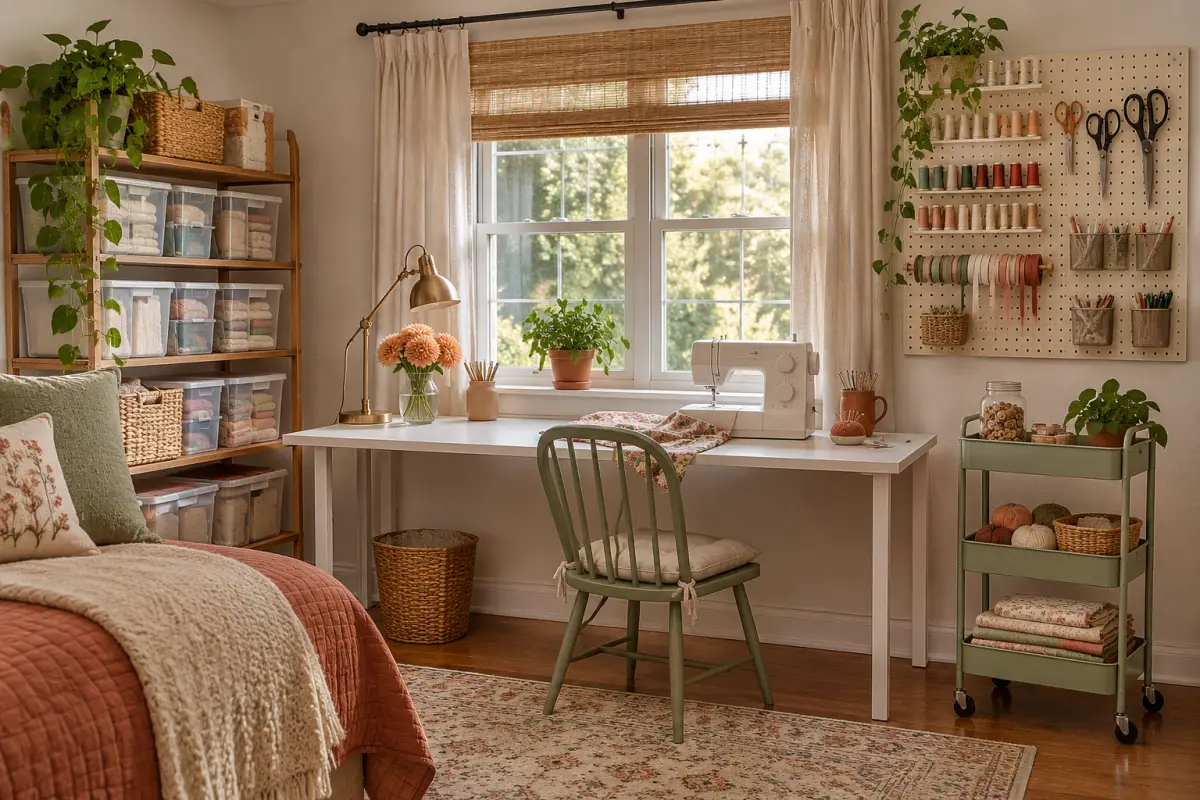
A craft room earns its space when nothing has to be packed away between sessions. A big table under the window gives you good light for cutting and stitching, and a wall pegboard keeps tools in sight instead of buried in drawers.
Store supplies by project or by type in clear lidded bins. You see what you have, so you stop buying the same thread twice.
Set it up: large worktable or folding table, task lamp, wall pegboard with hooks, a rolling cart for the supplies you use most, clear lidded bins on shelves, a comfortable chair at table height.
Pairs well with: guests, if the worktable folds or the supplies roll into the closet. Read the two-jobs section below for the changeover.
3. A home gym
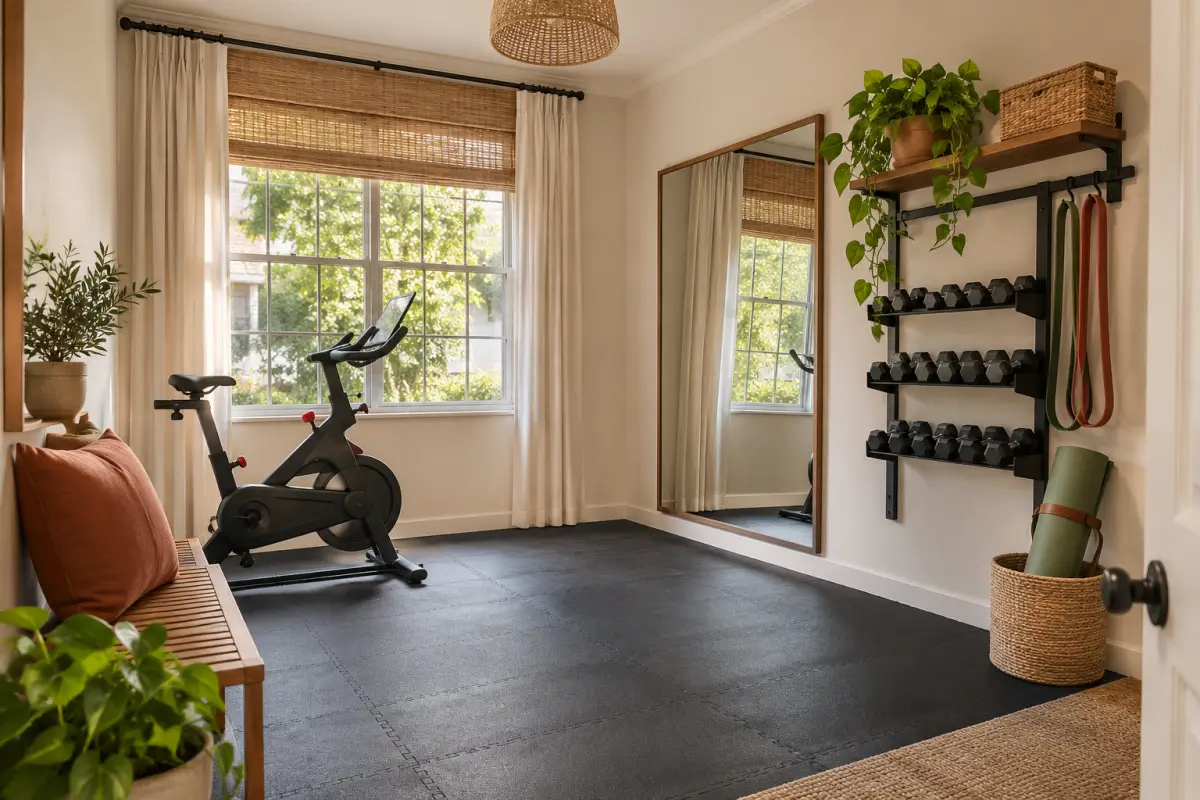
A spare bedroom gym means no more moving the coffee table to work out. Start with interlocking rubber floor mats to protect the floor and quiet the thud of dropped weights, then add a wall mirror so you can check your form.
Wall racks for weights and bands keep the floor clear and safe to move on. Put the heaviest gear low, near the wall.
Set it up: rubber floor mats, a large mirror secured to the wall, a wall rack for dumbbells and bands, a yoga mat, one cardio machine if the room allows it, a fan.
Treadmills need the most thought. Check the clearance your model’s manual asks for behind the belt before you measure the room. When the CPSC warned owners of one treadmill model, it told them to use it only in a locked room to keep children and pets away, and to unplug it and store the safety key out of children’s reach when not in use.
Pairs well with: a reading corner or occasional guests with a sleeper sofa. Avoid pairing a gym with a playroom.
4. A dressing room
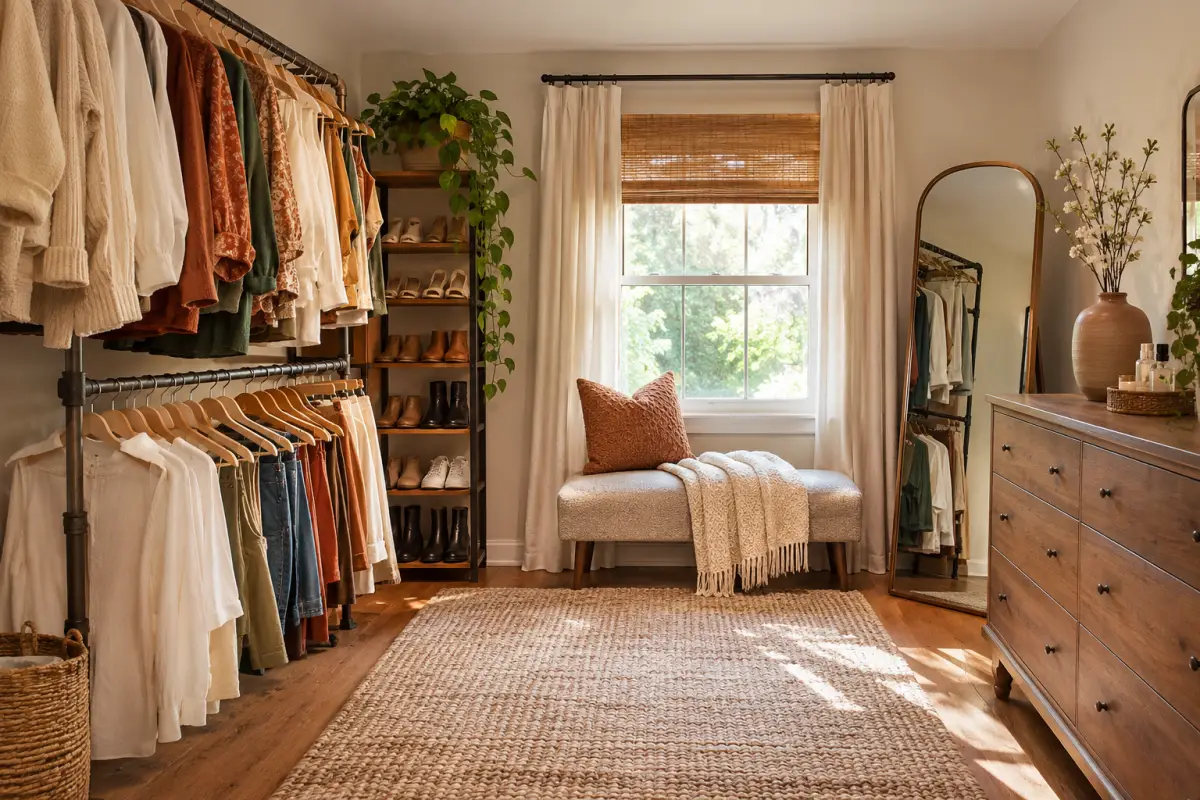
A dressing room takes clothes out of your bedroom, which makes the bedroom calmer and gives you room to see everything you own. It works best in a spare room next to your bedroom.
Hang clothes on two levels to double the rail space. ClosetMaid’s install guide puts double-hang shelves at 85.5 and 42 inches and a long-hang shelf at 71.5 inches, which gives you a starting point before you measure your own clothes.
Set it up: double-hang rails for shirts and skirts, one long-hang section for dresses and coats, shoe shelves, a full-length mirror, a bench, a dresser for folded things. Anchor the dresser to the wall: CPSC notes that new dressers come with anti-tip devices and asks you to install them right away.
Pairs well with: guests (give them one rail) or a getting-ready corner. Our bedroom vanity ideas show how to set up the mirror and lighting.
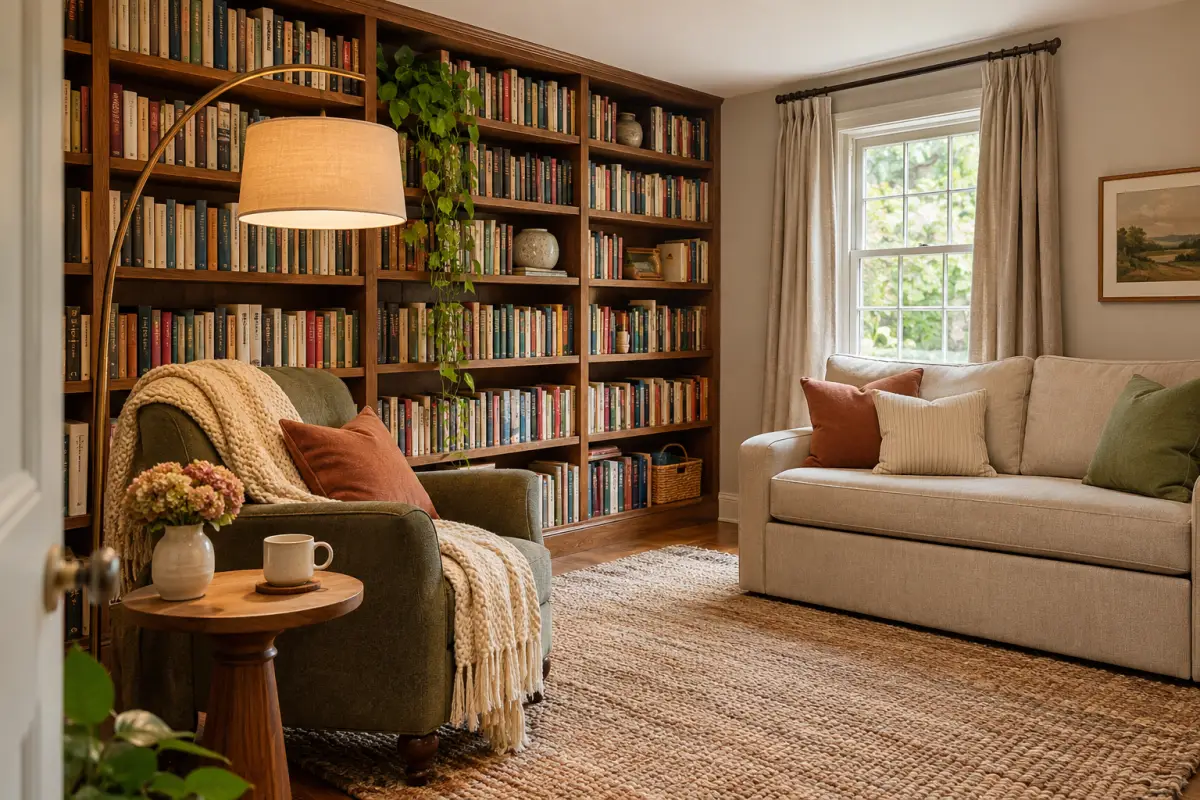
5. A reading room or home library
A reading room is the quietest use for a spare bedroom and one of the easiest to set up. You need one very comfortable chair, a good lamp beside it and shelves for the books you keep.
Floor-to-ceiling shelves look great but tip easily when they are full and someone pulls on a shelf. Use anti-tip brackets on every tall bookcase.
Set it up: deep armchair or loveseat, a floor lamp that reaches over the chair, a small side table, bookshelves secured to the wall, a soft rug, a throw. For warm, layered light, see our guide to bedroom lighting ideas.
Pairs well with: guests. A sleeper sofa works as the reading seat by day and a bed by night.
6. A playroom
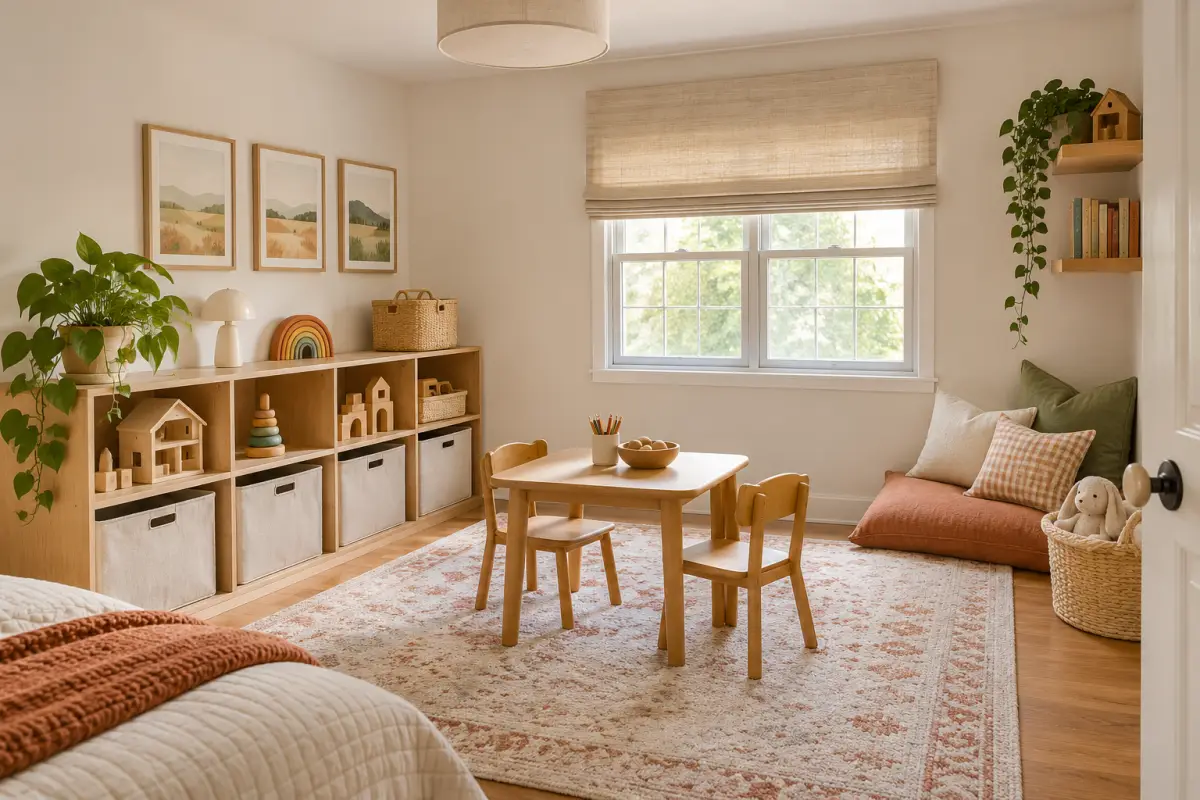
A playroom moves toys out of the living room and gives kids a space that is theirs. Low, open shelves with fabric bins let children reach and put away their own things, which keeps cleanup fast.
Safety matters more here than anywhere else in the house. Anchor every shelf and dresser. Choose cordless blinds or shades: CPSC asks families to install cordless window coverings in all rooms where a child may be present.
Set it up: low open shelving with bins, a washable rug, a small table and chairs, a reading corner with floor cushions, cordless window coverings. For a toy chest, pick open bins or a lid that stays open in any position; CPSC’s advice for chests with a falling lid is to remove the lid support or replace it with a spring-loaded one that holds the lid open in any position.
Pairs well with: guests, with a trundle daybed. Avoid sharing the room with a home gym or a craft room full of sharp tools.
How to make one spare room do two jobs
Most extra rooms end up as a multipurpose guest room, so plan for both jobs from the start. The trick is a bed that gets out of the way, storage that hides the second job, and a changeover you can do in one go.
Pick a sleeper that suits the room
The guest bed decides how much room the daily job gets. Here is how the common choices compare.
| Sleeper | By day | By night | Good to know |
|---|---|---|---|
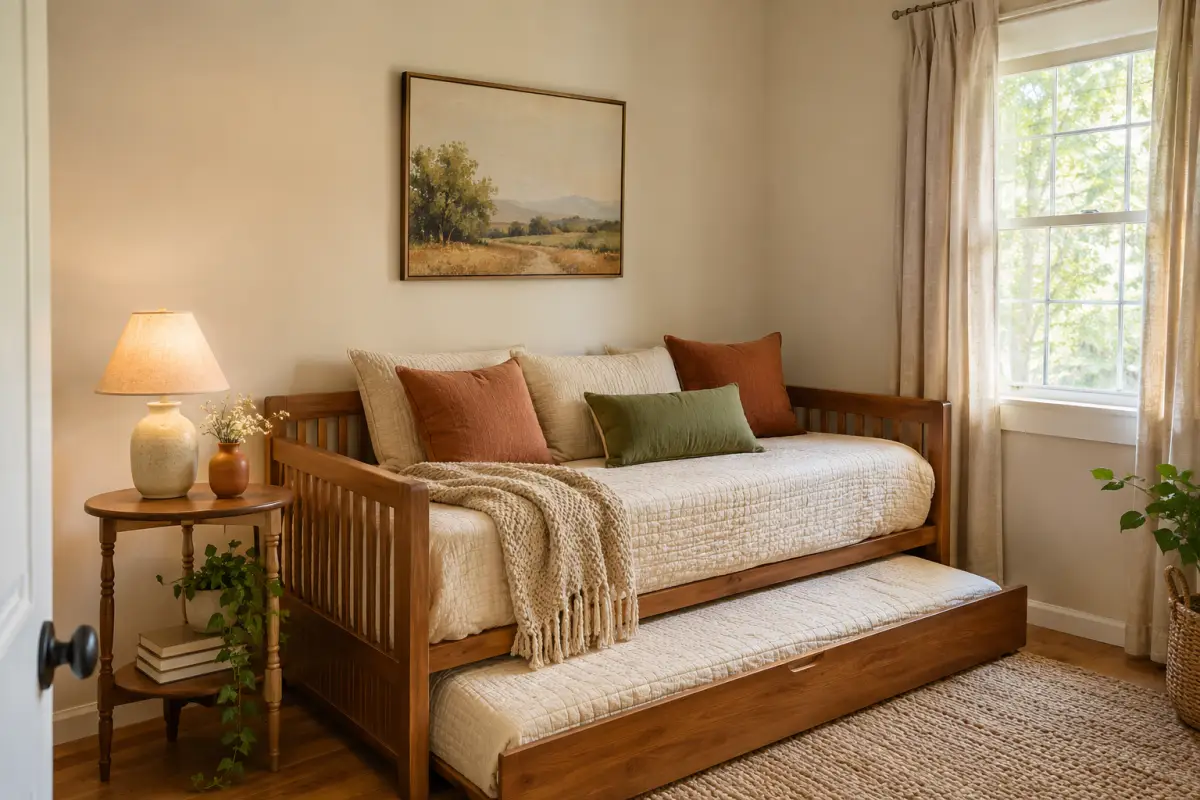
| Daybed with trundle | A sofa with cushions | One or two single beds | Freestanding, so it suits renters |
| Sleeper sofa | A real sofa | A pull-out bed | Needs clear floor in front to open |
| Murphy (wall) bed | A cabinet on the wall | A bed that folds down | Anchors into wall studs |
| Futon | A low couch | A flat mattress | Lowest cost, least plush |
Size the bed from the mattress, not the frame. Casper’s size guide lists a twin at 38 by 75 inches, a full at 53 by 75 and a queen at 60 by 80. A daybed usually takes a twin, which is why it fits so easily along one wall.
A Murphy bed frees the most floor, but it has to be fixed to the wall. Wilding Wallbeds explains that wall studs give the firm anchor that lets you fold and unfold the bed safely. If you rent, ask your landlord before you drill, or choose a daybed. Our bedroom furniture ideas for small rooms cover more fold-away and storage pieces.
Give each job its own side
Put the bed on one wall and the daily job on the opposite wall, facing away from the bed if you can. A rug under each zone makes the split clear without a divider.
In a narrow room, a low open bookcase between the zones works as a soft wall, as long as it is anchored. For tight floor plans, our guide on how to lay out a small bedroom shows where the big pieces fit.
Split the closet
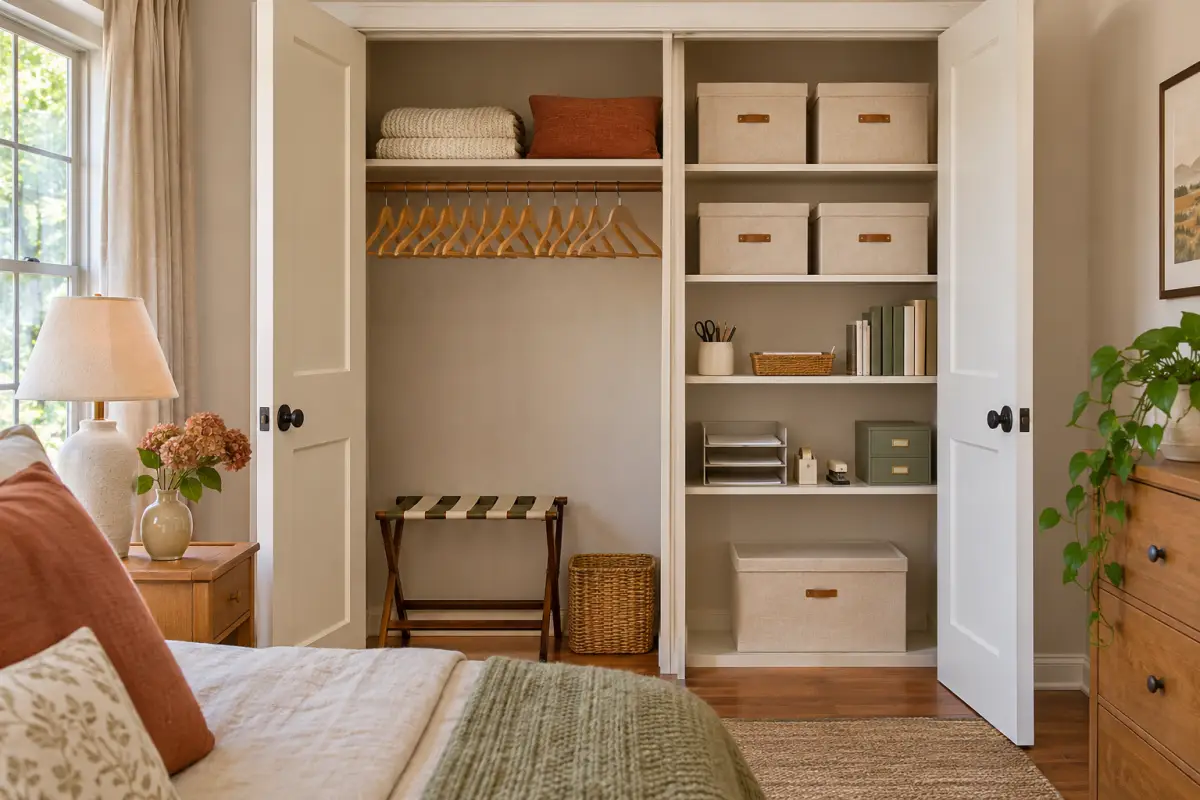
Give guests one half of the closet: a clear rail, a few empty hangers and one free shelf. The other half holds the second job, in closed boxes that look tidy when the door is open.
This one move does more for a double-duty room than any furniture, because guests never have to live out of a suitcase next to your supplies.
Put the second job on wheels
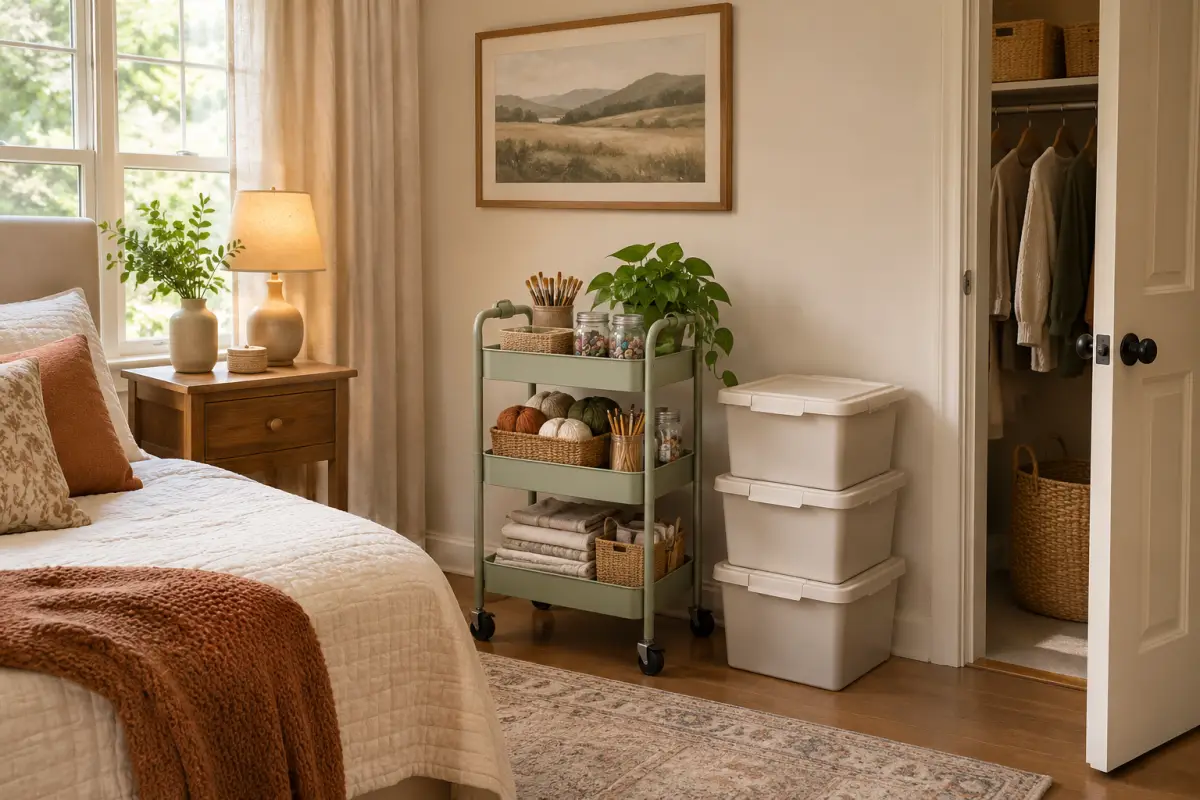
A rolling cart and a stack of lidded bins can hold almost everything a craft table, desk or gym corner needs. When guests are coming, roll it all into the closet and the room is a bedroom again.
Choose a cart narrow enough to fit through the closet door, and keep the bins the same size so they stack.
Light both jobs
A desk or craft table needs bright task light; a guest needs a soft lamp beside the bed. Plan one of each, plus a ceiling light or floor lamp for the whole room, so neither job borrows the other’s light.
Which jobs share a room well
Easy pairs
Office + guests
Reading room + guests
Dressing room + guests
Craft room + guests (with a rolling cart)
Think twice
Gym + playroom (equipment and small kids)
Playroom + craft room (sharp tools, small parts)
Gym + guests in a tiny room (no floor left for a bed)
Guest changeover checklist
Before guests arrive
- Clear the desk or worktable into its lidded box
- Roll the cart and bins into your half of the closet
- Open the sleeper and make it with fresh sheets
- Empty the guest half of the closet and add hangers
- Switch on the bedside lamp and put a charger beside it
For the welcome touches that come after the room is ready, like a basket of toiletries and a night light to the bathroom, see our guest bedroom ideas.
Spare bedroom ideas FAQ
What can I do with a spare bedroom?
The most useful spare room ideas are a home office, a craft or sewing room, a home gym, a dressing room, a reading room and a playroom. Pick the one you set up and pack away most often in other rooms, then add a fold-away bed if you still host guests.
Can a spare room be an office and a guest room?
Yes, and it is one of the easiest pairings. Put the desk on the window wall, a daybed or sleeper sofa on the opposite wall, and split the closet so work things hide behind one door while guests use the other half.
What is the best bed for a guest room office?
A daybed with a trundle suits most rooms and renters because it stands on its own and sits like a sofa. A Murphy bed frees more floor but has to be anchored into wall studs, so check with your landlord if you rent.
How do I make a small spare bedroom work?
Choose one main job, keep the bed against a wall, and store everything for the second job in a closet or on a rolling cart. Wall shelves and pegboards use height instead of floor space. More ideas live in our bedroom ideas collection.
Should I keep a bed in the spare room?
If you host guests regularly, keep some kind of bed, but it does not have to be a full bed frame. A daybed, sleeper sofa or futon gives guests a real place to sleep and gives you the floor back the rest of the time.
Save this guide to your bedroom board for the weekend you finally clear out the spare room, and pair it with our guest bedroom ideas when visitors are on the way.
Sources
- Computer Workstations eTool: Monitors, U.S. Occupational Safety and Health Administration (OSHA)
- Peloton Recalls Tread+ Treadmills After One Child Died and More than 70 Incidents Reported, U.S. Consumer Product Safety Commission (CPSC), 2021-04-17
- How to Guides, ClosetMaid
- AnchorIt.gov, U.S. Consumer Product Safety Commission (CPSC)
- Nearly Half of Incidents with Kids and Corded Window Coverings Resulted in Death; GoCordless to Save Lives, U.S. Consumer Product Safety Commission (CPSC)
- CPSC Warns Consumers of the Deadly Dangers of Storage and Toy Chests, U.S. Consumer Product Safety Commission (CPSC), 2014-03-05
- Mattress Sizes and Bed Dimensions Guide, Casper
- Murphy Bed Installation Prep Guide, Wilding Wallbeds